

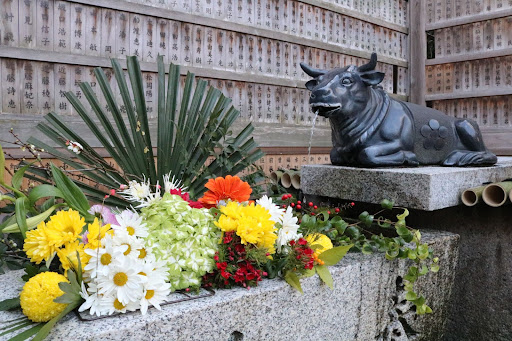
The Kyoto Imperial Palace is a popular tourist attraction in Kyoto City. Did you know that Sugawara-in Tenmangu Shrine, a shrine with deep ties to Sugawara no Michizane, the god of learning, stands across Karasuma-dori, which borders the west side of the temple? The shrine is secretly a popular spot for prayers for the healing of illness, academic success, and safe delivery. The grounds of the shrine are cozy and can be visited in about 15 to 20 minutes, making it possible to visit the shrine in combination with the Kyoto Imperial Palace. This article introduces the history and highlights of Sugawara-in Tenmangu Shrine.
Built on the site where Sugawara no Michizane livedSugawara-in Tenmangu Shrine
Sugawara-in Tenmangu Shrine stands on a plot of land where the Sugawara family, including Michizane Sugawara, has lived for generations. The Sugawara family mansion has stood here since the time of Michizane's great-grandfather, Kojin Asaomi, and Michizane was born here.
The Sugawara family's mansion was converted into a shrine after Michizane's death in Dazaifu (present-day Dazaifu City, Fukuoka Prefecture). At that time, there were a series of natural disasters and illnesses and deaths of aristocrats in Heian-kyo, and people began to say that the resentment of Michizane might have caused this situation. Therefore, the Sugawara-in Tenmangu Shrine was built to settle the situation by worshipping Michizane as a god.
Drink "water of birth water" to recharge your batteries!
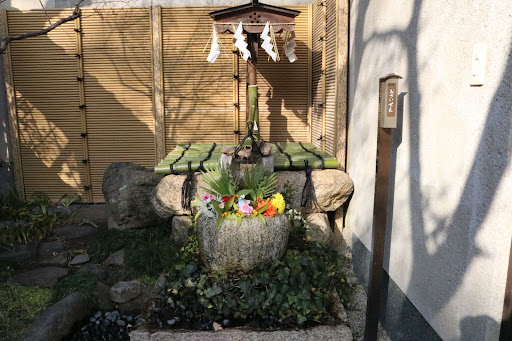
Within the precincts of Sugawara-in Tenmangu Shrine, a well with a spring of water that is said to have been used for Michizane's birth bath still remains today. Since Michizane was born in 845, the well has a history of more than 1,100 years. The stone used for the well is said to be from the Heian period.
There is a water station on the temple grounds for worshippers where "water for birth" is available, so it is recommended to bring an empty water bottle or PET bottle with you. Take the blessings of academic success and healing of illness into your body!
Let's heal what's wrong with your body with "Heiheishi.
The youngest shrine, Umemaru Daishinja, located to the left of the hall of worship, is said to be mainly beneficial in the fight against cancer. A spherical stone called "heal stone" is placed in front of the building, and it is said to be effective if a white handkerchief distributed at the shrine office is placed on the stone and then on the affected area. In addition, Umemaru Daishin also attracts faithful visitors for pimples, boils, and skin diseases, so those who wish to pray for good health in the future should definitely give it a try.
What kinds of things are sold at the shrine office?
The shrine office sells good luck charms, ema (votive picture tablet), and omafuda (votive talismans). The charms are for the protection of cancer, family health, and academic success. Many of them are decorated with plum blossoms, which Michizane loved, and are recommended as souvenirs.
Other items available include red seals, stickers, and ox fortunes. The Ox fortune is a pastel-colored figurine of an Ox with a fortune paper inside, and is popular for its cute, dull eyes. After visiting the main shrine, stop by the shrine office.
Sugawara-in Tenmangu Shrine" to visit in conjunction with sightseeing at the Kyoto Imperial Palace
Sugawara-in Tenmangu Shrine is located on Karasuma-dori, on the west side of the Kyoto Imperial Palace. It is a 3-minute walk from Marutamachi Subway Station and a 15-minute walk from Shikikan-den Hall in the Gosho, making it a perfect place to stop by for a visit. There are also places to experience and enjoy, such as "water for birthing" and "heal stones," so be sure to pay a visit.


Related PostRelated Articles

What is “Fengquan,” a restaurant serving Kyoto-style Cantonese cuisine? If you’re looking for authentic flavors in Kyoto’s Nakagyo Ward, this is the place to go!
Have you heard of a restaurant called “Hōsen” in Kawaramachi, Kyoto? “Hōsen” is a restaurant where you can enjoy authentic Cantonese cuisine […]
A Pilgrimage to the Sacred Sites of *Nurarihyon's Grandson: The Thousand-Year Demon Capital* in Kyoto! List [Summary]
"Nurarihyon's Grandson," a Japanese manga by Hiroshi Shiibashi. Serialized in Weekly Shonen Jump in 2008, it features yokai as its theme […]
What is "Suehiro," the time-honored Kyoto sushi restaurant with over 200 years of history? If you're visiting Kyoto's finest restaurants, this is the place to go!
It’s no exaggeration to say that almost everyone living in Nakagyo Ward, Kyoto, has heard of the long-established Kyoto sushi restaurant “Suehiro.” This place has been featured in the media and magazines […]
A Pilgrimage to the "HELLO WORLD" Holy Sites in Kyoto! List [Summary]
"HELLO WORLD" was released on September 20, 2019. Director Tomohiko Ito is also known for *Your Name.*, but...
If you want to eat seasonal fruit tart in Kyoto! What's so special about Hyde&Away and what do you recommend?
If you like sweets, don't you sometimes have an irresistible craving for tarts? Tarts are a pastry that originated in France and are made of fruit and [...]...