

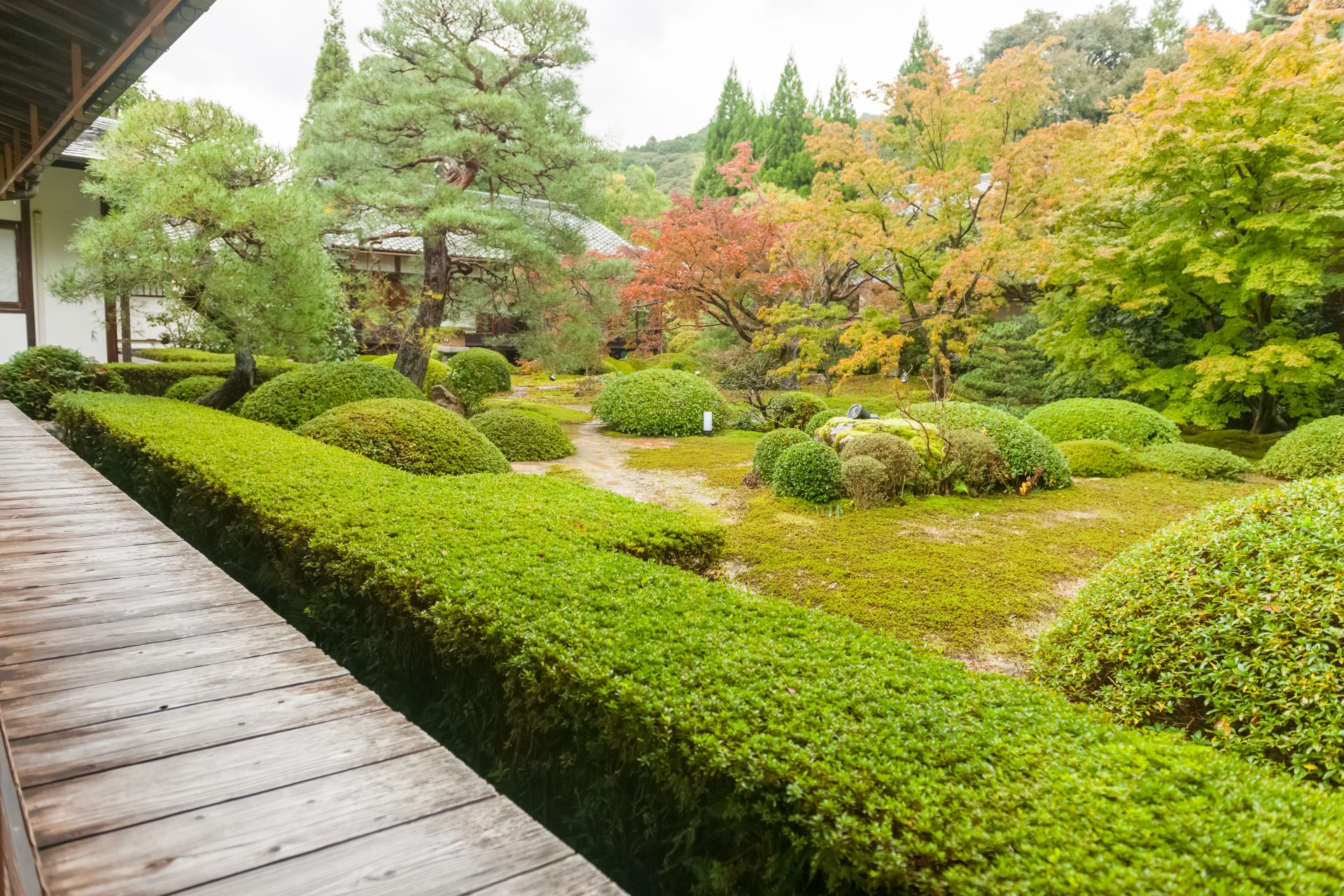
Sightseeing in Kyoto is crowded with many people, and some people prefer to avoid the crowds if possible.
In fact, there are several places in Kyoto that are well known by locals but are popular as hidden gems.
So this time, we would like to introduce some hidden spots for those who want to go out in a relaxed atmosphere.
Please look for the charms of Kyoto that you have never seen before, not its famous landmarks!
1. Recommended spots for a stroll in Kyoto: Hakuryuen
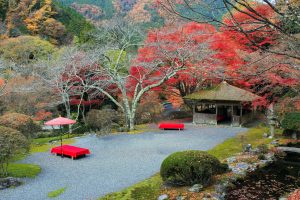
Photo: Photo AC
○Features
Located near Kurama, where the mountain god is said to reside, Hakuryuen floats at the foot of Anyoji Mountain in the village of Ninose.
Beautiful scenery can be seen in each season, such as cherry blossoms in the cherry blossom season and autumn leaves in the fall.
It is popular as a hole-in-the-wall spot open to the public only in spring and fall.
During the tourist season, the area is crowded with people, but if you make reservations in advance, you will be able to relax because the number of people is limited.
Kuramadera Temple and Kibune Shrine are famous places in the Kurama area, but Hakuryuen Garden is also a beautiful garden surrounded by mountains that creates a magical space where time seems to have stopped.
○Word of mouth
When the exhibition is open to the public for a limited time, there may be a line for tickets on the day of the exhibition. However, since tickets are limited, the inside will not be crowded. If you want to enjoy the autumn leaves quietly, this is the place to go.
It is about a 5-7 minute walk from Ninose Station on the Eizan Electric Railway. The autumn leaves in the garden were very beautiful.
I took a walk not far from Kurama. We had the best view of the autumn leaves.
The moss and autumn leaves are very nice. I couldn't even take pictures at the tourist spots, but I was able to spend some time here.
I am fascinated by the fresh green of Hakuryuen. The moss was absolutely magnificent.
Address
106 Kurama Ninose-cho, Sakyo-ku, Kyoto-shi, Kyoto
How to access
Approximately 7 minutes walk from Ninose Station on the Eizan Dentetsu Kurama Line
○ Homepage
2. Koumyouin, the pagoda of Tofukuji Temple
○Features
Koumyouin is a Buddhist temple built in 1198 that offers a sense of history.
Known for its summer flowers and fall foliage, the temple is home to a stone garden where the philosophy of Zen comes alive.
In the autumn season, the temple is also called "Rainbow Koke-dera" (moss temple) because of the beautiful appearance of the moss as well as the autumn leaves.
Located not far from the national treasures Sanmon and Rokuharamon, it is popular as a hole-in-the-wall spot.
The "Hashinniwa" garden, completed in 1939, is also a highlight.
○Word of mouth
The garden with its dry landscape garden was breathtaking. As the name "rainbow moss temple" implies, we were able to appreciate the beautiful moss.
It was right next to Tofukuji Temple and the karesansui (dry landscape garden) was absolutely beautiful. Overall, the atmosphere was quiet and serene.
The temple is a little off the beaten tourist track, so it is not as crowded as some of the more famous temples. You can sit down and relax and look at the garden.
I had a great time sightseeing in Kyoto. It was interesting to see the different scenery depending on where I was.
The famous "Hashinniwa" garden was a beautiful work of art created by the gardener Mirei Shigemori.
Address
15-809 Honmachi, Higashiyama-ku, Kyoto-shi, Kyoto
How to access
Approx. 10 minutes walk from Tofukuji Station on JR or Keihan Line
○ Homepage
3. Gionji Temple, a recommended spot for a stroll in Kyoto
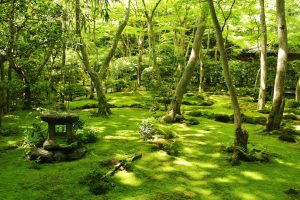
Photo: Photo AC
○Features
Gionji Temple is famous as the nun temple of tragic love in the famous Tale of the Heike.
Located in Arashiyama, a popular tourist spot, many tourist attractions such as the Sagano trolley train and the small bamboo grove are nearby.
Gionji Temple has a serene atmosphere, and the bamboo grove and other greenery is truly breathtaking.
The beautiful moss garden is a must-see.
○Word of mouth
The temple is famous for the story of Gion of the Tale of the Heike. The moss garden was more beautiful than I had imagined.
Arashiyama is usually thought of as a crowded place, but it is relatively empty. The autumn leaves were beautiful.
The temple is said to be a nunnery of tragic love.
It was in a bamboo grove, with lots of greenery. The atmosphere was quiet and serene.
It was a little crowded during the season. So the second time we came here, we avoided the season. It was more empty than usual and we had a peaceful time.
Address
32 Saga-Toriihon-Kosaka-cho, Ukyo-ku, Kyoto City, Kyoto
How to access
Approximately 25 minutes walk from JR Saga-Arashiyama Station
○ Homepage
4. Unryu-in Temple, a recommended spot for a walk in Kyoto
Photo: Photo AC
○Features
Unryuin Temple, a temple of the Sennyuji School of the Shingon sect, is located in Higashiyama-ku, Kyoto City, Kyoto Prefecture.
It was built in 1342 by Emperor Go-Kogon.
Highlights include the temple gate, Ryuukaden, an important cultural asset, and the Room of Enlightenment.
The Enlightenment Room is said to represent the teachings of Zen, and you can spend a relaxing time there if you visit during off-season.
You can also experience sutra copying, so please try it and relax with a cup of green tea.
○Word of mouth
It is one of the temples in the mountain of Sennyuji Temple. As a temple associated with the imperial family, it has an otherworldly atmosphere.
The room of enlightenment is recommended. The round window is the Window of Enlightenment. The view from there cannot be described in words.
Unryuin with its "Window of Enlightenment and Window of Lostness," which expresses the teachings of Zen. It was lovely.
Each window had a different atmosphere, which I enjoyed. Considering the time of day, there were few people.
The experience of sutra copying was available at the reception desk on the day of the event. It was delicious and included matcha green tea and sweets.
Address
36 Sennyuji Sannai-cho, Higashiyama-ku, Kyoto City, Kyoto
How to access
Approx. 15 minutes walk from JR Tofukuji Station
○ Homepage
5. Hourinji Temple, a recommended spot for a stroll in Kyoto.
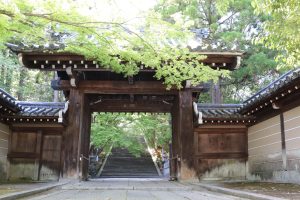
Photo: Photo AC
○Features
Horinji Temple was founded in 713 by Gyoki Bodhisattva at the request of Emperor Gemyo in the 6th year of the Wado Period (713).
The long staircase is impressive, and the trees along the way add a touch of elegance.
It is a great place to enjoy the great outdoors, with autumn foliage in fall and fresh greenery in spring.
Although located in the sightseeing spot of Arashiyama, the precincts of the temple will have a calm and comfortable atmosphere.
You can see the Katsura River and the city of Kyoto from the observation deck.
○Word of mouth
I took the Randen to Arashiyama. On weekdays, there were few people and I was able to spend a peaceful time.
The temple grounds have a calm atmosphere. We were able to see Futagoka, where Kenko Hoshi spent the last years of his life.
The shrine was empty and quiet. The trees on either side of the stairs were absolutely beautiful.
I thought it would be extremely crowded since it was in Arashiyama, but it was not so much. It was a great nature.
The temple is located just after crossing the Togetsu Bridge. From the deck next to the main hall, we had a panoramic view of the city of Kyoto.
Address
16, Arashiyama-Kuramaizozan-cho, Nishikyo-ku, Kyoto City, Kyoto Prefecture, Japan
How to access
Approximately 5 minutes walk from "Arashiyama Station" of Hankyu Arashiyama Line
○ Homepage
https://www.kokuzohourinji.com/
■ Summary
How was it?
In this issue, we have introduced five spots in Kyoto that are known by locals as "hole-in-the-wall" spots.
If you want to avoid the popular tourist spots and enjoy the new Kyoto townscape, please take a look at the spots in this issue! If so, please take a look at the hole-in-the-wall spots in this issue.


Related PostRelated Articles

The obanzai at "Gyaatei" in Arashiyama, Kyoto, is wonderful! What is the Gyaatei Set Meal?
What places did you visit while sightseeing in Arashiyama, Kyoto? Arashiyama has several attractions, such as the Hozu River boat ride, the Torokko Train, the Bamboo Grove Path, and the Togetsukyo Bridge […]
Terakoya Honpo’s Innovative Dango Are Amazing! Let’s Go on a Sweet Treat Tour in Arashiyama to Sample the Exquisite “Kabi Dango”
Are you enjoying sightseeing around Saga-Arashiyama, such as the Togetsukyo Bridge, Tenryu-ji Temple, and the Torokko Train? There are many tourist attractions in Saga-Arashiyama […]
Come try the giant mitarashi dango at Koto Imo Honpo! A popular choice for street food in Arashiyama♪
Have you heard of a shop called “Kotoimo Honpo,” located just off the path through the bamboo grove? Lately, it’s been on Ins […]
The signature dish at Muge Sanbo in Kyoto—the ”Ultra-Rich Matcha Parfait”—is absolutely delicious! If you want to experience the true essence of Kyoto, this is the place to go!
Have you heard of a shop called “Muge Sanbo,” whose signature dish is a parfait made with matcha that’s quintessentially Kyoto […]
Detective Conan: A Pilgrimage to the Kyoto Locations Featured in "The Crimson Love Song" and "The Crossroads of the Labyrinth"! List [Summary]
The Detective Conan movies set in Kyoto are *A Crimson Love Letter* and *Crossroads in the Labyrinth* […]