

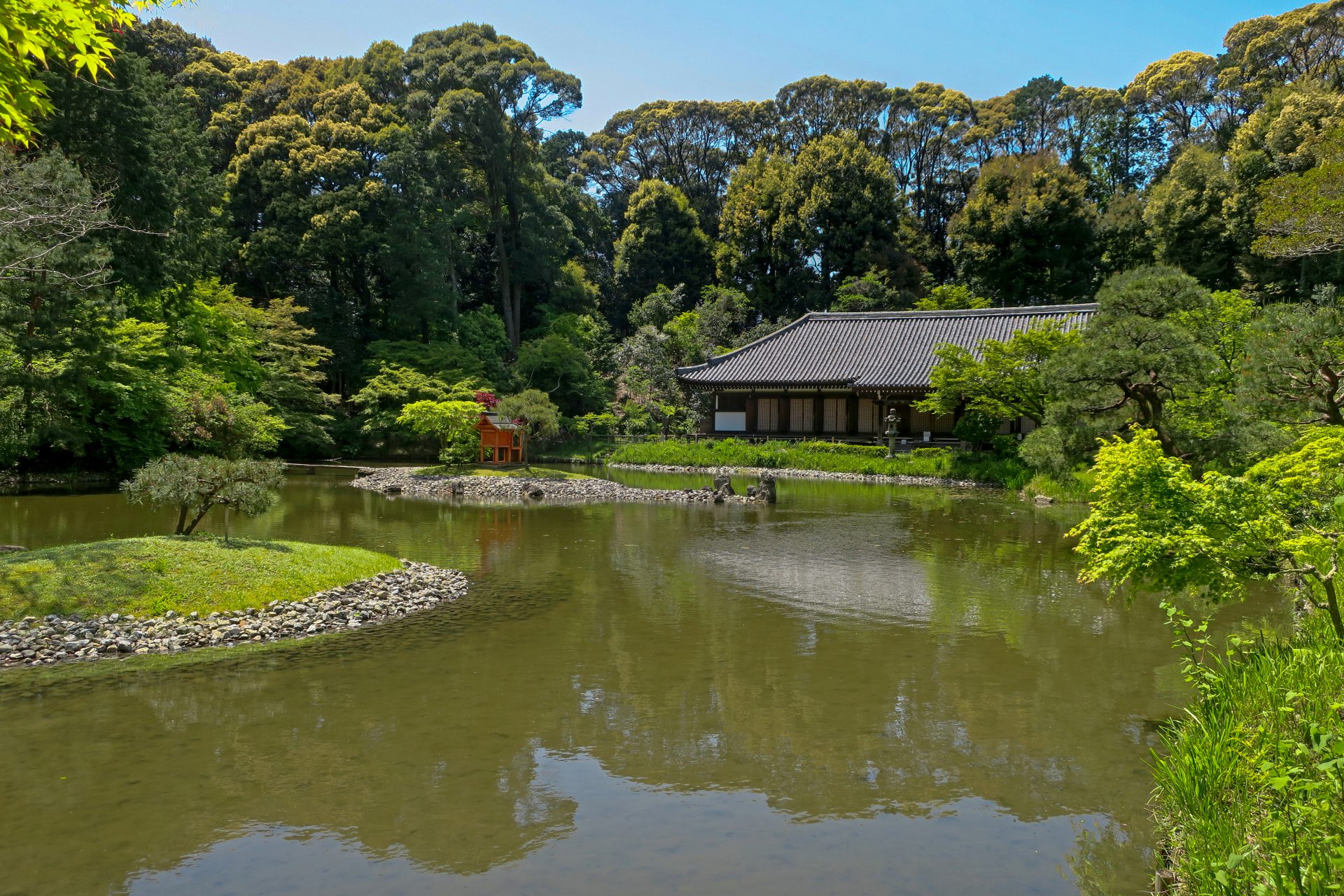
Do you know a temple called "Joruridera" in Kizugawa City, Kyoto Prefecture?
This place is secretly popular as a hidden tourist spot where you can see many national treasures.
In this article, we will introduce the features, history, and highlights of Joruridera Temple in Kyoto.
If you plan to visit in the future, please take a look.
■What is Joruridera, Kyoto?
Photo: Photo AC
Joruridera Temple is located in Nishikofuda, Kamo-cho, Kizugawa City, Kyoto Prefecture.
It is a Shingon Ritsu sect, and the principal deities are the nine Amitabha Buddhas and the Yakushi Nyorai Buddha.
It is said to have been founded in 1047 (Eisho 2).
The name Joruri-ji comes from "Joruri Sekai," the Pure Land of Yakushi Nyorai, enshrined in the three-story pagoda.
Joruri-ji Temple is also called Kutai-ji Temple because there are as many as nine seated Amida Nyorai statues enshrined in the main hall.
■History of Joruridera, Kyoto
Joruri-ji Temple was modeled after the Pure Land Garden of the Heian Period.
According to the temple treasure "Joruri Jiryuki no Koto," this temple was founded in 1047.
The three-story pagoda is in the eastern direction where the sun rises, and the main hall is in the western direction where the sun sets.
These evoke Buddhist concepts, and the pond at the center is a "symbol of Amida's paradise" as it imitates the ocean between the afterlife and this world.
In 1107, nine wooden statues of Amida Nyorai were enshrined in Joruri.
■Highlight of Joruridera Temple, Kyoto, Japan
What are some of the highlights of Joruridera Temple in Kyoto?
○Flowers of the Four Seasons
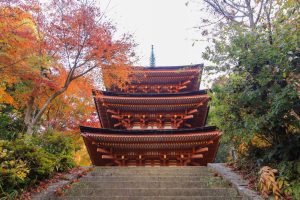
Photo: Photo AC
At Joruridera you can see flowers of the four seasons.
For example, in spring, camellias and irises are examples.
In summer, sarsaparilla and kakitsubata can be seen; in autumn, the leaves turn red; and in winter, mangyo and daffodils can be seen.
○ National Treasure Architecture
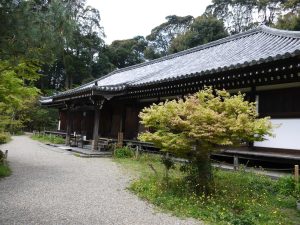
Photo: Photo AC
The temple complex of Joruri-ji Temple was built in the Heian period (794-1185) and has remained largely intact.
The main hall was completed in 1107 and moved to its present location in 1157.
This is also designated as a Japanese National Treasure.
The garden is also designated as a special place of scenic beauty by the national government, and the charm of the garden is that you can feel the atmosphere of that period.
○Buddhist image of National Treasure
Joruri-ji Temple has a number of Buddhist statues that have become national treasures, including nine Amitabha Nyorai statues.
The nine Amida Nyorai statues in the Amida Hall were carved during the Heian period (794-1192), and all nine statues are national treasures.
The statues of the Four Heavenly Kings from the Heian period (794-1185) that flank it are also national treasures.
○Three-story pagoda
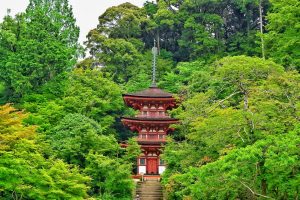
Photo: Photo AC
The three-story pagoda was moved to its present location in 1178.
It is the only building that has survived from the Heian period (794-1185), although others have been lost to war and fire.
Here, there is a statue of Yakushi Nyorai (the Medicine Buddha), who was believed to save sentient beings from illness and suffering, and is designated as a National Important Cultural Property.
The statues of Yakushi Nyorai, Kichijo Tenjo, Dainichi Nyorai, Benzaiten, and En no Gyoja are usually kept secret, but the first three statues listed above are not.
It can be seen on the day of the opening of the hidden Buddha.
The three-story pagoda is also designated as a national treasure.
Review of Joruridera, Kyoto
Take a look at the reviews of Joruridera Temple, Kyoto.
The three-story pagoda, with its distinctive cypress bark roof, is a national treasure. The temple's treasure trove of national treasures, including the horizontal main hall with its nine Amida Nyorai statues, the Amida Nyorai Chusonzo statue, and the Shitenno statues, is a sight to behold.
It is a fantastic temple with a quiet atmosphere. The atmosphere of the pond and the buildings are tasteful and relaxing. It had an aura of paradise.
The statue of the Kissho Tennyo statue was seen at the special opening of the pagoda on the 8th of every month. On the 8th day of every month, which is a fine day, the Yakushi Nyorai statue in the three-story pagoda can be viewed, so we saw the statues of Buddha at the special opening. All of them were breathtaking.
The sight of it will take your breath away and your vocabulary will be lost. It is truly an amazing temple. The Joruri-ji Temple is the only remaining nine Amidas that have been lost over time. I am amazed that they have been preserved. You must see it in person.
The air was clean and restful. The view of the pond from the three-story pagoda was nice.
■Address and access to Joruridera Temple, Kyoto, Japan
Finally, let's look at the address and access to Joruridera Temple in Kyoto, Japan.
○Address of Joruridera Temple, Kyoto, Japan
40-40, Nishikofuda, Kamo-cho, Kizugawa-shi, Kyoto
○Access to Joruridera Temple, Kyoto, Japan
Approximately 10 minutes by community bus from the east exit of Kamo Station on the JR Kansai Main Line
○ Homepage
■ Summary
How was it?
In this issue, we have introduced "Joruri-ji Temple" located in Kizugawa City, Kyoto Prefecture.
It is home to many national treasures, including the main hall (Amida Hall), the three-story pagoda, nine statues of the Amida Nyorai, and statues of the Four Heavenly Kings.
The temple also has many other important cultural assets such as a seated statue of Yakushi Nyorai, a standing statue of Jizo Bosatsu, and a statue of Kichijo Tennyo, so you can experience a lot of history in one visit.
Please visit us when you come to Kizugawa City, Kyoto.


Related PostRelated Articles

"Rurouni Kenshin" Kyoto Pilgrimage to Famous Locations! List [Summary]
Have you heard of *Rurouni Kenshin*? Not only is there an anime series, but it’s also been adapted into a live-action movie starring Takeru Satoh, so you should definitely check it out […]
"K-ON!" Kyoto Pilgrimage to the Series' Locations! List [Summary]
Have you heard of the anime “K-ON!”? “K-ON!” is a four-panel manga series by manga artist Kaki Furai […]
A Pilgrimage to the Sacred Sites of "Ikkyu-san" in Kyoto! List [Summary]
Do you all in Japan know who Ikkyu-san is? I’m sure everyone—from elementary school-aged children to adults—has heard of him at least once […]
A Pilgrimage to the Sacred Sites of "The Eccentric Family" in Kyoto! List [Summary]
Have you heard of the anime *The Eccentric Family*? *The Eccentric Family* is an anime adaptation of a novel by Tomihiko Morimi […]
Tenyo" in Yamashina, Kyoto is amazing! What's the "succulent negi negitan" overflowing with gravy?
Do you know a restaurant called "Tenyo" located about 3 minutes walk from Yamashina Station? This is a famous local yakiniku restaurant [...].