

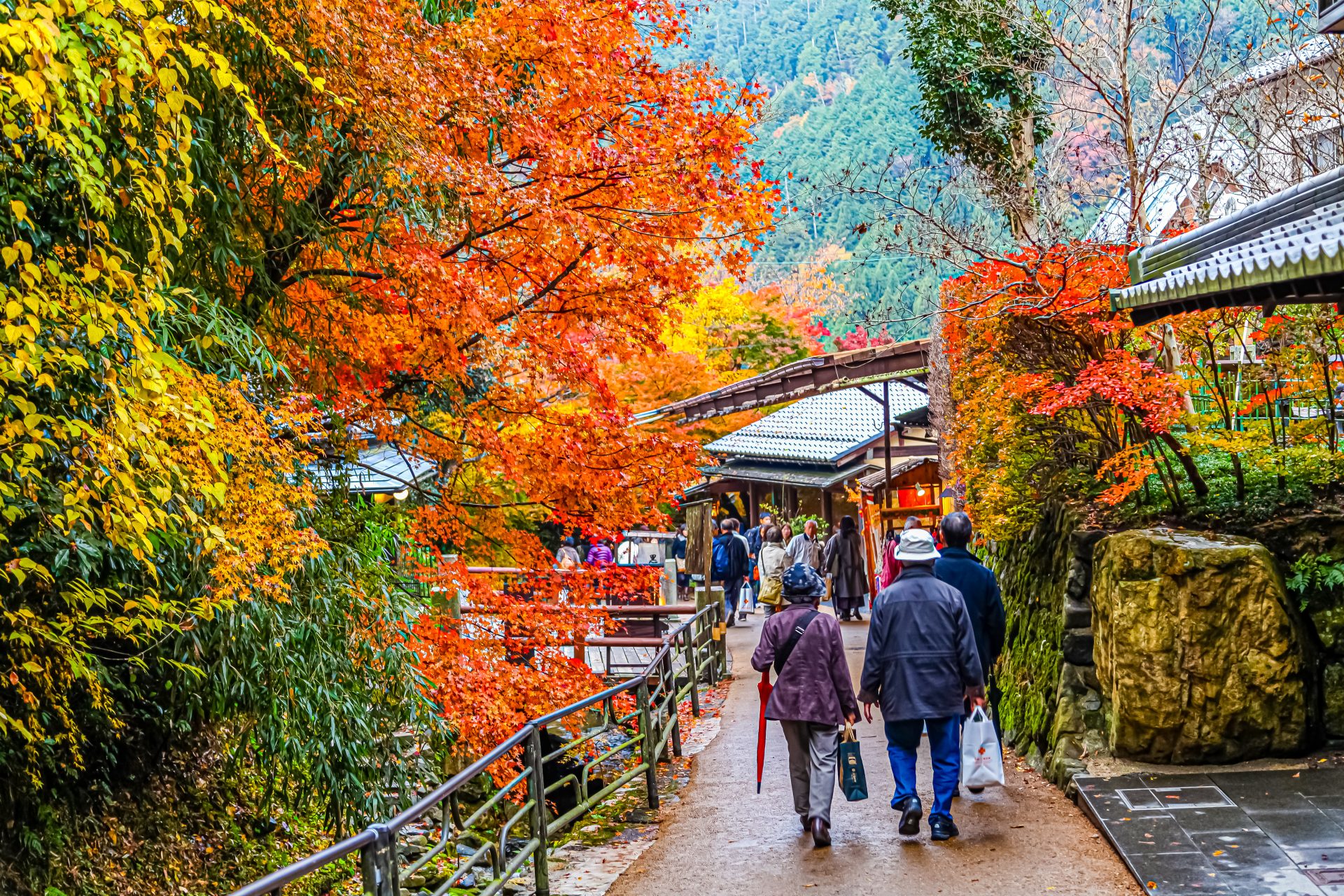
Have you ever heard of Ohara, a place located northeast of central Kyoto?
Although it takes about an hour by bus or rental car from Kyoto City, it is a popular destination for a short day trip because of its secluded, old-fashioned, storybook atmosphere.
In addition to the famous "Sanzenin" and "Jakkoin" temples, which have a history of more than 1,200 years, there are a number of temples and shrines in the village of Ohara, and you may come across wonderful spots in unexpected places as you walk up and down the gentle slopes.
In the past, there were not many lodgings in Ohara, but now there are many hotels and guest houses, so if you are traveling from far away and staying more than two nights in Kyoto, it is recommended to extend your stay in Ohara for a day.
In this issue, we will introduce all the charms of Ohara!
Whether you are a casual observer or a visitor who had no idea there was such a place in Kyoto, this article will make you want to go to Ohara! If you read this, you will definitely want to go to Ohara.
Please read to the end.
Table of Contents
Ohara Sanzenin Temple
Ohara Jakkoin
■ Side roads and slopes
■ Four Seasons in Ohara
- Ohara in Spring
- Ohara in Summer
- Ohara in Autumn
- Ohara in winter
Ohara's specialty: Shibazuke (pickled shibazuke)
- Doi Shibazuke Honpo
- Tsuji Shibazuke Honpo
Further afield, you can visit Lake Biwa.
Ohara Sanzenin Temple
Sanzenin Temple, one of the representative temples in Ohara, has probably been visited by many people since it was featured in a hit song in the Showa period.
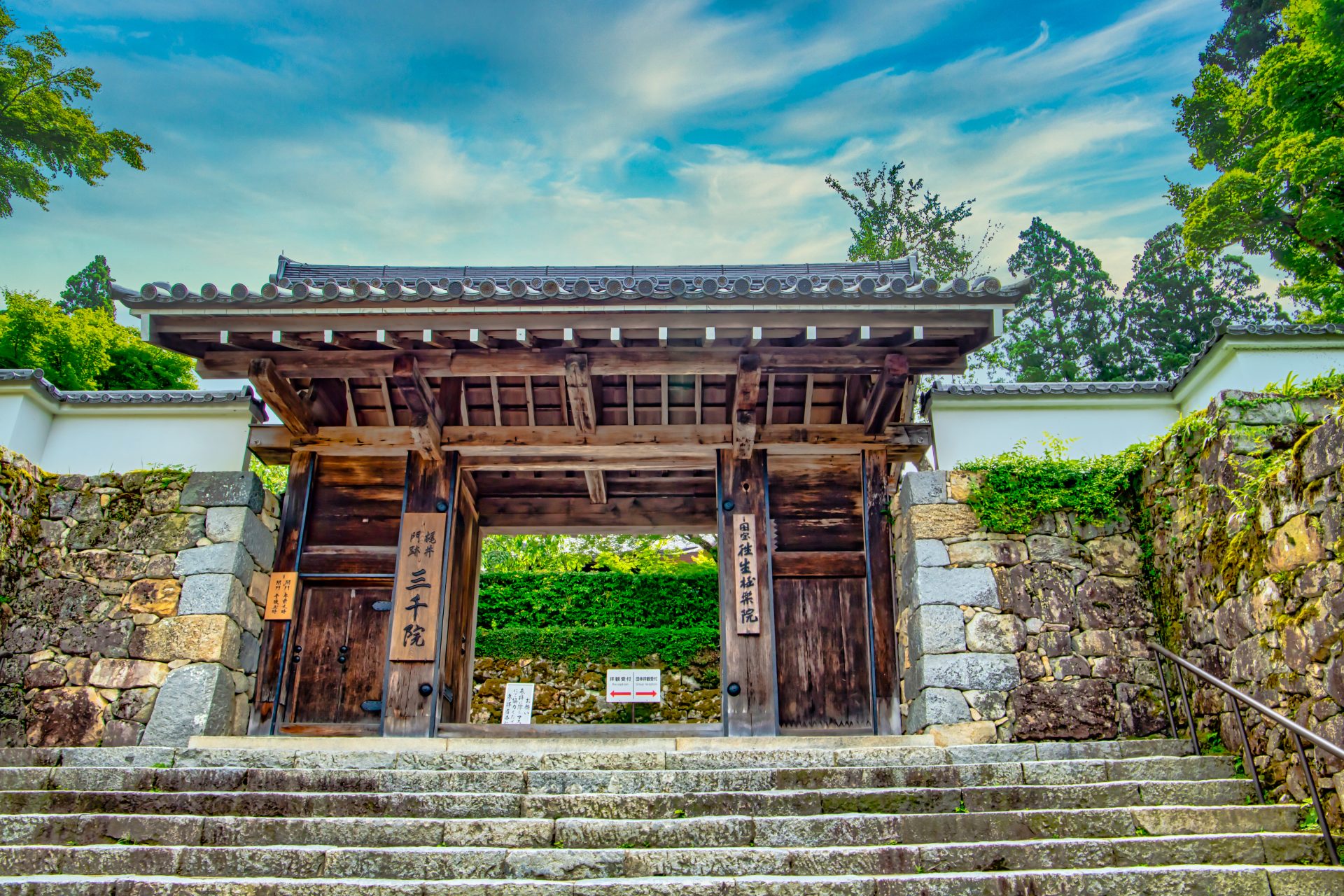
History of Sanzenin
Sanzen-in Temple was founded in the Enryaku era (782-806) by the great Buddhist missionary Saicho under a large prickly pear tree in the Minamidani of the East Pagoda of Mt. After the Meiji Restoration, Sanzen-in Temple continued to maintain its prestige even as the Kyoto area underwent transformations. At this time, the temple was moved to its current location in Ohara, where it has spun out its 1200-year history as "Sanzen-in.
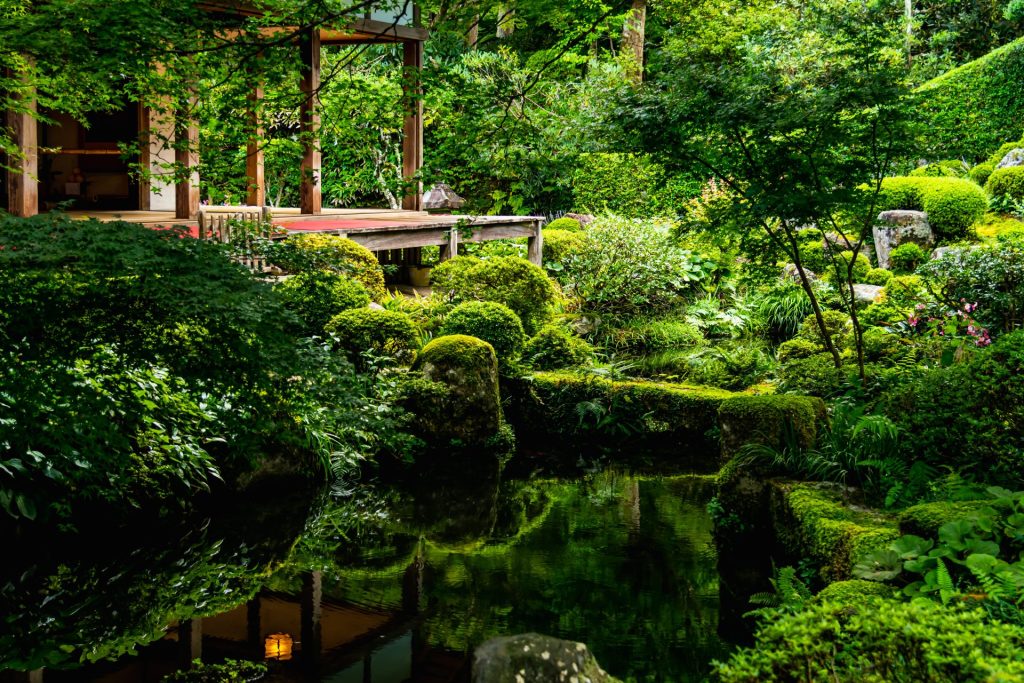
Over its 1200-year history, "Sanzen-in" has undergone numerous restorations and rebuildings, but its beauty and prestige have never changed. The spacious precincts of the temple are filled with elegant gardens and beautiful architecture, evoking a traditional Japanese sense of beauty.
Sansen-in Temple is also a temple of the Shingon sect of Buddhism. According to legend, Saicho was on his way up Mt. Hiei when he saw "three thousand figures" on a large rock, hence the name "Sanzen-in". Therefore, "Sanzen-in" has various Buddhist statues representing the "three thousand figures," and visitors can feel the teachings and history of Buddhism.
Such a historic "Sanzen-in" temple has maintained its prestige and beauty from the time of its founding by the great Buddhist priest Saicho until the present day. This temple, which has been protected through the efforts of successive generations of priests and devotees, has provided healing and inspiration to many people.
It is also an important venue for cultural events and exchanges, and serves as the center of the community.
The magnificent history and charm of Sanzenin will continue to be passed on to many more people.
Sanzenin Temple Highlights
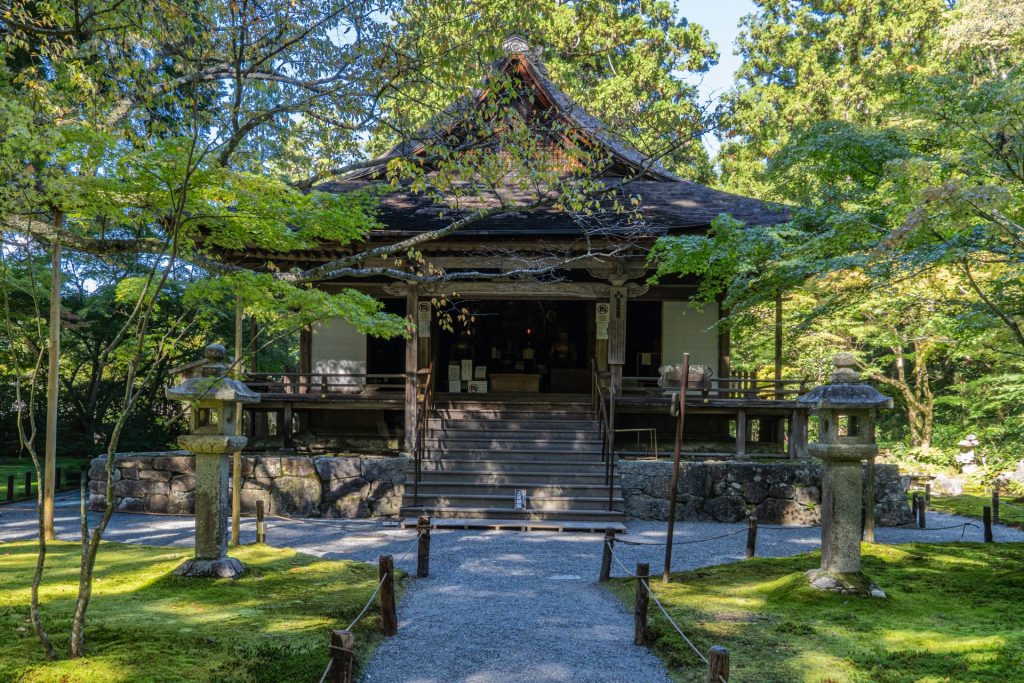
A stroll in the tranquility of the temple will reveal the many faces of Sanzen-in Temple, which stands against the beautiful scenery of the four seasons. Not only the buildings, but also the history behind them and the surrounding scenery are worth seeing.
Wara Wara Jizo Stone
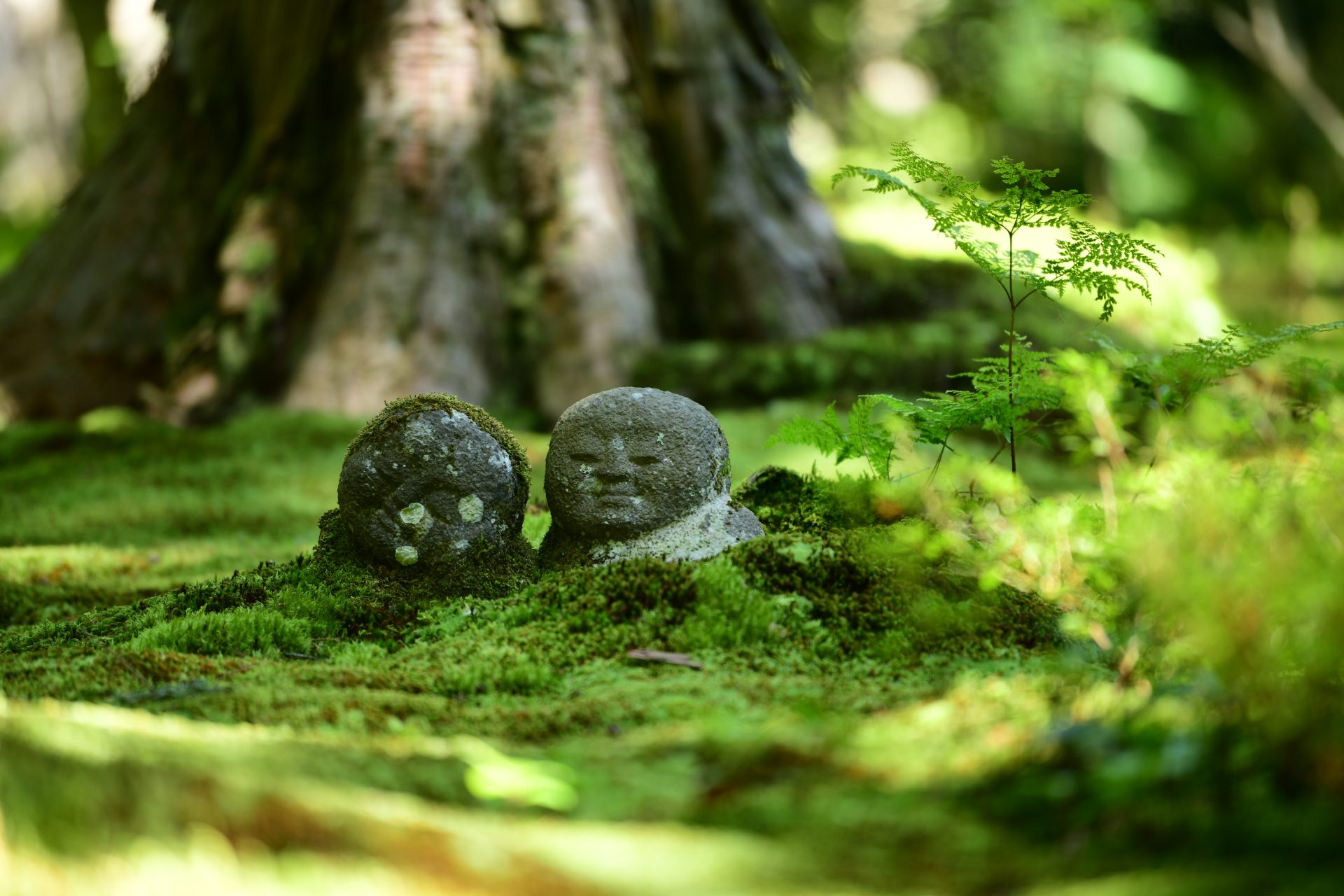
One of the highlights of the Sanzenin temple grounds is the "Warabe Jizo," a type of Buddhist statue that is believed to have been created by a Buddhist priest.
Finding and photographing various Jizo is one of the pleasures of walking around the area. Warabe Jizo are Jizoson built to pray for the safety and happiness of children. Their appearance is childlike and friendly.
Jizo statues of children of various ages and genders are lined up on the temple grounds, each with a lively expression on their faces. They symbolize the wishes and desires of children, and are believed to be beings that stand by their wishes and grant them fulfillment.
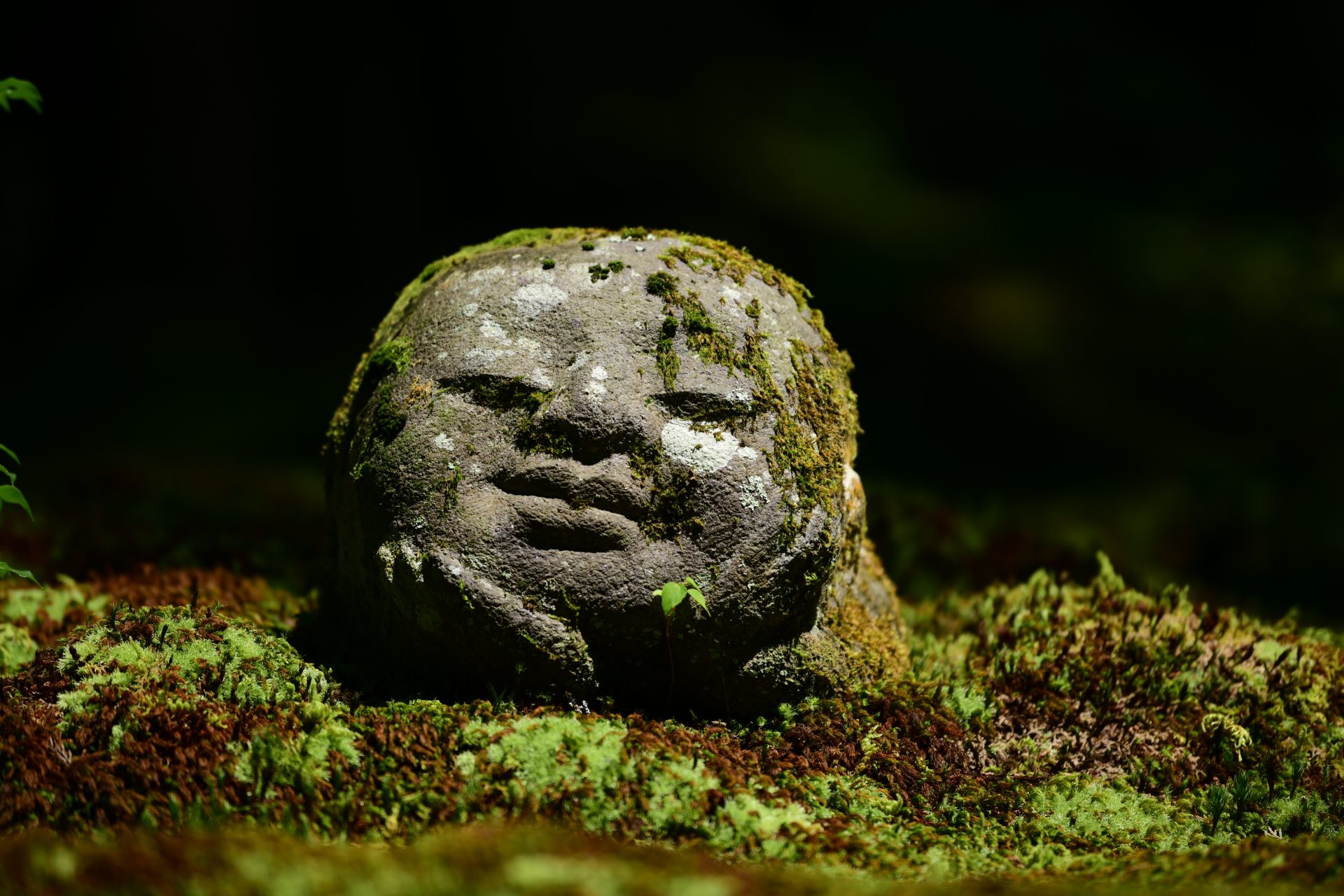
Visitors can make wishes to the Warabe Jizo. Children in particular are said to offer wishes for themselves and their loved ones, such as good health, improved academic performance, and safe growth.
When visiting the shrine, it is important to put one's hands together and make a heartfelt wish. Its cute appearance and the meaning of prayer bring peace of mind and hope to visitors, and it is a place to wish for the happiness of families and children.
Ajisaien
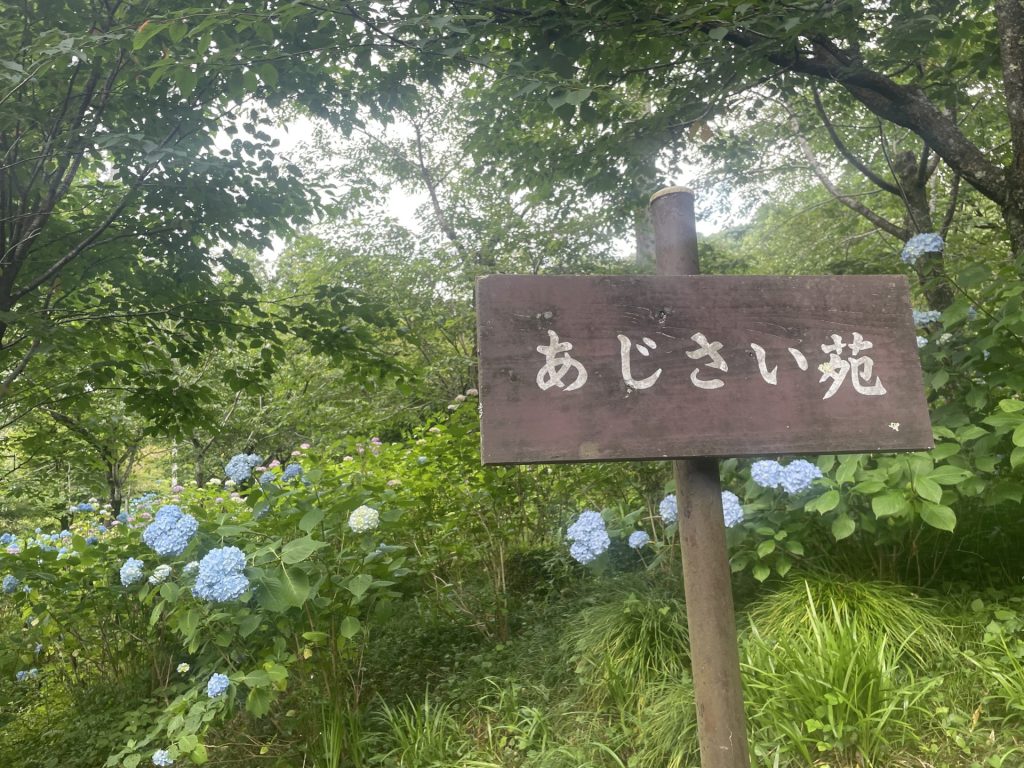
Ajisai-en is located in the precincts of "Sanzenin" and extends over a vast area of approximately 3,000 square meters.
The garden is especially at its best during the rainy season from June to July, when numerous hydrangeas bloom one after another and the grounds are brightly decorated with beautiful blue, purple, pink, and red flowers. The flowers vary in size and shape, offering a wide variety of beauty to the viewer.
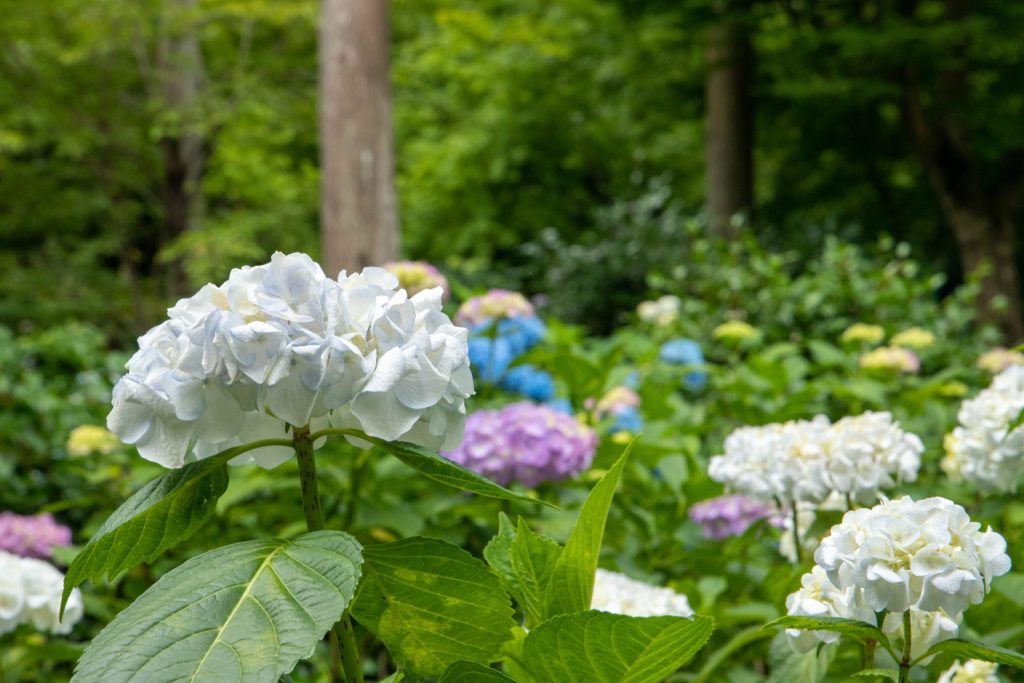
The sight of the hydrangea flowers swaying in the wind and the elegant contrast of colors bring a pleasant sense of healing to visitors.
This hydrangea garden holds the "Hydrangea Festival" during the rainy season. During this festival, the hydrangeas on the grounds are decorated more gorgeously, and musical performances and traditional events are held.
The hydrangea garden at Sanzenin is a special place for those who seek the beauty of flowers and peace of mind.
Wooooooooooooooooooooooooooooooooooooooooooooooooooooooooooo!
■Sanzenin
HP:http://www.sanzenin.or.jp/
Address: 540, Ohara Raigo-in-cho, Sakyo-ku, Kyoto
Phone: 075-744-2531
■Ohara Jakkoin
Jakkoin Temple is famous as the place where Kenreimonin, the tragic woman in the famous "Tale of the Heike," spent the rest of her life (too long to be called "rest of life" since she was so young ......) mourning for her son, the Emperor Antoku.
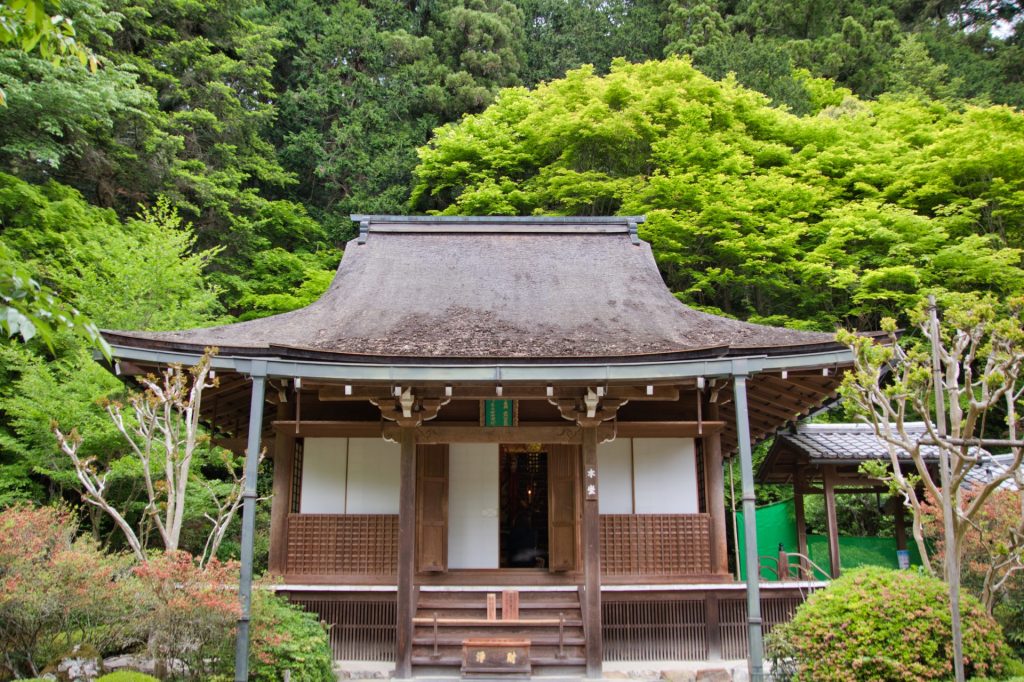
History of Jakkoin
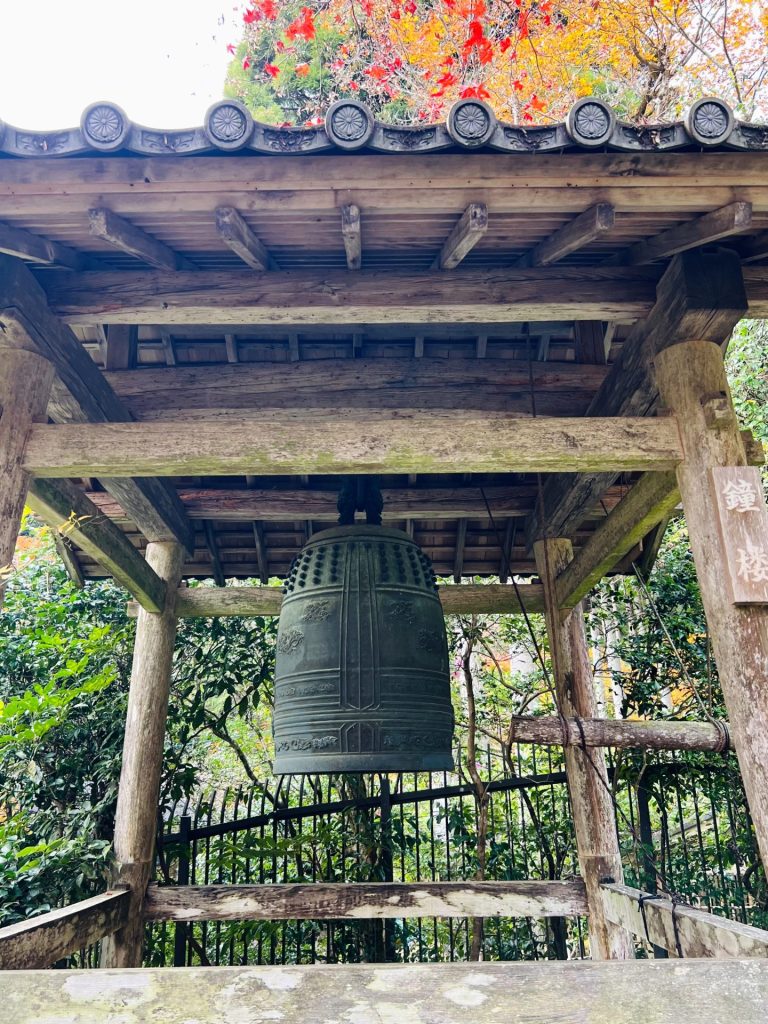
It is said to have been built in Suiko 2 (594) by Prince Shotoku to mourn the loss of his father, Emperor Yomei.
The temple experienced a period of devastation due to warfare and burning of temples during the Warring States period. Nevertheless, the Zen teachings and the pursuit of beauty have been passed on uninterrupted to the present day.
The third Kenereimonin (daughter of Taira no Kiyomori, middle consort of Emperor Takakura and mother of Emperor Antoku), famous in history, entered the temple in September 1185 and was called Shinnokaku baikoin (nun). After the defeat in the battle of Genpei, she lived quietly with her attendants at Jakkoin Temple for the rest of her life, mourning for the Heike clan that perished at Dannoura and her son, the Emperor Antoku.
In addition, Jakkoin Temple has been recognized for its cultural value in Japan and has been designated as a National Treasure and an Important Cultural Property. As a result, activities are underway to preserve and maintain the temple.
Jakkoin Highlights
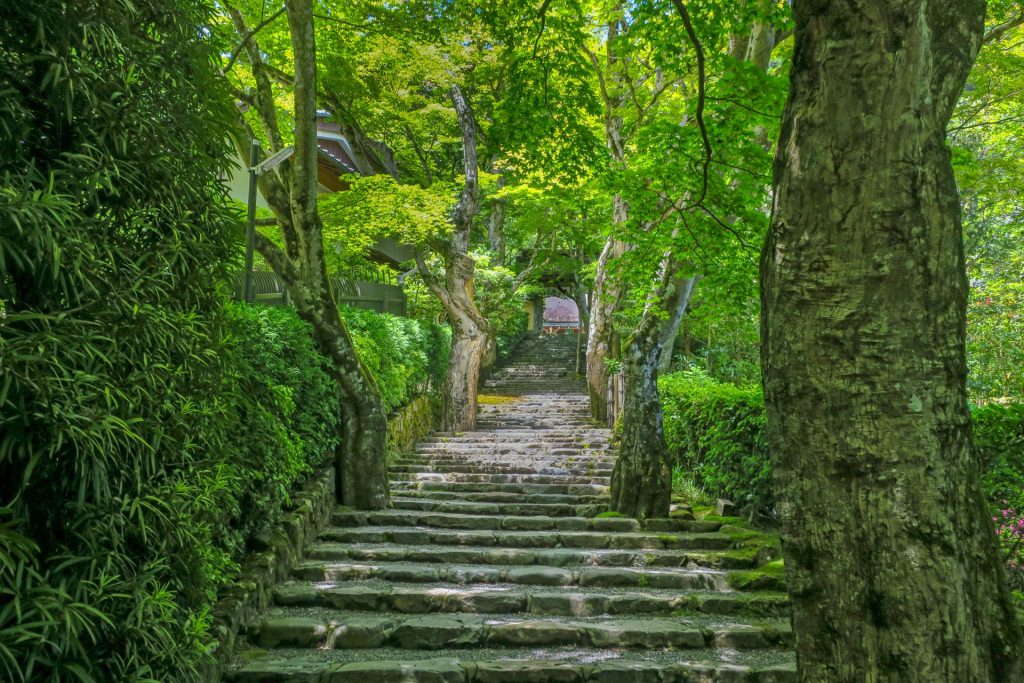
Walking in the opposite direction from "Sanzen-in", you will reach "Jakkoin". When you come to Ohara, you cannot miss "Sanzen-in" and "Jakkoin". They are loved by many people as attractive places where nature and history are interwoven.
The Tale of the Heike
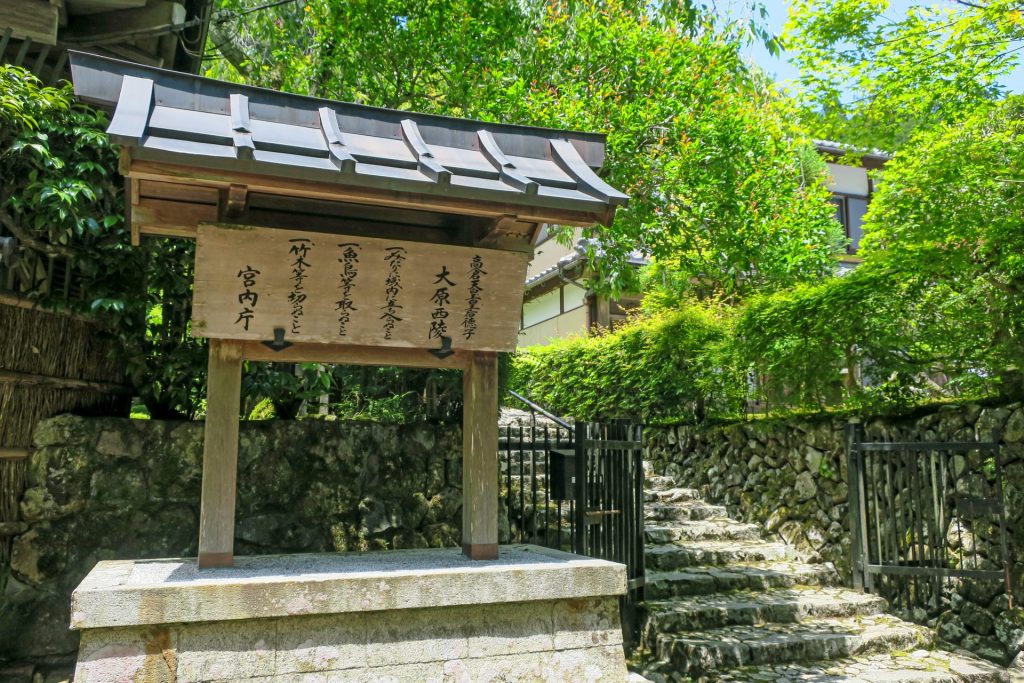
Jakkoin Temple is known as the temple associated with the Tale of the Heike. The elegant garden in front of the main hall to the west is also depicted in the tale, and appears in the "Ohara Gokou" of the Kanchou scroll, where Kenreimonin returns from picking flowers on Suizumozan (the mountain opposite the front of the main hall) in the spring of 1186, and meets the emperor Goshirakawa.
At first, Kenreimonin was puzzled by the sudden visit of the pope, but at the urging of his lady-in-waiting, Awa Naishi, who had a connection with Ohara-no-onna, they met face to face,
The Empress tells the story of the Heike clan's final days at Dannoura and the strange fate that befell them, thus bringing to a close this magnificent tale of the Heike clan's rise and fall.
In the precincts of the temple, you can feel the world of the Tale of the Heike in harmony with nature.
Wooooooooooooooooooooooooooooooooooooooooooooooooooooooooooo!
■Jakkoin
HP:https://www.jakkoin.jp/
Address: 676 Ohara Kusocho, Sakyo-ku, Kyoto City
Phone: 075-744-3341
■Side roads and slopes
When you arrive in Ohara, please walk around. It is a real pleasure to discover small shrines, little side streets, and slopes that you may not find unless you walk.
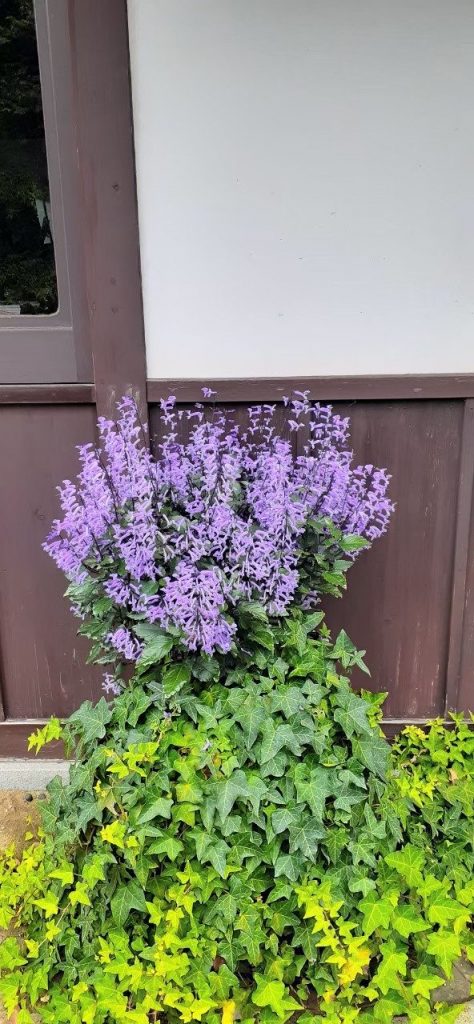
Sanzenin Temple and Jakkoin Temple are very famous, but there are of course many other temples and shrines.
Ohara is dotted with historical temples and cultural heritage sites. In addition to temples and shrines, you will find rivers, waterfalls, fresh water, and the graves of interesting characters for those who love the Heike Monogatari period.
The area around Ohara has a townscape that can be explored on foot, allowing visitors to fully enjoy the atmosphere of Kyoto as it used to be.
The Way of Hibiki
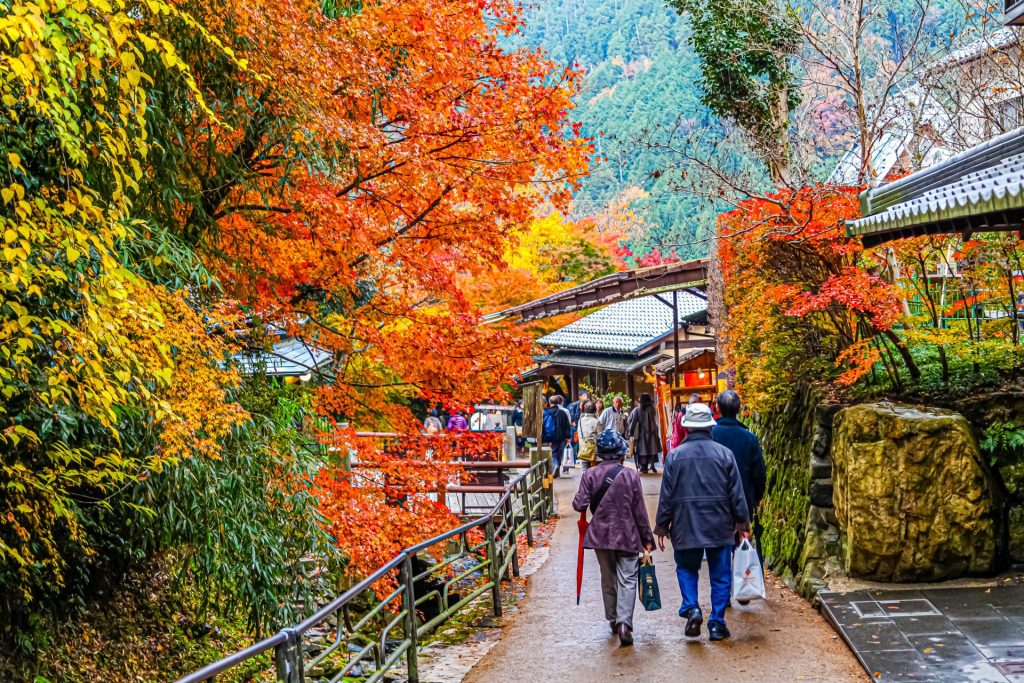
The "Hibiki no Michi" is a 2-kilometer walk from Ohara to Sanzenin Temple.
The name comes from the sound of footsteps that once echoed through the trees as one walked along this path.
You can enjoy the pleasant scenery as you walk through nature while enjoying its quiet sounds.
The Way of the Flowers
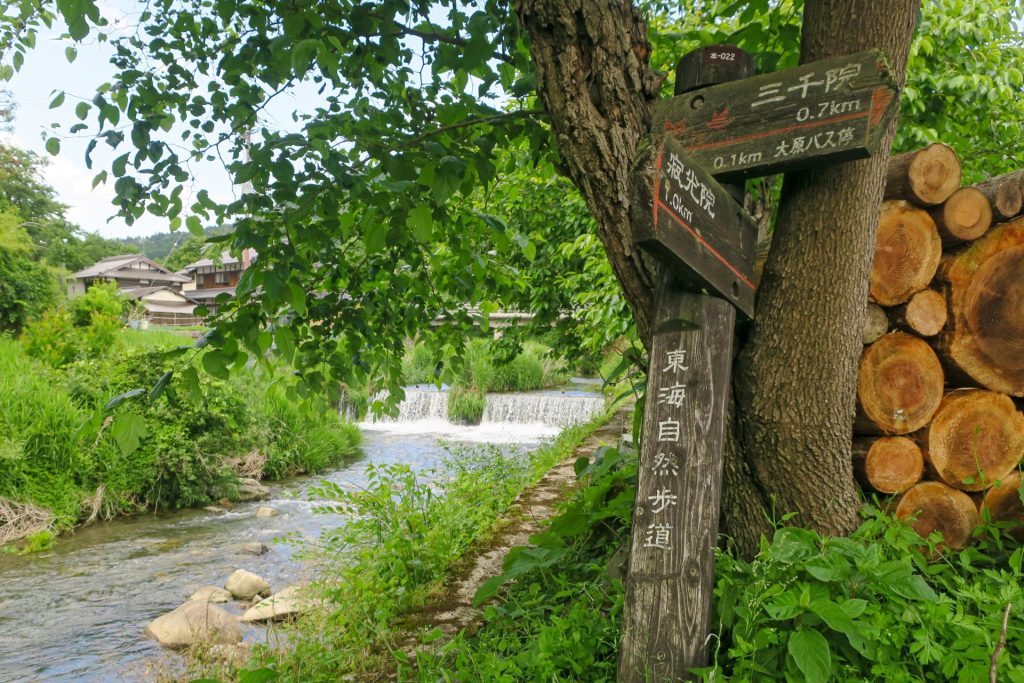
The next route leads to Jakkoin, where Kenreimonin lived.
The Ohara Women's Lane is the site of the Ohara Women's Festival, held every year in late April, in which a procession of Ohara women of different eras parades through the streets from Jakkoin Temple to Sanzenin Temple. The highlight of the parade is the procession of women dressed in different Ohara Women's costumes for each period of time, which runs from "Jakkoin" to "Sanzenin".
[Oharame]
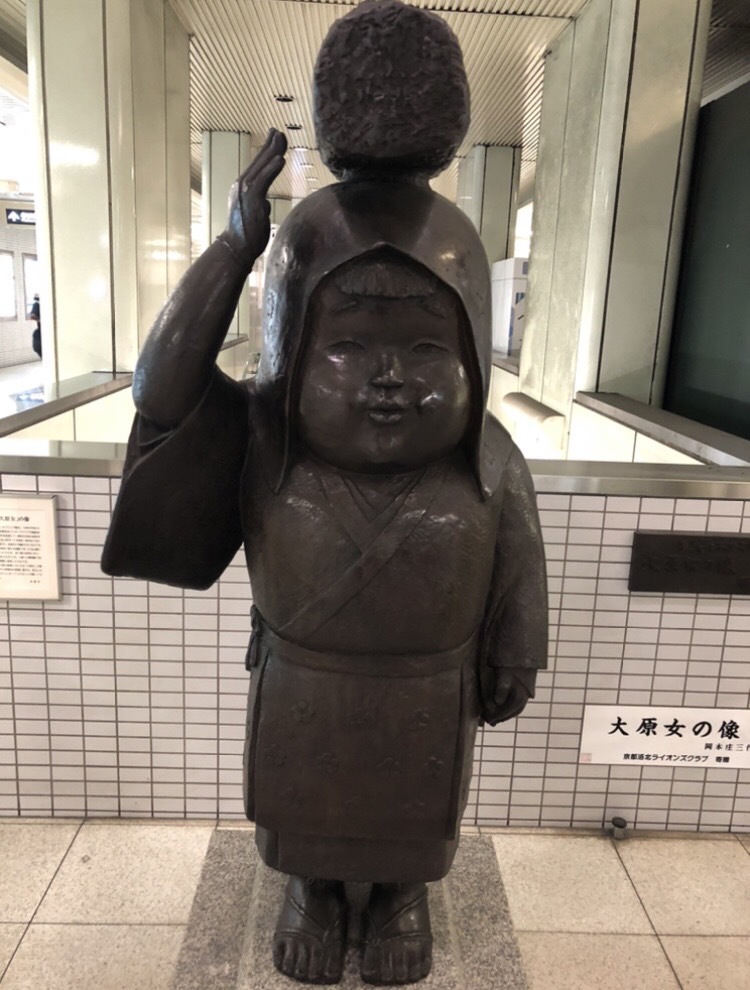
Ohara women were Ohara working women who carried a "bush" on their heads and went to Kyoto to peddle their wares during the Edo period.
In the Heian period (794-1185), Ohara women handled "charcoal" and in the Muromachi period (1333-1573), "firewood" was handled, and they also appear in the Jidai Matsuri, one of the "three major festivals in Kyoto". In the Showa period (1926-1989), they changed to selling "Shibazuke" (pickles with shibazuke) in a cart.
■The Four Seasons in Ohara
Ohara in Kyoto is a charming satoyama that is a perfect blend of Japanese tradition and natural beauty. With beautiful gardens, visitors can enjoy seasonal flowers and foliage. Experience the Japanese sense of beauty as it changes with the seasons.
You will be welcomed by a quiet environment away from the hustle and bustle of the city center. Walking along the cobblestone pathways, listening to the chirping of birds and the rustling of the wind, you will be released from the hustle and bustle of daily life.
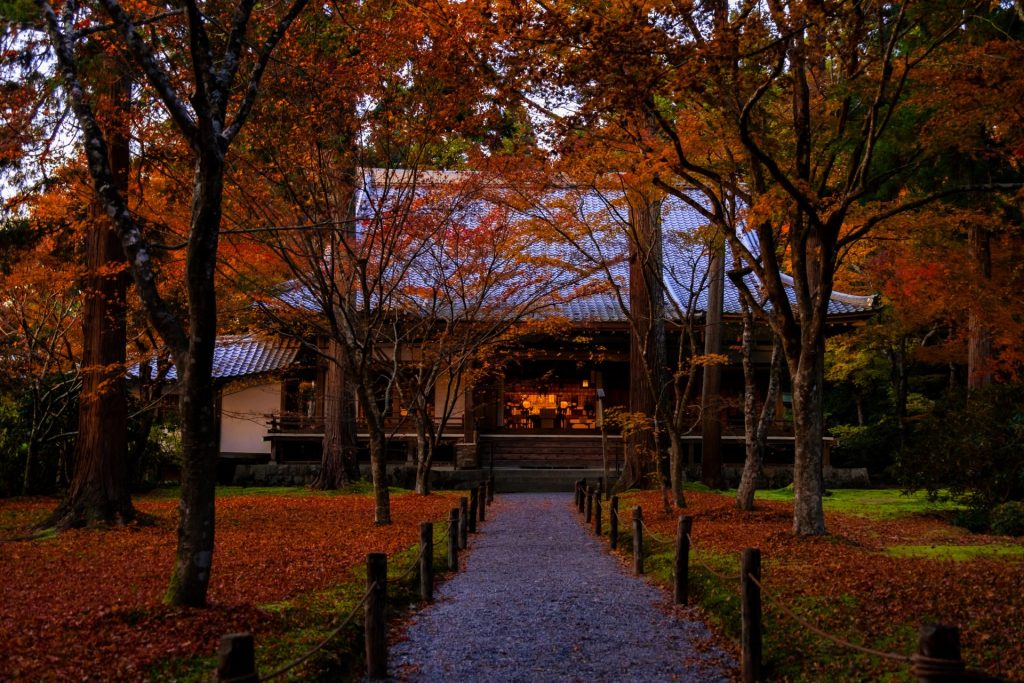
Kyoto in the cherry blossom season is exceptional.
Kyoto in autumn leaves is also wonderful.
Kyoto is also hot and humid in summer.
Kyoto in the cold winter also has a maniacal charm.
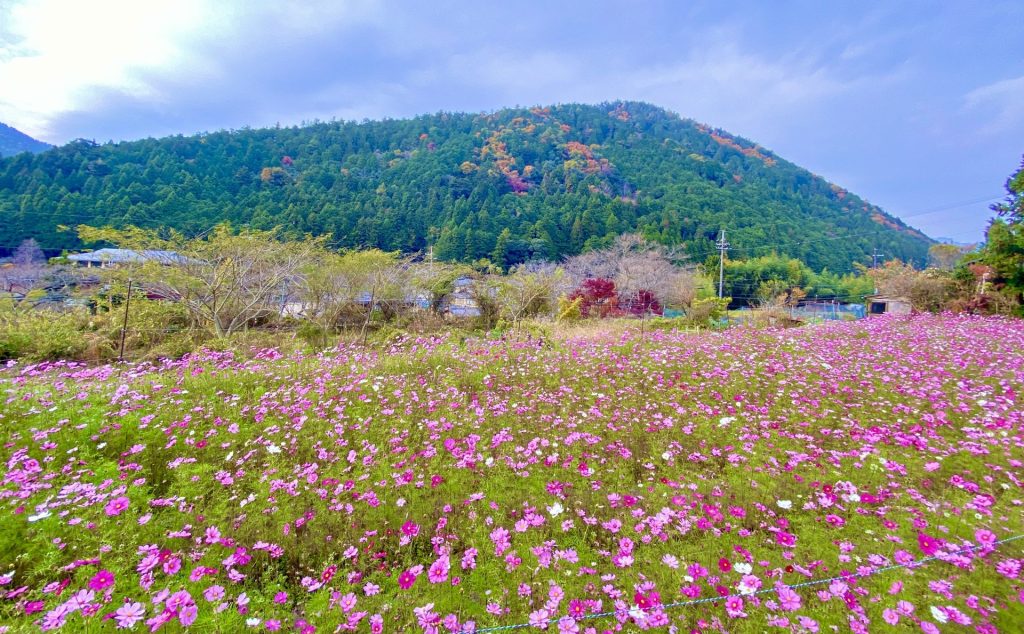
Autumn is the best time to visit Ohara, according to the author's preference.
Cosmos flowers can be seen everywhere. Even though the autumn leaves are not as spectacular as the autumn foliage, the withered appearance of the trees is also very atmospheric.
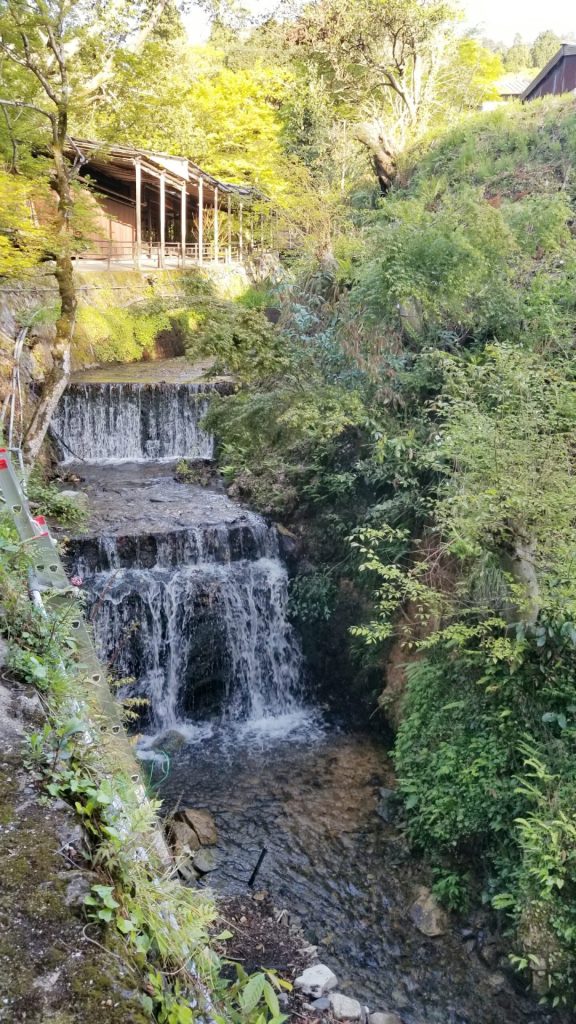
This is "Rokawa" from the song "Ohara no Sato" by a Showa-era folk group called "Ume Matsuri.
Is it read as "rogawa", "ryosen", or both? There may be no name ...... around it, but there is also a small river in Hobo.
Ohara around the time of "Haru no Ogawa wa Sarasara Ikuyo" is also nice. Dandelions, tsukushis, and other lovely wild flowers. The scenery, which cannot be experienced in the city, is wonderful. Especially in summer, you can enjoy the cool breeze blowing through the area.
The authors of Ohara sightseeing guide books and websites have different opinions about when is the best season to visit Ohara, so it would be great if you could visit in all four seasons and find your favorite season.
1. weeping cherry blossoms at Sanzenin Temple in Ohara in spring
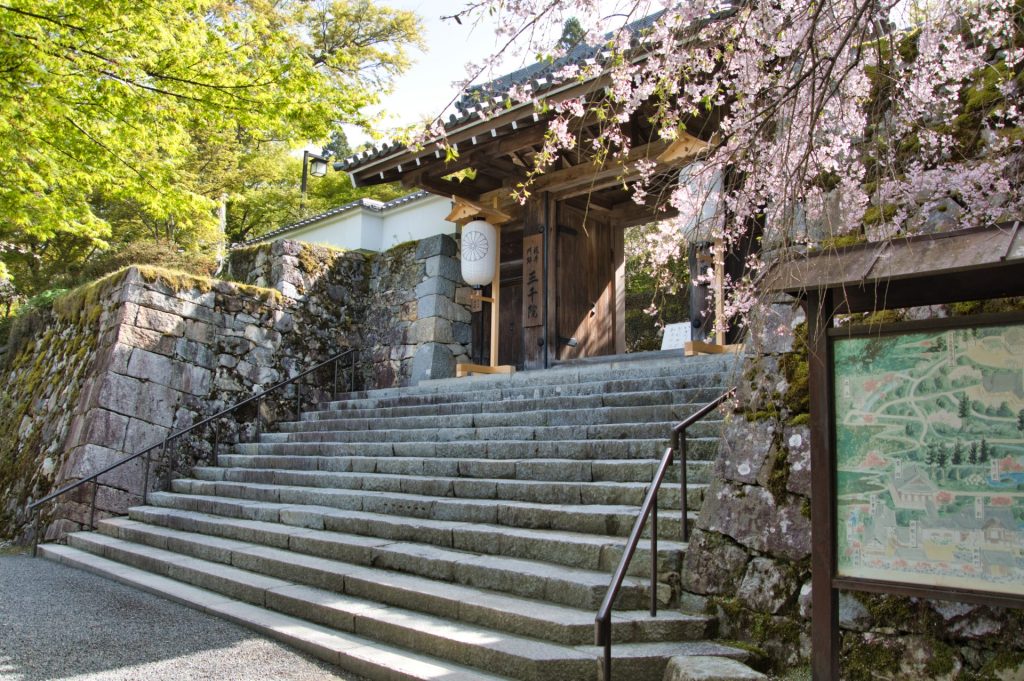
Spring is the time for cherry blossoms. Kyoto's cherry blossoms are now world-famous. For those who want to see a different view this year, the weeping cherry blossoms at Ohara Sanzenin Temple may be called the "hole-in-the-wall" cherry blossom viewing spot. You can view the cherry blossoms in front of the gate and in the inner sanctuary. The best time to view the cherry blossoms is usually around mid-April, but please check the latest information when you visit.
2. summer in Ohara "red shiso memorial service
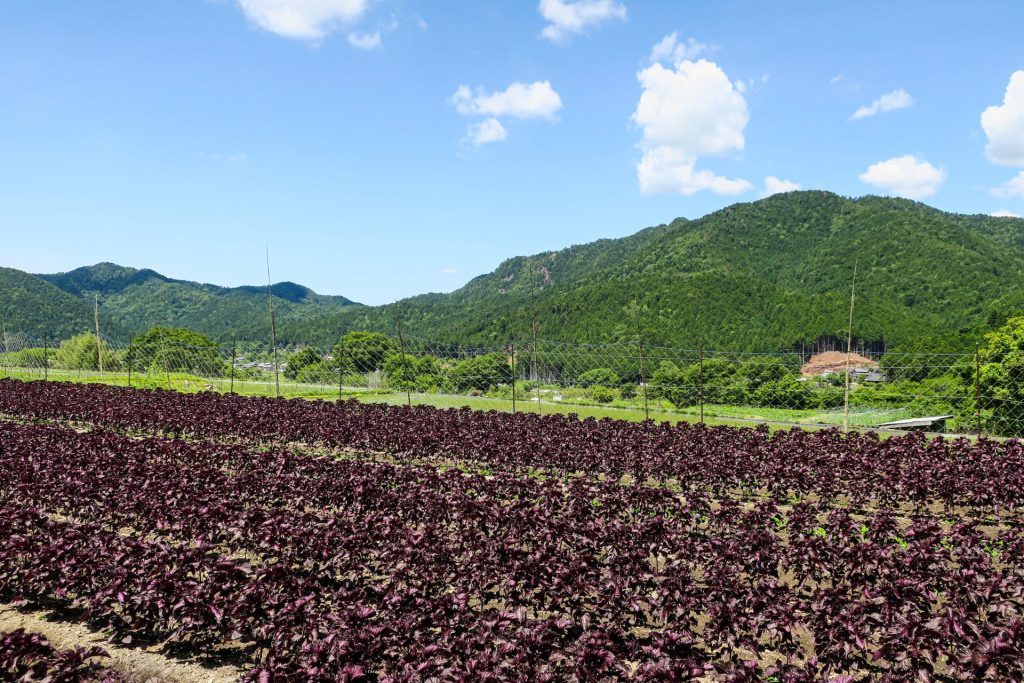
In July, the leaves of the red shiso field, the raw material for one of Ohara's specialties, "shibazuke," grow thick and the "red shiso" stacking experience and sales begin.
On July 1, the "Aka-Shiso Buddhist Memorial Service" will be held at Jakkoin Temple. Shibazuke" is said to have been invented by the monk Seio Daishi of Sanzenin Temple, and its name is said to have originated from Kenrei-mon'in Temple. When local residents presented Kenreimonin, who was living quietly at Jakkoin Temple in Ohara, with pickles made from shiso, he was delighted with the taste. The local people were so pleased with the taste that they named the dish "Murasaki haazuke" (purple leaf pickles) after the bright purple color.
At Jakkoin, the "birthplace of Shibazuke," red shiso of the year is offered to pray for a good harvest, local prosperity, safety, and health. Worshippers can also attend the ceremony, so it may be a good idea to time your visit accordingly.
3. the framed garden at Hosenin in Ohara in autumn
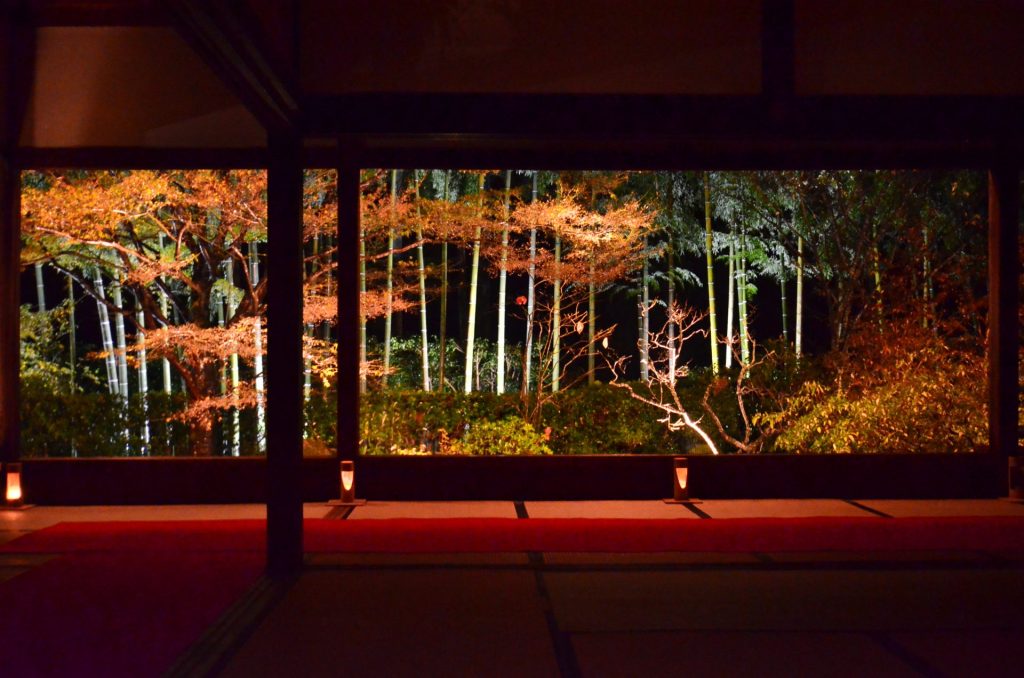
Along with the cherry blossoms in Kyoto, tourists from all over the world visit Kyoto for the autumn foliage. The autumn season is the perfect time to visit Kyoto. The view of the frame garden from the guest hall of "Hosenin" in Ohara, where there is a famous 700-year-old tree in the shape of Omi Fuji, is exceptional.
The best time to view the fall foliage is typically from mid- to late November. Before the COVID-19 pandemic, nighttime viewings with illuminated foliage were held, but you’ll want to check to see if they’ve resumed.
Ohara in winter "Hatsuuma Daikon Bonfire
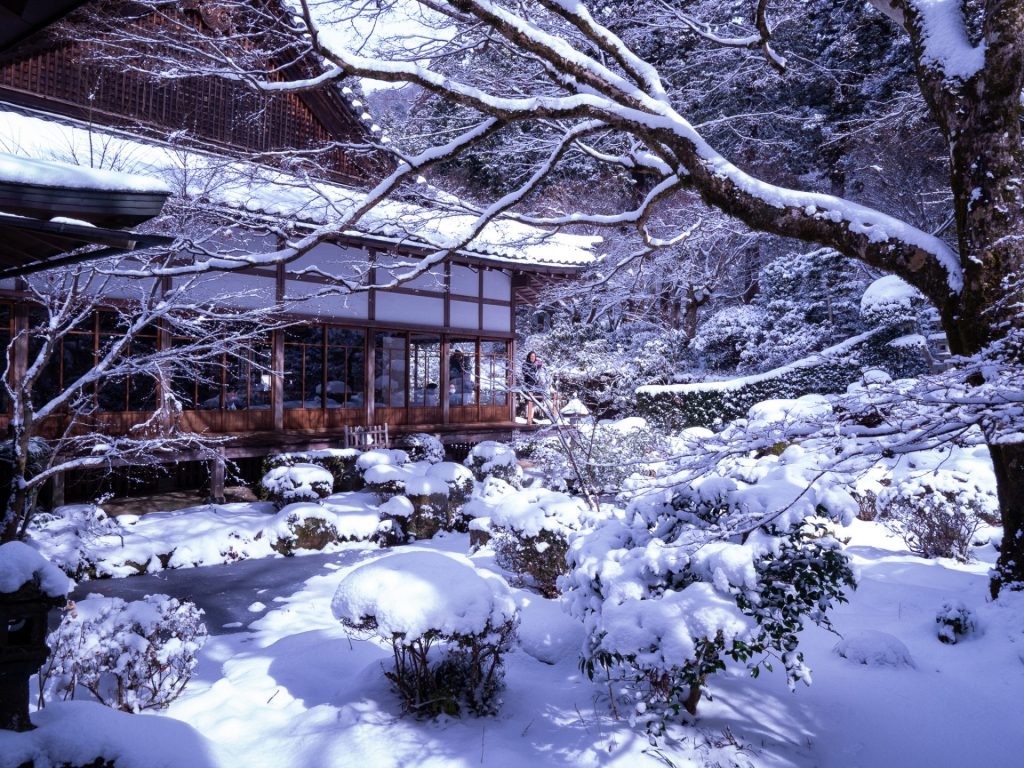
In Ohara, you can experience satoyama winter. When the snow falls, it has a different flavor. Ohara, with its rich history and culture, is a special place that offers visitors a heartwarming experience and a fascinating taste of Japan.
It is also good to visit for Ohara vegetables in winter.
Every year in mid-February, "Hatsuuma Daikon Daki" (burning of daikon radish) is held at "Sanzenin" to entertain worshippers. Also called "Daikon burning for happiness," the purpose of this event is to pray for good health, good fortune, and good luck for all visitors by tasting daikon radish that has been specially prayed for so that they may receive the blessing and fortune of the Golden Fudo Myoo, the God of prosperity and gold. The hot daikon radish is the best way to pray for a happy new year.
Ohara's specialty - Shibazuke (pickled shibazuke)
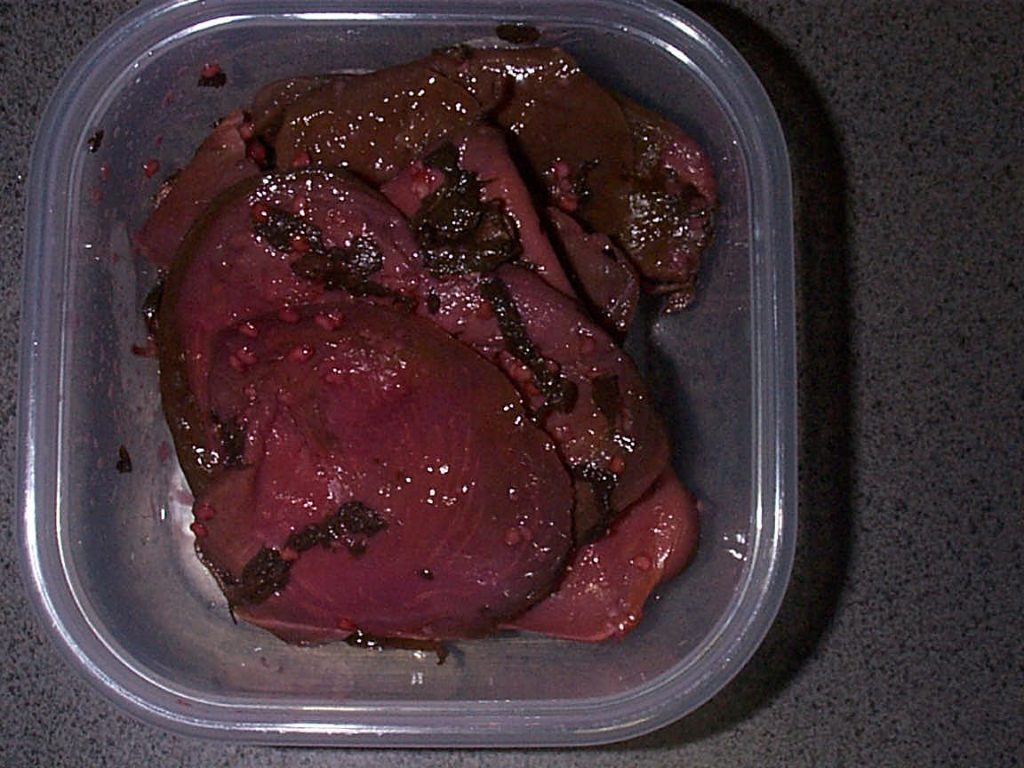
Even if you are not interested in temples, there are many old souvenir shops, new cafes, and stores selling Shibazuke (Japanese pickles) and folk crafts that will make you stop in your tracks.
Shibazuke" is a specialty of Ohara, and is sold at many stores here and there. Some of these stores have been in business for decades. You may be able to hear stories about Ohara in the Showa period from the shopkeepers.
1. doi shibazuke honpo
Founded in 1901 (Meiji 34), this store has already been in business for more than 100 years and has a nationwide presence. There is also a branch in Kyoto Station, but it is nice to buy souvenirs in the home of "Shibazuke". It would be nice to buy souvenirs in the village of "Shibazuke".
There is also a restaurant, "Kogama Kikkoman Gohan Yui," where you can enjoy the luxury of "Shibazuke" with hokkori tasty rice and side dishes.
Wooooooooooooooooooooooooooooooooooooooooooooooooooooooooooo!
Doi Shibazuke Honpo
HP:https://www.doishibazuke.co.jp/shop/123/
Address: 41 Hanajiri-cho, Yase, Sakyo-ku, Kyoto
Phone: 075-744-2311
2. Tsuji Shibazuke Honpo
Tsuji Shibazuke Honpo, located on Kaze no Michi, is a store that handles the entire process of shiso production from cultivation to pickling and sales.
You can also purchase Ohara's "Nama Shibazuke," which is now rare and made by a limited number of manufacturers. The simple taste of eggplant and red perilla pickled with only salt is characterized by the sourness resulting from lactic acid fermentation.
Wooooooooooooooooooooooooooooooooooooooooooooooooooooooooooo!
■Tsuji Shibazuke Honpo
HP:https://tsujishiba.com/
Address: 483 Ohara Ueno-cho, Sakyo-ku, Kyoto-shi, Kyoto
Phone: 075-744-2839
Further afield, you can visit Lake Biwa.
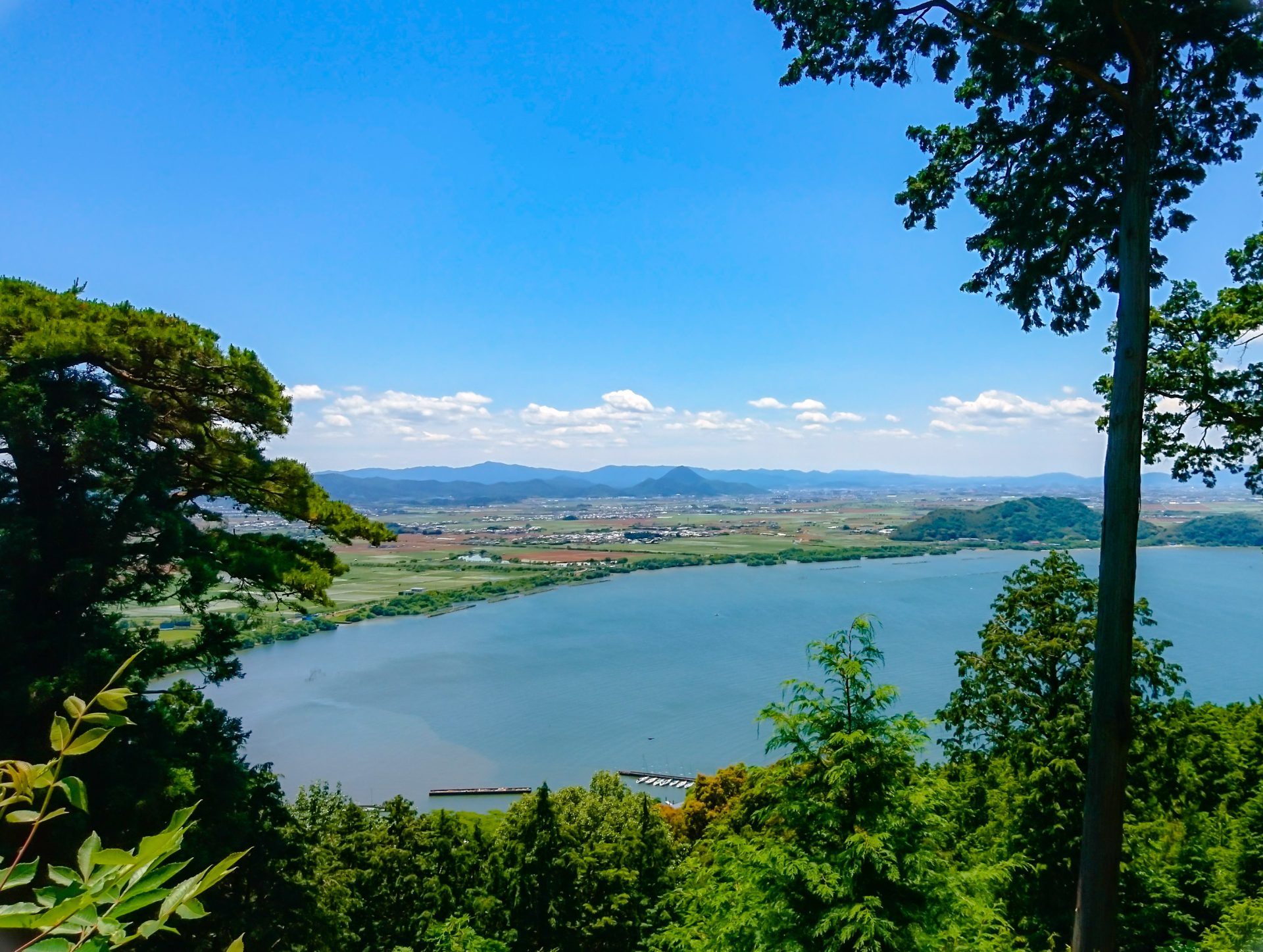
If you go further, you will enter Shiga Prefecture. Shiga, another but neighboring prefecture, is easily accessible from Kyoto, and of course, Lake Biwa can be seen.
The majestic and peaceful Lake Biwa is always a soothing place to visit. It sits in the middle of Shiga, so no matter where you are driving, you will always be able to see it, which is a great relief.
In summer, the area is popular for swimming, camping at a nearby lodge, barbecues, and trips with children, and in August, the Lake Biwa Fireworks Festival in Otsu attracts many visitors.
If you are going by rental car, this is a recommended stopover plan. After sightseeing in Ohara, you can stay overnight in Shiga.
■ Summary
How was Ohara no Sato? I would be happy if you could add it to your list of ideas for your next visit to Kyoto. We would be happy if you could add it to your list of ideas for your next visit to Kyoto.
The charm of the satoyama is different from the sightseeing spots in the center of Kyoto City, and you may feel that Kyoto City is also a big place.
Ohara has many traditional local restaurants and teahouses, offering abundant opportunities to experience local tastes and culture.
It may be more emotional to touch the Ohara women in Ohara and see them at the Jidai Matsuri, one of the "three major festivals in Kyoto" held in autumn.
Surrounded by lush nature, you can enjoy different scenery in each season, so be sure to make plans according to the time of year.


