

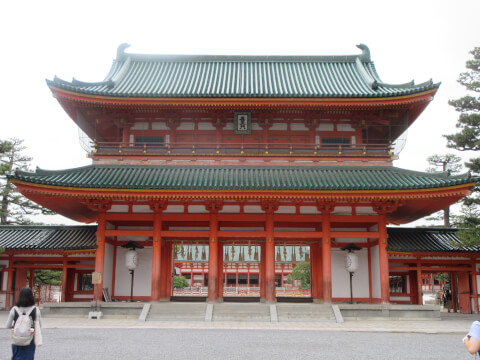
Heian Jingu Shrine in Kyoto was founded in 1895.
Built to commemorate the 1,100th anniversary of the relocation of the capital to Heian-kyo, it is a relatively new shrine among the many old shrines in Kyoto.
The Otorii gate is 24 meters high and 18 meters wide, and highlights include Daigoku-den and Otenmon, which are designated as national important cultural properties.
So what kind of place is Heian Jingu Shrine in Kyoto, which is familiar to many people in Kyoto?
We will introduce its history and highlights.
Table of Contents
■What is Heian Shrine in Kyoto?
■Highlight of Heian Jingu Shrine, Kyoto
■We would like to see the three major festivals in Kyoto! What is Jidai Matsuri?
■ Summary
■What is Heian Shrine in Kyoto?
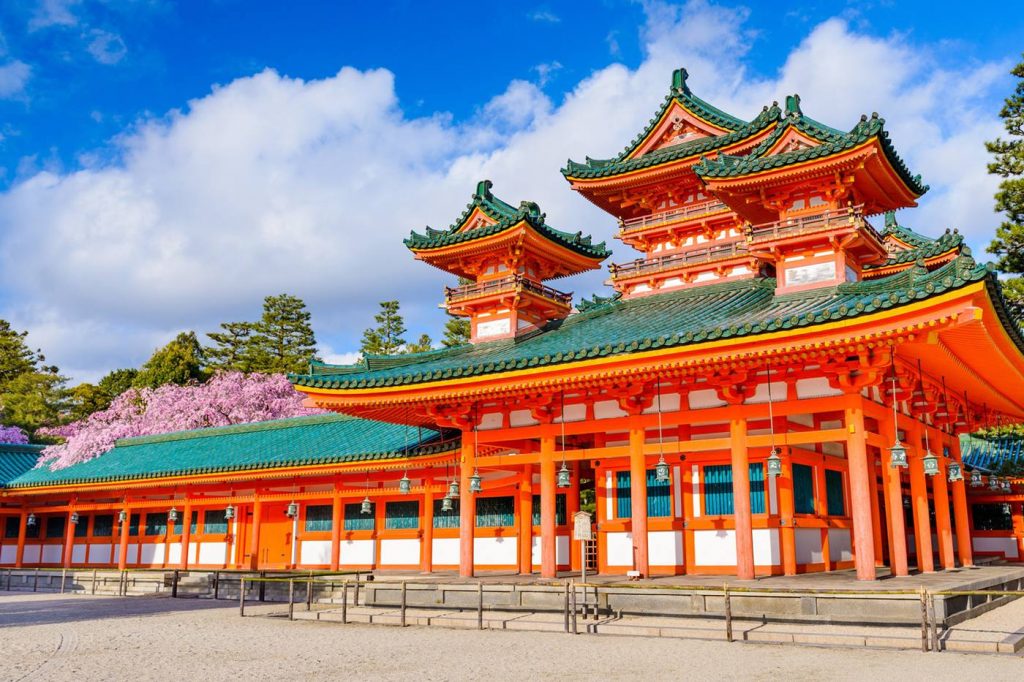
Heian Shrine was built in 1895 to commemorate the 1,100th anniversary of the relocation of the capital to Heian, and was dedicated to Emperor Kammu, the 50th Emperor of Japan.
At the time, the war in the closing days of the Tokugawa Shogunate had left the city of Kyoto in ruins, and the Meiji Restoration had moved the capital to Tokyo, which was a very shocking event for the citizens of Kyoto.
Despite these circumstances, the Heian Jingu Shrine was created as a result of the enthusiasm of citizens and support from all over Japan for the revival of Kyoto, so that Kyoto, which flourished for more than 1,000 years, could continue to be handed down to future generations.
Later, in 1940, the spirit of Emperor Komei was enshrined together, and the shrine came to be revered as an Oyasama Shrine.
■Highlight of Heian Jingu Shrine, Kyoto
Here are some of the highlights of Heian Jingu Shrine that you should not miss even within its spacious grounds.
○Otorii

The symbol of Heian Shrine is the Otorii Gate.
Completed in 1929, it was the largest torii gate in Japan at the time of its construction, measuring 24 m in height and 18 m in width.
This construction began in reinforced concrete in 1928, when the Emperor Showa ascended to the throne and it was decided to build a torii gate at Heian Jingu Shrine.
It is now designated as a registered tangible cultural property.
Otenmon Gate
The 18.43-meter-high Otenmon Gate was built based on the Etenmon Gate of the Heian-kyo Chodoin.
Designated as a national important cultural property, it is a two-story tower gate with a vermilion gate that is very colorful.
○Daigoku-den
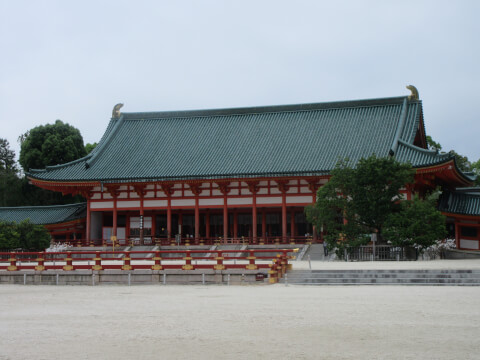
Daigoku-den Hall was designated as a National Important Cultural Property in 2010.
Built in 1895, it was restored in a five-eighths scale, modeled after the Daigoku-den, the main hall of the Chodoin (朝堂院).
The Daigoku-den Hall was used for ceremonies such as the coronation of the emperor.
And on either side of the front courtyard of Daigoku-den
Cherry blossoms of Sakon
Cherry blossoms in Ukon
are planted.
These are the abbreviated names for the Left and Right Konservatory.
Plum trees were planted at that time when the capital was moved to Heian-kyo, but they were destroyed by fire in Tentoku 4, and cherry trees were planted to carry on the tradition to the present day.
XXII Shinen-en
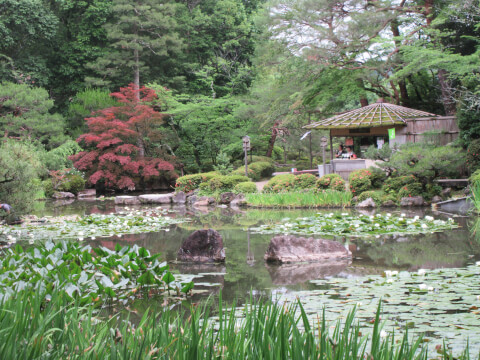
The Shinen Garden was created in 1895 by Jihei Ogawa, a famous landscape architect who created Maruyama Park and other famous gardens, over a period of more than 20 years. It is a typical Japanese garden of the Meiji era, with a total area of approximately 33,000 m2, and was designated a Place of Scenic Beauty by the Japanese government in 1976.
Shinen is,
South Goddess of the Garden
West Deien
Naka Shinen
East Goddess of the Garden
and consists of four gardens,
Minami-shinen Garden is known for its yaeveni weeping cherry trees, and is also famous for its plantings of plants and trees that appear in the Kokin Wakashu and Taketori Monogatari (The Tale of Taketori).
The West Garden is beautiful with water lilies, and the East Garden is a garden representative of the Meiji era.
The Garyu Bridge, with its distinctive stepping stones, is located in the Naka Shinen Garden and is named after a reclining dragon. The stepping stones can be crossed during certain periods of the year.
Each offers beautiful natural scenery, and you will want to visit in every season.
■We would like to see the three major festivals in Kyoto! What is Jidai Matsuri?
The Jidai Matsuri is held as the grand festival of Heian Shrine.
Jidai Matsuri is one of the three major festivals in Kyoto that carry on the history and traditions of the city, and is held annually on October 22 (postponed in case of rain).
This festival, which began in 1895, is a representative autumn festival in Kyoto and commemorates the founding of Heian Shrine and the relocation of the capital to Heian-kyo. The Heian Jingu Shrine was built as the culmination of efforts to revitalize the city of Kyoto, which was then in decline due to the Meiji Restoration, and the festival began as an expression of the enthusiasm of the people who gathered there for Kyoto.
During the Jidai Matsuri, approximately 2,000 people walk approximately 2 km in period costumes, led by taiko drums and flutes played by the Ishin Kinno-tai.
■ Summary
In this issue, we introduced the highlights, history, and Jidai Matsuri (festival of the ages) of Heian Jingu Shrine in Kyoto.
Please visit Heian Jingu Shrine, the symbol of Kyoto's revival, with its Otorii gate and Daigoku-den Hall, an important cultural asset of Japan, as well as other highlights of the city.
Facility Name:Heian Shrine
HP:http://www.heianjingu.or.jp/
Address: 97 Okazaki Nishitenno-cho, Sakyo-ku, Kyoto
Access: Heian Jingu City Bus No. 5 from JR Kyoto Station to "Okazaki Koen Art Museum, Heian Jingu-mae", about 5 minutes on foot.


Related PostRelated Articles
Pilgrimage to Kyoto, the holy place of "Kyojyu Caricatures"! List [Summary
Kyousou Giga (京騒戯画) is an anime that has been broadcast since 2013. Kyoto is used as a model everywhere [...].
Pilgrimage to Kyoto and holy places in "Kyoraku Region"! List [Summary
One story appeared in Comic Blade BROWNIE, which was released on December 10, 2008, and all five volumes of the book were released [...].
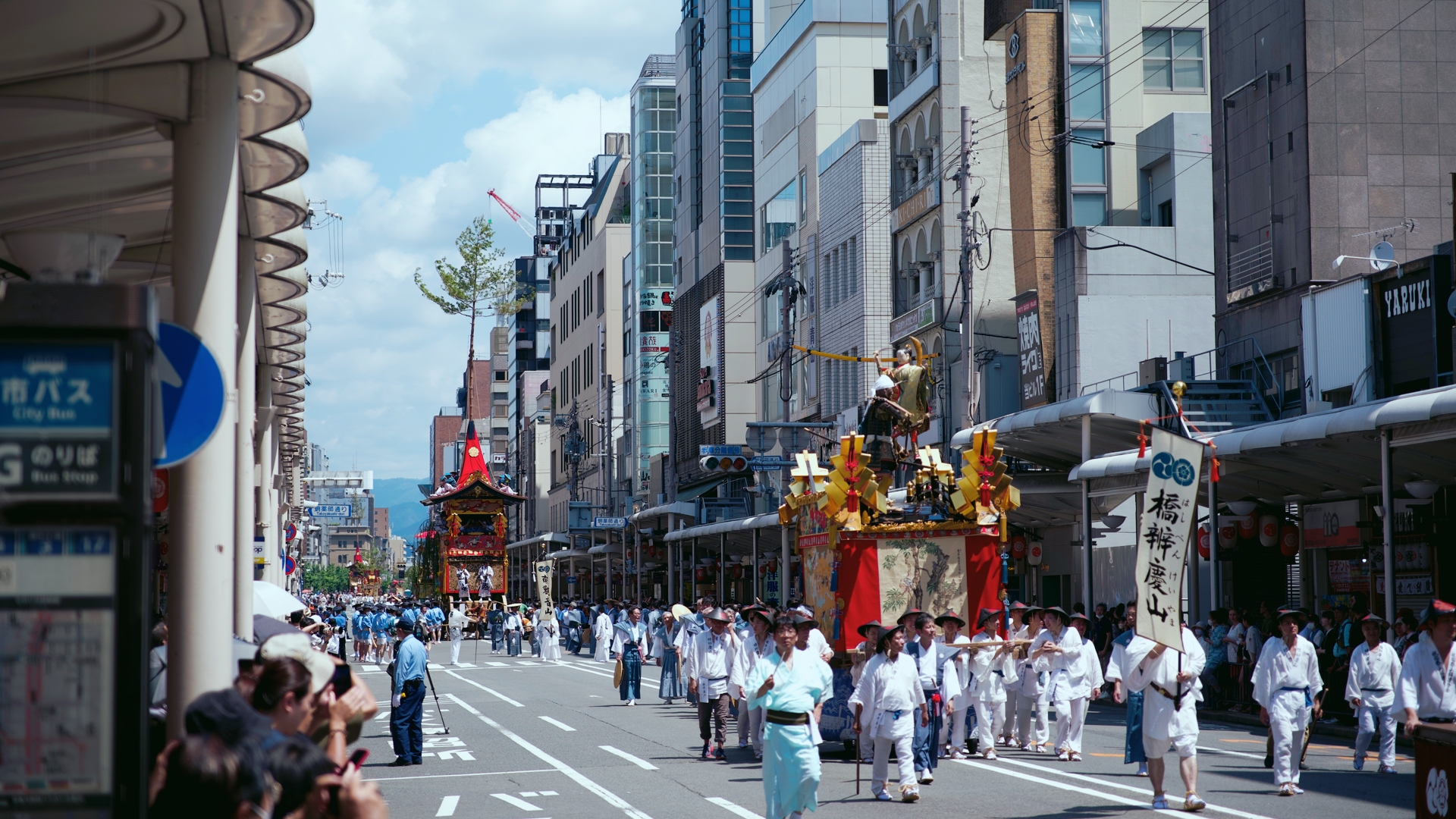
What are the three major festivals in Kyoto? Explaining the characteristics and history of each
Do you know about the three major festivals in Kyoto? In Kyoto, there are three festivals called Aoi Matsuri, Gion Matsuri, and Jidai Matsuri.
5 recommended hotels in Kyoto where you can enjoy sightseeing and swimming pools
When you come to Kyoto, you want to leave behind wonderful memories here and there. However, depending on the season, you may want to "take a break" at a hotel [...].
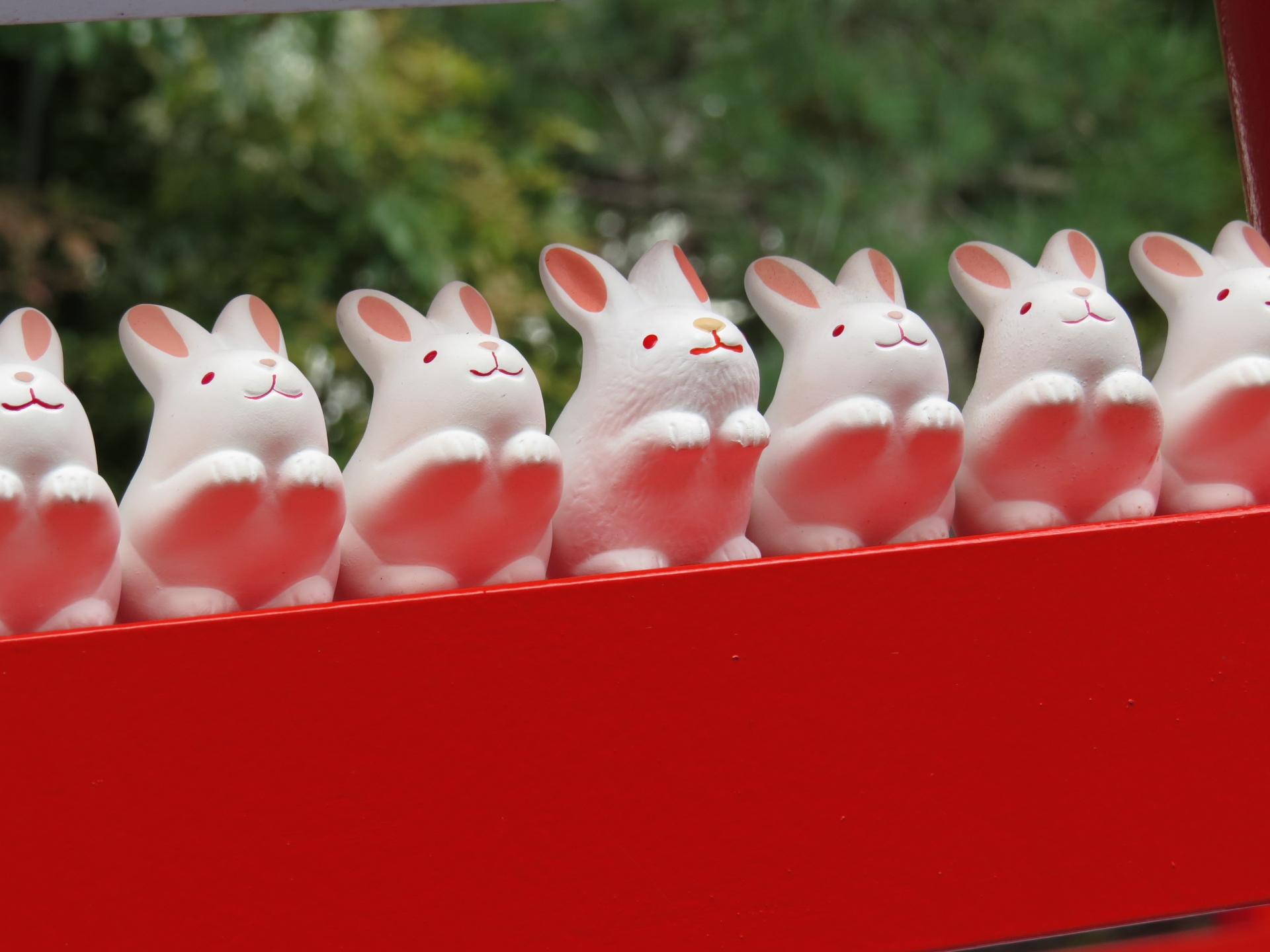
Are Cute Animals the Messengers of God? 5 Omikuji to draw at shrines and temples in Kyoto
When you come to a shrine, you want to draw an omikuji at least once. Omikuji tell our fortune or good luck, don't they? Daikichi, Shokichi, etc. [...].