

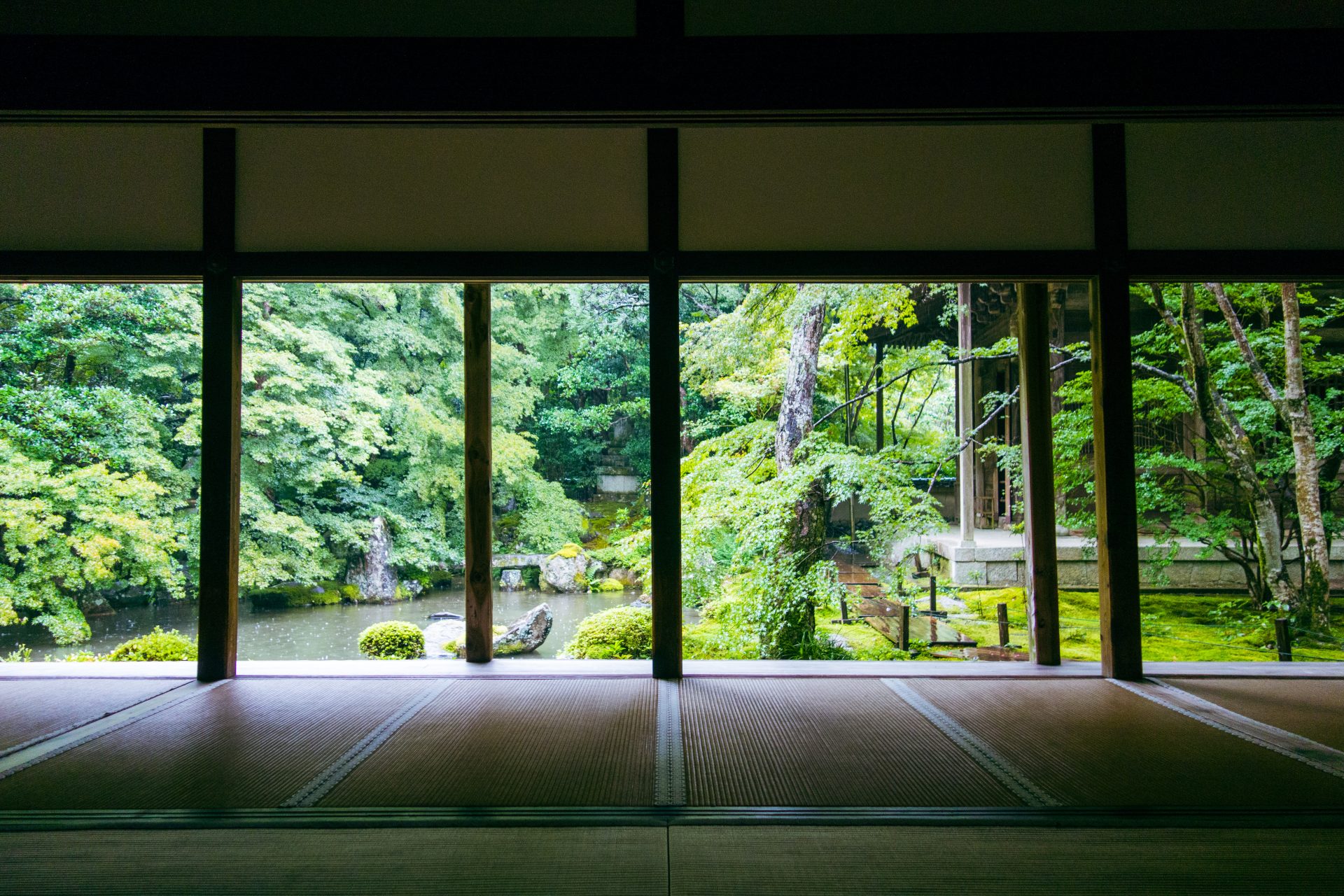
The rainy season continues with dreary, rainy days. However, moss planted in Japanese gardens and temples turns a deep green color when wet with water and is very tasteful. In this issue, we would like to introduce two temples with beautiful moss that you should visit on rainy days.
Both of these spots are secluded, so no matter when you visit, you will be able to appreciate them at your leisure. You can also view the garden from indoors, so there is no need to worry about getting wet during your stroll. If rain is forecasted on the day of your trip to Kyoto, please take a look at this page.
Table of Contents
■Keishun-in
■Lotus Temple
■ Summary
■Keishun-in
Keishunin" is the pagoda of Myoshinji Temple, one of the largest Zen temples in Japan. It is located about a 6-minute walk from Myoshinji Station on the Keifuku Electric Railway Kitano Line. It is marked by a stately gate with a tiled roof and black signboards hanging on both sides.
The entire garden is planted with moss, which, combined with the fresh green blue maples, creates a serene atmosphere. Just sitting on the porch and gazing at the view in a daze is a calming experience. The building is also decorated with sliding door paintings by Kano Sansetsu, a painter of the Kano school in the early Edo period.
Keishun-in was founded by Oda Hidenori, grandson of Oda Nobunaga. In the Edo period (1603-1867), a tea house called Kohakuan was moved from Nagahama Castle in Shiga Prefecture. The Kebakuan was built by Fujimura Youken, one of the Four Devas of Sotan, the son of Sen no Rikyu, and is a temple where visitors can experience both "Wabi-sabi" and "Zen spirit".
Facility Name:Keishun-in
Address: 11, Hanazono Teranonaka-cho, Ukyo-ku, Kyoto, 616-8036, Japan
Phone number: 075-463-6578
■Lotus Temple
Rengeji Temple" is located at the foot of Mt. It is located a 6-minute walk from Miyakehachiman Station on the Eizan Electric Railway's Eizanhon Line. After passing through a small gate, there is a building enshrining many Buddhist statues on the left side, and a stone-paved pathway stretches through the center to the main hall.
The building is very spacious, and lush moss and fresh green maple trees can be seen from the low-lit room. You can listen to the sound of the rain and refresh yourself with the negative ions of nature. There is also a pond at the edge of the garden with large carp swimming in it.
It originally stood under the name "Saorai-in" near the current Kyoto Station, but was once lost due to the Onin War. In the early Edo period (1603-1867), it was rebuilt in its current location by a vassal of the Kaga Maeda clan. There are temples with the same name in Ukyo-ku and Minami-ku, so be careful not to make a mistake.
Facility Name:Rengeji Temple (Sakyo Ward)
Address: 1 Kamitakano-Hachiman-cho, Sakyo-ku, Kyoto, 606-0065, Japan
Phone number: 075-781-3494
■ Summary
In Kyoto in June and July, when the rainy weather continues, it is nice to appreciate the garden quietly while listening to the sound of the rain. The moss soaking in the water is so lush and shiny that you will be tempted to take a picture. If you visit early in the morning or close to closing time, you can enjoy a relaxing time with fewer people. Please visit the garden to feel the fresh air of new greenery.


Related PostRelated Articles

If you're going all the way, visit a place that will leave you with lasting memories! 7 Retro Cafés in Kyoto
Recently, retro-style coffee shops that make you feel as if you’ve slipped back in time to the Showa era have been attracting a lot of attention. With their vibrant colors […]

Enjoy a cup of coffee in the retro atmosphere of “Kaze to Coffee” in Kyoto’s Kamigyo Ward… Are the accompanying sweets tempting?
There are many tourist spots in Kyoto, but perhaps some of you would like to take a break from the bustling atmosphere from time to time […]
"Rurouni Kenshin" Kyoto Pilgrimage to Famous Locations! List [Summary]
Have you heard of *Rurouni Kenshin*? Not only is there an anime series, but it’s also been adapted into a live-action movie starring Takeru Satoh, so you should definitely check it out […]
"K-ON!" Kyoto Pilgrimage to the Series' Locations! List [Summary]
Have you heard of the anime “K-ON!”? “K-ON!” is a four-panel manga series by manga artist Kaki Furai […]
A Pilgrimage to the Sacred Sites of "Ikkyu-san" in Kyoto! List [Summary]
Do you all in Japan know who Ikkyu-san is? I’m sure everyone—from elementary school-aged children to adults—has heard of him at least once […]