

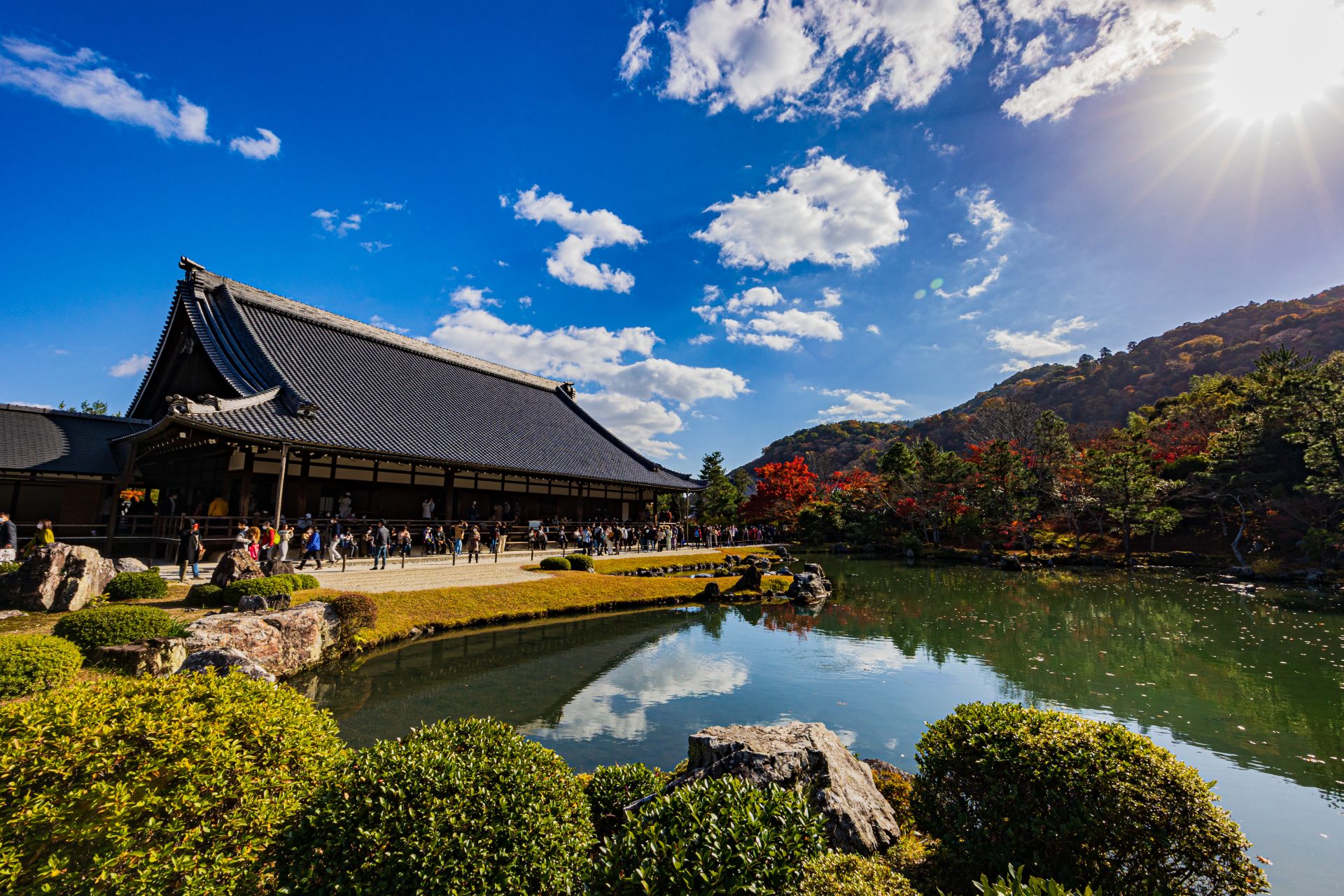
Kyoto's temples have a variety of attractions.
For example, it could be a structure, an enshrined object, or a seasonal view.
Have you also paid attention to the other paintings on the ceiling and folding screens?
For example, Toji-in Temple has a large painting of Daruma Daishi, and Shoju-in Temple has as many as 160 ceiling paintings on the theme of flowers and Japan.
Many temples in Kyoto have paintings on their ceilings and screens, and one of the most powerful ceiling paintings is the dragon.
Dragons are depicted in many temples because in Zen they were believed to be the protectors of Buddhism.
Therefore, we would like to introduce some temples in Kyoto where you can see ceiling paintings.
All of the ceiling paintings are stunning, so please look up and see them in person.
1.Tenryuji Temple, where you can see the dragon ceiling paintings.
Photo: Photo AC
○Features
Tenryuji Temple is the main temple of the Tenryuji School of Rinzai Zen Buddhism, located in Ukyo-ku, Kyoto, and was founded by Ashikaga Takauji in the early Muromachi period (1336-1573) as a memorial to Emperor Godaigo.
Although many buildings have been lost to fire, they were rebuilt in the Meiji era (1868-1912) and are now registered as a World Cultural Heritage site.
The Sogenchi Pond Garden was created about 700 years ago by the Japanese Zen monk Muso Kokushi, and the scenery of trees, gardens, and Arashiyama can be enjoyed at the same time.
Here, the ceiling of the Dharma Hall is decorated with "Unryu (dragon and cloud) paintings.
This is a work by Matazo Kayama and Matsutoshi Suzuki.
Created by Matsutoshi Suzuki in 1899, the Unryuzu was severely damaged and is now in storage and open to the public every February.
The current ceiling painting is by Japanese-style painter Matazo Kayama, depicting a dragon and clouds.
This was created for the 100th anniversary of the relocation of the Dharma Hall in 1944, and features a dragon within a circle.
The foundation is made of 159 3-cm-thick cypress boards pasted together and coated with lacquer.
This is a mysterious painting that, when moved while staring at it, appears as if the dragon keeps looking at you.
It is open to the public during special visitation periods and on weekends, so please come and see the powerful dragon and cloud paintings.
○Word of mouth
The temple was registered as a World Heritage site. No matter what season you visit, the garden is relaxing with seasonal flowers and plants.
The highlight of the exhibition is the dragon and cloud painting on the ceiling of the Hodo Hall. It is a new one and is very powerful with well-defined colors.
The dragon is very powerful and looks at you from any direction.
The ceiling paintings are amazing. There are benches in the Dharma hall so you can sit down and take a good look.
The garden and the dragon and cloud paintings were beautiful. It was worth seeing. The building was also beautiful.
Address
68 Sagano-baba-cho, Tenryuji, Ukyo-ku, Kyoto-shi, Kyoto
How to access
15 minutes on foot from Arashiyama Station on the Hankyu Railway
○ Homepage
2. Kenninji Temple, where you can see the dragon ceiling paintings.
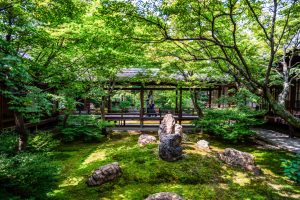
Photo: Photo AC
○Features
Kenninji Temple, founded in Kennin 2, is famous as the oldest Zen temple in Kyoto, where Zen was introduced by Eisai.
The "Double Dragon" painted on the ceiling of the Dharma Hall was created in 2002 to commemorate the 800th anniversary of the founding of Kenninji Temple, and was painted over a period of two years by the Japanese painter Junsaku Koizumi.
Although Kenninji Temple has a long history, this painting is relatively new and will become better known in the future.
Being a new work, the solid shading makes it look as if the dragon is closing in on us.
Other highlights include the Unryu (dragon and clouds) paintings by Kaihoku Tomomatsu, designated as an important cultural asset.
The original is kept at the Kyoto National Museum, but reproductions can be viewed at any time at the barrier painting.
There are also Zen meditation and sutra copying experiences available, so stop by for a memorable experience.
○Word of mouth
I was most impressed by the ceiling painting "Ssangyong" in the Dharma Hall. It was so powerful that it seemed as if it would start moving at any moment.
The "Ssangyong" is like being drawn into a painting. I kept looking up.
The Ssangyongzu can be seen at any time, not only at special openings. You should definitely see it when you go in the direction of Gion.
It is famous for its wind god and thunder god paintings. The site is large and there were many things to see. I would like to visit the Kyoto National Museum to see Tawaraya Sotatsu's "Wind and Thunder Gods" next time.
I visited for the first time. The cherry blossoms were in full bloom and it was very beautiful. Also, the ink paintings were wonderful. There are many important cultural assets, so I would like to come back again to take a closer look.
Address
584 Komatsu-cho, Shijo-sagaru, Yamato-oji-dori, Higashiyama-ku, Kyoto-shi, Kyoto
How to access
Approximately 10 minutes walk from Hankyu "Kawaramachi" station
○ Homepage
3. Myoshinji Temple, where you can see the dragon ceiling paintings.
○Features
Myoshinji Temple is the head temple of the Myoshinji School of the Rinzai Sect of Zen Buddhism.
This is a vast site, lined with 46 pagoda temples.
Japan's oldest famous temple bell and the Myochi Baths are popular tourist attractions.
Here you can also see dragons in the ceiling paintings and screens, which are designated as important cultural properties.
The cloud and dragon paintings on the ceiling of the Dharma Hall were created by Kano Tanyu over a period of eight years, and were completed in 1657.
The dragon and cloud paintings are painted on the 13-meter high ceiling, and the diameter of the circle is 12 meters.
This is also called "the dragon staring in all directions," a curious painting in which the dragon in the center of the circle appears to be staring at us from all angles.
Another famous example is the dragon and tiger painted on a folding screen by Kano Sangaku, which is now housed in the Kyoto National Museum.
This dragon and tiger painting depicts two dragons and a tiger glaring at each other.
To the left of the tiger is a leopard, which is said to have been painted by Kano Sangaku, who mistook it for a female tiger.
But the staring contest is a sight to behold.
○Word of mouth
The "Dragon with Eight Glances" is amazing. It was a mysterious picture that was large and intimidating, yet also gentle.
The painting of the ... dragons is wonderful. I looked at them until my neck hurt.
The highlight is the ceiling of the Dharma Hall, "Dragon and Cloud". I wandered around and looked at it.
It is a huge temple spread out in front of Hanazono Station on the Sanin Line, and the garden was beautiful.
The sliding door paintings of the Daihojo are painted by the hand of Kano Tanyu. It was a masterpiece.
Address
1, Hanazono Myoshinji-cho, Ukyo-ku, Kyoto-shi, Kyoto
How to access
About 5 minutes walk from Hanazono Station on JR Sagano Line
○ Homepage
4. Nanzenji Temple, where you can see the dragon ceiling paintings.
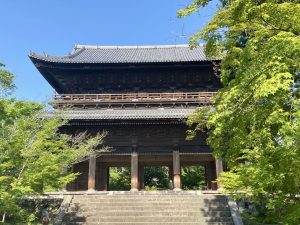
Photo: Photo AC
○Features
Nanzenji Temple is the main temple of the Nanzenji school of Rinzai Zen Buddhism, located in Sakyo-ku, Kyoto.
It is treated differently from other Zen temples in Japan and boasts the highest prestige.
There are many attractions such as the Sanmon Gate, one of the three main gates in Japan and an important cultural asset, and the Sosui, a red-brick aqueduct.
The huge masonry, which was designated as a national scenic beauty in 1951, is laid out horizontally, and the wide space of the white sandbar is also called "Toranokotsuwa-no-niwa-niwa" (garden of tiger cubs passing by).
Also here, the ceiling of the central Dharma hall is decorated with "Zuiryu zu (cloud dragons).
It is the work of Keinen Imao, and was created when the building was rebuilt in 1909 after being destroyed by fire once before in 1893.
Basically, you cannot enter the Dharma Hall, but you can see it from the outside.
○Word of mouth
He has visited every temple and shrine in Kyoto. Myoshinji Temple is a masterpiece. The Dharma Hall is a must-see. Zuiryuu is a must-see.
The ceiling painting of a huge dragon was amazing. It was very vivid and powerful.
The scale of the temple is very large and there are many tourists. The Sanmon Gate, an important cultural property, was amazing.
I can't go inside, but I can get a good look from the outside. I wish there was a special opening to the public....
I visited the place for the first time after learning about it. It was a beautiful place, as it is often shown on TV.
Address
Nanzenji Fukuchi-cho, Sakyo-ku, Kyoto-shi, Kyoto
How to access
Approximately 10 minutes walk from Keage Station on the Subway Tozai Line
○ Homepage
5. Tofukuji Temple, where you can see the dragon ceiling paintings.
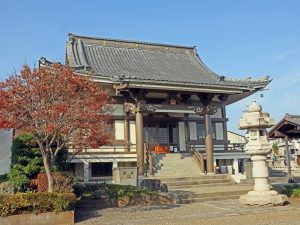
Photo: Photo AC
○Features
Tofukuji Temple is the head temple of the Tofukuji School of the Rinzai sect of Zen Buddhism, located in Higashiyama Ward.
It took 19 years to complete the project, starting in 1236.
Doke Kujo named the temple "Tofuku-ji" after Todai-ji and Kofuku-ji in Nara.
It is one of the best places in Kyoto to view the autumn leaves and is also known as "the temple face of Tofukuji Temple.
Fresh greenery in summer, green azaleas in spring, and bright red autumn leaves in fall are the colors of the season.
The ceiling painting of the main hall was created by Impression Domoto when the building was rebuilt after a fire in 1881.
The work is a huge painting measuring 22 meters from east to west and 11 meters from north to south, but it was completed in only 17 days.
This powerful dragon is 54 meters long and has a girth of 6.2 meters.
The dragon's eye painted on the ceiling is bizarre, and the entire painting has a unique atmosphere.
The Butsuden (Buddhist temple) is not usually open to the public, but you can see it when it is open to the public during special openings of non-public cultural properties.
○Word of mouth
This is the first time to see the Dragon and Cloud painting, which is open to the public for a limited time. You should go see this.
It is a picture that you will want to look up at forever and ever. Come and see it when it is open to the public.
The foliage is great and the scenery is quaint. I was healed from the bottom of my heart.
The dragon is so wonderful that it leaves me speechless. It's big. It's just so big. You should go see it.
I can't believe that you finished a painting of this size in 17 days. It is too amazing.
Address
15-778 Honmachi, Higashiyama-ku, Kyoto-shi, Kyoto
How to access
Approximately 7 minutes walk from "Kawaramachi Station" of Hankyu Railway
○ Homepage
■ Summary
How was it?
In this issue, we introduced five temples in Kyoto where you can see dragon ceiling paintings.
There are many ceiling paintings in Kyoto where dragons can be seen.
The dragons painted on the ceiling and screens by painters who were active in the past are still carefully preserved today.
When viewing the exhibition, please take the time to look at the overall atmosphere and the appearance of each dragon.


Related PostRelated Articles
If you're going all the way, visit a place that will leave you with lasting memories! 7 Retro Cafés in Kyoto
Recently, retro-style coffee shops that make you feel as if you’ve slipped back in time to the Showa era have been attracting a lot of attention. With their vibrant colors […]

The obanzai at "Gyaatei" in Arashiyama, Kyoto, is wonderful! What is the Gyaatei Set Meal?
What places did you visit while sightseeing in Arashiyama, Kyoto? Arashiyama has several attractions, such as the Hozu River boat ride, the Torokko Train, the Bamboo Grove Path, and the Togetsukyo Bridge […]
Enjoy a cup of coffee in the retro atmosphere of “Kaze to Coffee” in Kyoto’s Kamigyo Ward… Are the accompanying sweets tempting?
There are many tourist spots in Kyoto, but perhaps some of you would like to take a break from the bustling atmosphere from time to time […]
Terakoya Honpo’s Innovative Dango Are Amazing! Let’s Go on a Sweet Treat Tour in Arashiyama to Sample the Exquisite “Kabi Dango”
Are you enjoying sightseeing around Saga-Arashiyama, such as the Togetsukyo Bridge, Tenryu-ji Temple, and the Torokko Train? There are many tourist attractions in Saga-Arashiyama […]
Come try the giant mitarashi dango at Koto Imo Honpo! A popular choice for street food in Arashiyama♪
Have you heard of a shop called “Kotoimo Honpo,” located just off the path through the bamboo grove? Lately, it’s been on Ins […]