

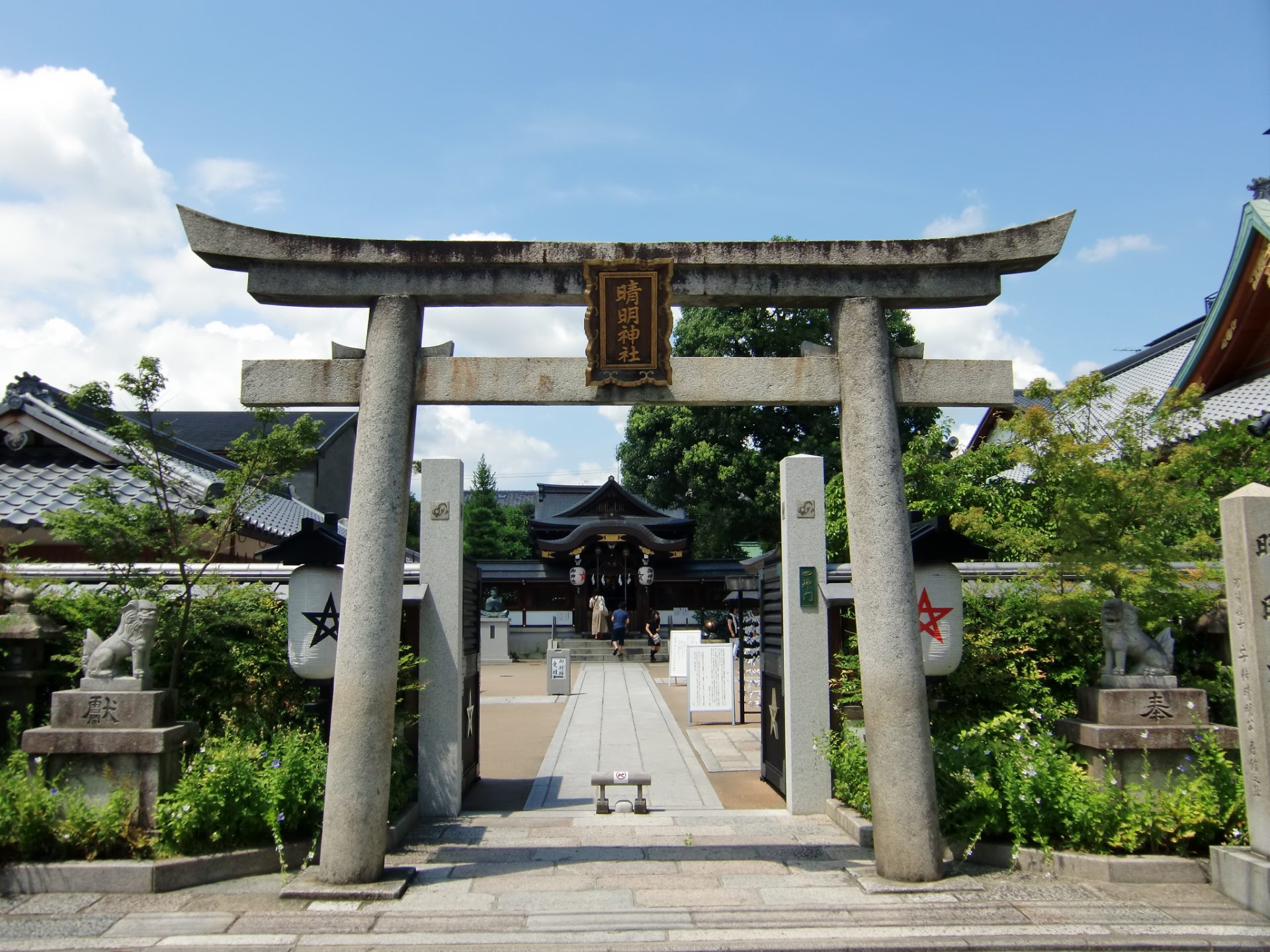
"Seimei Shrine" is located on Horikawa-dori in Kamigyo Ward, Kyoto City.
This shrine is dedicated to Abe no Seimei, known as an onmyōji (master of yin and yang) from the Heian period, and attracts many visitors seeking protection from misfortune and evil spirits.
Seimei Shrine is often the subject of discussion in the worlds of movies, anime, and figure skating, but what is its actual history, and what are its highlights? In this article, as a Kyoto tourism media outlet, we’ll provide a detailed overview of Seimei Shrine, covering its history, blessings, highlights, and visitor information.
Table of Contents
■What Is Seimei Shrine?
■Who Was Abe no Seimei?
■Why Seimei Shrine Has Been Gaining Attention in Recent Years
■Highlights of Seimei Shrine
■Visiting Hours and Directions
■ Summary
■What Is Seimei Shrine?
Seimei Shrine is a shrine dedicated to Abe no Seimei, an onmyōji who was active during the mid-Heian period.
It is said that in the 4th year of the Kan'ō era (1007)—two years after Seimei’s death—the temple was founded at its current location, believed to be the site of Seimei’s former residence, by order of Emperor Ichijō.
It is said that the temple grounds at the time of its founding covered a vast area bounded by Horikawa-dori to the east, Kuromon-dori to the west, Motoseiganji-dori to the north, and Nakadachiuri-dori to the south; however, they gradually shrunk due to the ravages of war—including the Ōnin War—and the urban redevelopment carried out by Toyotomi Hideyoshi. From the Edo period onward, parishioners undertook efforts to redevelop the grounds, and by 1950 (Shōwa 25), the precincts had been expanded to the point where they faced Horikawa-dori. The current main hall was rebuilt in 1905 (Meiji 38).
■Who Was Abe no Seimei?
Seimei Abe (921–1005) was a real-life onmyōji who lived during the mid-Heian period.
He studied astronomy under Kamo Tadayuki and Kamo Yasunori, a father and son who were leading authorities in Onmyōdō. After first appearing in historical records in 960 (the 4th year of the Tendoku era) as a “Tenmon Tokugōshō” (student of astronomy), he held various official posts, including that of Tenmon Hakase (Doctor of Astronomy), and was responsible for compiling calendars based on the movements of the stars and determining the dates for important court ceremonies through divination.
Seimei has been passed down through the ages along with numerous mystical tales, including the anecdote that he sensed celestial omens and foresaw Emperor Kazan’s abdication, as well as legends claiming he controlled spirits known as shikigami. Based on these traditions, he is sometimes described as an “astronomer,” but in reality, it is more accurate to say that he was a court onmyōji who had mastered both astronomy and Onmyōdō (a scholarly system encompassing divination, magic, and calendrical systems). In 2005, marking the 1,000th anniversary of his death, the “Abe no Seimei Millennium Festival” was held with great fanfare on the shrine grounds.
■Why Seimei Shrine Has Been Gaining Attention in Recent Years
There are several factors behind the Seimei Shrine’s growing popularity both in Japan and abroad.
Popularity of Movies, Novels, and the Like
Starting with the movie *Onmyōji* (released in 2001), in which Mansai Nomura played the role of Abe no Seimei, numerous films and novels based on Abe no Seimei have been released since the Heisei era and have gained widespread popularity. It is said that this led to a significant increase in the number of visitors to Seimei Shrine.
My Connection to Figure Skating
Yuzuru Hanyu, a two-time Olympic gold medalist in men’s figure skating, is also known for performing the short program “SEIMEI.” This program, featuring music and choreography inspired by Abe no Seimei, helped raise awareness of Seimei Shrine among fans around the world.
Belief in Divine Blessings
Seimei Shrine is believed to grant blessings such as recovery from illness, protection from evil spirits, and warding off misfortune, and has attracted devout worshippers since ancient times. The star-shaped patterns seen throughout the shrine grounds are pentagrams, also known as “Seimei Kikyo,” and are considered one of the talismans used in Onmyōdō—the school of divination said to have been founded by Abe no Seimei.
■Highlights of Seimei Shrine
First Torii Gate (Seimei Kikyo Torii Gate)
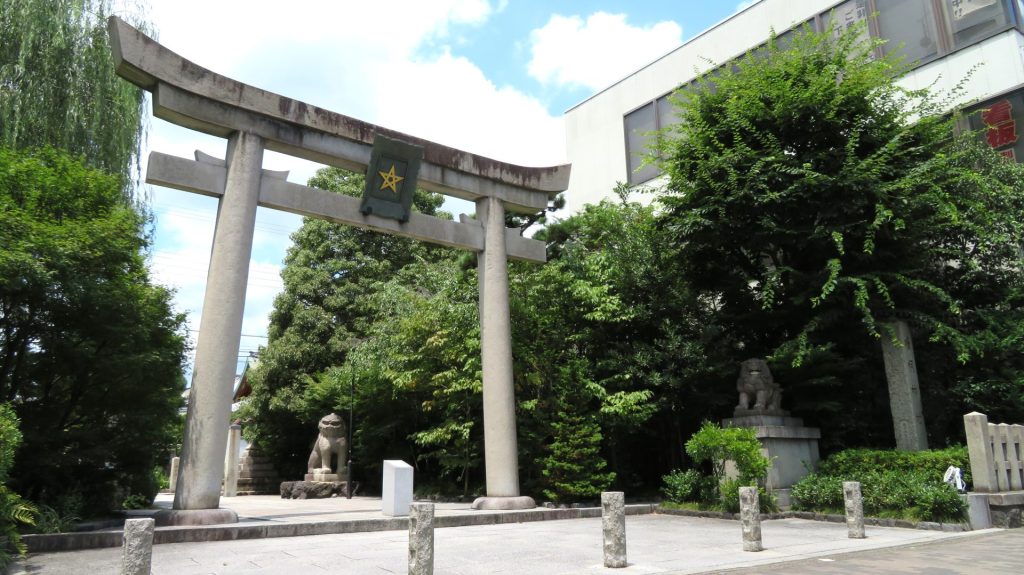
The first torii gate facing Horikawa-dori features not the shrine’s name but the “Seimei Kikyo” pentagram crest. This torii has a design that is rare even nationwide, so be sure to stop and look up at it before entering the shrine.
Former Ichijō-Modoribashi Bridge
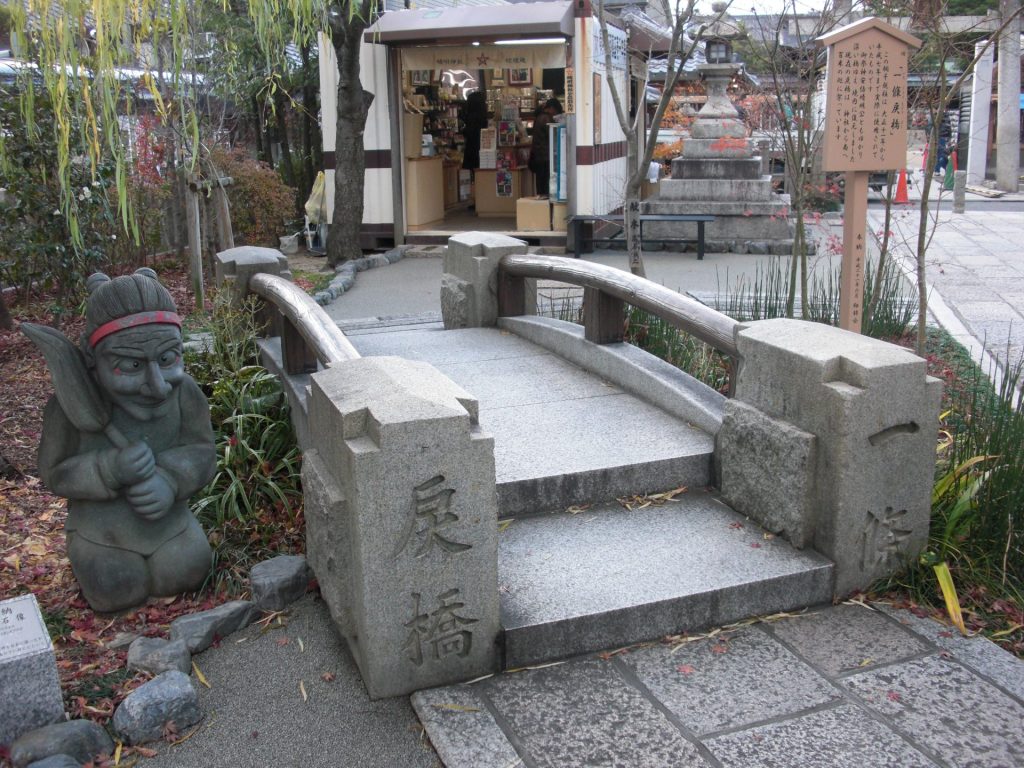
The small bridge that appears immediately upon entering the shrine grounds is a replica modeled after the “Ichijō Modori-bashi,” which is said to have stood near Seimei’s residence. In keeping with the bridge’s name—“Modori-bashi” (literally, “Return Bridge”)—a custom still persists today whereby brides-to-be, wishing to avoid “returning,” and funeral processions are not allowed to cross this bridge.
Seimei Kikyo’s Torii (Second Torii)
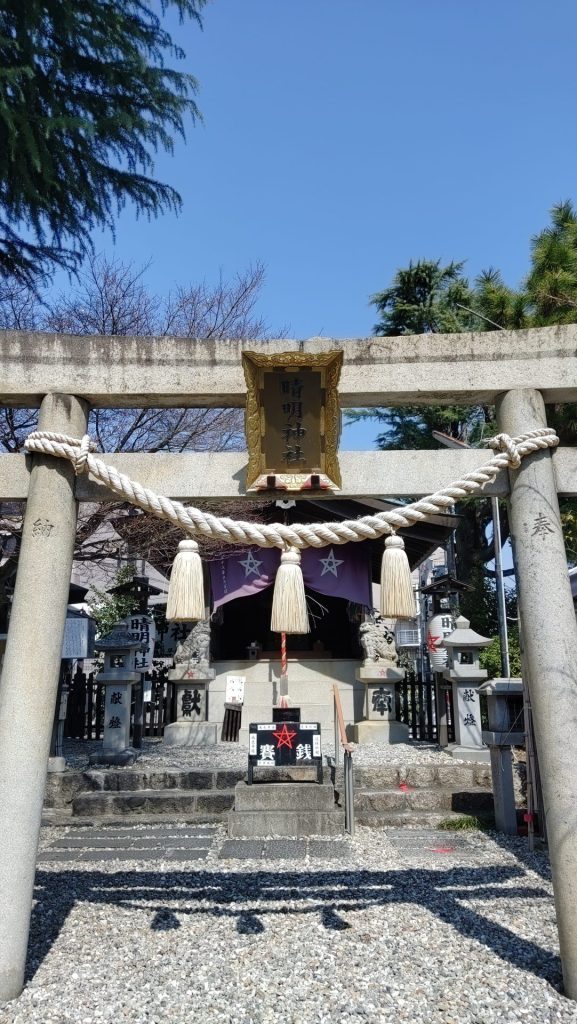
As you walk down the approach, a torii gate bearing the shrine’s name comes into view. Lanterns adorned with pentagrams line both sides, creating a mystical atmosphere.
Main Hall
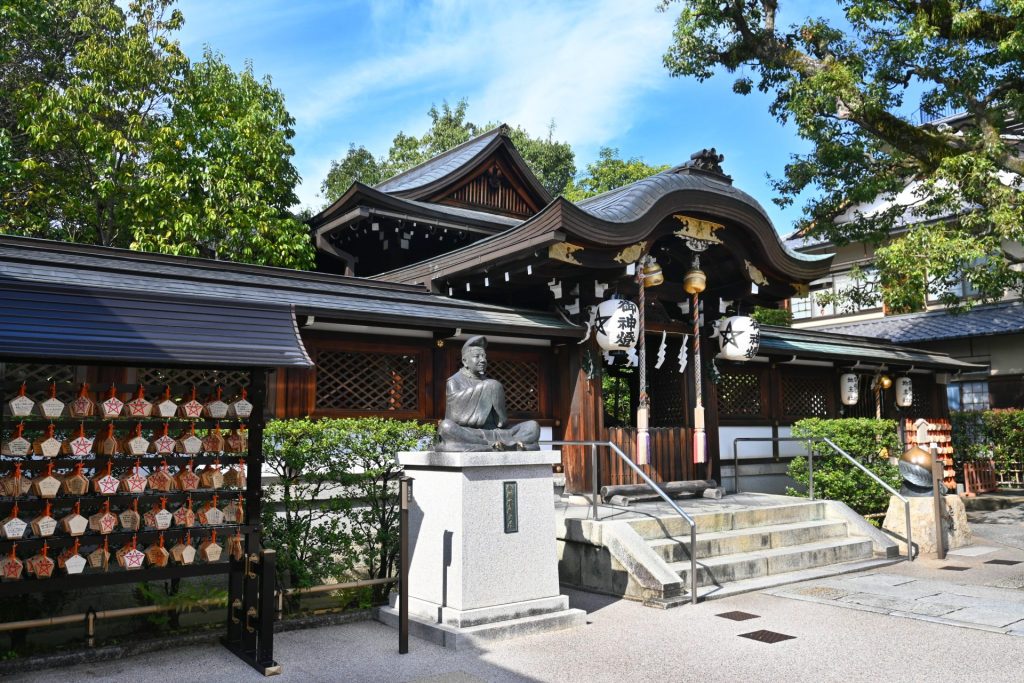
The main hall, located at the very back of the shrine grounds, was rebuilt in 1905 (Meiji 38). Many worshippers visit in hopes of receiving blessings to ward off misfortune and evil spirits.
Sacred Tree (a camphor tree over 300 years old)
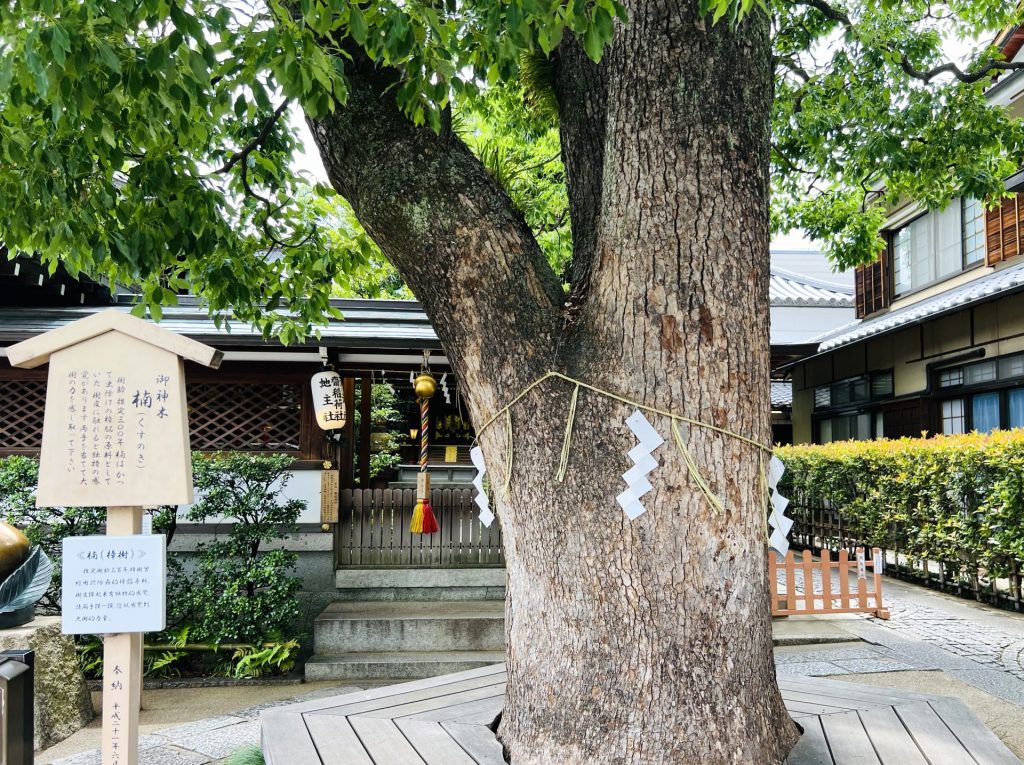
In front of the subsidiary shrine stands a large sacred camphor tree believed to be over 300 years old. There are benches set up in the surrounding area, so it’s a great spot to stop by and take a break.
Peach for Warding Off Misfortune
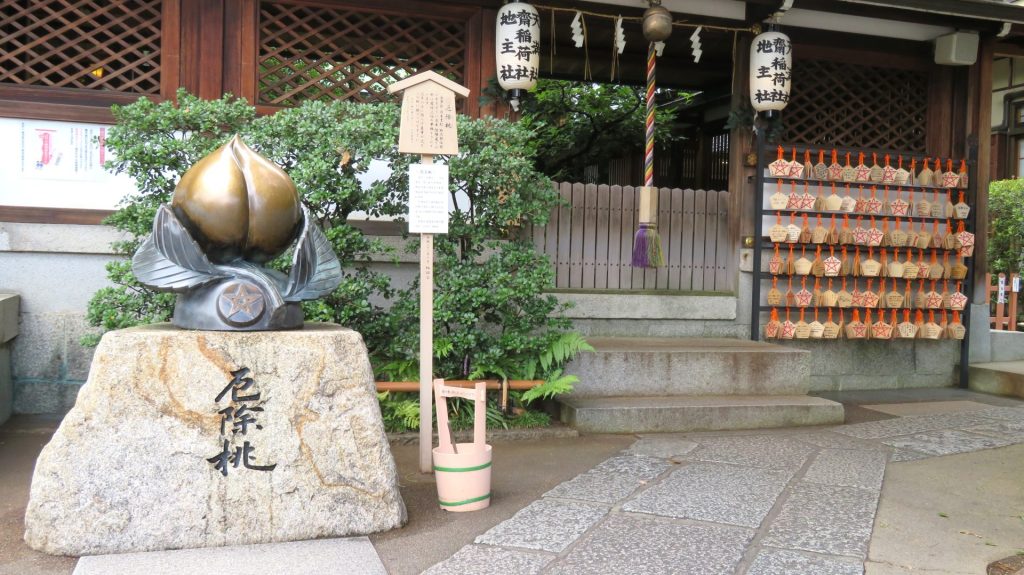
This is a peach-shaped statue placed near the main hall. In the Chinese philosophy of Yin-Yang and the Five Elements, the peach is considered a fruit that wards off evil spirits, and this statue has been placed here in accordance with that tradition. It is said that touching the “Evil-Warding Peach” can purify one of any misfortune or impurities that have attached themselves to one’s body.
Seimei Well
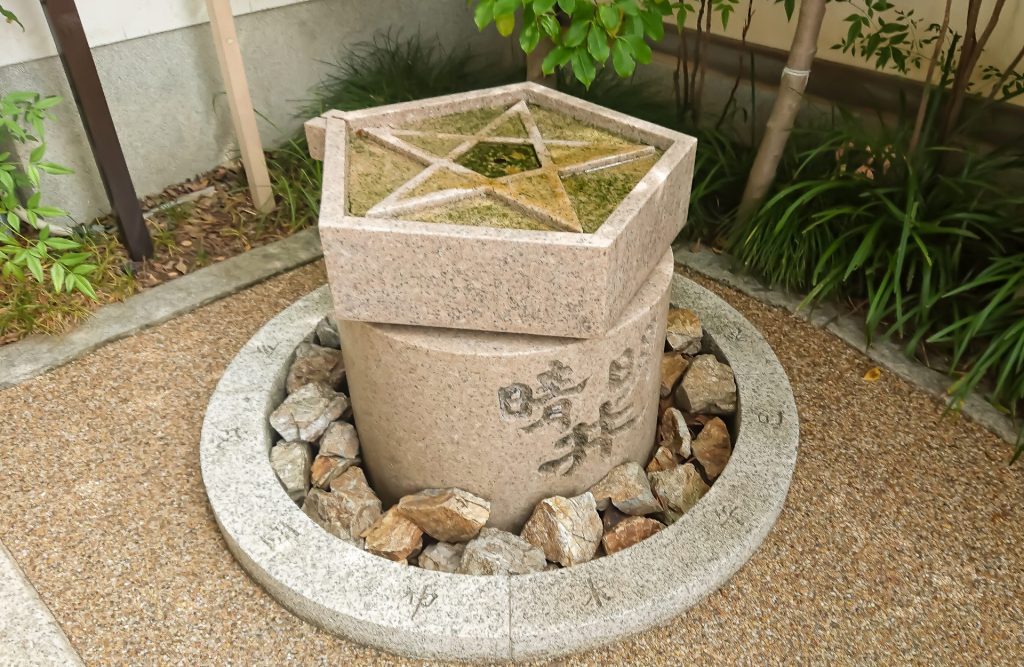
There is a legend that Abe no Seimei used his psychic powers to make water gush from the well located just beyond the second torii gate. It is said that drinking this water or setting a photo of the well as your phone’s wallpaper brings the blessing of recovery from illness, and many visitors can be seen taking photos there.
Sun and Moon Pillars
These two pillars, adorned with designs depicting the sun and the moon at the top, are said to symbolize the concept of yin and yang.
■Visiting Hours and Directions
Admission to Seimei Shrine is free, and anyone is welcome to explore the grounds. If you wish to receive a goshuin stamp, an omamori amulet, or have a prayer service performed, a separate offering is required. Since prayer services are by appointment only, it’s best to check the official website in advance.
○ Seimei Shrine
Address: 806 Seimei-cho, Kamigyo-ku, Kyoto City, Kyoto Prefecture (up the street from Horikawa-dori and Ichijo)
Visiting Hours: 9:00 a.m. to 5:00 p.m. (Open year-round)
Registration Desk: Until approximately 4:30 p.m.
Admission: Free (A separate donation is required for temple stamps, amulets, and prayers)
Directions: From JR Kyoto Station, take City Bus Route 9 to the “Ichijō-Modoribashi / Seimei Shrine” stop; it’s about a 2-minute walk from there.
HP:https://www.seimeijinja.jp/
*Please note that information regarding offerings for commemorative items and admission fees is subject to change, so we recommend checking the official website before your visit.
The shrine grounds aren’t very large, and one of the attractions is that you can complete your visit—including receiving a goshuin stamp and amulets—in about 20 to 30 minutes. Since it’s conveniently located along walking routes toward Kitano Tenmangu Shrine and Kinkaku-ji Temple, we recommend combining a visit here with sightseeing in the surrounding area.
■ Summary
Seimei Shrine is a shrine in Kyoto with a unique atmosphere, dedicated to Abe no Seimei, a Heian-period onmyōji. The grounds are compactly arranged with sites that convey legends associated with Seimei—such as the torii gate adorned with a pentagram, the Ichijō Modoribashi Bridge, and the Seimei Well—allowing for a rich and fulfilling visit even in a short amount of time.
Whether you first learned about Seimei Shrine through movies or figure skating, why not immerse yourself in the world of Onmyōdō from the Heian period and pick up some original goshuin and omamori?


Related PostRelated Articles

What is “Fengquan,” a restaurant serving Kyoto-style Cantonese cuisine? If you’re looking for authentic flavors in Kyoto’s Nakagyo Ward, this is the place to go!
Have you heard of a restaurant called “Hōsen” in Kawaramachi, Kyoto? “Hōsen” is a restaurant where you can enjoy authentic Cantonese cuisine […]
A Pilgrimage to the Sacred Sites of *Nurarihyon's Grandson: The Thousand-Year Demon Capital* in Kyoto! List [Summary]
"Nurarihyon's Grandson," a Japanese manga by Hiroshi Shiibashi. Serialized in Weekly Shonen Jump in 2008, it features yokai as its theme […]
What is "Suehiro," the time-honored Kyoto sushi restaurant with over 200 years of history? If you're visiting Kyoto's finest restaurants, this is the place to go!
It’s no exaggeration to say that almost everyone living in Nakagyo Ward, Kyoto, has heard of the long-established Kyoto sushi restaurant “Suehiro.” This place has been featured in the media and magazines […]
A Pilgrimage to the "HELLO WORLD" Holy Sites in Kyoto! List [Summary]
"HELLO WORLD" was released on September 20, 2019. Director Tomohiko Ito is also known for *Your Name.*, but...
If you want to eat seasonal fruit tart in Kyoto! What's so special about Hyde&Away and what do you recommend?
If you like sweets, don't you sometimes have an irresistible craving for tarts? Tarts are a pastry that originated in France and are made of fruit and [...]...