

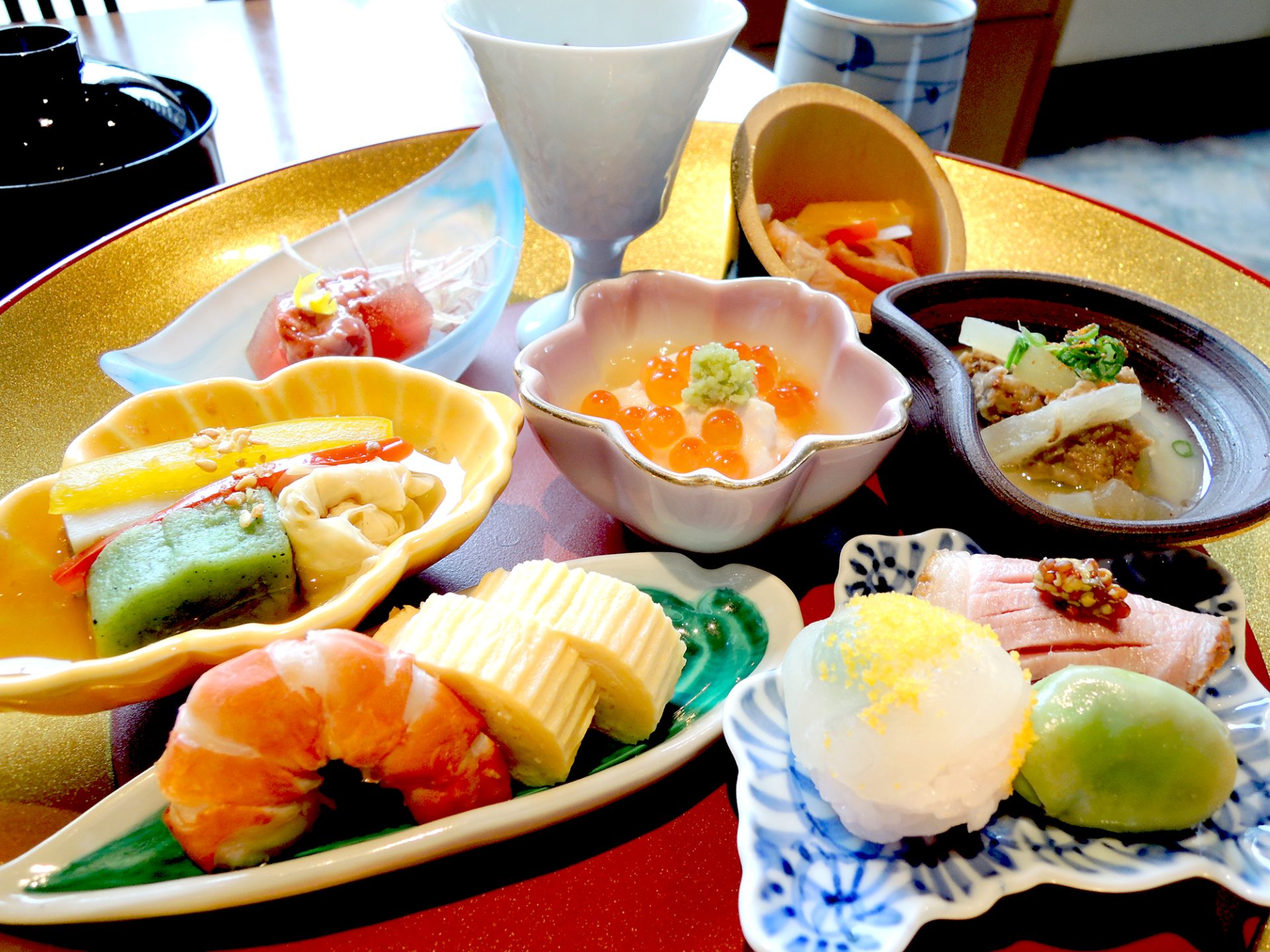
It is difficult to imagine what Kyoto ryori is like, even if it is called Kyoto ryori.
Many people consider kyo ryori to be Japanese food, but what exactly is the culture of kyo ryori, and what are some of its attractions and characteristics?
In this issue, we would like to introduce in detail the charm of Kyoto cuisine and the ingredients used.
If you try it after reading this and learning about Kyoto cuisine, you may find a different taste.
Table of Contents
■What are the five elements of Kyoto cuisine?
■History and Characteristics of Kyoto Cuisine
■Water is responsible for the development of Kyoto cuisine.
■Kyoto vegetables and seasonings to be enjoyed in Kyoto cuisine
Kyoto Rikyu" if you want to get ■dashi (soup stock)
■ Summary
■What are the five elements of Kyoto cuisine?
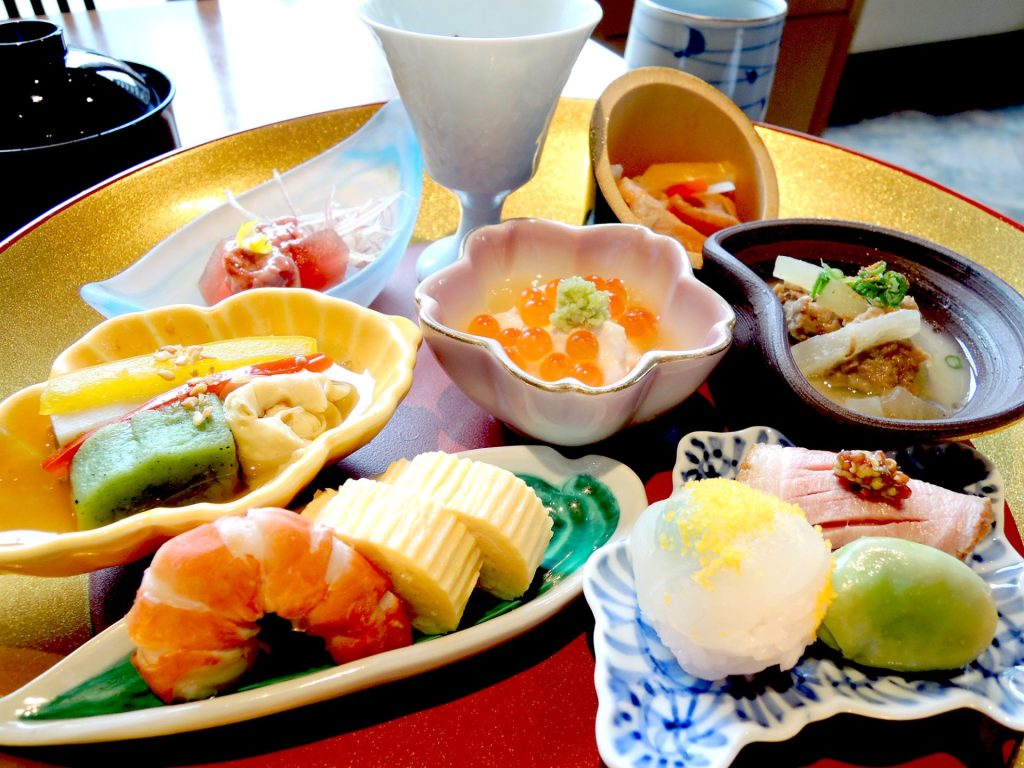
When you come to Kyoto, you can enjoy a variety of cuisines.
Have you ever heard the term "kyo ryori" in this context?
Kyo ryori refers to the five systems of Japanese cuisine that have been historically developed in Kyoto.
The five systems include the following five
〇court banquet (Heian period)(Daijyo Kyoukai Cuisine)
A banquet dish for the nobles at the imperial court to serve to the emperor.
The appearance of this dish is especially important, as it is cut, dimensioned, and arranged in a certain way.
Seasoning is often soy sauce, vinegar, or salt, with no undercooked flavor.
These were born from the influence of Chinese cuisine and are the oldest culinary style in Japan.
0 vegetarian cuisine
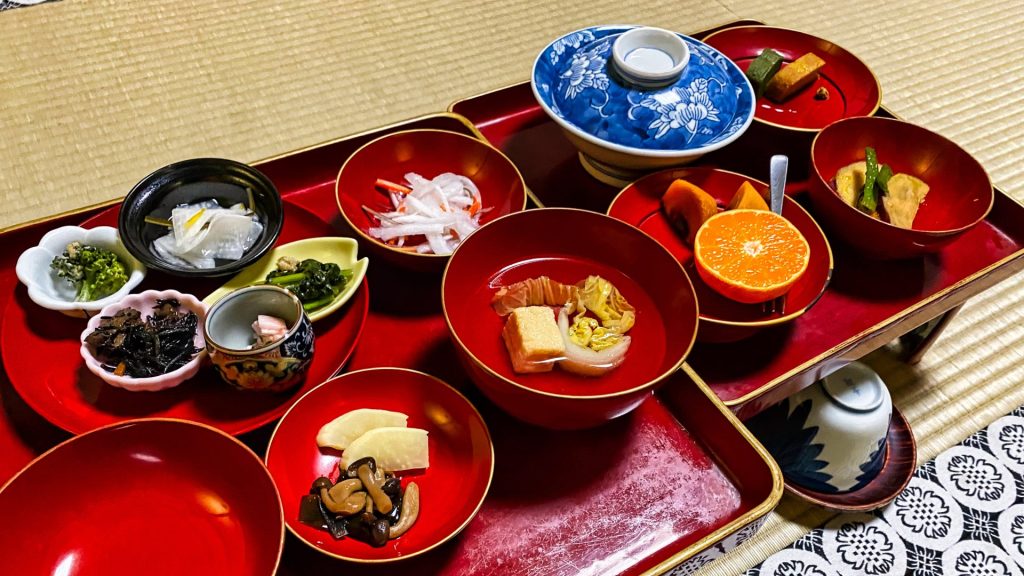
The food culture developed after the Great Feast Cuisine.
It was developed in religions where killing is not allowed, and is called vegetarian cuisine.
Because it was born in a temple society, vegetables are the main ingredient.
Since religious prohibitions prevented the use of meat and other foods, soybeans were made to look like the texture of meat, and soybeans and flour were made to taste more like animal food.
The techniques of preparing seasonings and soup stock were also born from vegetarian cooking.
0Honzen Cuisine
The appearance is important in honzen cuisine.
As a dish for weddings and funerals, it is a dish that can be enjoyed with the eyes.
0Kaiseki Cuisine (Kaiseki Cuisine)
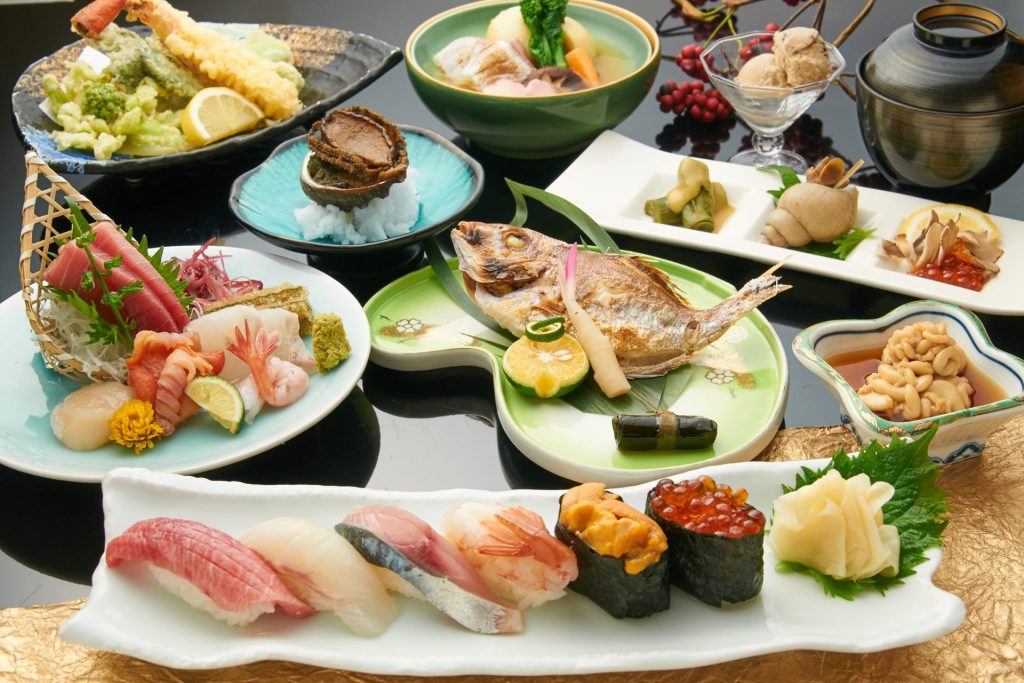
Kaiseki cuisine was born as a way to entertain guests as a result of the development of tea culture.
It is served at tea ceremonies to entertain guests.
〇有職料理 (ゆうそく料理)
A dish enjoyed by workers at the imperial court and elsewhere.
It was developed under the influence of Dai Fei Cuisine and Honzen Cuisine.
What all of these dishes have in common is the use of seasonal vegetables grown in Kyoto's natural environment and "dashi" (soup stock) made from kombu (kelp) and katsuobushi (dried bonito flakes) to bring out the true flavor of the ingredients, and the beautiful presentation and serving of these dishes.
■History and Characteristics of Kyoto Cuisine
○History of Kyoto Cuisine
Each country has its own distinctive cuisine, and Kyoto has its own unique culture called "Kyo ryori" for a reason.
Kyoto was the center of politics, culture, and religion when the capital was located there.
This also involved the culture of court nobles and priests, and many customs influenced the cuisine.
In the Nara period (710-794), Kyoto was not rich in marine products.
However, the aristocrats were very particular about taste, so dishes were prepared using ingredients such as dried fish, vegetables, soybeans, and dried fish from Kyoto.
Since the appearance of these dishes was also important, they were beautifully presented not only for their taste but also to make the people who saw them happy.
In the Kamakura period (1185-1333), a new culture was introduced from the Song Dynasty (960-1279), and "vegetarian cuisine" was born from the religious teaching not to kill.
These were refined in taste through the use of vegetable and other ingredients and a particular cooking method.
Cooking with miso increased because of the development of mortars and other cooking utensils around this time.
Later, with the spread of the tea ceremony during the Warring States period, kaiseki cuisine also developed as a way to entertain guests.
Today, Kyo ryori is a cuisine that offers a sense of "Omotenashi" (hospitality), and tourists come from all over Japan to enjoy its flavors.
○Kyoto Cuisine Features
In Kyoto cuisine, many dishes are made with Kyoto vegetables, dried foods, soybeans, and other ingredients.
Most of the seasonings are simple, and the dishes are grilled, steamed, fried, or left raw, making the most of their natural flavors.
The dishes are characterized not only by their appearance, but also by the way they are arranged according to the season... they are dishes that can be enjoyed not only through taste, but also through all five senses.
■Water is responsible for the development of Kyoto cuisine.
When you think of "good-tasting water," where comes to mind?
Today we can drink good-tasting water in many places, but at that time Kyoto was blessed with abundant water resources, and cold, fresh water was available.
This groundwater has allowed many kyoto vegetables to grow fresh and to be used in cooking.
Kyo-ryori has been designated as an intangible cultural asset of Kyoto Prefecture, and we are sure that many more dishes will be created in the future.
■Kyoto vegetables and seasonings to be enjoyed in Kyoto cuisine
Kyo ryori incorporates the flavors of the four seasons. Let's take a look at each of them.
springtime of pregnancy
In spring, wild vegetable dishes such as bracken and royal fern are especially in season, making it possible to enjoy spring-like Kyoto cuisine.
This is also the time of year for bamboo shoots, which appear in a variety of dishes.
summer
Dishes using ayu and hamo will increase. You can eat them in various flavors such as miso-based dishes and tempura.
♦Summer Pick Up Ingredients Manganji Togarashi
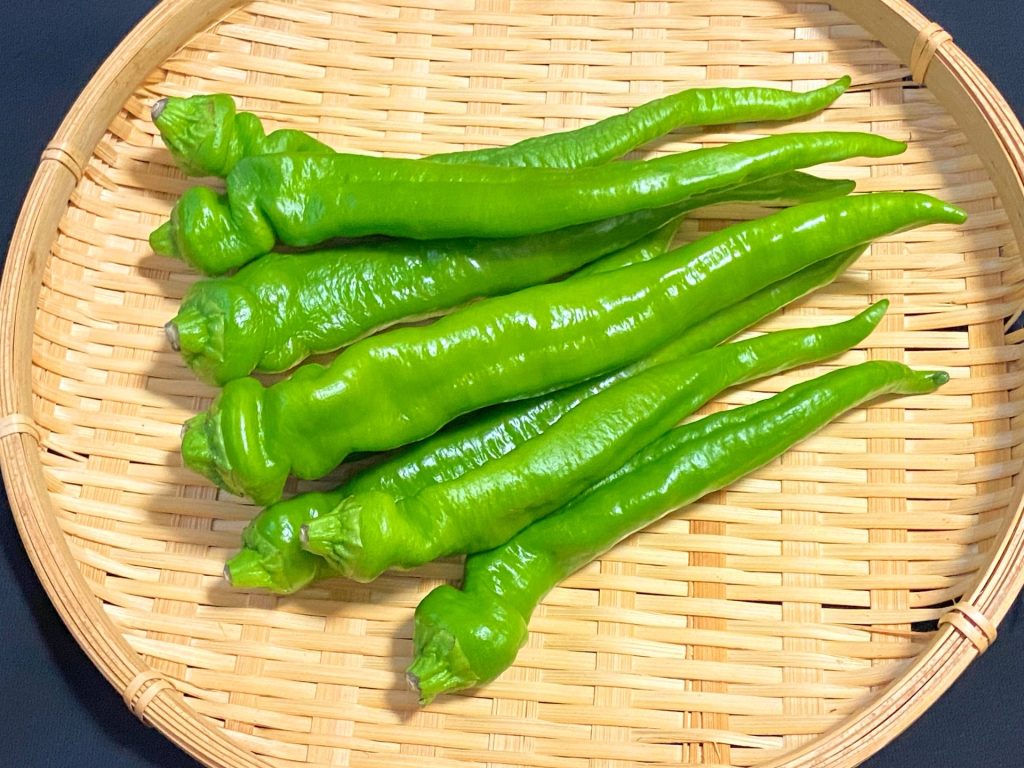
There are many varieties of red pepper, but "Manganji Togarashi" is said to have originated in Maizuru City, Kyoto Prefecture. Many of you have probably heard of it.
Despite its appearance, it tastes very different from other peppercorns, and is used in Kyoto as an easy-to-eat snack for those who do not like spicy food, and is loved by people of all ages.
Manganji Togarashi is one of the Kyoto vegetables born in the Taisho era (1912-1926) and originated in Manganji, Maizuru City, Kyoto Prefecture. Manganji Togarashi is the result of crossing Fushimi type Togarashi with California Wonder type Togarashi.
It is a genus of peppers in the eggplant family, and like shishito, it is difficult to distinguish, but the "size" will make it obvious.
Locally, it is also called Manganji sweet pepper, Manganji, or Manganji. Some are green and look like shishito peppers, while others are called "aka manganji," which are harvested later in the year and are red.
Manganji peppers can be eaten year-round, but if grown in a natural environment rather than in a greenhouse, they are in season during the hot season, that is, from early May to mid-September.
The word "Togarashi" conjures up images of spiciness.
People who do not like spicy food have a strong image that they cannot eat Togaradera (red pepper), but Manganji Togaradera is not spicy even though it is a red pepper, which is a major characteristic of Togaradera. It enriches the color of dishes, and its meaty and hearty flesh makes it delicious for people of all ages.
■Recipe for "Manganji Togarashi" in Kyoto
Manganji peppers are attractive for their sweetness and volume.
Since there are few seeds, we recommend grilling them without removing them or dressing them with dried bonito flakes and soy sauce. They also go well with everything from simmered dishes to tempura and stir-fried dishes, so please try them.
Here are some recommended recipes using "Manganji Togarashi" in Kyoto.
Sauteed Manganji peppers and baby sardines
[What you need.]
4 Manganji Togarashi
10 g dried baby sardines
1 teaspoon sake
1/2 teaspoon soup stock
1/2 teaspoon mirin
1/2 teaspoon soy sauce
1/2 teaspoon sesame oil
[Procedure]
1. Cut the heta off the Manganji Togarashi peppers. The seeds are optional, but if you do not like the texture, remove them.
2. Cut Manganji peppers into 1.5 cm diagonal slices.
3. Heat a frying pan with sesame oil and fry the dried baby sardines.
4. When the color starts to change, add sake, Japanese soup stock, mirin, and soy sauce, and stir-fry Manganji Togarashi.
5. When the liquid is gone, it is ready to use.
Manganji togarashi (red pepper) and chirimenjako (dried young sardines) are a perfect match. This dish is also recommended as a snack.
If Manganji Togarashi peppers are stir-fried whole, they may not absorb the flavor well and may burst, so if they are to be cooked as is, use a toothpick to pierce the peppers.
○Simmered Manganji Tofu with Manganji Tofu
[What you need.]
6 Manganji Togarashi
1 tablespoon sesame oil
5g of soup stock
1/2 of dashi soy sauce
1/2 of mirin
Cooking wine 1/2
150 cc water
A pinch of dried bonito
[Procedure]
1. Remove the heta from the Manganji peppers, cut them in half lengthwise, and remove the seeds.
2. Put Manganji Togarashi in a pan and saute in sesame oil.
3. Add seasonings and bring to a boil.
4. Place in a dish and sprinkle with hana-katsuo (dried bonito) to complete the dish.
Manganji peppers are sweet and fleshy, so they are also delicious boiled and soaked.
○○ autumn (fall)
Autumn is the season of chestnuts, matsutake mushrooms, and baby ayu fish. The dishes are served with autumn leaves decorating the plates and are beautiful to look at.
♦Autumn Pickup Ingredient: Kyotanba Black Edamame
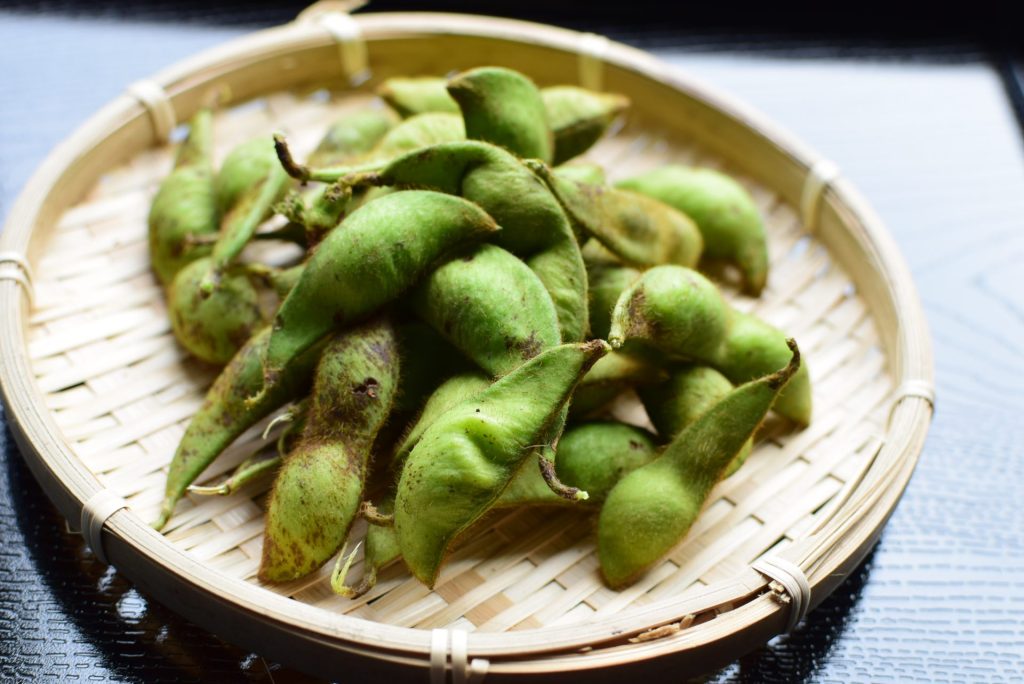
Have you ever heard of "Kyotanba black edamame" harvested in Kyotanba? It is characterized by edamame that are darker in hue than regular green edamame. These are picked early in October, before the beans have turned black, and the later in the season they are picked, the different taste and hue they have.
Kyotanba black edamame" looks darker than regular edamame and has a delightful, flaky texture. It has become famous in the Kyotamba area as a large, flavorful black edamame. Its quality was once used as a gift for the Tokugawa family, and because it can only be harvested during a limited period of time, it is a gem of a bean that is renowned as a "phantom edamame.
It is also called "hard-working beans" because of the difficulty of cultivating and managing them, and was counted as one of the five grains in the Kojiki (Records of Ancient Matters) around 712 and the Nihonshoki (Chronicles of Japan) around 720.
Black soybean stew, which is eaten to pray for health and longevity, is an essential part of Osechi cuisine.
Black soybeans bloom in August and begin to bear fruit in September, and those harvested before they are fully ripe in October or November are called black edamame and are sold in the market.
Although the nutritional value of edamame may not give you a clear image of what it is, Kyotanba black edamame contains
Vitamin B1
Vitamin B2
is rich in dietary fiber and anthocyanin, a pigment.
Anthocyanins are also found in blueberries, eggplant, and sweet potato peels, and this pigment improves eye function and prevents eye strain.
Since ancient times, black beans have been mentioned in Chinese pharmacopoeia books,
Enhance kidney function
. Detoxification.
. Improve blood circulation.
It has been said to have such benefits as
■Kyoto Tanba Kuro Edamame Recipe
Kyotanba black edamame can be used in a wide range of recipes, from direct enjoyment of its flavor to Japanese cuisine.
Let's take a look at some popular Kyotanbakuro edamame recipes.
○Black Edamame Tempura
[To be prepared].
1 sweet potato
150g Kyoto Tanba black edamame
A pinch of salt
Tempura flour, to taste
Water
Dosage of oil
1) Boil and peel the Kyotanba black edamame.
(2) Cut sweet potatoes into small blocks.
(3) Place edamame and sweet potato in a bowl and add tempura flour, water and salt.
(4) Put them in oil at about 160 degrees Celsius and deep fry them.
(5) Sprinkle with tempura sauce or salt to complete the dish.
○Yaki Eda
[To be prepared].
Kyo-Tanba black edamame 200g
Salt to taste
50 ml of water
1) Cut both ends of the Kyotanba black edamame.
(2) Put the cut edamame in a bowl and rinse them in cold water to remove the wilted hair.
(3) After draining the water, place in a frying pan and add salt and 50 ml of water.
(4) Cover the pan and bring to a boil over high heat.
(5) Once it comes to a boil, lower the heat and let it brown.
Rice with Minor Grains
[To be prepared].
Kyo-Tanba black edamame 200g
Water
Salt to taste
suitable for rice
Rice with cereals (as needed)
1) Wash Kyo-Tanba black edamame in cold water and blanch with salt. Cut off both ends of the pod.
(2) Boil water in a pot and add Kyo-Tanba black edamame and salt.
(3) After 3 minutes have elapsed, take out and drain the water and remove the Kyotanba black edamame.
(4) Wash the rice and place it in a colander.
5) Add water to millet and rice.
(6) After about 30 minutes, stir in salt and add Kyotanba black edamame and heat through.
(7) Once the water comes to a boil, reduce the heat to low and cook. When the rice is steamed and can be loosened with a wooden spoon, it is ready to serve.
○ Winter
Many Kyoto vegetables such as Shogoin radish, kujo leeks, Horikawa gobo (burdock root), and mibuna (Brassica campestris var. mibuna) are in season.
You can also enjoy dishes made with pufferfish or crab in a hot pot or porridge to warm your body from the inside out.
○ Seasoning
Not only ingredients, but also seasonings have unique characteristics unique to Kyoto.
♦Saikyo miso
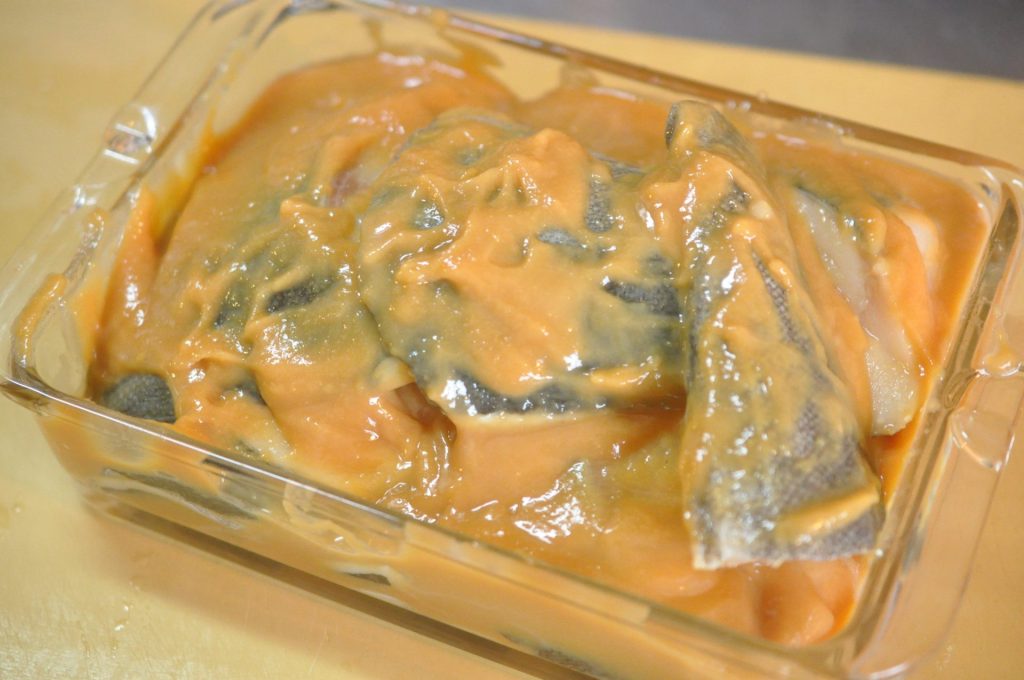
Miso" is the most popular seasoning for Japanese cooking. It is a traditional Japanese seasoning made by fermenting soybeans, rice, wheat, and other grains with koji (malted rice) and salt.
There are different types of miso in different regions, with red miso and white miso being the most famous. Among them, there is a type of miso called "Saikyo Miso" in Kyoto.
Saikyo Miso" was born 200 years ago in Kyoto. The origin of Saikyo miso dates back to a Tamba toji named Shigesuke Tambaya who, at the behest of the Forbidden Imperial Palace (today's Kyoto Imperial Palace), brewed and presented miso for cooking at the palace.
Originally, Kyoto was far from the sea and it was difficult to keep fish fresh, so they were pickled in miso. Then, chefs who pursued Kyoto cuisine began to pickle fish to bring out the best flavor of the ingredients.
The name "Saikyo Miso" comes from the fact that the capital was moved to Edo (Tokyo) during the Meiji Restoration and became "Tokyo," while Kyoto, the capital of the west, was called "Saikyo.
Saikyo miso was nurtured in the court culture, and its main feature is to prepare low-salt miso with a short maturation period in order to take advantage of its sweetness and beauty.
This gives it a sweet taste that is different from the salty white miso of Kanto. Although it may seem unsuitable for miso soup, miso soup with its robust aroma and its sweetness is also delicious.
Saikyo miso is made with a large amount of rice malt, and in some cases, it also contains mizuame (starch syrup). It has a strong sweet taste and less than half the salt content of regular white miso.
Low-sodium Saikyo miso is also characterized by its whitish color. The short maturation period gives it a whiter finish.
So what are the differences between Saikyo miso and Shiro miso, which look very similar?
The conclusion is that the manufacturing method is the same and the characteristics of the miso are the same.
In other words, Saikyo miso and Shiro miso are the same miso.
However, not just any white miso can be labeled "Saikyo Miso," as long as it meets the criteria approved by the Kyoto Miso Cooperative Association.
The conditions under which miso can be described as Saikyo miso are as follows.
I belong to a union.
The materials used are certified by the association and manufactured in Kyoto Prefecture.
Certified unionized sweet and low-sodium miso
The applicant must have been in business in Kyoto for at least 50 years, or have a miso technician of at least the first grade, or have manufacturing skills equivalent to those commended in the National Federation of Miso Cooperative Associations' awards ceremony.
Only miso that meets the criteria of "the best miso" is called Saikyo Miso.
♦Dashi
Kombu dashi is the basic soup stock used in Kyoto cuisine. Then, dashi broths such as bonito flakes, mackerel flakes, or tuna flakes are used according to the cuisine. When these are combined with the delicious Kyoto water, they form the base that gives the dish its depth of flavor.
Kyoto Rikyu" if you want to get ■dashi (soup stock)
If you can obtain such dashi soup stock, which is indispensable for Kyoto cuisine, you can easily reproduce the taste of Kyoto at home! Here we introduce "Kyoto Rikyu," a much talked-about dashi broth theme park.
Kyoto Rikyu, a restaurant in Fushimi, Kyoto, specializing in dashi and dashi maki, is a new restaurant that opened in July 2022 and has recently been featured in many media outlets.
The restaurant is housed in a magnificent renovated historic Japanese house, and is popular for its carefully selected dashi (Japanese soup stock) and difficult-to-reserve lunches.
This place is said to be a place that delivers the desire to convey the charm, history, and culture of dashi, and with a beautiful Japanese garden and other features, you can feel the Kyoto-like atmosphere.
Furthermore, it is a great place to learn about dashi, with dashi on display in showcases and the opportunity to actually touch the ingredients.
The concept of this restaurant, which claims to be a theme park of dashi (Japanese soup stock), is "enjoyment through the five senses.
○Rikyu's particular dashi (soup stock)
All of the soup stock here is made from the finest natural ingredients produced in Japan.
Since no chemical seasonings, additives, or preservatives are used, even small children and the elderly can eat it with peace of mind.
Recommended for those who want to taste dashi made with real ingredients.
First of all, enjoy the soup stock.
When you come here, enjoy the dashi first. Here, you can watch the chefs making dashimaki. You can also enjoy the sound and aroma of the soup, giving you a real sense of presence.
Learn about our soup stock
Dashi is not just for eating. You can learn about its history and ingredients in our gallery.
You will be able to hold the ingredients in your hands and taste them, which will make you more and more interested in them.
○Try the soup stock
In the food and beverage area, you can get dashimaki and other dishes. The best feature of the dashimaki here is that you can choose from four different types of dashi rolls made with different types of soup stock.
This is the first dashimaki in Japan that allows you to taste different types of dashi broth, so you can enjoy delicious dashimaki while comparing the different flavors of dashi broth. You will surely find the flavor you like.
To finish off the meal, there is also dashi chazuke. The collaboration of freshly cooked rice and the taste of dashi broth is irresistible!
Purchase ○Odashi soup stock
The soup stock can of course be purchased. It makes a great souvenir, so be sure to examine it according to the recipient. There are also bento boxes and sushi that come with dashimaki, which are beautiful to look at and have a great impact. Of course, the soup stock is made with the finest ingredients and comes in a decorative box, making it a good souvenir.
Facility Name:Imperial Villa of Kyoto (esp. the Ueno Palace)
HP:https://kyotorikyu.com/
Address: 45 Nakajima Toba Rikyu-cho, Fushimi-ku, Kyoto-shi, Kyoto
Access: about 5 minutes by car from the west exit of Takeda Station on the Kyoto Municipal Subway Karasuma Line
■ Summary
How was it?
In this issue, we have introduced the appeal of Kyoto cuisine, including its ingredients.
Kyoto was blessed with abundant water resources, which allowed Kyoto cuisine to develop over a long period of time.
In particular, many kyoyasai vegetables are in season in each of the four seasons, so be sure to try the ones in season when you are sightseeing.


Related PostRelated Articles

Pilgrimage to the Holy Land of "Tamako Market" in Kyoto, Japan! List [Summary
Do you know the Japanese TV animation "Tamako Market" produced by Kyoto Animation? Tamako [...]...
Recommended in Kyoto♪ Places to play with children indoors during Golden Week!
Golden Week will soon arrive. We hope that every day will be meaningful for your children... and their parents [...].
Enjoy Sake in Fushimi, Kyoto♪ 3 recommended places for sake brewery tours
Fushimi, Kyoto has long been famous for sake brewing. Also, with many of the shrines and famous water, delicious sake [...].
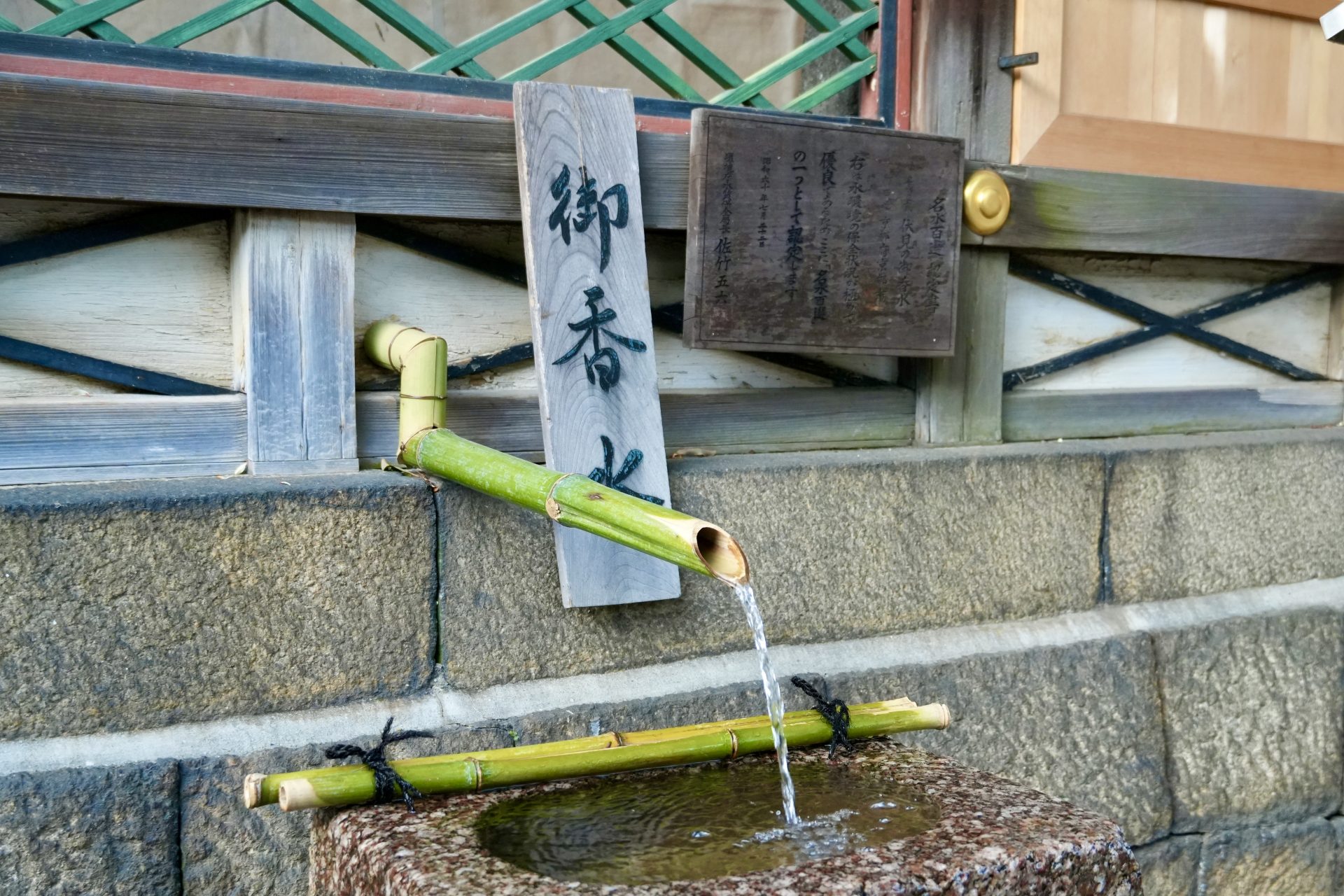
Three famous water sources in Kyoto! What are the places where you can heal your travel fatigue with ”water”?
In Kyoto, there are many famous places known as "Meisui" (famous water). In such cases, what you especially want to visit is not just famous water to look at, but also to "drink [...]".
Insider Tips from Kyoto Locals! 4 Hidden-Gem Shrines and Temples to Visit Without the Crowds [Including Visiting Hours and Admission Fees]
Visiting shrines and temples is an essential part of sightseeing in Kyoto, but popular spots like Kiyomizu-dera Temple and Fushimi Inari Taisha attract large numbers of visitors regardless of the season […]