

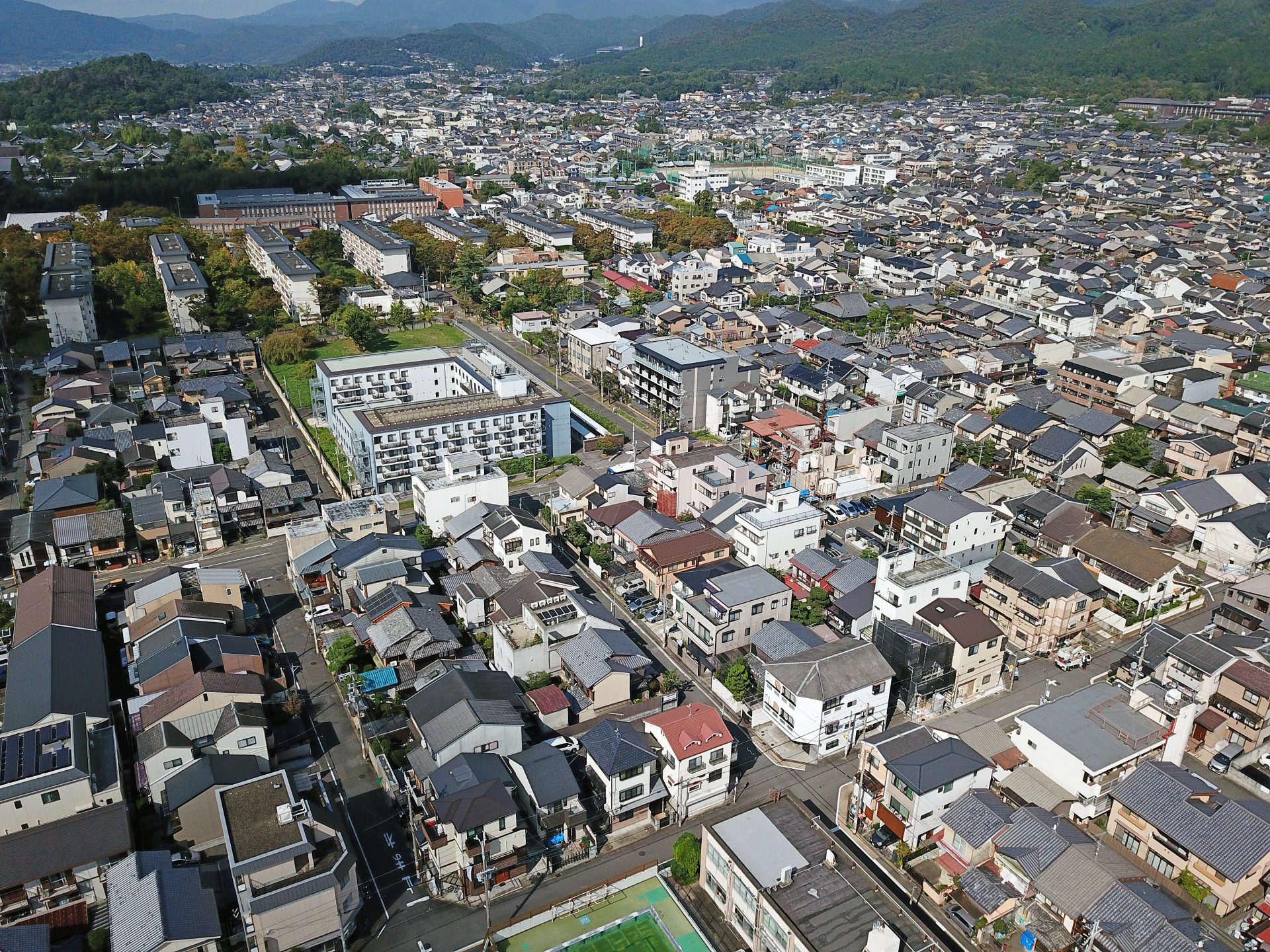
When you come to Kyoto, you are particularly impressed by the grid pattern of the streets.
On the one hand, I think "I feel Kyoto-like" because I don't see this kind of road very often,
Why the grid?
Is it not easy to get lost?
. how do people in Kyoto remember?
You may have many questions, such as.
Therefore, in this article, we would like to introduce why the streets of Kyoto are laid out in a grid pattern and a song that can help you remember the way.
Please learn more about it and then walk around the actual town.
Kyoto's grid is like a maze!
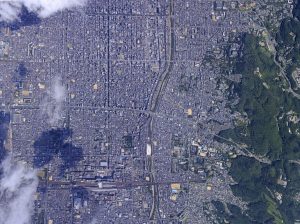
Photo: Photo AC
Have you ever walked the streets of Kyoto consciously?
If you have actually walked through the area as a tourist, you may have experienced that once you step into the area, you do not know where you are.
Why are the streets of Kyoto City called "Go-ban-me"?
The reason for this is obvious in the map.
The city of Kyoto has straight east-west streets and straight north-south streets that intersect with each other, neatly arranged like a grid when viewed horizontally and vertically.
The east-west street is horizontal and the north-south street is vertical.
That's why they are called "Go-ban-no-me" or "grid paths.
■Why are the streets of Kyoto laid out in a grid pattern?
A normally finished street would not have a grid like this.
Then, why are the streets of Kyoto laid out in a grid pattern?
The reason for this concern can be understood by looking back in time.
Basically, the roads on the Go board in Japan are Kyoto City, Nara Prefecture, and Sapporo.
Around the world, they can be found in Beijing, Chicago, and New York.
These were built in planned hands.
Heian-kyo is the city that was once considered the capital of Japan.
In other words, the east-west and north-south streets were laid out to intersect vertically based on the joubou system in 794 A.D., when the Heian-kyo capital was built.
From the north on Dongzhi Rd.
Ichijyo Oji
Nijo Oji
Sanjo Oji
︙
Kujo Oji
In addition, small alleys were built between each of the main alleys.
And in Nanboku-ji, four major streets and minor streets were built around Senbon-dori, one to the west as Ukyo and up to Saikyogoku-oji, and the other to the east as Sakyo and up to Tokyo-kyogoku-oji.
Thus, based on the joubou system, major and minor roads were built in the north-south and east-west directions.
Later, the town was partially devastated by fire and warfare, including the Onin War that broke out in 1467.
Later, when Toyotomi Hideyoshi began to rebuild the city of Kyoto, he utilized the streets of Heian-kyo to create north-south alleys.
Although the shape of the street has changed since then due to Kyoto City's three major projects and urban planning, it is still in the form of a grid.
■Don't people in Kyoto get lost in the Go board?
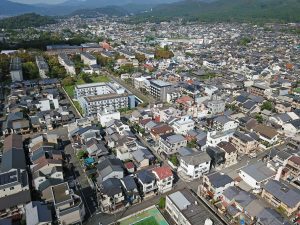
Photo: Photo AC
Kyoto City, where streets are laid out in a grid pattern.
For first-time visitors to the area, it can be a bit of a "maze" and a bit confusing.
So, do people in Kyoto not get lost in the Go board?
The conclusion is that the risk of getting lost is rather low.
The grid of Kyoto City faces either east, west, south, north, or south, so that if you only know "which way is north," you will not get lost.
However, the atmosphere of each place looks exactly like Kyoto, so a first-time visitor may find many similar streets and intersections, which may make it difficult to find the right place to visit.
I don't understand.
. I've lost track of where I am on the board.
You may experience this.
■The way to remember Kyoto's Go board is by "song"!
Many of the streets in Kyoto's grid system have difficult names, but songs have long been passed down to help people avoid getting lost.
Here are some "Kyoto Street Counting Songs".
Counting Songs of the East and West
Lyrics
Marutake Ebisuni Oshioike
Anesan Rokkaku Tako Nishiki
Shiyabutsubutsukaka Matsumagojo (Shiyabutsubutsukaka Matsumagojo)
Seketa Chara Chara Uonotana (Snow Clogs on the Fish Shelf)
Rokujosan tetsujou santetsu jyosou
Hittcho koete ha hakkujo (If you cross the seven articles, you will cross the eighty-nine articles)
Jujo Toji de Todo Usade (To finish at Jujo Toji Temple)
Meaning of each
Maru→Marutamachi Dori
Take → Takeya-cho Dori
Ebisu → Isikawa St.
2 -> Nijo dori
Oshi → Oshikoji St.
Oike → Oike Dori
Ane → Anekoji Dori
Sanjo Street
Rokkaku→Rokkaku Dori
Tako → Takoyakushi Dori
Nishiki → Nishiki-koji St.
Shijo St.
Aya → Ayakoji Dori
Bussu→Butsukoji Dori
Taka → Takatsuji Dori
Matsu→Matsubaradori
Man → Manjuji St.
Gojo → Gojo Dori
Seta→Setsuyacho Dori (now Yangbai Dori)
Chara Chara → Kagiyacho Dori (now Matoba Dori)
Uonotana→Uo no tana dori (now Rokujo dori)
Rokujo → Rokujo Dori
Santetsu (too much street) → Santetsu Dori (now Shiokoji Dori)
Hicho (koeru) → Shichijo dori
Hachijo Dori
Kujo → Kujo Dori
Jujo → Jujo Dori
Toji de (to stay) → Toji Temple
○Northern and Southern Counting Songs
Lyrics
Teragoko Fuyatomi Yanagisakai
Takama Higashi Kurumaya-cho
Karasu Ryogae Murorogoro
Shinmachi Kamanza Nishi-Ogawa (Shinmachi Kamanza Nishi-Ogawa)
Aburasamegai de horikawa no mizu (Aburasamegai de Horikawa no mizu)
Yoshiya inokuro oomiya he (Yoshiya inokuro oomiya he)
Matsuhigurashi ni Chiekoin (Matsuhigure ni Chiekoin)
Jofuku Senbon Sasta ni Shijin (Jofuku Senbon Sasta ni Shijin)
Meaning of each
Tera → Teramachi Dori
Goko → Mikomachi Dori
Fuya → fuyacho dori
Tomi→Tomikoji St.
Yanagi → Yanagi Babadori
Sakai→Sakaicho Dori
Taka → Takakura Dori
Ai → Manomachi Dori
East → Higashinotoin Dori
Kurumaya-cho → Kurumaya-cho Dori
Karasu → Karasuma Dori
Ryogae → Ryogae-cho Dori
Mura→Muromachi Dori
Goromo → Korodanadori
Shinmachi → Shinmachidori
Kamanza→Kamanza Dori
Nishi → Nishinotoin Dori
Ogawa → Ogawa Dori
Abura→Aburakoji St.
Samegai (de)→Samegai Dori
Horikawa (Nozumi) → Horikawa Dori
Yoshiya → Yoshiya-cho Dori
Ino → Dori Inokuma
Kuro → Kuromon Dori
Oomiya (he) → Omiya Dori
Matsu → Matsuyacho Dori
Higurashi (ni)→Higurashi Dori
Chiekoin→Chiekoin Dori
Jofuku→Jofukuji Dori
Senbon (Sate-nishijin) → Senbon Dori
■Addresses are marked in a unique way, such as "Higashiiru" (east entrance)
Even addresses that are commonplace to Kyoto residents have a unique culture.
It is,
East entrance
West entrance
upper reaches
... and down
This means that notations such as the following are used.
This has been in use since the mid-Heian period.
in either sense
East Entrance→Turn east at the intersection of streets.
Entering the street from the west, go west at the intersection of streets.
Go to the north side.
Go down to the south side.
This is the case.
Kami-ru" or "Shimo-ru" is the north side toward the front of the emperor, and "Shimo-ru" is the south side away from the front of the emperor, so they are called "Kami-ru" or "Shimo-ru".
Thus, addresses also have their own unique culture, so please pay attention to the addresses as you visit the sightseeing spots.
■Kyoto's goban song appears in that movie!
The Kyoto Go board counting song appears in the movie "Detective Conan: Labyrinth of Crossroads (Crossroads)," which was released in April 2003.
This Detective Conan story is set in Kyoto, where a certain girl is singing a counting song about the streets of Kyoto while playing ball.
Kiyomizu Temple and Kyoto Tower also make appearances, so anime lovers may have seen them at least once.
■ Summary
How was it?
In this issue, we have introduced the reason why the streets were developed into the "Goban-no-Me" which is said to be like a maze in Kyoto, and counting songs that can be memorized.
It's fun to actually think of a song and walk down that road.
We encourage you to walk the famous streets and visit the tourist attractions.


Related PostRelated Articles
If you're going all the way, visit a place that will leave you with lasting memories! 7 Retro Cafés in Kyoto
Recently, retro-style coffee shops that make you feel as if you’ve slipped back in time to the Showa era have been attracting a lot of attention. With their vibrant colors […]

Detective Conan: A Pilgrimage to the Kyoto Locations Featured in "The Crimson Love Song" and "The Crossroads of the Labyrinth"! List [Summary]
The Detective Conan movies set in Kyoto are *A Crimson Love Letter* and *Crossroads in the Labyrinth* […]
What Is "Sawawa" in Kyoto? Discover the Charm of Matcha at Nishiki Market, with Over 1,300 Years of History!
Nishiki Market is often called the “kitchen of Kyoto,” and it’s lined with all kinds of shops, isn’t it? In a place like that, you can find drinks and ice cream made with matcha […]
"K-ON!" Kyoto Pilgrimage to the Series' Locations! List [Summary]
Have you heard of the anime “K-ON!”? “K-ON!” is a four-panel manga series by manga artist Kaki Furai […]
What is “Smart Coffee Shop,” a local favorite for many years? Their French toast is delicious!
Have you heard of a café called “Smart Coffee Shop” in Sanjo, Kyoto? It has been a local favorite for over 90 years […]