

What is Onmyouji?
What exactly is an Onmyoji? They appear in dramas, movies, video games, and anime, and they are well known for being chosen as a theme by figure skater Hanyu, right?
The term "Onmyoji" first came into use around 685. Thirty years later, in 718, the Yoro Ritsuryo (Yoro Code) established the Onmyo Ryo, a national institution similar to the modern Ministry of Education and Science, and the national civil servants who worked there were called Onmyoji.
In fact, this profession has existed since the Nara and Heian periods.
He specialized in astrology and astronomy, and as an extension of this, he also performed demon exorcisms.
In other words, they were using academics and divination to verify and solve various phenomena.
Charismatic Yin-Yang Master, Abe no Seimei
Among the Yin-Yang masters of the past, Abe no Seimei was said to be a genius by far.
Abe no Seimei was reputed for his outstanding knowledge of Onmyo-do and was trusted by many noblemen. He left behind numerous achievements and anecdotes, and is said to be a legendary Onmyoji.
Seimei served in the entourage of six emperors from Suzaku to Murakami, Reisen, Enryu, Hanayama, and Ichijo, and made numerous achievements and left behind many anecdotes. While in the service of Emperor Murakami, he traveled to Tang Dynasty China and inherited the divine teachings of the Hakudo Hermits, which he used as the basis for the establishment of the uniquely Japanese Onmyoudo.
The annual events, calendars, and divination methods that serve as the basis for our daily lives today were all created at this time.
If you pray to Seimei, you will be protected from various disasters. He is said to be a legendary Yin-Yang master who has left behind numerous achievements and anecdotes, such as curing illnesses and injuries.
In this issue, we will guide you to Seimei Shrine, which is dedicated to Abe no Seimei.
Table of Contents
What is Seimei Shrine?
■Seimei ShrineHighlights of the Ichino Torii (1)
■Highlight of Seimei Shrine (2) Old Ichijo-gomen Bridge
■Highlight of Seimei Shrine (3) Seimei Well
■Highlight of Seimei Shrine (4) Main Shrine
■Highlight of Seimei Shrine (5) Statue of Lord Seimei Abe
■Highlight of Seimei Shrine (6) Peach to ward off bad luck
■Highlight of Seimei Shrine (7) Commendation board
■Highlight of Seimei Shrine (8) Kikyoen
■ Summary
What is Seimei Shrine?
Seimei Shrine is located in Kamigyo-ku, Kyoto.
After Seimei's death in 1005, Emperor Ichijo founded this shrine on the site of the mansion where he lived in honor of his achievements. At the time of its construction, the shrine was a vast area with Horikawa Dori to the east, Kuromon Dori to the west, Motoshiganji Dori to the north, and Neutraluri Dori to the south. However, due to wars such as the Onin War and the construction of the capital by Toyotomi Hideyoshi, the size of the shrine was reduced and the shrine buildings were in a state of ruin. After the end of the Edo period, the shrine and its precincts were renovated mainly by the shrine parishioners.
■Highlight of Seimei Shrine (1) Ichino Torii (First Gate)
The Seimei Shrine offers something different from other shrines.
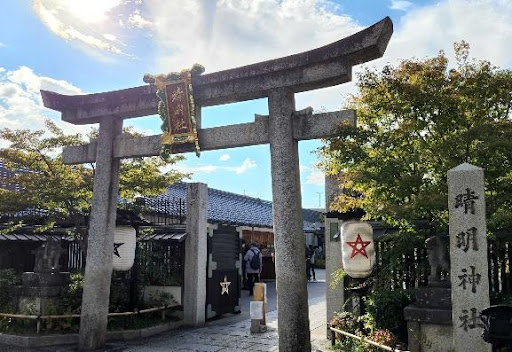
The first one we will introduce is Ichino Torii.
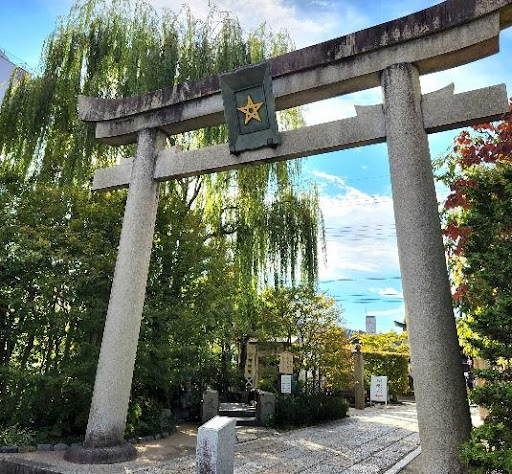
Shining on the oblong plaque is the company crest, a pentagram (gobo sei). Also known as "Seimei Kikyo," it has been valued as a talisman to ward off all kinds of evil.
Generally, the name of the temple or building is written on the flat plaque, so it is unusual and eye-catching.
■Highlight of Seimei Shrine (2) Old Ichijo-gomen Bridge

You can see the "Old Ichijo Mibyo Bridge," which was reproduced using the parapet posts that were once actually used on the Mibyo Bridge.
The Ichijo-muren-bashi Bridge was built in 794 (Enryaku 13) when the capital was transferred to Heian-kyo, and is still located approximately 100m south of Seimei Shrine. It was replaced in 1995.
Located in the northeast direction of the capital at that time, it was the entrance and exit at the edge of the capital. It is said that the dead were carried across this bridge to the cemetery outside the capital, so it can be said that it was a bridge connecting the other world and this world.
The name of the bridge comes from the story of his son, Jozo, who, upon receiving the news of Kiyoyuki Miyoshi's death, hurried back to Kyoto and met his father's funeral procession on this bridge, where he grieved and Kiyoyuki was temporarily revived.
Even today, there is a custom that young women who are about to get married or involved in a marriage proposal should stay away from this bridge, lest their wives be returned from the marriage.
It is also said that, taking "return" backwards, soldiers going to war and their families crossed the bridge of return hoping for their safe return.
Highlights of Seimei Shrine (3) Seimei Well

On the right side of the second torii gate is the Seimei Well. It is said that the Seimei Well is said to be blessed with the spiritual power of Abe no Seimei to bring good health and good fortune. Seimei well is one of the Seven Wonders of Horikawa Street.
Seimei well is counted as one of the best springs in Yamashiro and is said to have been used by Sen no Rikyu. It is also said that Sekihaku Hideyoshi Toyotomi drank it for tea.
■Highlight of Seimei Shrine (4) Main Shrine
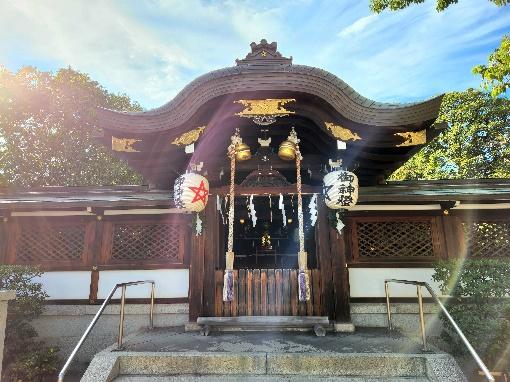
The main shrine, located at the far end, enshrines the main deities, Abe no Seimei and Kurainatama no Mikoto (Uka-no-Mitama no Mikoto).
The shrine is said to be blessed with charms and blessings such as protection against evil, protection against evil, protection against bad luck, protection against fire, healing from illness (protection against disease), marriage, and prayers for success in school.
■Highlight of Seimei Shrine (5) Statue of Lord Seimei Abe
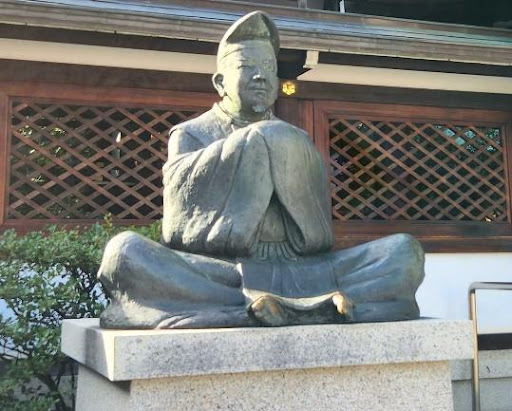
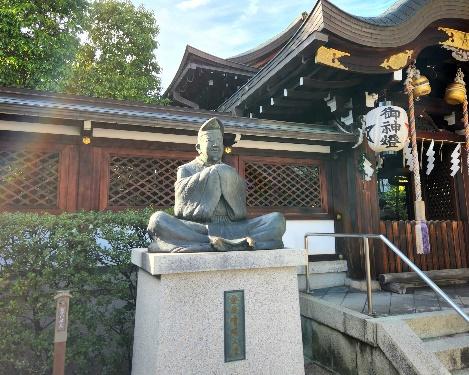
This bronze statue was created based on a portrait in the collection of Seimei Shrine. The figure is reproduced observing the celestial bodies in the distance, hands tied in a seal under his costume.
■Highlight of Seimei Shrine (6) Peach to ward off bad luck
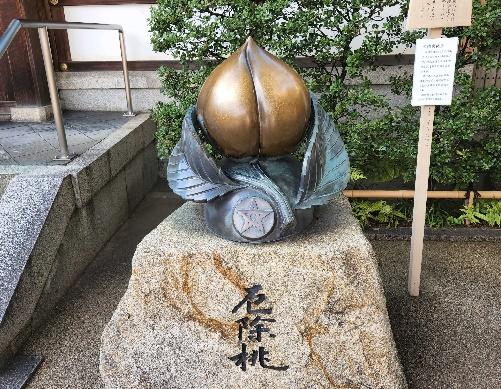
On the right toward the main shrine is the "Yakuyaku Momo" (peach to ward off evil spirits).
The Chinese character for "peach" is written "木" hence "kizashi," and in the Yin-Yang Tao, it is said to be a fruit to ward off evil and evil spirits. It is said that stroking a Yakuwari Peach will transfer evil spirits to the peach and bring good luck in warding off bad luck.
■Highlight of Seimei Shrine (7) Commendation board
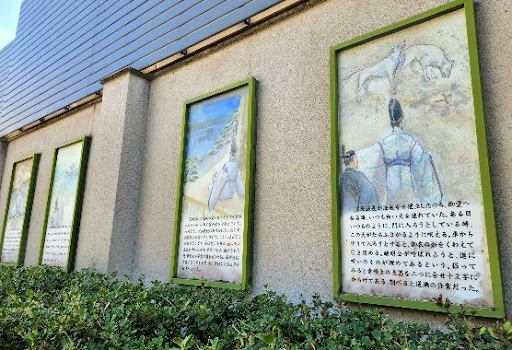
Ten legends about Abe no Seimei are presented in pictures and text.
The story of Seimei competing with his rival Ashiya Douman (芦屋道満) to see who had better legal powers and turning summer tangerines into rats is explained in an easy-to-understand manner, almost drawing you into the mystique of Seimei.
■Highlight of Seimei Shrine (8) Kikyoen

Within the shrine grounds is the Kikyo Garden, where bellflowers, the motif of the shrine crest "Seimei Kikyo," bloom.
About 2,000 bellflowers, including those in the bellflower garden, are planted on the temple grounds, and their cobalt blue and white flowers bloom from mid-June to early fall each year. Incidentally, "Kikyo-mamori" is sold only during the period when the bellflowers are in bloom.
In addition to good luck charms and omamori, the shrine also carries a variety of other products, such as a crystal sazareishi for purification, a pentagram charm sticker to put on your car, and a round crystal pentagram pendant charm.

The shrine is also full of spots such as this where visitors can enjoy themselves while paying their respects.
■ Summary
When you come to Kyoto, why not visit the best power spot in Kyoto to ward off evil and experience the world of Onmyoji?
Facility Name:Seimei Shrine
HP:https://www.seimeijinja.jp/
Address: 806 Harumei-cho, Kamigyo-ku, Kyoto (Horikawa-dori Ichijo-agaru)
Phone: 075-441-6460


Related PostRelated Articles

What is “Fengquan,” a restaurant serving Kyoto-style Cantonese cuisine? If you’re looking for authentic flavors in Kyoto’s Nakagyo Ward, this is the place to go!
Have you heard of a restaurant called “Hōsen” in Kawaramachi, Kyoto? “Hōsen” is a restaurant where you can enjoy authentic Cantonese cuisine […]
A Pilgrimage to the Sacred Sites of *Nurarihyon's Grandson: The Thousand-Year Demon Capital* in Kyoto! List [Summary]
"Nurarihyon's Grandson," a Japanese manga by Hiroshi Shiibashi. Serialized in Weekly Shonen Jump in 2008, it features yokai as its theme […]
What is "Suehiro," the time-honored Kyoto sushi restaurant with over 200 years of history? If you're visiting Kyoto's finest restaurants, this is the place to go!
It’s no exaggeration to say that almost everyone living in Nakagyo Ward, Kyoto, has heard of the long-established Kyoto sushi restaurant “Suehiro.” This place has been featured in the media and magazines […]
A Pilgrimage to the "HELLO WORLD" Holy Sites in Kyoto! List [Summary]
"HELLO WORLD" was released on September 20, 2019. Director Tomohiko Ito is also known for *Your Name.*, but...
If you want to eat seasonal fruit tart in Kyoto! What's so special about Hyde&Away and what do you recommend?
If you like sweets, don't you sometimes have an irresistible craving for tarts? Tarts are a pastry that originated in France and are made of fruit and [...]...