

"Yasui Konpira-gu," a small shrine located at the Higashiyama-Yasui intersection south of Gion in Kyoto.
Although it is affectionately known locally as “Yasui’s Konpira-san,” it is nationally renowned as “one of Japan’s leading shrines for ending relationships.”
Known for its unique blessing of “cutting bad ties and forging good ones,” this is one of Kyoto’s most renowned power spots, attracting visitors from all over the country who are struggling with various kinds of “ties”—whether in romance, personal relationships, or bad habits.
In this article, we provide a comprehensive overview covering everything from the historical background of Yasui Konpira Shrine to the proper way to worship at its iconic “Stone Monument for Breaking and Forming Bonds,” essential etiquette to keep in mind during your visit, highlights within the shrine grounds, and access information.
This information is useful not only for first-time visitors but also for those showing foreign friends around.
Table of Contents
■About Yasui Konpira Shrine
■Why Is It Called the “Shrine for Breaking Ties”? | The History of the Shrine and Emperor Sutoku
■Benefits You Can Receive
■How to Pay Respects at the “Monument for Breaking and Forging Bonds”
■Etiquette and Points to Keep in Mind When Visiting a Shrine
■Highlights of the Temple Grounds
■Amulets, Fortune Slips, and Temple Stamps
■ Is it okay for couples or married couples to visit the shrine?
■Directions & Basic Information
■ Summary
■About Yasui Konpira Shrine
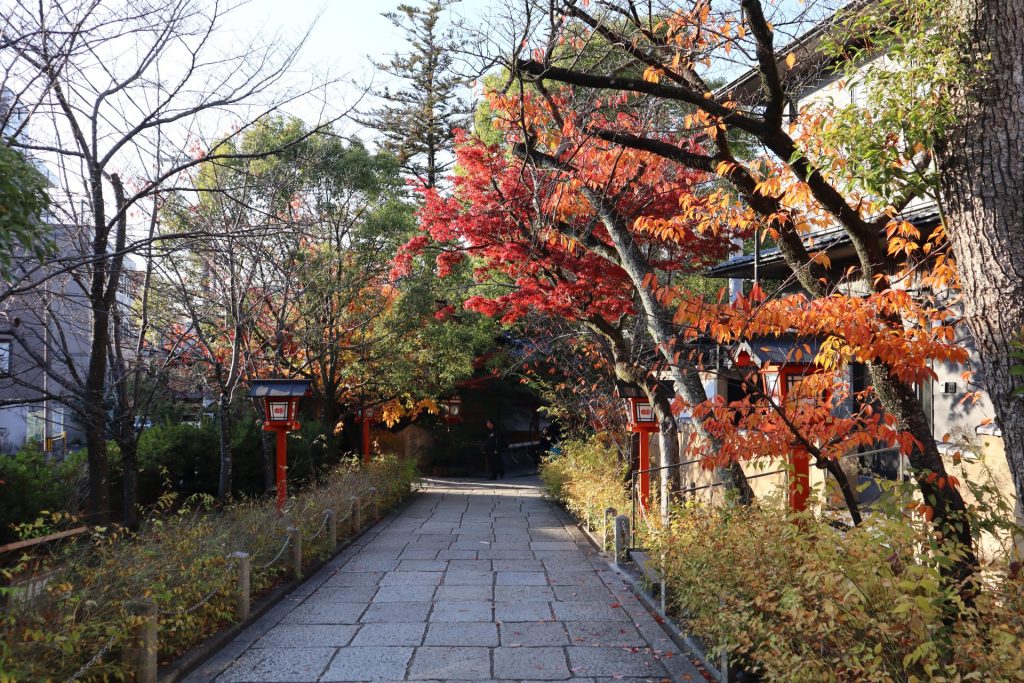
Yasui Konpira Shrine is a Shinto shrine located at the corner of the Higashiyama-Yasui intersection in Higashiyama Ward, Kyoto City.
Nestled within walking distance of popular tourist spots in the Higashiyama area—such as Kiyomizu-dera Temple, Yasaka Shrine, and Kennin-ji Temple—it stands quietly just beyond a stone torii gate.
The principal deity enshrined here is Emperor Sutoku (Emperor Sutoku the Retired), the 75th emperor of Japan, who reigned during the late Heian period.
In addition, the shrine enshrines Ōmononushi-no-kami, known as the god of maritime and traffic safety, as well as the military commander Minamoto no Yorimasa.
Known for its blessing of “severing bad ties and forging good ones,” it has garnered a devoted following not only for helping with concerns about romantic and interpersonal relationships but also as a place for “prayers to sever ties” — to break free from bad habits such as smoking, drinking, and gambling, as well as to sever ties with illness.
■Why Is It Called the “Shrine for Breaking Ties”? | The History of the Shrine and Emperor Sutoku
○Its origins date back to the Asuka period, when it was known as "Fujidera"
According to the shrine’s tradition, the origins of Yasui Konpira-gu are said to date back to the Asuka period.
During the reign of Emperor Tenji, the 38th emperor known for the Taika Reform (c. 668–671), it is said that Fujiwara no Kamatari (Nakatsumi no Kamatari), wishing for the prosperity of his clan, built a Buddhist hall and planted purple wisteria within the grounds; this is said to be the origin of the temple’s name, “Fujidera.” Later, during the reign of Emperor Shōmu, the temple was renovated and renamed “Kanshō-ji.”
○Emperor Sutoku and His Tragic Life
In the late Heian period, Emperor Sutoku was said to have deeply loved the wisteria at this Fuji-dera temple. In 1146 (the 2nd year of the Kyuan era), after abdicating and becoming the retired emperor, Emperor Sutoku is said to have converted part of the temple’s halls and pagodas into a residence and had his favorite lady-in-waiting, Awa no Naishi, live there.
However, in 1156, the faction of Emperor Sutoku was defeated in the “Hōgen Rebellion,” which was sparked by disputes over the imperial succession and internal strife within the Regent’s family. The Emperor was exiled to Sanuki Province (present-day Kagawa Prefecture) and, never to set foot in Kyoto again, passed away in 1164 at the age of 46. It is said that during his exile in Sanuki, the retired Emperor renounced all worldly desires and spent his days secluded at Kotohira Shrine in Kagawa.
It is said that this story—"renouncing desire = severing ties"—became the origin of the tradition passed down through the ages that "Yasui Konpira-gu is a shrine known for its power to sever ties."
There is a legend that, following the death of Emperor Sutoku, a series of disasters and epidemics struck Kyoto, leading to the construction of a shrine to appease his spirit—and that this marked the origin of Konpira-gu.
○Devastation and Reconstruction Following the Ōnin War
In 1177, “Kōmyō-in Kanshō-ji” was founded by order of Emperor Go-Shirakawa, but it was destroyed by fire during the Ōnin War, which began in 1467, and fell into ruin.
Later, in the 8th year of the Genroku era (1695) of the Edo period, Rengeko-in Temple, which had been located in Uzumasa-Yasui (present-day Ukyo Ward), was relocated to this site, and Emperor Sutoku, Ōmononushi-no-kami, and Minamoto no Yorimasa began to be enshrined here as the area’s guardian deities.
Following the separation of Shinto and Buddhism during the Meiji era, it was renamed “Yasui Shrine,” and after World War II, it settled on its current name, “Yasui Konpira-gu,” which it retains to this day.
A wisteria tree still stands on the temple grounds as a remnant of the temple’s past as a wisteria temple, and it blooms with beautiful purple flowers every year from April through May.
○Until it gained nationwide recognition as the “Shinto Shrine for Breaking Ties”
The fact that Yasui Konpira Shrine has long been a place of worship for ending relationships can be seen from a prayer ema said to have been dedicated in Meiji 22 (1889).
This ema depicts a woman praying to sever her relationship with a man, indicating that the site was already known at that time as a place for prayers to end relationships.
That said, it was only relatively recently that the shrine gained the nationwide recognition it enjoys today. The number of visitors increased following the erection of the “Stone Monument for Breaking and Forging Bonds”—the shrine grounds’ iconic symbol—and, buoyed by the shrine and “power spot” boom of the 2000s, it became widely known as “Kyoto’s most powerful shrine for breaking bonds.”
■Blessings You Can Receive
○Breaking Bad Connections and Forging Good Ones
The greatest blessing, of course, is “breaking bad ties and forming good ones.” People from all over the country visit the shrine with concerns such as the following.
- I want to break free from the entanglements of personal and romantic relationships
- I want to break the "bad karma" related to my body, such as illness or physical constitution.
- I want to break bad habits like smoking, drinking, gambling, and overspending.
Based on the legend of Emperor Sutoku, who renounced worldly desires and retreated to Kotohira-gu Shrine, the shrine has become a sacred site of worship known for prayers to “cut off” negative influences.
○ Traffic safety・Maritime Safety
Ōmononushi-no-kami, enshrined in the adjacent hall, is known as a deity who clears the way and is believed to grant blessings for traffic safety. Furthermore, since the main shrine of Kotohira-gu (in Kagawa Prefecture) has long been revered as the guardian deity of maritime transportation, many people who enjoy boat fishing and water sports also visit the shrine.
■How to Pay Respects at the “Monument for Breaking and Forming Bonds”
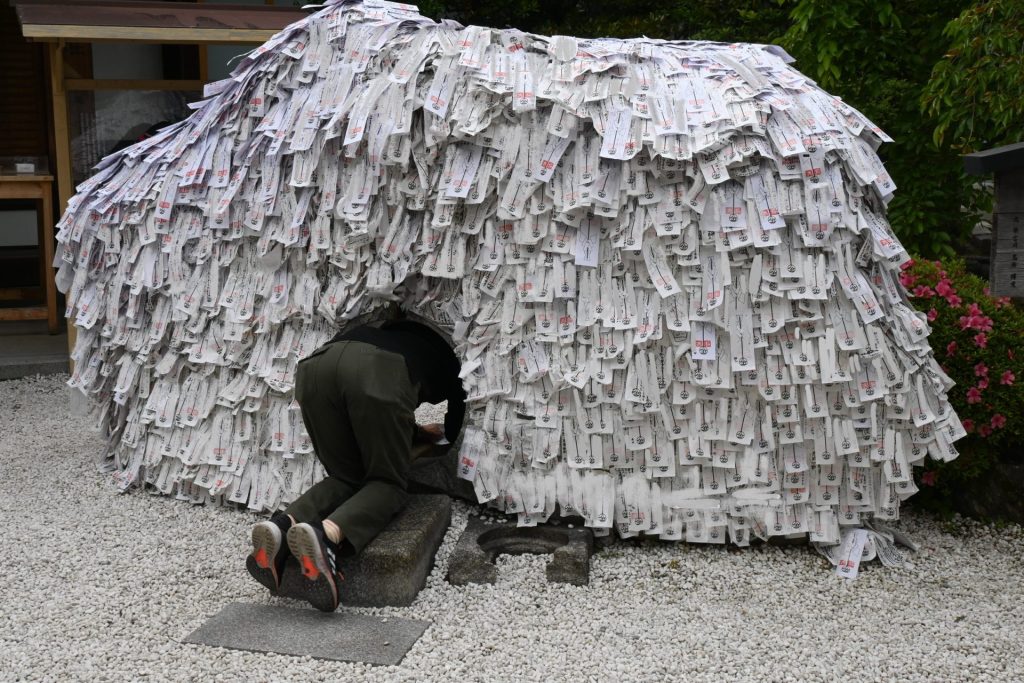
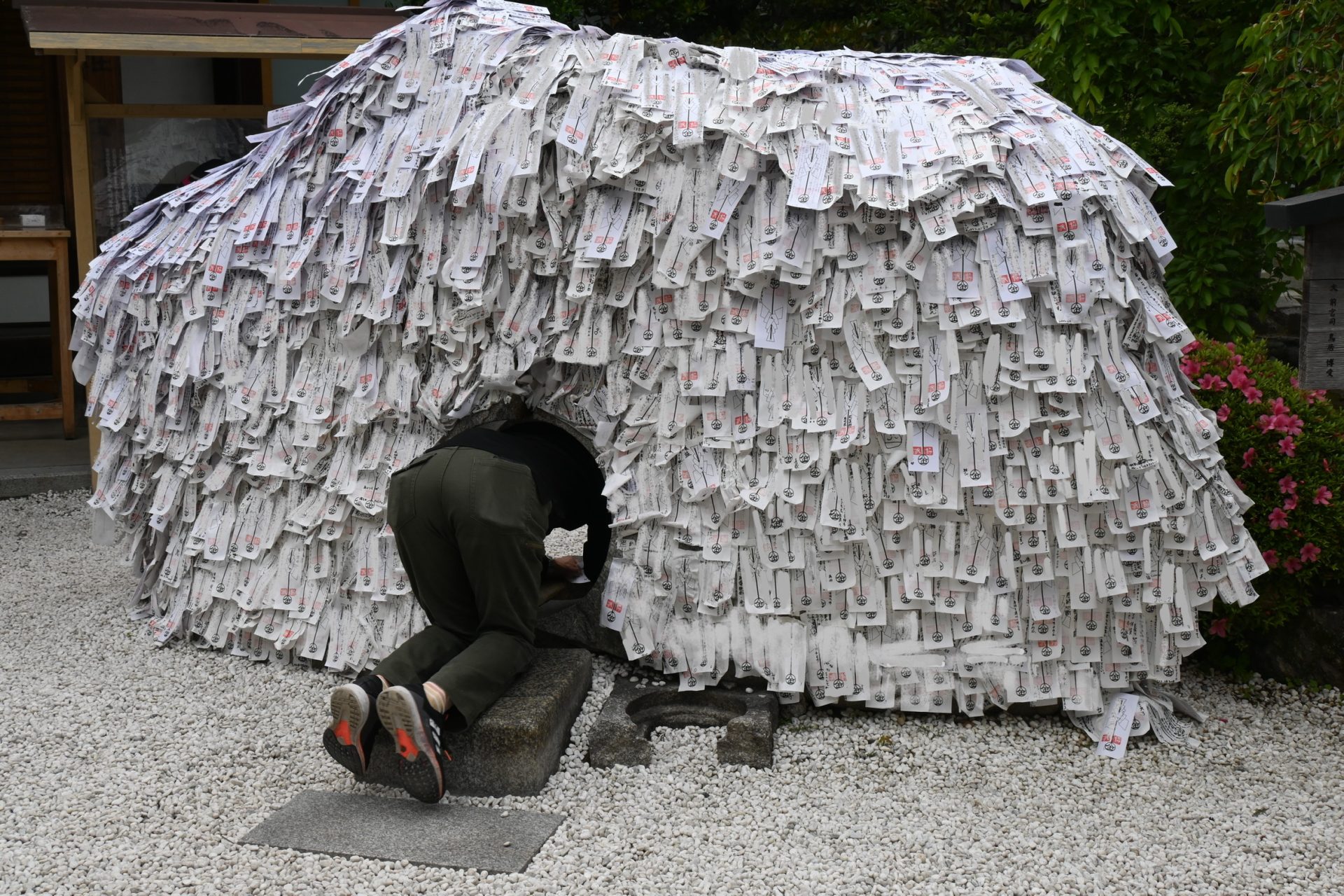
As soon as you step onto the shrine grounds, the first thing that catches your eye is the massive stone monument called the “Stone of Breaking and Making Bonds,” which is completely covered with white talismans.
It is a massive, ema-shaped stone approximately 1.5 meters high and 3 meters wide, with a hole in the center large enough for a person to pass through; it is believed that the power of the gods resides within this hole.
The countless talismans (katashiro) covering its surface speak to the great number of people who have visited this monument over the years.
The proper way to pay respects is as follows.
- Paying Respects at the Main Hall
First, offer a coin at the worship hall, then pay your respects at the main hall by performing the ritual of two bows, two claps, and one bow. - Write your wish on the shikigami
At the distribution booth or the “katashiro” distribution booth located next to the monument, receive a talisman called a “katashiro” (a substitute talisman) and write your wish using the pen provided. It is customary to make a donation of 100 yen or more as a token of appreciation. - Crawl Through the Hole to Break Unfortunate Ties
While holding the shikigami in your hand, pass through the opening from the front side of the monument with your heart full of prayer, and emerge on the back side. - Crawl through the hole to find a good match
Next, while praying for a good marriage, crawl through the same hole from the back to the front, and return to your original position. - Attaching the paper effigy to the monument
Finally, attach the shimono you have to the monument with glue, and your prayer is complete.
Please note that while you can visit the main hall and offer prayers at the monument at any time of day, the reception hours at the gift shop, where you can receive amulets and temple stamps, are9:00 a.m. to 5:30 p.m.Since it closes at [time], we recommend visiting before then.
On weekends and holidays, it can get so crowded during the day that lines form in front of the monument, so if you’d like to pay your respects in peace, early morning or late afternoon are your best bets.
○What should I write on the shikigami?
While there are no strict rules for writing a katashiro, the following styles are generally observed.
- Write the things you want to cut ties with on the right and the things you want to connect with on the left.
- Include a name or initials so that the person can be identified
- Write specific requests, such as “May I sever ties with [Name]” or “May I break [Name]’s bad habit.”
■Etiquette and Points to Keep in Mind When Visiting a Shrine
While many people visit out of curiosity, drawn by the striking nature of the phrase “breaking ties,” Yasui Konpira Shrine is, above all, a sacred place where people offer prayers to the gods.
To ensure a pleasant visit to the shrine, please keep the following points in mind.
○Don't force yourself to cut ties with someone you haven't fully decided to part ways with.
If you're still unsure whether you really want to sever ties, I recommend visiting the shrine again once you've made up your mind.
○Don't wish misfortune upon others
The blessings of Yasui Konpira Shrine are intended solely to “sever bad relationships and allow you to find good ones and achieve happiness.” It is not a place to vent your resentment or grievances toward a specific person.
○Follow the basic etiquette for visiting a shrine
Please observe the general etiquette for visiting shrines, such as bowing once before passing through the torii gate, walking along the edge of the approach path rather than in the center, purifying your body and mind at the water basin, and offering prayers with the “two bows, two claps, one bow” ritual.
○Don't forget to be considerate of those around you.
Since this is a popular spot visited by many worshippers, please refrain from speaking loudly or blocking the aisles while taking photos for extended periods. It is also considered good manners not to peek at the contents of the shintai written by other worshippers.
○Don't visit it just because it's considered a haunted spot
While some people visit here for the thrill of a “cursed place” based on the image associated with the term “en-kiri,” please remember that this is, first and foremost, a place of worship.
■Highlights of the Temple Grounds
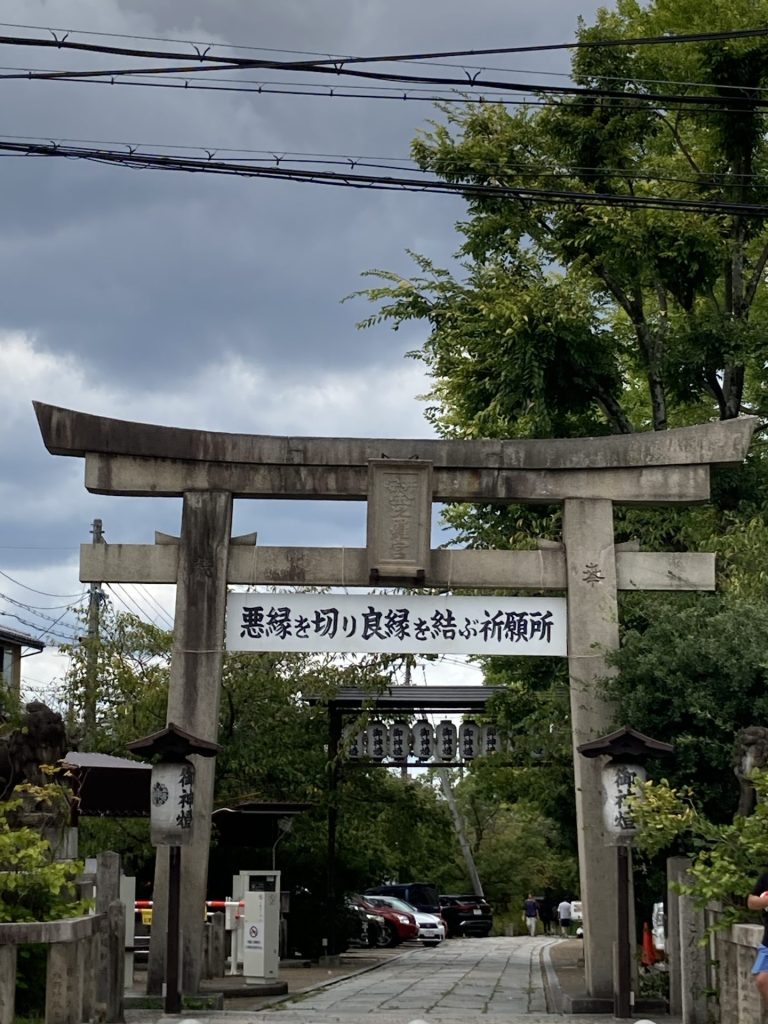
Although the temple grounds aren't particularly large, there are many things to see.
○Konpira Ema Museum
This facility displays a collection of ema gathered from across the country.
However, since renovation work is scheduled to continue until around spring 2027 (Reiwa 9), you may not be able to tour the facility depending on when you visit.
It's a good idea to check the official website in advance for the latest information.
○Worship Hall and Main Hall
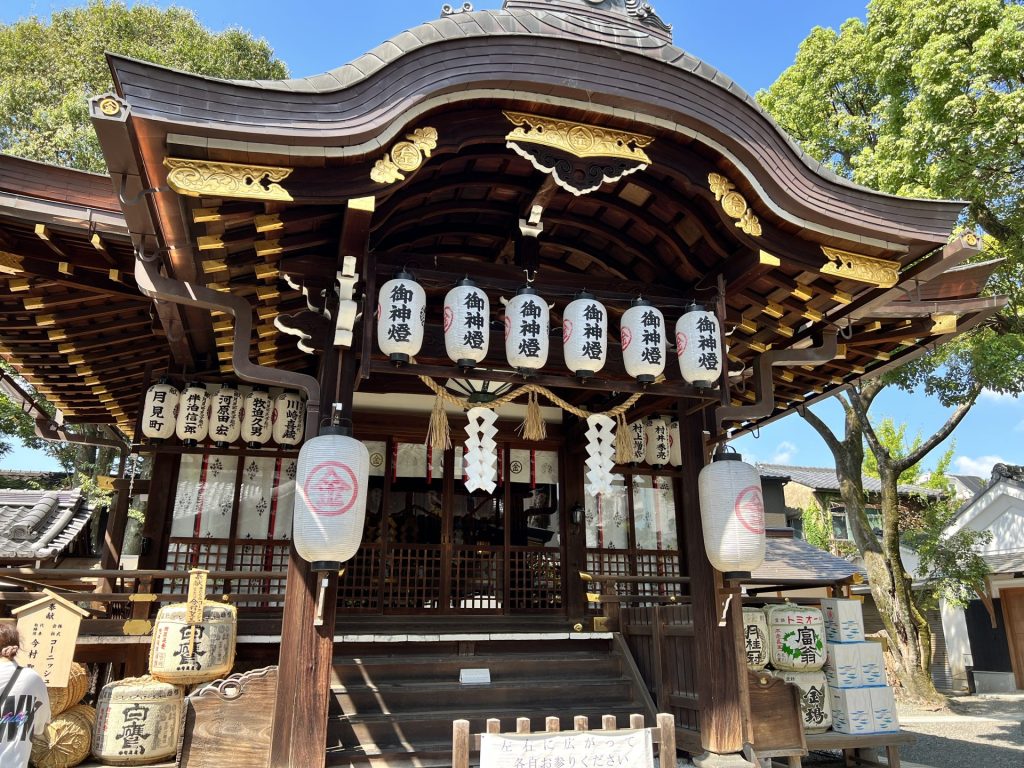
Emperor Sutoku is enshrined in the center, with Ōmononushi-no-kami to the right and Minamoto no Yorimasa to the left. Please begin your visit by paying your respects here.
○Place of Remote Worship (Yōhaijo)
Located behind the main hall, it faces the direction of Kotohira-gu in Kagawa Prefecture, which is the head shrine. Worshipers who are unable to travel all the way to Shikoku can offer their prayers from here.
○Kushizuka
A mound erected in 1961 for the purpose of holding a memorial service for old combs.
Because it is associated with the word “comb” (kushi), it is said to bring benefits for beautiful hair and beauty. Every year on the fourth Monday of September, the “Kushi Festival”—a traditional event to honor disused combs and hairpins—is held, featuring a historical parade recreating hairstyles from various eras of Japanese history that winds its way through the Gion district.
○Yasui Tenmangu Shrine
This is a subsidiary shrine dedicated to Sugawara no Michizane, the god of learning, and is one of the 25 shrines included in the traditional pilgrimage route of the Rakuyo Tenmangu Shrines. The shrine grounds feature a pair of komainu (guardian lion-dogs) said to be the oldest in Kyoto City.
■Amulets, Fortune Slips, and Temple Stamps
At the shrine gift shop, you'll find a variety of amulets related to breaking and forming relationships.
In addition to the “Bad Relationship-Cutting Amulet” for those who want to break free from toxic relationships, the “Matchmaking Amulet” for those hoping to form new connections, and the “Fresh Start Amulet” for when you want to turn over a new leaf, we also carry amulets for academic success, financial luck, protection from water-related accidents, and traffic safety.
After visiting the shrine, the "En-mikuji" fortune slips are also popular.
The process involves shaking a tube containing sticks, reporting the number that comes out to the shrine office, paying the offering fee, and receiving the item. It features a unique design that includes a waka poem by Emperor Sutoku along with predictions for love, health, and financial fortune, and displays a “bad relationship risk” rating as a percentage.
Standard fortune slips (which indicate good or bad fortune) are also available separately, and the hours for receiving them are the same as those at the distribution center: 9:00 a.m. to 5:30 p.m.
■Is it okay for couples or married couples to visit the shrine?
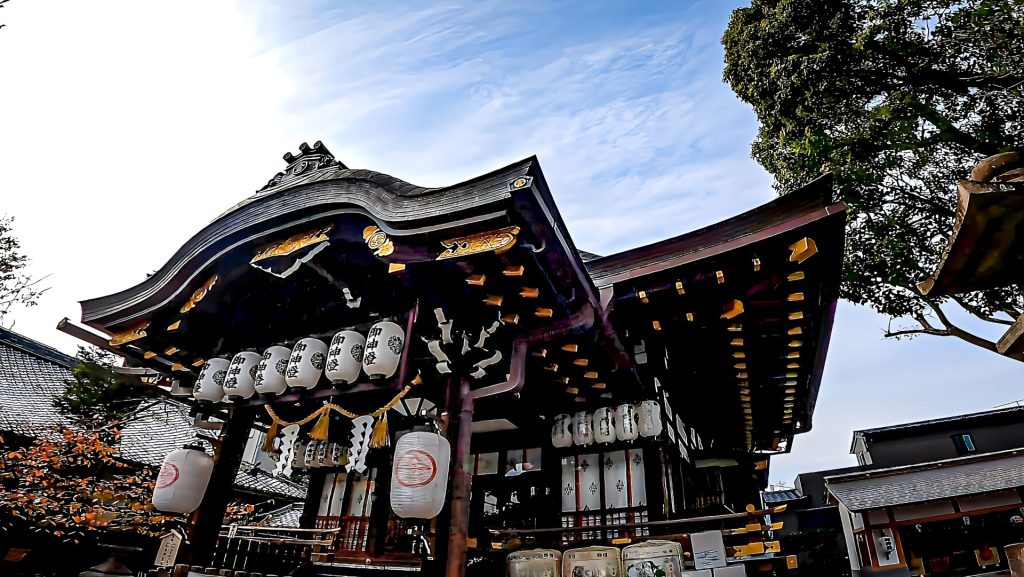
Given the name “Enkiri Shrine,” some people may worry that “if couples or married couples visit, their relationship might end,” but there’s no need to worry.
Yasui Konpira Shrine cuts through the “bad karma”—such as jealousy, attachment, and possessiveness—that destroys happy relationships. In fact, it is often chosen as a place of worship by couples and married pairs who wish to maintain a healthy relationship, as a way to strengthen their bond.
■Directions & Basic Information
| Item | Details |
| name | Yasui Konpira Shrine |
| address (e.g. of house) | 70 Shimo-Benten-cho, Higashioji-Matsubara-agaru, Higashiyama-ku, Kyoto 605-0823 |
| Phone number | 075-561-5127 |
| Visiting Hours | You are welcome to offer prayers at the shrine grounds and memorials at any time of day (the souvenir shop is open from 9:00 a.m. to 5:30 p.m.). |
| Admission Fee | Free |
| Closed Days | Open every day |
| Parking Lot | Available (about 5 units) |
| Directions | About a 10-minute walk from Gion-Shijo Station on the Keihan Main Line / About a 15-minute walk from Kyoto-Kawaramachi Station on the Hankyu Kyoto Line / Right next to the "Higashiyama-Yasui" city bus stop |
| Official Website | http://www.yasui-konpiragu.or.jp/ |
*Opening hours, admission fees, and construction status are subject to change. Please check the official website for the latest information before your visit.
○Nearby Attractions You'll Want to Visit
Since Yasui Konpira Shrine is located in the heart of the Higashiyama area, we recommend visiting it along with the other nearby attractions.
- Kenninji temple
About a 3-minute walk. This is Kyoto’s oldest Zen temple, known for the National Treasure “Folding Screens Depicting the Wind and Thunder Gods” (high-definition replica) and the painting of the twin dragons in the Dharma Hall. - Yasaka Koshindo
About a 5-minute walk. A popular photo spot known for its colorful “Kukuri Saru” statues. - Hanamikoji and Gion
Within walking distance. It’s a charming street lined with traditional Kyoto-style townhouses. - Kiyomizu Temple
It’s within walking distance and conveniently located so it can easily be incorporated into a classic Higashiyama sightseeing itinerary.
■ Summary
Yasui Konpira-gu is one of Kyoto’s premier spiritual spots, preserving the tradition of “prayers to sever negative ties”—a belief rooted in the tragic life of Emperor Sutoku. If you’re struggling with “unfortunate ties”—such as issues in romance, relationships, or bad habits—that are difficult to break on your own, why not pay a visit while observing the proper rituals and etiquette? Located in a convenient spot that’s easy to visit while sightseeing in the Gion and Higashiyama areas, be sure to include it in your Kyoto travel plans.


Related PostRelated Articles

The signature dish at Muge Sanbo in Kyoto—the ”Ultra-Rich Matcha Parfait”—is absolutely delicious! If you want to experience the true essence of Kyoto, this is the place to go!
Have you heard of a shop called “Muge Sanbo,” whose signature dish is a parfait made with matcha that’s quintessentially Kyoto […]
"Rurouni Kenshin" Kyoto Pilgrimage to Famous Locations! List [Summary]
Have you heard of *Rurouni Kenshin*? Not only is there an anime series, but it’s also been adapted into a live-action movie starring Takeru Satoh, so you should definitely check it out […]
Who is Fujina Mi (Sannenzaka Main Store)? Her mitarashi dango are absolutely to die for♪
Have you heard of “Fujinami,” a shop famous for its mitarashi dango? Locals say this is the place to go for freshly made dango […]
A Pilgrimage to the Sacred Sites of "The Eccentric Family" in Kyoto! List [Summary]
Have you heard of the anime *The Eccentric Family*? *The Eccentric Family* is an anime adaptation of a novel by Tomihiko Morimi […]
Have you heard of “Minced Meat and Rice” in Higashiyama Ward, Kyoto? Is it true that it’s incredibly popular even though it only has one item on the menu?
Have you heard of “Hikuniku to Kome,” a famous hamburger steak restaurant in Tokyo? “Hikuniku to Kome” is a popular restaurant in Tokyo, and in 2022 […]