

Kyoto is home to many tourist attractions.
Especially in the Arashiyama area, where there are many sightseeing spots where you can feel "the Kyoto"! Especially in the Arashiyama area, where there are many sightseeing spots such as the Togetsu Bridge and the trolley train, you will see many people on weekends! People! So many people! You may be tired of waiting in line and getting drunk, even though you have come to Kyoto for relaxation....
This time, however, we would like to introduce a few hidden spots near tourist attractions that are easy to visit even for those who are not fond of such crowds, and are known by those in the know.
All of them are places where you can avoid the densely populated areas you are still interested in and still encounter the Kyoto-like atmosphere, so please check here for your reference before you visit the standard tourist spots.
Table of Contents
1. Kano Nenbutsuji Temple
2. Wara Tenjingu Shrine
3. Zuishin-in Temple
4. Nomiya Shrine
5. Ota Shrine
summary
1. Kano Nenbutsuji Temple
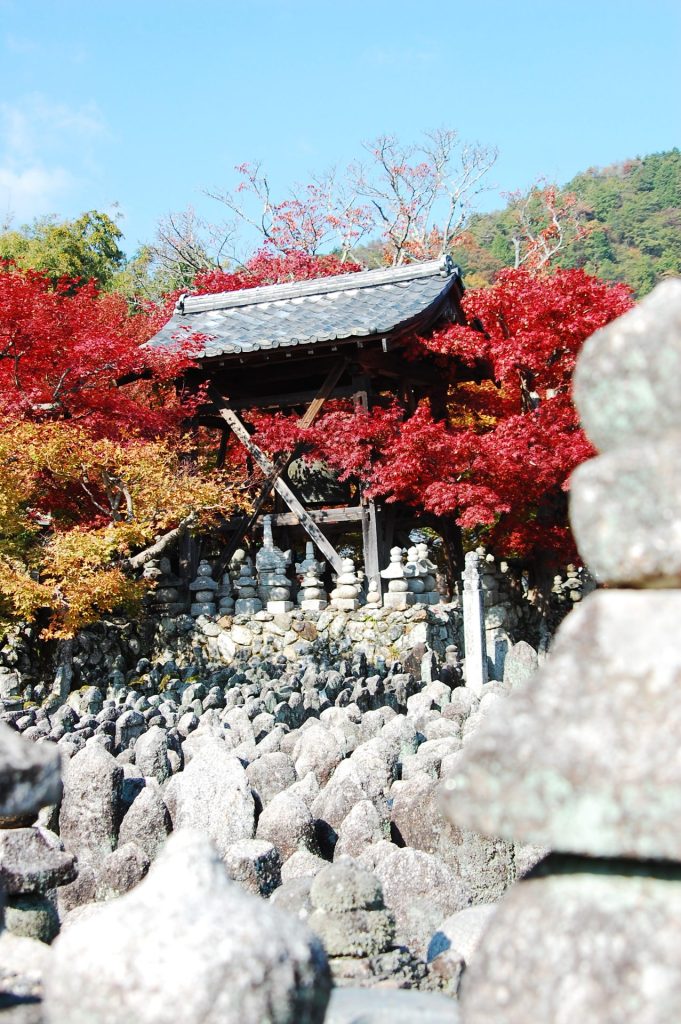
Kano Nenbutsuji Temple, a temple of the Jodo Shinshu sect, is located in the Arashiyama area of Ukyo-ku, Kyoto City, Kyoto Prefecture.
The word “Kakano” means "Adashino," which means "bare" in Japanese.
The land of Kakano used to be a place where poor common people were buried by the wind and left out in the open, but as time went by, people gradually began to send their dead by burial.
At that time, people who regretted their parting built a stone Buddha here.
That is the over 8,000 stone Buddhas in this "Saiin no Kawara". They are all gravestones of people buried here.
In his essay "Tsurezuregusa" (Essays in Idleness), Yoshida Kenko wrote, "If the dew of the Adashino field never disappears, and if the smoke of Mt. The world is an unfair place, and I am sorry that it is so.
Although the stone Buddhas lined up in a row may seem a little scary, you may be able to relax and contemplate the scenery of the four seasons in the quiet atmosphere.
The center of Arashiyama is crowded with many people, but those who want to tour a quieter place may prefer to experience the history that seeps into the stone Buddha and stone pagodas here.
Facility Name:Kano Nenbutsuji Temple
HP:http://www.nenbutsuji.jp/
Address: 17 Saga-Toriihon-Kakano-cho, Ukyo-ku, Kyoto City, Kyoto
Access: about 20 minutes on foot from Saga-Arashiyama Station on the JR Line
2. Wara Tenjingu Shrine
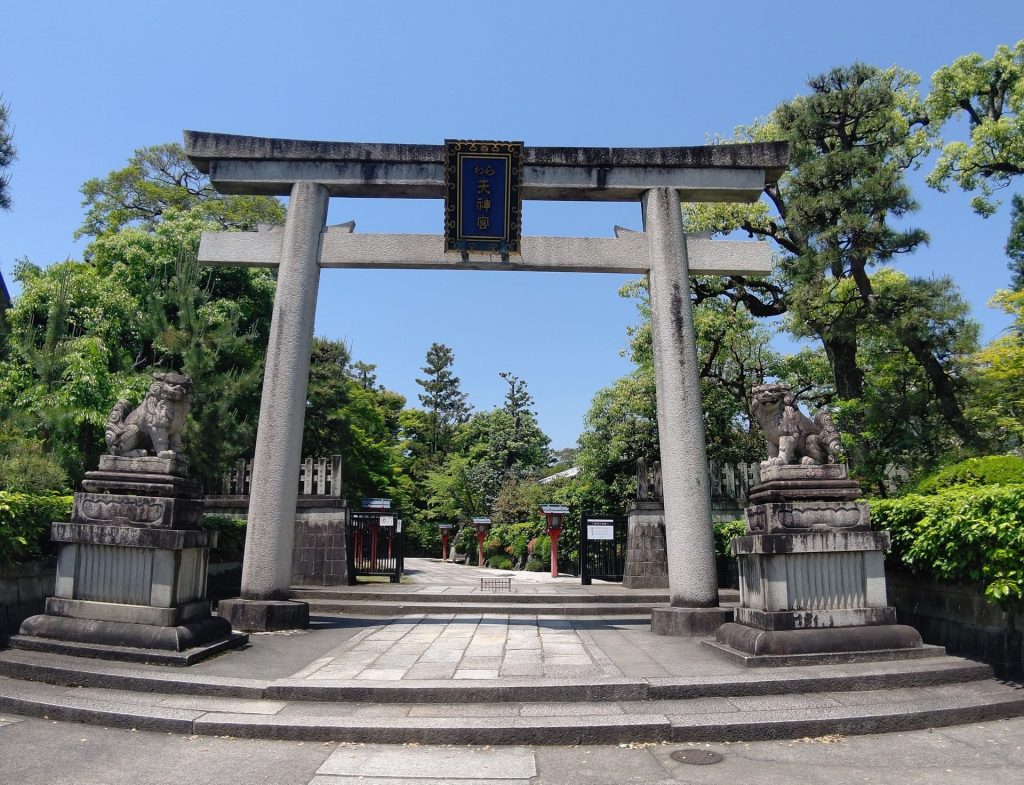
Wara Tenjingu, officially named "Site Shrine," is located at the end of Kitaoji Street.
It is a well-known place for locals who usually take the city bus, but it is a hole-in-the-wall shrine that many people have never visited because of the nearby Kinkakuji Temple and other famous temples.
This is a great spot for couples, married couples, pregnant women, and students taking exams.
Famous for its benefits for easy childbirth, many women visit the temple to pray for the birth of a healthy and happy baby.
If the straw has knots in it, the baby will be a boy, otherwise a girl.
Another regent shrine is Rokusho Shrine, where students can be seen visiting during the examination season to pray for success.
Rokusho Shrine holds an Autumn Grand Festival at the end of October as a festival of thanksgiving for the autumn harvest, and you can also watch a traditional Kyogen performance.
Facility Name:Brahma-Deva
Address: 10 Kinugasa Tenjinmorimachi, Kita-ku, Kyoto-shi, Kyoto
Access: A short walk from "Waratenjin-mae" bus stop on routes 50 and 101 of the city bus from JR Kyoto Station.
3. Zuishin-in Temple
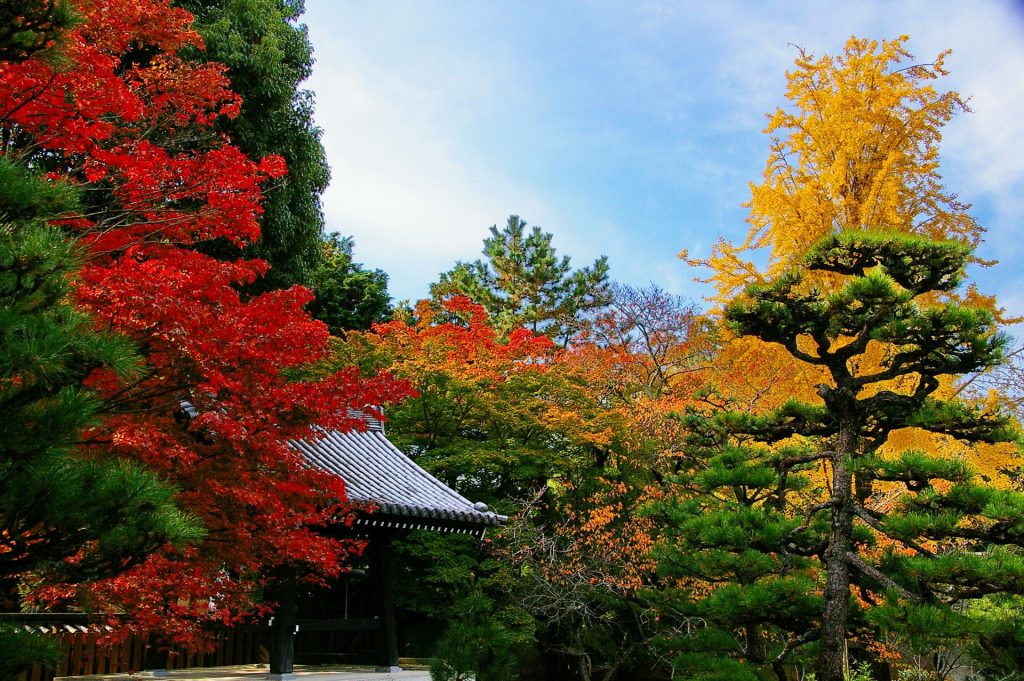
Zuishin-in Temple is the head temple of the Zentsuji School of Shingon Buddhism, located in Yamashina-ku, Kyoto City, Kyoto Prefecture.
It is also called Zuishin-in Monzeki because it was designated as a monzeki temple by order of Emperor Go-Horikawa in the Kamakura period (1185-1333).
It is said that Ono no Komachi, a female poetess of the Heian period (794-1185) who is said to have been an extremely beautiful woman, spent the rest of her life there, and a cosmetic well of Ono no Komachi still remains.
In addition to many Buddhist statues, including a seated mixed Sattva statue from the Kamakura period, the sliding door paintings depicting the life of Komachi and the folding screens are also attractive.
The Noh Room, which was renovated in 1991, is a space where visitors can spend time while enjoying the elegance of the garden outside.
In this room is the "Gokusai-roku Umeko Komachi Ezu". The colorful fusuma paintings are so photogenic that you will want to take many pictures.
Facility Name:Zuishin-in
HP:https://www.zuishinin.or.jp/
Address: 35 Ono-Goryo-cho, Yamashina-ku, Kyoto-shi, Kyoto
Access: about 5 minutes walk from "Ono Station" of Kyoto Municipal Subway Tozai Line
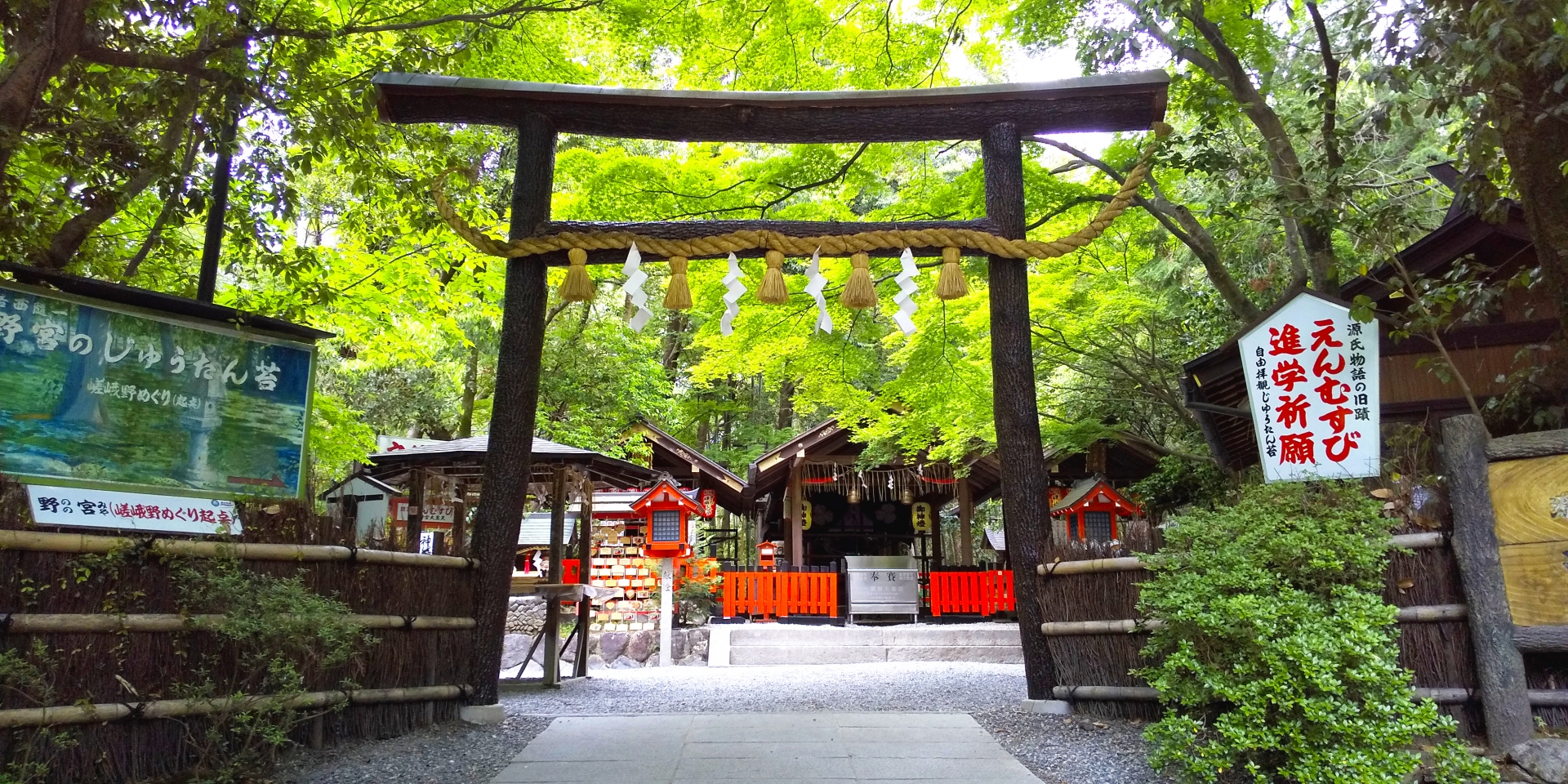
4. Nomiya Shrine
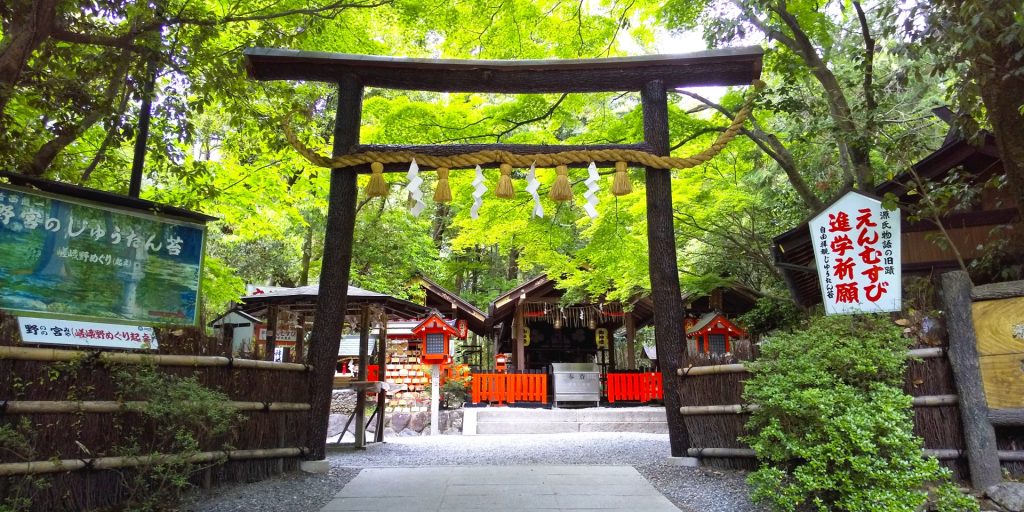
Nomiya Shrine is said to bring good luck in childbirth and marriage. The shrine is rich in nature, and worshippers come to see the scenery.
And here is the only "black torii" in Japan.
This torii gate is made directly from the bark of a sawtooth oak without peeling, giving it a stately and austere appearance.
This is a valuable torii gate, the only one in Japan, in view of the difficulty of preserving the sawtooth oak at present.
Also, when the Saio system was in place, the imperial princesses would leave their families and loved ones and visit Ise as a mairi to the emperor.
This Nomiya Shrine is the place where he purified himself at that time.
The "carpet moss garden" in the precincts of the temple has a world view that looks like something out of Totoro or Nausicaa. The lush greenery matches the atmosphere of Arashiyama very well.
There is also another "turtle stone" that is said to bring a wish within a year if you make it while stroking it.
It is also said to be popular as a turtle stone for love fulfillment, so if you are in the Arashiyama area, be sure to stop by.
Facility Name:Nomiya Shrine
HP:http://www.nonomiya.com/
Address: 1 Saganomoto-cho, Ukyo-ku, Kyoto-shi, Kyoto
Access: Approx. 10 min. walk from JR Saga-Arashiyama Sta.
5. Ota Shrine
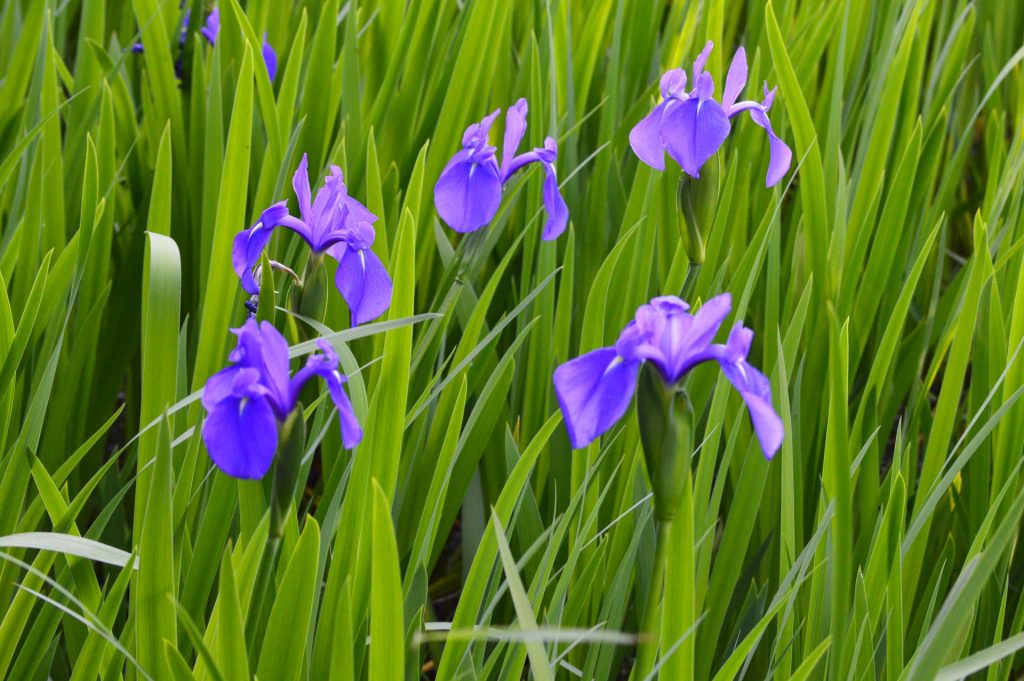
Ota Shrine is a regency shrine outside the precincts of Kamigamo Shrine. It enshrines Ama-no-Matsume-no-Mikoto and was the site of a poem by the poet Toshinari Fujiwara.
The 25,000 "kakitsubata" plants, designated as a national natural monument, come into bloom around early May, turning the entire area purple.
Kakitsubata already grew wild here in the Heian period (794-1192), and you will be overwhelmed by the scenery, which remains unchanged today.
Facility Name:Ota Shrine
HP:https://www.kamigamojinja.jp/shaden/oota/
Address: 340, Kamigamo Motoyama, Kita-ku, Kyoto-shi, Kyoto
Access: Approx. 10 min. walk from "Kamigamo Jinja-mae" bus stop on routes 4, 46, and 67 of the city bus.
summary
In this issue, we have introduced some of the temple's best spots to visit for those who don't like crowds.
Kyoto has many sightseeing spots, but even during the season of autumn leaves and cherry blossoms, some temples and shrines are less crowded than others, so if you want to take your time and visit at your leisure, please visit the temples and shrines introduced here.


Related PostRelated Articles
If you're going all the way, visit a place that will leave you with lasting memories! 7 Retro Cafés in Kyoto
Recently, retro-style coffee shops that make you feel as if you’ve slipped back in time to the Showa era have been attracting a lot of attention. With their vibrant colors […]

The obanzai at "Gyaatei" in Arashiyama, Kyoto, is wonderful! What is the Gyaatei Set Meal?
What places did you visit while sightseeing in Arashiyama, Kyoto? Arashiyama has several attractions, such as the Hozu River boat ride, the Torokko Train, the Bamboo Grove Path, and the Togetsukyo Bridge […]
Enjoy a cup of coffee in the retro atmosphere of “Kaze to Coffee” in Kyoto’s Kamigyo Ward… Are the accompanying sweets tempting?
There are many tourist spots in Kyoto, but perhaps some of you would like to take a break from the bustling atmosphere from time to time […]
Terakoya Honpo’s Innovative Dango Are Amazing! Let’s Go on a Sweet Treat Tour in Arashiyama to Sample the Exquisite “Kabi Dango”
Are you enjoying sightseeing around Saga-Arashiyama, such as the Togetsukyo Bridge, Tenryu-ji Temple, and the Torokko Train? There are many tourist attractions in Saga-Arashiyama […]
Come try the giant mitarashi dango at Koto Imo Honpo! A popular choice for street food in Arashiyama♪
Have you heard of a shop called “Kotoimo Honpo,” located just off the path through the bamboo grove? Lately, it’s been on Ins […]