

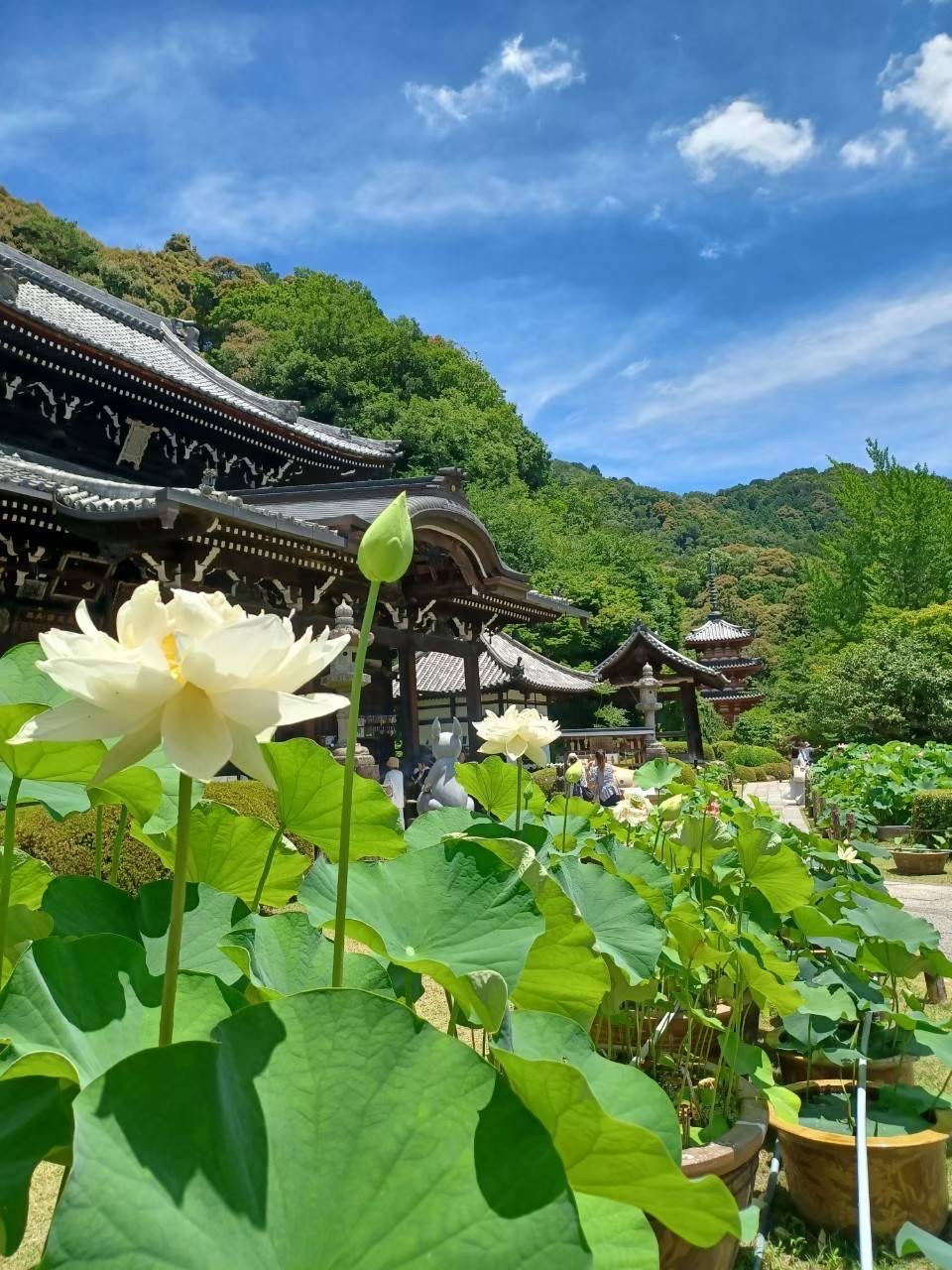
If you come to Kyoto, Uji City is a great place to stop by as a tourist attraction.
Uji City is located south of Kyoto and is home to numerous temples and shrines, including Byodoin Phoenix Hall and Ujigami Shrine, said to be the oldest shrine in Japan.
So, what are the recommended places to visit when you come to Uji for sightseeing?
In this issue, we would like to introduce some recommended sightseeing spots in Uji City, Kyoto Prefecture.
Table of Contents
1. Shojuin Temple
Mimuroto-ji Temple
Ujigami Shrine
Uji Bridge
Uji Shrine
The Tale of Genji Museum
■ Summary
1. Shojuin Temple
Shojuin" is popular for its annual wind-bell festival from July to September, when approximately 2,000 wind-bells play their tones.
Jigenzan "Shojuin" temple of the Koyasan Shingon sect was built in 717 as a pagoda temple of the Iryo Kyokoji temple.
The seated statue of Fudo Meio was created by Kakei in the early Kamakura period (1185-1333) and is designated as a National Important Cultural Property.
Shosyuin is also known as the "wind-bell temple" because of its famous wind-bell festival, but there are other reasons why it has recently become a popular tourist destination for the younger generation.
It is a heart-shaped window called Inome-mado. It has attracted the attention of young women and couples because of the Kyoto-like scenery that can be seen from the window and the wonderful shadows that are projected on it.
Other highlights include 160 ceiling paintings on the theme of flowers and Japan.
Facility Name:Shoujuin Temple
HP:http://shoujuin.boo.jp/
Address: 149 Kawakami, Okuyamada, Ujitawara-cho, Tsuduki-gun, Kyoto, Japan
Access: 10 min. walk from Okuyamada bus stop.
Mimuroto-ji Temple
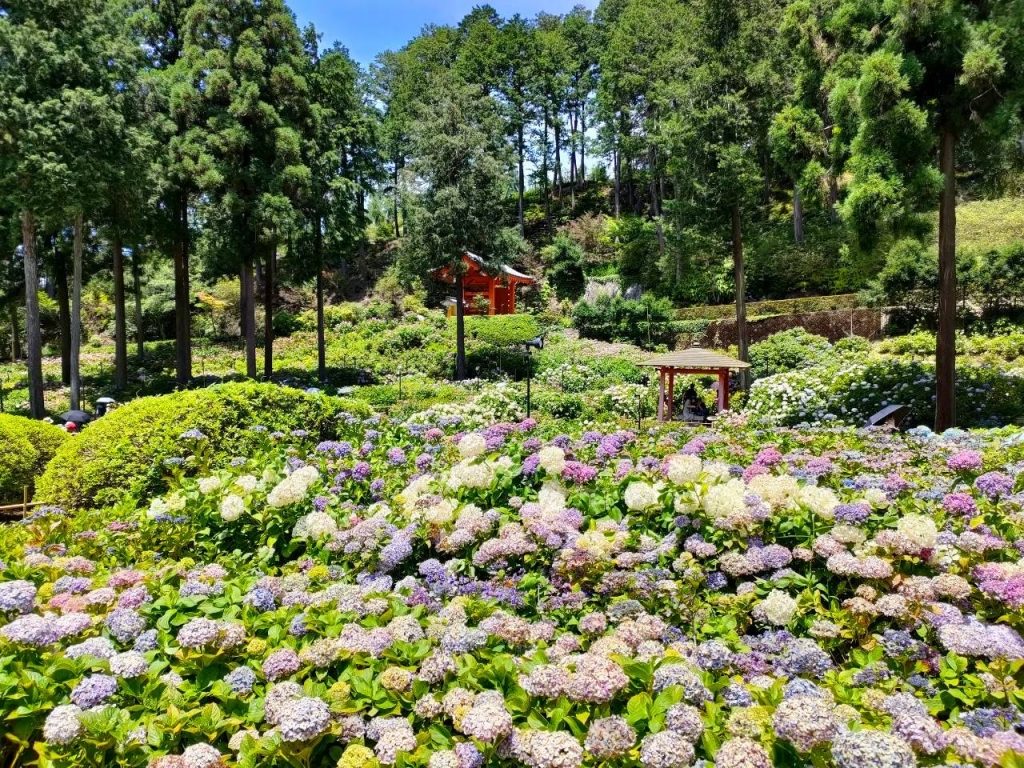
Mimuroto-ji Temple was built in the first year of the Hogame Era (770).
The principal image of the temple is enshrined as the Thousand-Armed Avalokitesvara Bodhisattva, who legend has it emerged from a rocky abyss at the back of the temple.
Other important cultural properties, such as a statue of Amida Sanson, are also housed in the treasury.
Such Mimuroto-dera Temple is also known as "Flower Temple" or "Hydrangea Temple" and is famous for its beautiful seasonal flowers.
During the hydrangea season, as many as 10,000 plants of 50 varieties of colorful hydrangeas in pink, blue, and purple bloom in the park.
Mimuroto-ji Temple is also famous for its 20,000 azaleas in spring and for its autumn leaves in fall, so if you want to experience flowers and nature, Mimuroto-ji Temple is the place to go.
Facility Name:Mimuroto-ji Temple
HP:https://www.mimurotoji.com/
Address: 21, Shigadani, Uji, Uji, Kyoto, Japan
Access: about 15 minutes on foot from Mimuroto Station on the Keihan Uji Line
Ujigami Shrine
The main hall, a national treasure, was built in the Heian period (794-1192) and is said to be the oldest existing shrine building in Japan.
Ujigami Shrine enshrines Ujigami, Emperor Ojin, and Emperor Nintoku, and has long been worshipped as the shrine of Byodo-in Temple.
The official name of the shrine is "Uji Rikyu Myojin," which was divided into Ujigami Shrine and Uji Shrine after the Meiji Restoration.
Ujigami Shrine is a shrine that many people visit to pray for academic achievement and success in school, and the highlight of the shrine is the hall of worship, which is a national treasure.
Legend has it that it was built in the early Kamakura period (1185-1333), and its architectural style is absolutely beautiful.
The method of building the roof is called clinging gable, and it will be overwhelming to see it in person.
Ujigami Shrine also offers seasonal limited edition red seals, all of which are very popular.
Facility Name:Ujigami Shrine
HP:https://ujikamijinja.amebaownd.com/
Address: 59 Uji Yamada, Uji City, Kyoto, Japan
Access: about 10 minutes on foot from Uji Station on the Keihan Uji Line
Uji Bridge
Many people may think of this "Uji Bridge" when they think of Uji.
Uji Bridge is the oldest bridge in Japan, built by Doto, a priest of Genkoji Temple in Nara, during the Asuka Period in the 2nd year of Taika (646).
This bridge is considered one of the three oldest bridges in Japan, along with the Karabashi Bridge in Seta, Shiga Prefecture, and the Yamazaki Bridge in Oyamazaki, Otokuni-gun.
Although it has been damaged by battles, typhoons, and floods in the past, it was renovated in 1996, and the current landscape is still very beautiful.
You can also see a statue of Murasaki Shikibu at the foot of the bridge, as she is mentioned in the Tale of Genji.
Facility Name:Uji Bridge
HP:https://www.city.uji.kyoto.jp/soshiki/3/7508.html
Address: Uji, Uji City, Kyoto, Japan
Access: A short walk from Uji Station on the Keihan Uji Line
Uji Shrine
Uji Shrine, located along the Uji River, was built in the Heian period (794-1185), and the Rikyu Festival is held every year on May 8.
The main shrine is designated as a national important cultural property and enshrines the prince of Emperor Ojin, Usukido Wakaroshi-no-mikoto.
As the founder of Bunkyo, he is worshipped as the god of success in academic studies and entrance examinations.
The name "Uji" is derived from a legend that a rabbit guided the way of the rabbit when he came to Uji, and that rabbits passed through the area in packs.
In the precincts of Uji Shrine, there is a rabbit called "Mikaeri Usagi.
The reason for the backward-looking pose is that when the rabbit guided the way to Uji from Kawachi, when he was lost on his way there, he turned around.
This is why the rabbit is considered to be a messenger of the gods. The omikuji (written oracle) and amulet are also decorated with rabbit motifs, and their cuteness is a must-see attraction.
Facility Name:Uji Shrine
HP:http://uji-jinja.com/index.html
Address: 1 Uji Yamada, Uji City, Kyoto, Japan
Access: 10 minute walk from Uji Station on the Keihan Uji Line
The Tale of Genji Museum
Last but not least, the Uji City Tale of Genji Museum is a must-visit when you come to Uji for sightseeing.
Opened in 1998, it exhibits materials related to "The Tale of Genji," a long novel by Murasaki Shikibu, a writer of the mid-Heian period.
The museum features a "Heian-no-Ma" room that introduces the life of the aristocrats in the Tale of Genji with models and original movies, and a "Uji-no-Ma" room themed on the third part of the Tale of Genji, "Uji Jucho," as well as replicas of furniture and costumes of Heian period nobles, a full-scale cow shed and various other recreated worlds. You will be able to immerse yourself in the world of Hikaru Genji.
There are also Tale of Genji goods for sale, so you will surely learn about the history of Heian culture and leave with a lasting memory.
Facility Name:The Tale of Genji Museum
HP:https://www.city.uji.kyoto.jp/soshiki/33/
Address: 45-26, Uji Higashiuchi, Uji City, Kyoto, Japan
Access: about 8 minutes on foot from Uji Station on the Keihan Uji Line
■ Summary
How was it?
In this issue, we have introduced some of the highlights and information on recommended sightseeing spots in Uji.
Please refer to this page when you are not sure where to go to see the sights.


Related PostRelated Articles

Ito Kyuemon’s Matcha Parfait Ice Pop Is a Social Media Hit! What Kind of Japanese-Style Ice Cream Is It?
Have any of you ever tried the popular “Ito Kyuemon Parfait” at a café in Uji, Kyoto? That popular […]
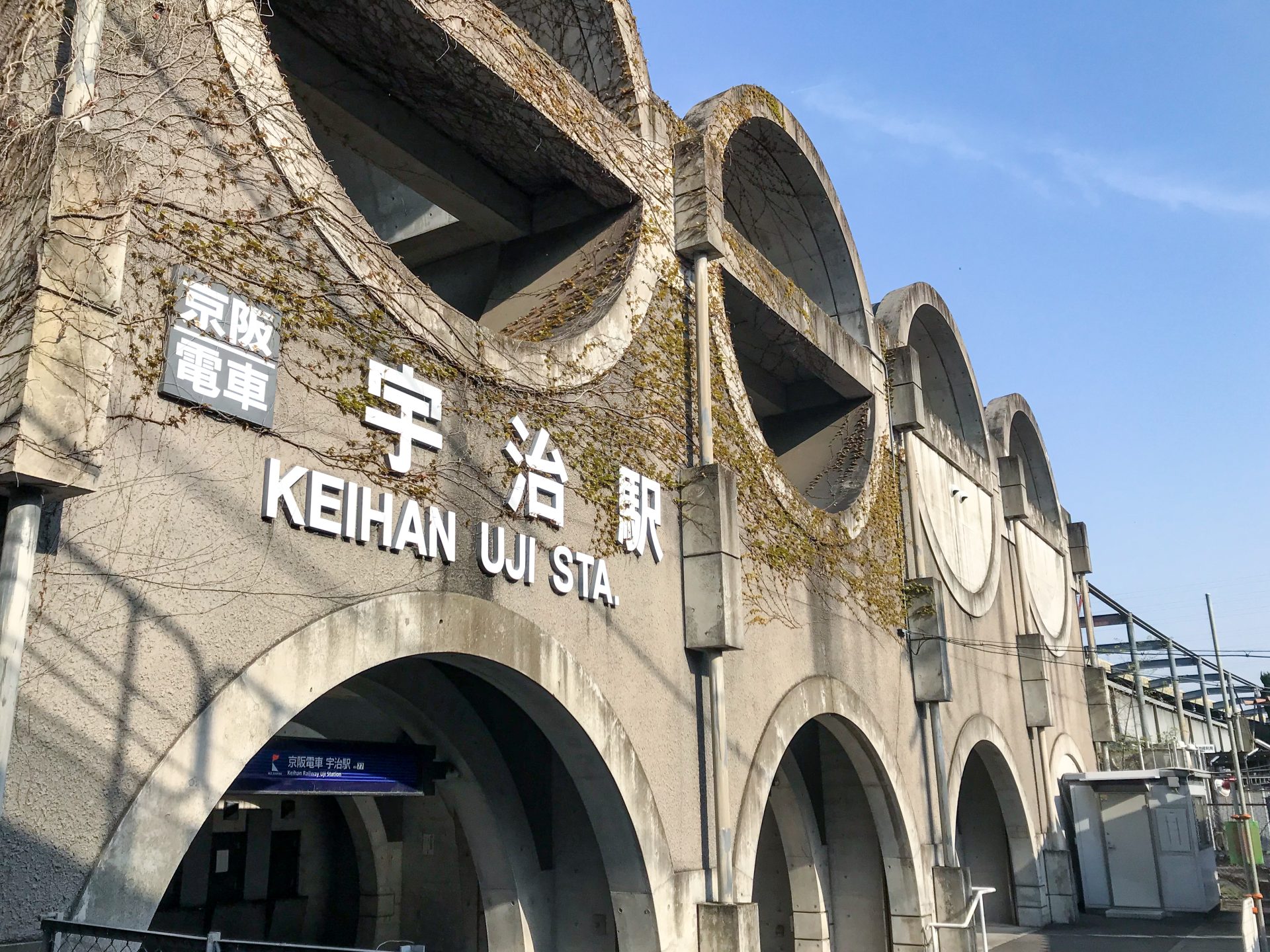
Kyoto - Pilgrimage to the holy place of "Hibike! Euphonium" Pilgrimage to Kyoto and Holy Places! List [Summary
Have you ever heard of "Hibike", a coming-of-age anime about a brass band of high school students by Kyoto Animation? Euphonium" by Kyoto Animation?
Want to eat with your loved ones! The best looking and tasting cakes and rolls in Kyoto♪
Kyoto is home to many delicious sweets. The charm of Kyoto is that they are not only tasty but also pretty and fashionable in appearance [...].
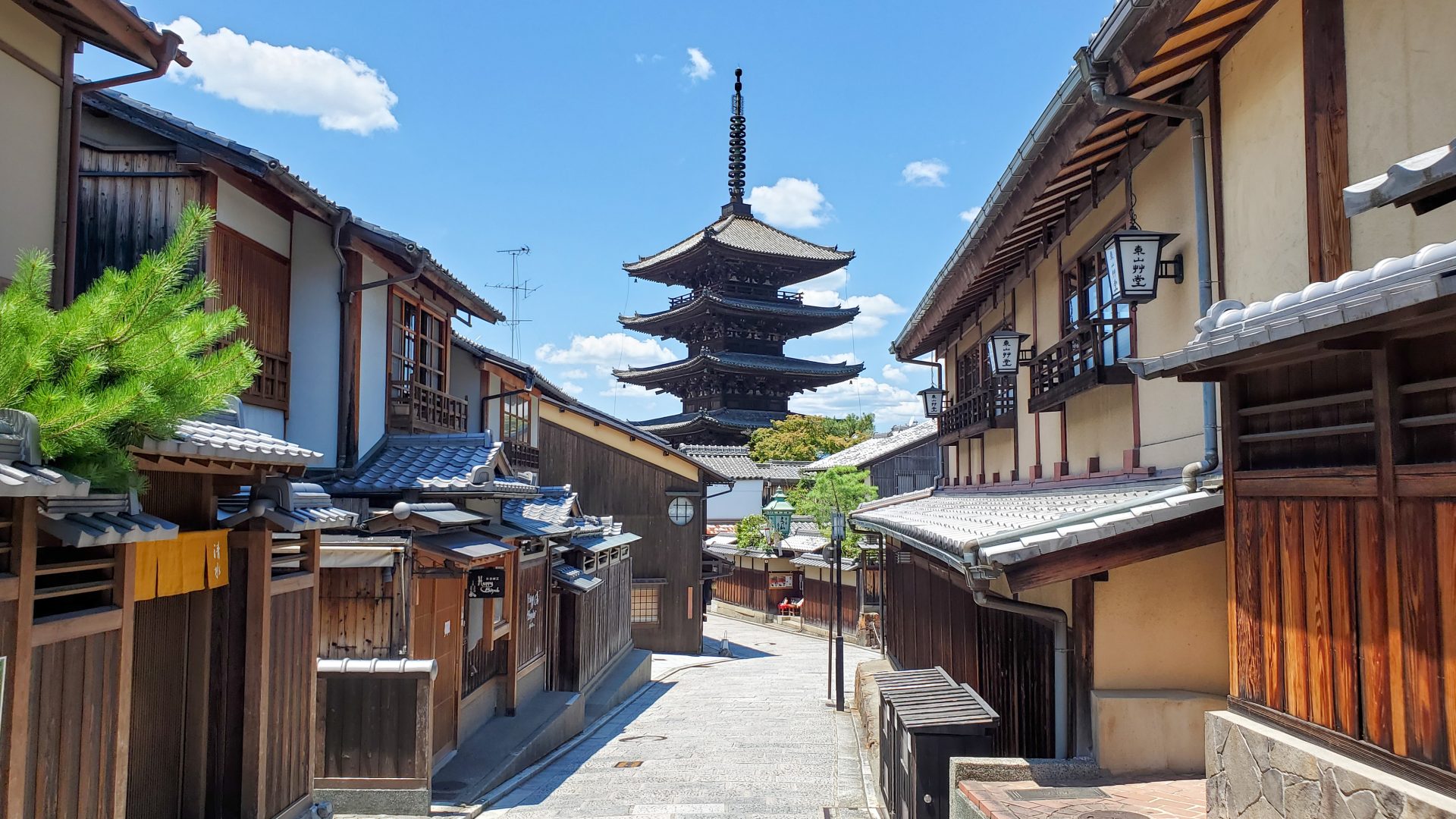
An in-depth study of the connection between the Jutsu Kaisen and Kyoto! Summary of Kyoto school members, model of Jutsu Kosen, and sacred sites.
Have you seen Jutsu Kaiten? The manga, anime, and movie are all very popular among people of all ages. The Jutsu [...]...
Latest in 2026] Kyoto Animation - List of Popular Anime by Age! Which anime is related to Kyoto?
Do you know "Kyoto Animation" which has produced many popular works? Kyoto Animation is located in Uji, Kyoto [...].