

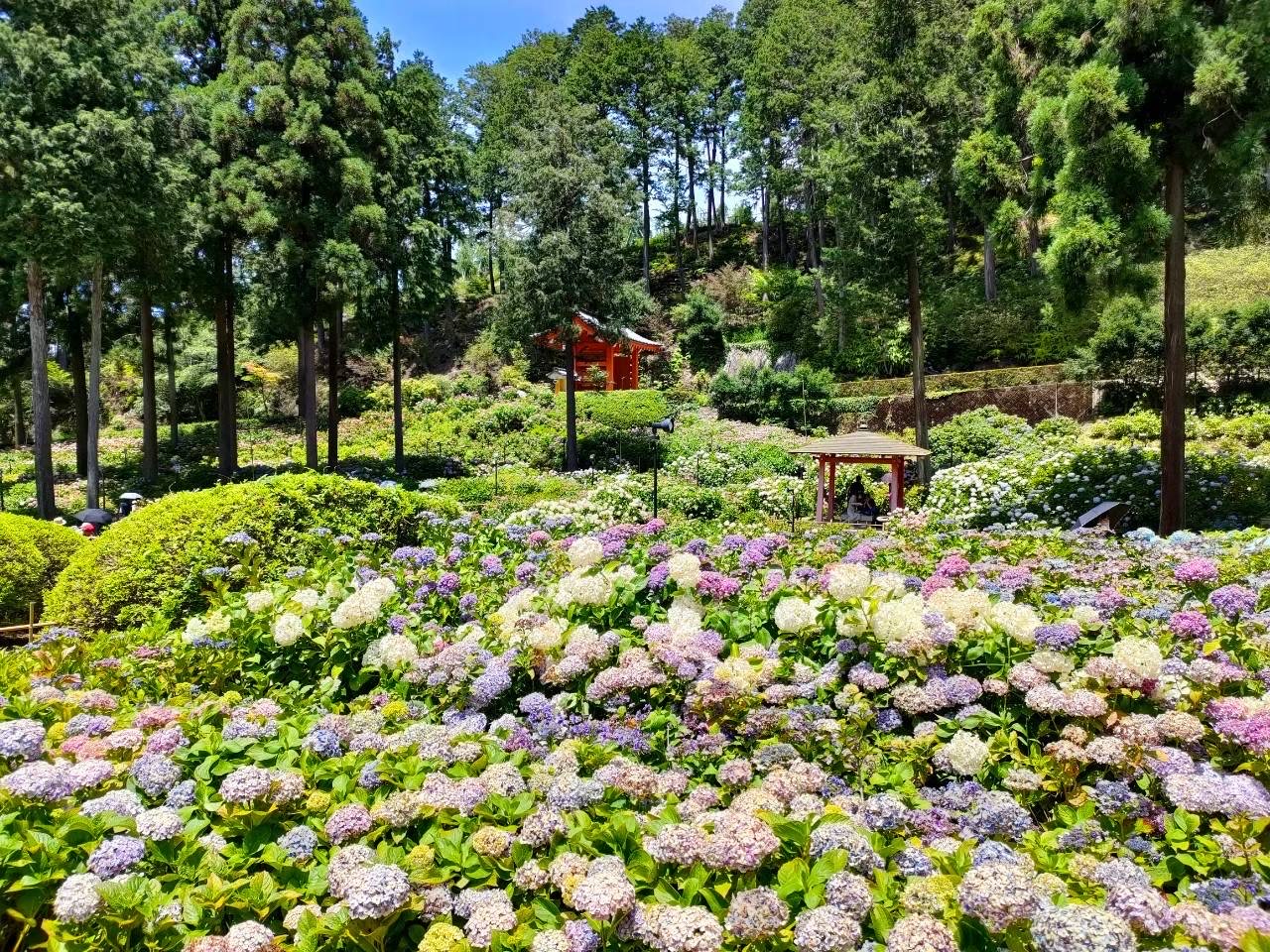
It is almost the season of the rainy season. Although I hate the dreariness of the rainy season, isn't it exciting to be told that it is "the season of hydrangeas"?
The most famous hydrangea temple in the Kanto region is "Meigetsuin" in Kamakura, but if you ask people in the Kansai region, most of them will tell you that it is the most famous hydrangea temple in Japan.Mimuroto-ji Temple is located in Uji City, Kyoto Prefecture.The local people call it "Hydrangea Temple," and as the name suggests, it is famous for its hydrangeas and other colorful flowers, which are quite beautiful.
In this article, we would like to introduce the highlights and attractions of Mimuroto-dera Temple in Uji City, Kyoto Prefecture.
If you want to see beautiful flowers at a temple in Kyoto, this is a must-see.
Table of Contents
■What is Mimuroto-ji Temple in Uji City, Kyoto Prefecture?
History of Mimuroto-ji Temple, Uji City, Kyoto Prefecture
Mimuroto-dera Temple, Uji City, Kyoto, Japan
Review of Mimuroto-ji Temple, Uji, Kyoto, Japan
■ Summary
■What is Mimuroto-ji Temple in Uji City, Kyoto Prefecture?
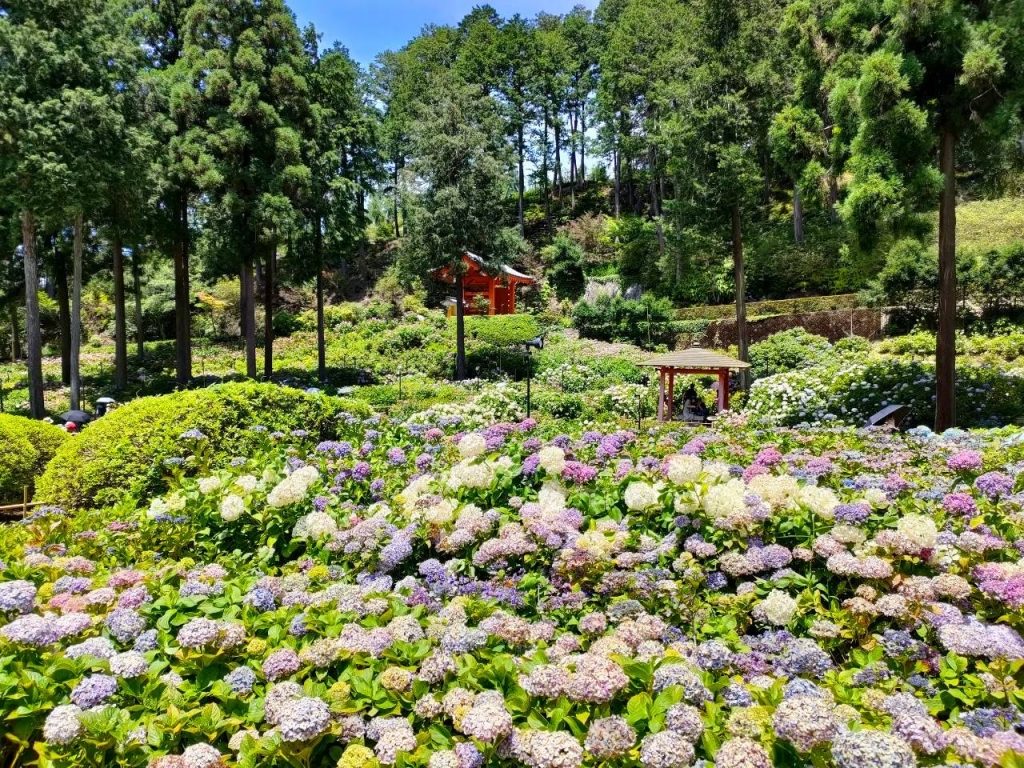
Mimuroto-ji Temple is located in Uji City, Kyoto Prefecture, and is a separate head temple of the head temple of the Shugen sect. The main deity is the thousand-armed Kannon Bosatsu (Goddess of Mercy).
It is said to have been built in the Nara period (710-794) at the request of Emperor Kounin, and was revered by the aristocracy.
Mimuroto-ji Temple, which flourished during the Nara period, declined several times before the current main hall was rebuilt in 1814.
Together with the three-story pagoda, bell tower, and Amida Hall, it is designated as a cultural asset by Kyoto Prefecture. The precincts of the temple are a vast site with a wide range of elevations, and is recommended for those who wish to take their time in visiting the temple.
History of Mimuroto-ji Temple, Uji City, Kyoto Prefecture
The history of Mimuroto-ji Temple dates back to the Nara period (710-794). According to temple legend, King Shirakabe, grandson of Emperor Tenchi, worshipped a statue of the thousand-armed Avalokitesvara Bodhisattva found in Shizugawa.
Later, when he ascended to the throne as Emperor Konin, the statue was moved to Uji, and Mimuroto-ji Temple was built according to the imperial request.
The temple was called "Sanmuroto-ji" because three emperors, including Emperor Mitsuhito, who ascended to the throne as the 49th emperor, Hanayama, and Shirakawa, had their detached palaces there.
In the Muromachi period (1336-1573), the large statue was lost in a fire that razed the temple complex, but the small statue is still handed down today as the "Kannon (Goddess of Mercy) for the extinguishing of fires.
From there, the temple went through many vicissitudes, including the Battle of Makijima Castle, and in 1805, the present main hall was built.
Mimuroto-dera Temple, Uji City, Kyoto, Japan
Mimuroto-dera Temple in Uji City, Kyoto Prefecture, is famous as a hydrangea temple. Please refer to the many highlights of the temple.
○The "hydrangeas" at Mimuroto-ji Temple are breathtaking.
Many people visit Mimuroto-ji Temple to see the hydrangeas, which in mid-June are over 20,000 beautiful plants in about 50 varieties.
It is recommended to take a closer look at the hydrangeas, which include not only western hydrangeas but also seven-tiered and forehead hydrangeas. Depending on the season, the hydrangeas may be lit up, creating a magical atmosphere.
○Colorful flowers

Mimuroto-ji Temple is also famous for many flowers other than hydrangeas.
For example, azaleas are at their best from late April to early May. The azalea garden boasts as many as 20,000 azalea plants, with colorful purple, white, and pink flowers in full bloom.
And in the hot season of July, "lotus" is also recommended. About 250 pots with as many as 100 species of lotus bloom.
Thus, Mimuroto-dera is a wonderful temple filled with not only hydrangeas, but also azaleas, lotuses, rhododendrons, and many other flowers. Each season has a different look, and you will be truly healed by seeing the flowers.
○There are many unique stone statues.
There are many stone statues in the precincts of Mimuroto-ji Temple.
Ascending the stairs leading to the main hall, the "Ugajin" can be seen on the right. It looks like a guardian snake and is said to bring good luck for health, longevity, and money.
Please take a look at our other products such as "Fortune Rabbit".
○Signature of red seal
If you have gone to the trouble of visiting Mimuroto-ji Temple, you should get a red seal.
The design of the red seal stamp varies depending on the time of year, but if you get stamped with a stamp of flowers such as hydrangea or wisteria, it will surely be a memorable experience.
Buddha images in the Treasure House
The Treasure House of Mimuroto-ji Temple contains Buddhist statues carved in the Heian period.
It is usually closed to the public, but is open to the public on the 17th of each month from 9:00 a.m. and on other days on an irregular basis (currently closed to the public until the end of March 2024 due to repairs to the Treasure House). Here, visitors can view statues of the Amida Nyorai, the Amida Nyorai Triad, and other statues.
Review of Mimuroto-ji Temple, Uji, Kyoto, Japan
Take a look at the reviews of Mimuroto-ji Temple in Uji, Kyoto.
I can see why it is called the hydrangea temple. The hydrangeas were the highlight of the temple.
The hydrangea garden in the precincts of the temple is large, and I think it is one of the most impressive in Kyoto.
The temple was very famous for its hydrangea. There was also a lotus pond, which I think would be beautiful not only during the hydrangea season but also during the lotus season.
A temple of flowers. Rhododendrons, hydrangeas...all beautiful. There are also Buddhist statues and I could feel the history of the temple.
I visited there with my husband and wife and felt peaceful. Although there are many tourists during the season, we enjoyed the beautiful hydrangeas.
The hydrangeas are very beautiful. There are hydrangea gardens under the trees, so you can see them from various places.
The many lotus pots were eye-catching. I felt calm and healed from the bottom of my heart.
Wooooooooooooooooooooooooooooooooooooooooooooooooooooooooooo!
Mimuroto-ji Temple
Address: 21 Shigadani, Suido, Uji City, Kyoto, Japan
HP:https://www.mimurotoji.com/
Access: about 15 minutes on foot from Keihan "Mimuroto Station".
■ Summary
How was it?
In this issue, we introduced the highlights and attractions of Mimuroto-dera Temple in Uji City, Kyoto Prefecture, which is famous as a hydrangea temple.
It takes about 40 minutes by train from Kyoto Station, the gateway to Kyoto, and Gion-Shijo Station, located in the center of Kyoto City. If you want to take your time to visit and explore the large temple grounds, you should allow at least one hour.
Please visit Mimuroto-ji Temple at least once, which is famous not only for its hydrangeas but also for its many other flowers.


Related PostRelated Articles

Ito Kyuemon’s Matcha Parfait Ice Pop Is a Social Media Hit! What Kind of Japanese-Style Ice Cream Is It?
Have any of you ever tried the popular “Ito Kyuemon Parfait” at a café in Uji, Kyoto? That popular […]
Kyoto - Pilgrimage to the holy place of "Hibike! Euphonium" Pilgrimage to Kyoto and Holy Places! List [Summary
Have you ever heard of "Hibike", a coming-of-age anime about a brass band of high school students by Kyoto Animation? Euphonium" by Kyoto Animation?
Want to eat with your loved ones! The best looking and tasting cakes and rolls in Kyoto♪
Kyoto is home to many delicious sweets. The charm of Kyoto is that they are not only tasty but also pretty and fashionable in appearance [...].
An in-depth study of the connection between the Jutsu Kaisen and Kyoto! Summary of Kyoto school members, model of Jutsu Kosen, and sacred sites.
Have you seen Jutsu Kaiten? The manga, anime, and movie are all very popular among people of all ages. The Jutsu [...]...
Latest in 2026] Kyoto Animation - List of Popular Anime by Age! Which anime is related to Kyoto?
Do you know "Kyoto Animation" which has produced many popular works? Kyoto Animation is located in Uji, Kyoto [...].