

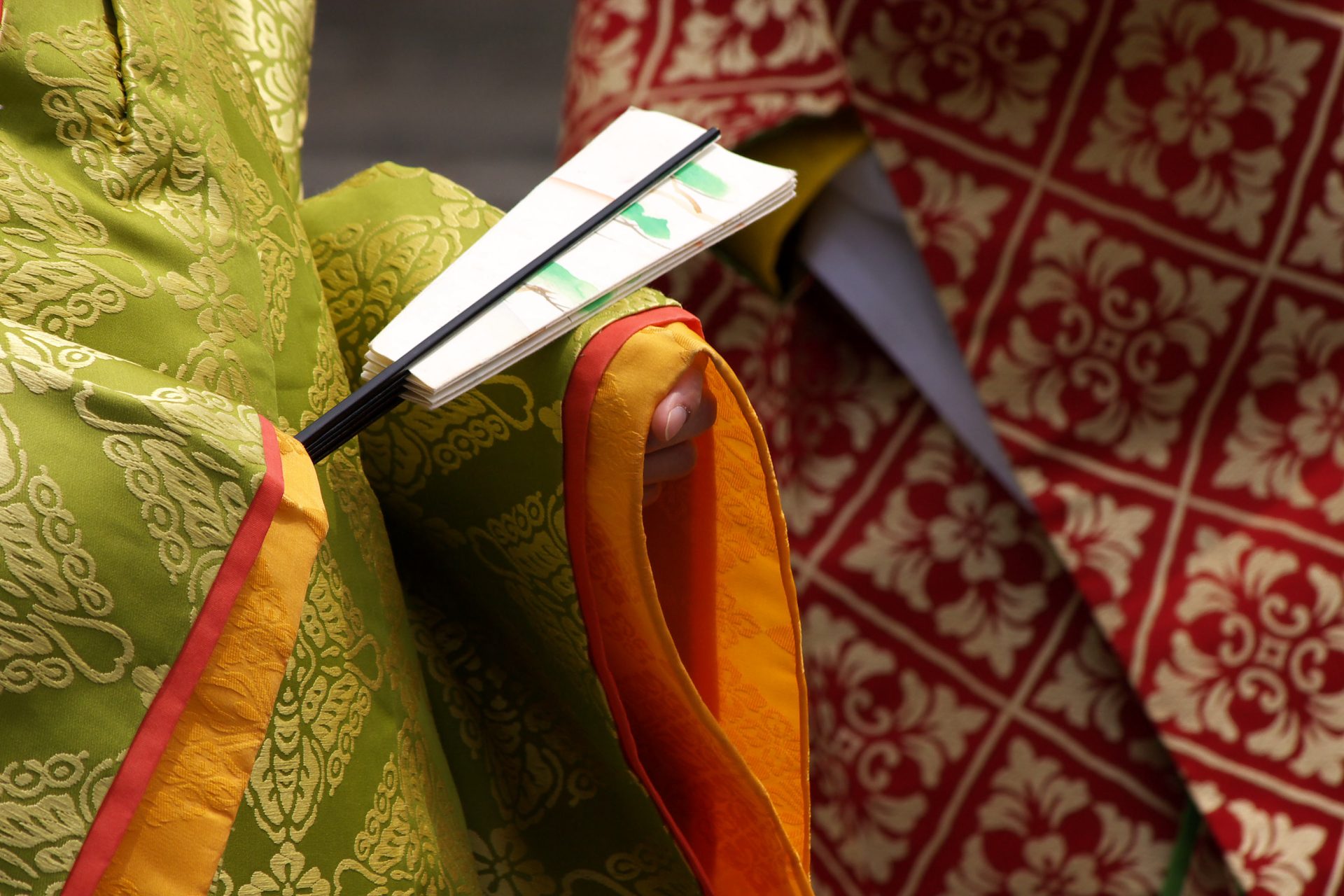
Kyoto has
Gion-cho
hollyhock festival
Jidai Matsuri (Festival of the Ages)
The "three major festivals of Kyoto" are called "Kyoto's three major festivals.
The Aoi Matsuri is an annual festival held in May at Kamigamo Shrine and Shimogamo Shrine. The Aoi Matsuri is one of the most famous festivals in Kyoto, with a procession of more than 500 people, including the Saioh portable shrine, that can be as long as one kilometer. Some of you may have heard of Aoi Matsuri but do not know what it is all about. So this time, we would like to introduce the origin, the origin, and the schedule of Aoi Matsuri.
Table of Contents
- ■What is the hollyhock of the hollyhock festival?
- ■History of the Aoi Matsuri
- ■When is Aoi Matsuri held? Schedule
- ■ Summary
What is the hollyhock of the hollyhock festival?
While the Gion Festival is called the festival of the common people, the Aoi Matsuri is said to be the festival of the aristocrats, and even today, the traditions of the events of the imperial aristocracy are still preserved and performed with elegance. In the Heian period (794-1185), Aoi Matsuri was so famous that people used to call it "Aoi Matsuri" when talking about festivals, but it was originally called "Kamo Matsuri". Then, how did it come to be called "Aoi Matsuri"?
Goshoguruma (oxcart), imperial envoys, and attendants in the procession of more than 500 people in total, their robes and crowns, oxen and horses, and a bamboo blind were all decorated with hollyhock leaves. The green leaves decorated with hollyhocks are called "Aoi Katsura" (hollyhock laurel).
The festival is called "Aoi Matsuri" (hollyhock festival) because it is decorated with two hollyhock leaves, the divine crests of Kamigamo Shrine and Shimogamo Shrine.
History of Aoi Matsuri
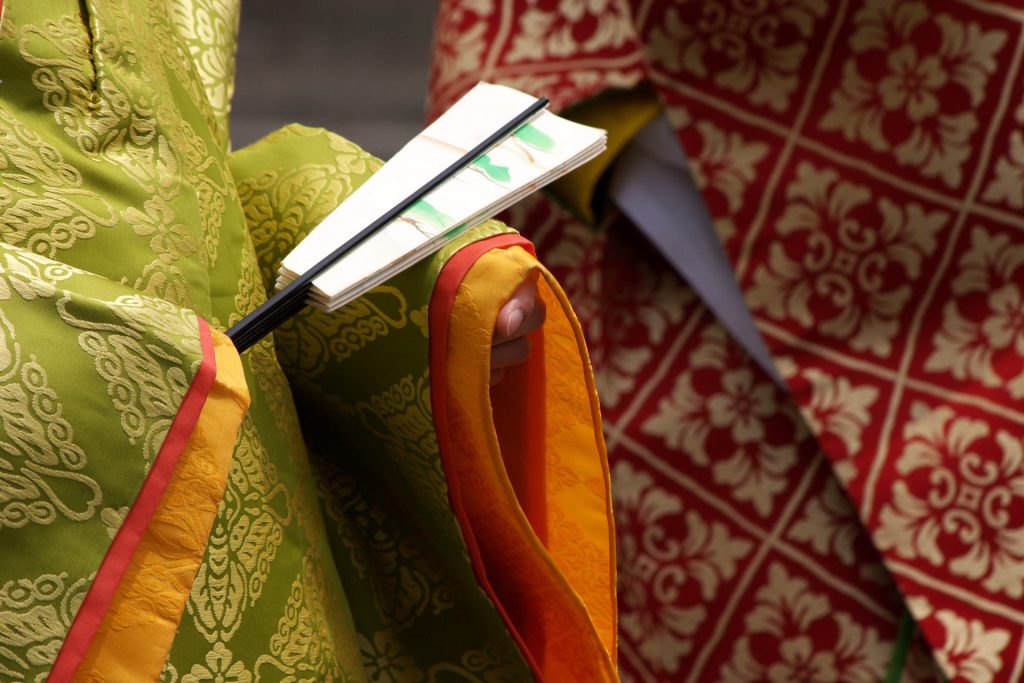
About 1,400 years ago, in the middle of the 6th century, during the reign of Emperor Kinmei, a plague epidemic broke out and wind and rain caused the five grains to be unfruitful. Therefore, at the order of the emperor (imperial command), Urabe Ikichi Wakahiko, a worshipper of the great deity of Kamo at that time, told his fortune, and it indicated that the deity Kamo was possessed. The god was believed to be cursed, and so, on a lucky day in April, a horse race with bells attached was held to pray for a good harvest, and the wind and rain subsided, the grains grew, and the people enjoyed peace. This event is said to be the origin of the Aoi Matsuri.
From there, in 819, the tradition was passed down as a national event to be performed according to a regular ritual under the imperial court's Ritsuryo system.
After the Heian period (794-1185), it was discontinued for about 200 years due to financial deterioration caused by the Onin War, which turned Kyoto into a battlefield, and although it was discontinued from 1871 to 1883 and from 1943 to 1952, it has been revived and continues to be revived to the present day.
When is the Aoi Matsuri? Schedule
Aoi Matsuri (hollyhock festival) is held every year on May 15.
May 1: Kamo Race Ashisha Ceremony
The horses that will run in the Kamo Horse Race on May 5 are evaluated for their foot speed, health, and other conditions. The horses are then run to determine their superiority, and the horse combination for the day is decided.
May 3: Yabusame (horseback archery) ritual
In this ritual, an archer rides a horse and shoots arrows at three targets made of cedar planks every 100 meters to hit the target. The origins of this ritual can be traced back to the kishu (mounted archery), which was popular among samurai from the late Heian to Kamakura periods.
May 4: Misogi-no-Mori-no-Mori (purification ceremony) for the Saio-dai and other female members of the Saio family
On an auspicious day in early May, the Misogi-no-Magi ceremony is held for the Saio-dai and other female members of the procession. This ritual is held alternately at Kamigamo Shrine and Shimogamo Shrine every year, where about 40 women, including the Saio-dai and other female members of the procession, purify themselves by inserting their hands into the Mitarashi Pond.
May 5: Walking and shooting ritual
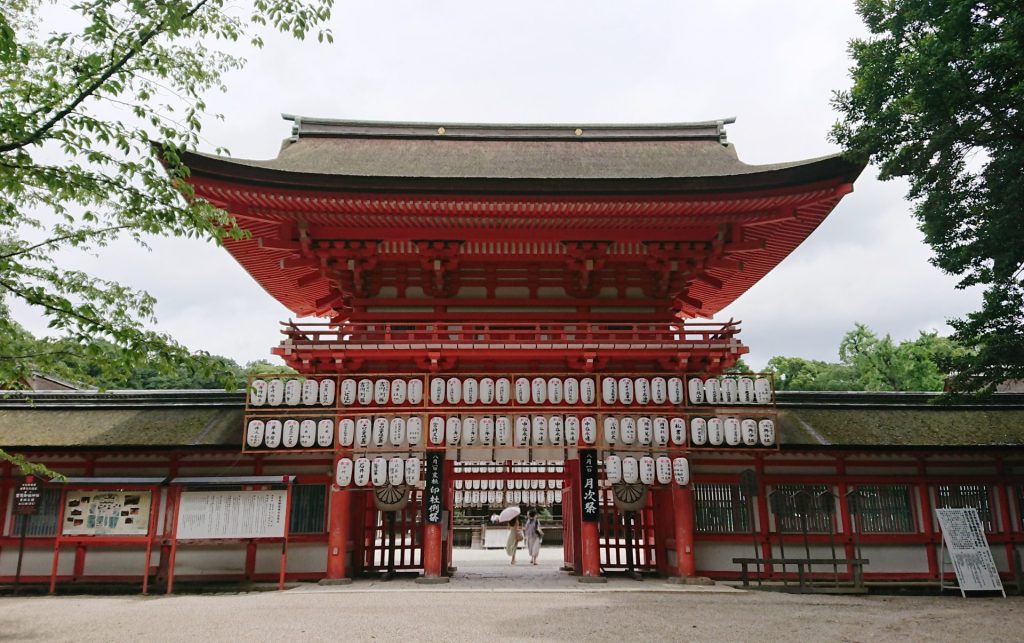
Arrows are shot at Shimogamo Shrine to pray for festival safety. It is said that this ceremony originated from a court ceremony held in the Heian period (794-1185).
May 5, 2007: Kamo Horse Race
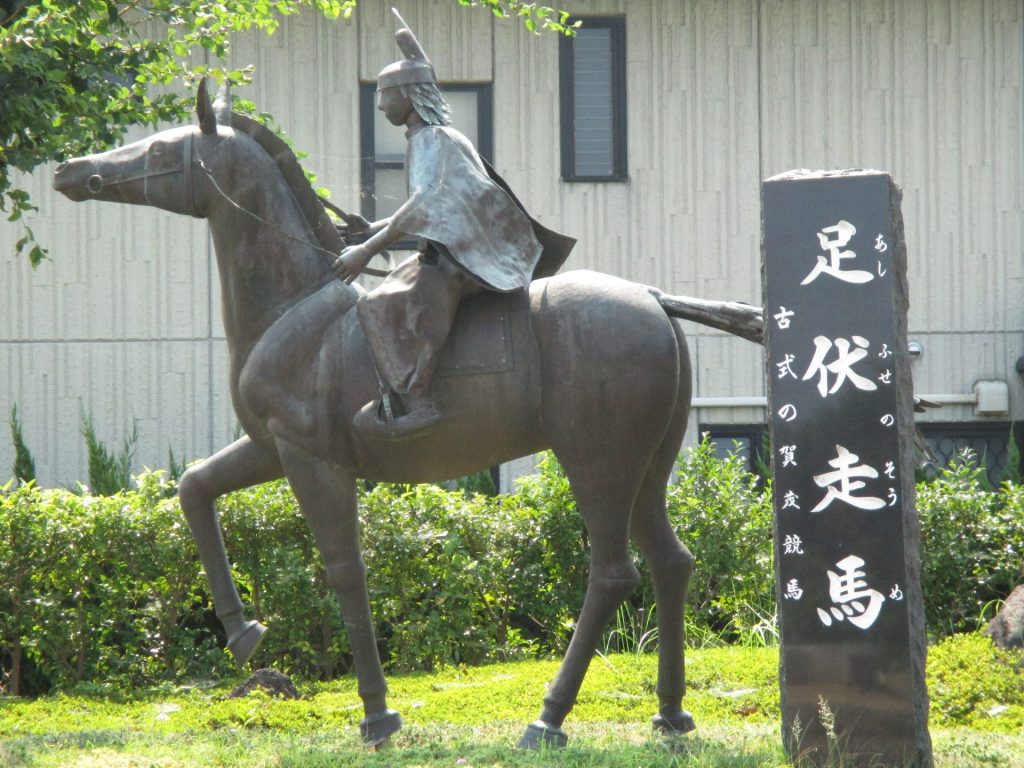
Kamigamo horse races are held at Kamigamo Shrine. 1093, during the Heian period (794-1192), horse races were offered to Kamigamo Shrine to pray for a good harvest.
May 12, 2012: Goyin Festival
This ritual welcomes the divine spirit of the Aoi Matsuri from Mikage Shrine at the western foot of Mount Hiei. It is held at Shimogamo Shrine.
May 15: Aoi Matsuri (hollyhock festival)
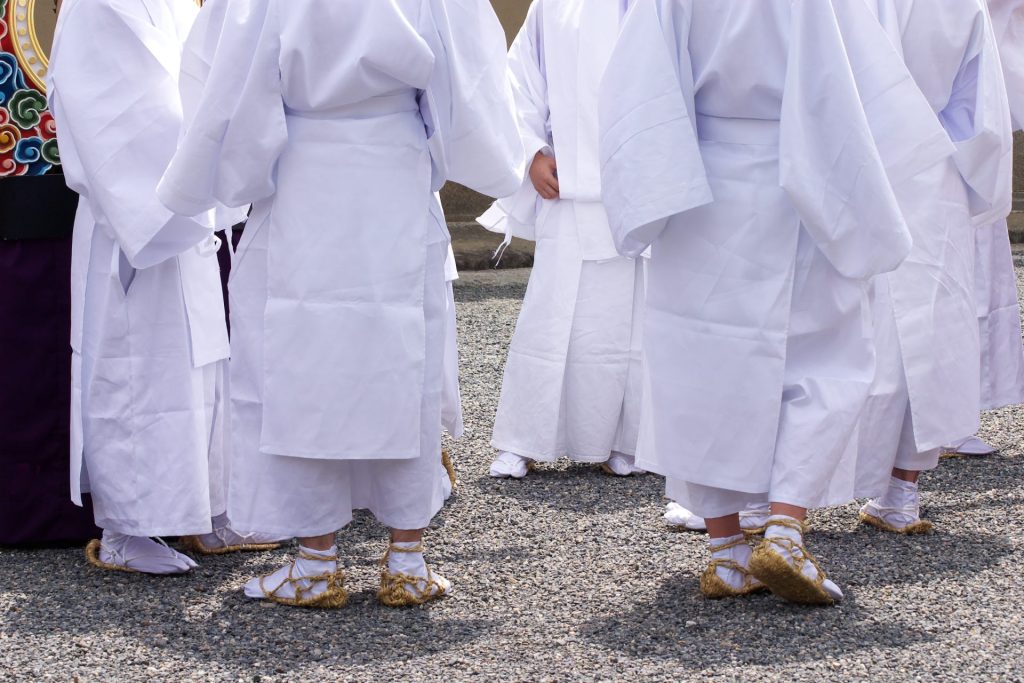
The ceremony consists of the Michinoe-no-gi, the Shado-no-gi, and the Court ceremony. In the Roadside Ceremony, the Yamashiro-ji, Saioji and female attendants walk from Kenreimon to Kawaramachi Dori and Shimogamo-jinja Shrine in this order. The Shagashira Ceremony is held at both Kamigamo Shrine and Shimogamo Shrine. When the procession arrives at Shimogamo-jinja Shrine, the ritual text is presented and the Toiyu is dedicated.
summary
How was it? In this article, we have introduced the origin, origin, and schedule of Aoi Matsuri. If you know the history and origin of Aoi Matsuri, you will be able to enjoy it from a different perspective. There are paid seats available at the Aoi Matsuri, so please make use of them and spend your time comfortably.


Related PostRelated Articles
Detective Conan: A Pilgrimage to the Kyoto Locations Featured in "The Crimson Love Song" and "The Crossroads of the Labyrinth"! List [Summary]
The Detective Conan movies set in Kyoto are *A Crimson Love Letter* and *Crossroads in the Labyrinth* […]
"Rurouni Kenshin" Kyoto Pilgrimage to Famous Locations! List [Summary]
Have you heard of *Rurouni Kenshin*? Not only is there an anime series, but it’s also been adapted into a live-action movie starring Takeru Satoh, so you should definitely check it out […]
"K-ON!" Kyoto Pilgrimage to the Series' Locations! List [Summary]
Have you heard of the anime “K-ON!”? “K-ON!” is a four-panel manga series by manga artist Kaki Furai […]
A Pilgrimage to the Sacred Sites of "The Eccentric Family" in Kyoto! List [Summary]
Have you heard of the anime *The Eccentric Family*? *The Eccentric Family* is an anime adaptation of a novel by Tomihiko Morimi […]
What is “Fengquan,” a restaurant serving Kyoto-style Cantonese cuisine? If you’re looking for authentic flavors in Kyoto’s Nakagyo Ward, this is the place to go!
Have you heard of a restaurant called “Hōsen” in Kawaramachi, Kyoto? “Hōsen” is a restaurant where you can enjoy authentic Cantonese cuisine […]