

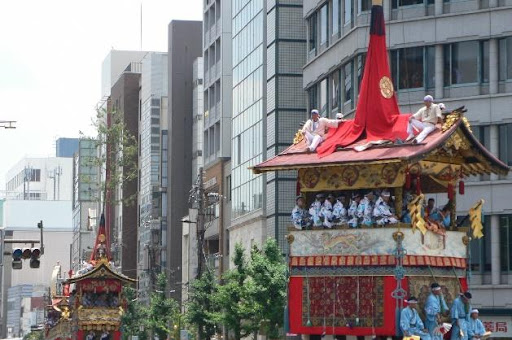
Throughout July, Kyoto is completely immersed in the “Gion Festival,” a month-long celebration. With Yasaka Shrine at the heart of the festivities, the Yamahoko districts host a variety of events, including the construction of the festival floats, the Yoiyama procession, and the magnificent Yamahoko parade.
Another highlight of the Gion Festival is the “limited-edition wagashi” that can only be found during this time of year. Kyoto’s long-established wagashi shops have preserved special sweets associated with the Gion Festival’s yama-hoko floats and religious rituals, some of which are sold only once a year—for just a single day. In this article, we’ll introduce three Kyoto wagashi inspired by the Gion Festival.
Table of Contents
■What Is the Gion Festival?
■"Gyōja-mochi," a traditional Japanese sweet available only once a year (Kashiwaya Mitsusada)
■The godparent is "Shitatari" (Hisao Kamehiro), the chief priest of Yasaka Shrine.
■"Gion Chigo Mochi," an elegant confection made with white miso (Sanjo Wakasa-ya)
■Summary: Things to Keep in Mind When Purchasing
■What Is the Gion Festival?
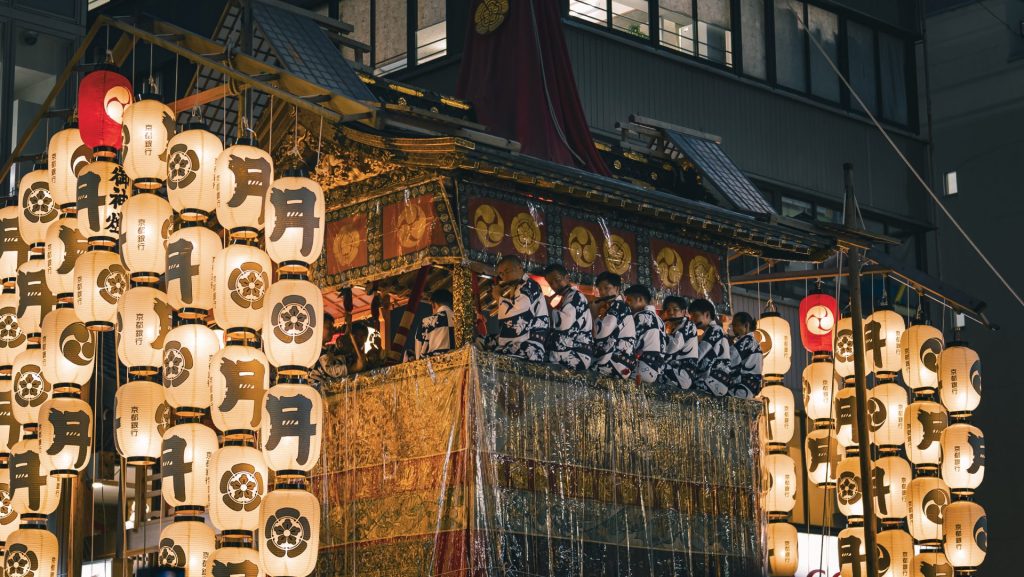
The Gion Festival is one of Kyoto's three major festivals, tracing its origins to the "Gion Goryō-e" held during the Heian period as a festival of Yasaka Shrine.
It is also listed as a UNESCO Intangible Cultural Heritage, and various religious rituals and events are held every year for one month, from July 1 to July 31.
In recent years, the festival has been held in two parts: the “Saki-matsuri” (Early Festival) and the “Ato-matsuri” (Late Festival). The Yoiyama festivities for the Saki-matsuri take place from July 14 to 16, with the Yamahoko Procession on July 17; for the Ato-matsuri, Yoiyama is typically held from July 21 to 23, and the Yamahoko Procession takes place on July 24 (as dates may vary by year, please check the official information before visiting).
Many of the traditional Japanese sweets we’ll be introducing today are available during this period, from Yoiyama to the procession.
■"Gyōja-mochi," a traditional Japanese sweet available only once a year (Kashiwaya Mitsusada)

"Kashiya Mitsusada," a long-established Japanese confectionery shop in Higashiyama and Yasui, founded in Bunka 3 (1806).
"Gyōja-mochi" is a treat sold only during the Gion Festival.
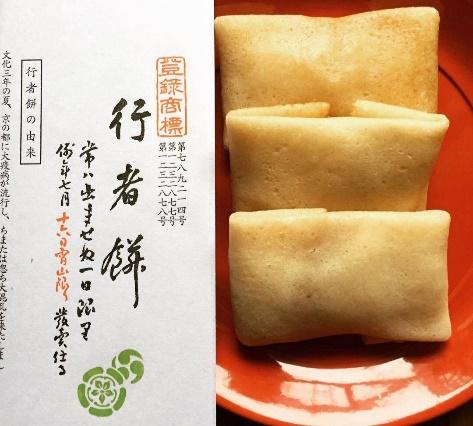
The origins of Gyōja Mochi date back to 1806, shortly after the company was founded, when a major epidemic swept through the city of Kyoto.
At that time, the first proprietor of Kashiwaya, who was practicing Shugendō on Mount Ōmine, received a divine revelation in a dream instructing him to create a confection modeled after the appearance of a Shugendō ascetic. It is said that when he offered the sweets—made in accordance with this divine revelation—to the “En no Gyōja-yama,” one of the floats in the Gion Festival, and shared them with those around him, the epidemic was driven away.
In honor of this legend, every year on the eve of the Yamahoko Parade, known as “Yoiyama,”July 16 only...and it began to be sold as a sweet symbolizing the wish for good health and the absence of illness.
This confection consists of a thin, crepe-like wrapper filled with white miso paste and gyuhi mochi. It is characterized by a unique flavor—the rich sweetness of white miso is accented by the subtle heat of ground sansho pepper.
Since 2017, reservations have not been accepted, and sales are limited to in-store purchases on the day of the event, so lines forming early in the morning have become an annual tradition. Because quantities are limited and items often sell out by early afternoon, we recommend lining up before the store opens if you want to be sure to get one.
At Kashiwaya Mitsusada, in addition to Gyōja Mochi, a dry confectionery called “Ōkini” (ground honey amber) is also popular and available year-round. It comes in four colors—white, brown, light green, and pink—with the brown variety featuring brown sugar, the light green variety featuring yuzu, and the pink variety featuring berry flavors.
It’s characterized by the contrast between its crisp exterior and its juicy, chewy interior; when eaten chilled, it also has a sorbet-like texture.

■Kashiwaya Mitsusada
Address: 33-2 Bishamon-cho, Higashiyama Ward, Kyoto City, Kyoto Prefecture
Phone Number: 075-561-2263
Gyōja Mochi Sales: Available only on July 16 each year; no reservations accepted (limited quantity; available while supplies last)
■The godparent is "Shitatari" (Hisao Kamehiro), the chief priest of Yasaka Shrine.
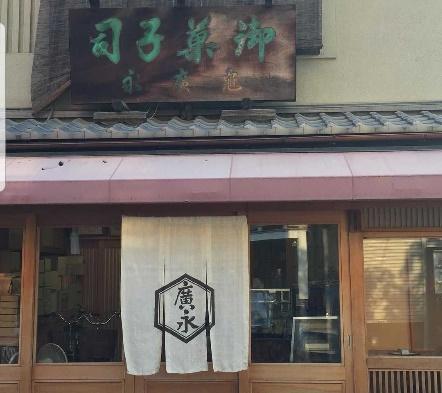
"Kamehiro-ei," a long-established Japanese confectionery shop with a history of over 200 years, is located near Karasuma-Oike.
This famous confection, "Shitatari," was created around 1970 as a treat to be served at the tea ceremony held on the "Kikusui-boko," one of the floats in the Gion Festival.

The Kikusui Hoko is a float named after the Chinese legend of “Kiku Jido.” Based on the legend that he drank dewdrops from chrysanthemums and lived for 700 years, this float is known as a symbol of eternal youth and longevity.
It is said that the name of this confection, “Shitatari,” was given by the chief priest of Yasaka Shrine, inspired by the image of medicinal water dripping from chrysanthemum leaves.
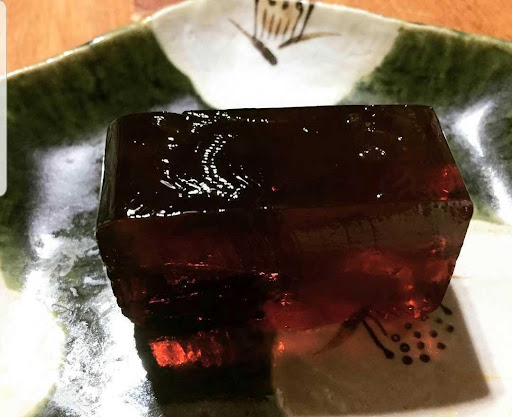
These traditional Japanese candy sticks were inspired by the refreshing droplets of the famous "Kikusui no I" spring and are crafted with carefully selected ingredients, including Okinawan brown sugar, high-quality coarse sugar, Awa-produced Wasanbon sugar, and Tamba agar.
Its appeal lies in its refreshing, translucent appearance, the natural sweetness of brown sugar, and the firm texture of the agar.
Kamehiro E is a shop that sells only in-store and does not ship its products, so it’s definitely a place you’ll want to stop by when you visit Kyoto.
■Eiji Kamehiro
Address: 359 Wakuya-cho, Takoyakushi-agaru, Nakagyo Ward, Kyoto City, Kyoto Prefecture
Phone Number: 075-221-5965
Note: Available for in-store purchase only (cannot be shipped)
■"Gion Chigo Mochi," an elegant confection made with white miso (Sanjo Wakasa-ya)

"Kyokashō Sanjō Wakasa-ya," whose main store is located in Horikawa Sanjō, is a long-established shop founded in Meiji 26 (1893).
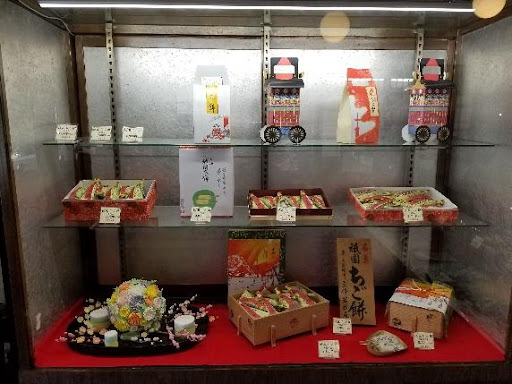
The signature confection, “Gion Chigo Mochi,” consists of white miso sauce wrapped in mochi dough, coated in shaved ice, and skewered on a bamboo stick. It is packaged in sets of three, each accompanied by red, white, and yellow strips of paper.
It is said that this color scheme captures the vibrant atmosphere of the Gion Festival.
The origins of Gion Chigo-mochi date back to a ceremony called “Shasan,” in which young boys were bestowed with titles, that was once held during the Gion Festival.
It is said that the story began when, on the way back from a visit to Yasaka Shrine, children were treated to mochi with miso sauce at a teahouse in front of the Romon Gate; these mochi gained a reputation for “warding off misfortune and bringing good fortune.” It is said that in the early Taisho era, the second-generation proprietor of Sanjo Wakasa-ya drew inspiration from this story and created the Gion Chigo-mochi as we know it today.
With a flavor that combines the soft, fluffy texture of gyuhi with the rich, sweet taste of white miso, this treat is also available in a gift box shaped like a festival float, making it a popular souvenir during the Gion Festival season.
Another popular signature item at this shop is “Kurumi-ita,” a wheat gluten cracker made with ground walnuts and topped with white miso and sugar.
■Sanjo Wakasa-ya Main Store
Address: 675 Hashinishi-cho, Sanjo-dori Horikawa Nishi-iru, Nakagyo-ku, Kyoto City, Kyoto Prefecture
Phone Number: 075-841-1381
HP:http://www.wakasaya.jp/
■Summary: Things to Keep in Mind When Purchasing
The traditional Japanese sweets associated with the Gion Festival all have a long history and their own stories, offering flavors unique to Kyoto.
In particular, Kashiwaya Mitsusada’s “Gyōja Mochi” is sold only once a year on July 16—and reservations are not accepted—so if you want to be sure to get some, we recommend arriving early in the morning and being prepared to wait in line.
"Shitatari" and "Gion Chigo Mochi" aren't as hard to find as Gyōja Mochi, but the area gets crowded with tourists during the Gion Festival, so be sure to allow plenty of time for your visit.
Please note that each store's hours of operation, product selection, and prices are subject to change.
We recommend checking the latest information by phone or on the official website before your visit.
Soak up the excitement of the Gion Festival and enjoy some special Japanese sweets that you can only experience in Kyoto.


Related PostRelated Articles
If you're going all the way, visit a place that will leave you with lasting memories! 7 Retro Cafés in Kyoto
Recently, retro-style coffee shops that make you feel as if you’ve slipped back in time to the Showa era have been attracting a lot of attention. With their vibrant colors […]
The signature dish at Muge Sanbo in Kyoto—the ”Ultra-Rich Matcha Parfait”—is absolutely delicious! If you want to experience the true essence of Kyoto, this is the place to go!
Have you heard of a shop called “Muge Sanbo,” whose signature dish is a parfait made with matcha that’s quintessentially Kyoto […]
Detective Conan: A Pilgrimage to the Kyoto Locations Featured in "The Crimson Love Song" and "The Crossroads of the Labyrinth"! List [Summary]
The Detective Conan movies set in Kyoto are *A Crimson Love Letter* and *Crossroads in the Labyrinth* […]
"Rurouni Kenshin" Kyoto Pilgrimage to Famous Locations! List [Summary]
Have you heard of *Rurouni Kenshin*? Not only is there an anime series, but it’s also been adapted into a live-action movie starring Takeru Satoh, so you should definitely check it out […]
What Is "Sawawa" in Kyoto? Discover the Charm of Matcha at Nishiki Market, with Over 1,300 Years of History!
Nishiki Market is often called the “kitchen of Kyoto,” and it’s lined with all kinds of shops, isn’t it? In a place like that, you can find drinks and ice cream made with matcha […]