

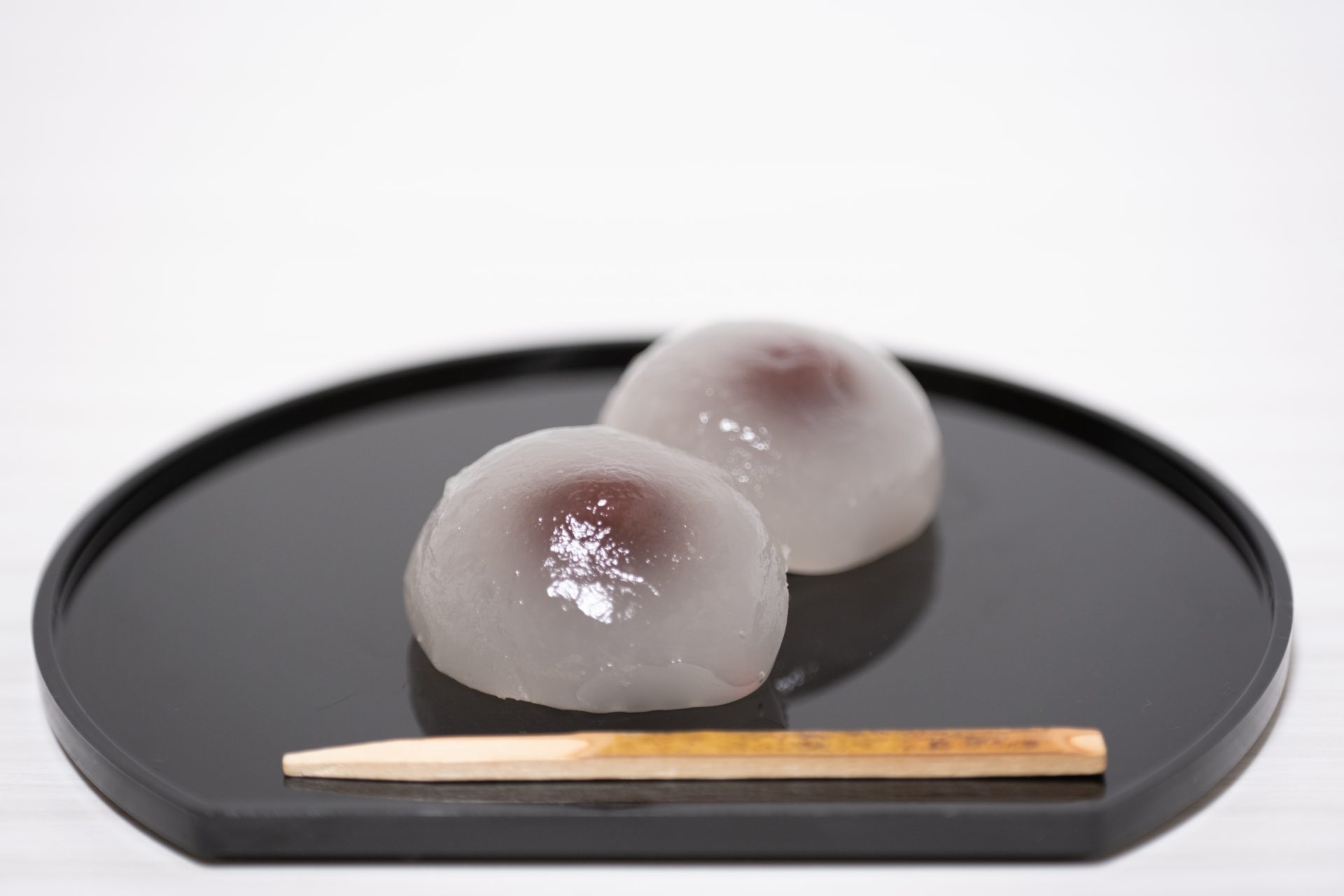
Summer in Kyoto, with its high humidity and stifling heat. It’s the season when refreshing Japanese sweets—such as kuzukiri and kinyoku—that slide smoothly down the throat are particularly popular. Among these, “mizu manju”—where the red bean paste is visible through the transparent dough—is a popular choice as a souvenir from Kyoto in the summer, thanks to its visually refreshing appearance and jiggly texture.
In this article, as a Kyoto tourism media outlet, we’ll provide a detailed introduction to the basics of mizu-manju, as well as shops in Kyoto where you can taste and purchase them.
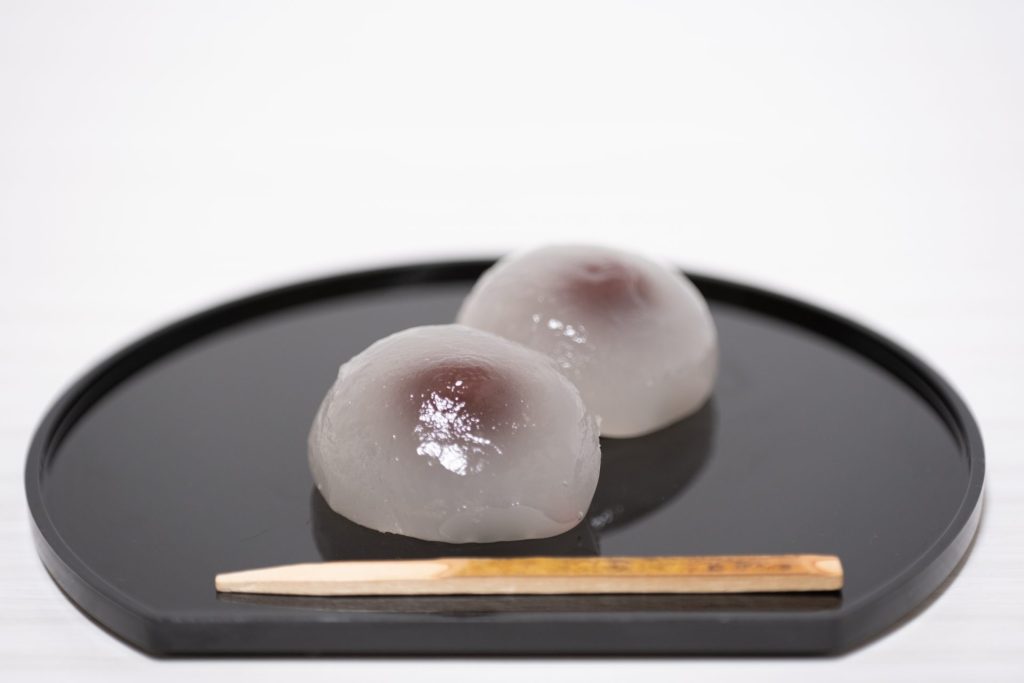
Table of Contents
■What Are Mizu Manju? How Do They Differ from Kuzu Manju and Warabi Mochi?
■Higashiyama Saryo, Kyoto
■young greens or herbs
■summary
■What Are Mizu Manju? How Do They Differ from Kuzu Manju and Warabi Mochi?
Mizu-manju is a translucent Japanese confection made from a dough primarily composed of kudzu starch, wrapped around sweet red bean paste.
It is said to have originated in Ogaki City, Gifu Prefecture. The story goes that during the Meiji era, in Ogaki—known as the “City of Water” due to its abundant groundwater—shop owners began selling kudzu manju by floating them in the city’s famous spring water. Even today, it remains a beloved local specialty of Ogaki City and has spread throughout the country as a summer tradition.
There is a similar Japanese confection called “kudzu manju,” but there are slight differences between the two. While kudzu manju is made exclusively from kudzu starch, mizu manju is characterized by the addition of “warabi starch”—which is resistant to water—to the kudzu starch. As a result, mizu manju has a slightly thicker and softer texture, and it is said to retain its translucent appearance even over time. “Warabi-mochi” is a different type of Japanese confectionery made primarily from warabi flour (or a similar starch), and it differs from mizu-manju in both preparation method and texture.
All of these are Japanese sweets perfect for summer—enjoy them chilled to savor their smooth texture and refreshing appearance. In Kyoto, many shops offer variations made with ingredients characteristic of the region, such as matcha, hojicha, and chestnuts.
■Higashiyama Saryo, Kyoto
Higashiyama Saryo, Kyotois a shop located along Gojo Street, on the way from Shimizu-Gojo Station to Kiyomizu-dera Temple.
With a calm atmosphere reminiscent of a traditional tea shop, you can enjoy a leisurely time here. As a sweet shop specializing in Uji tea, it’s known for crafting products that feature matcha and Uji tea. There’s also a café (tea room) on the premises, so if you have some extra time during your sightseeing in the Kiyomizu area, we recommend stopping by for a break.
The mizu manju come in three flavors: matcha, kinako, and hojicha. They feature a transparent manju wrapper packed tightly with sweet red bean paste, and are characterized by the addition of fresh cream inside, offering a flavor that blends Japanese and Western styles. The “Mizu Manju Roll Cake,” which has even been featured on television, is another popular item on the menu. In the café area, you can enjoy not only mizu manju but also other treats such as matcha roll cake and matcha pudding.
Since we also sell our products in-store, you can purchase them as souvenirs. You won’t often find these items in the basement food halls of department stores or souvenir shops in Kyoto, so be sure to check them out when you visit our store. They’re also available in our online store.
○ Kyoto: Higashiyama Saryo
Address: 4-448 Gojo-bashi Higashi, Higashiyama Ward, Kyoto City, Kyoto Prefecture 605-0846
Phone: 075-532-0873
Hours: Store (Retail) 10:00 a.m.–6:00 p.m., Tea Room (Café) 11:00 a.m.–5:00 p.m. (Last order at 4:30 p.m.)
Closed: Wednesdays (Closed on irregular days—please check)
Directions: About a 6-minute walk from Kiyomizu-Gojo Station on the Keihan Main Line
HP:https://www.kyo-ohana.com/
■Wakana-ya
Wakanaya (Kyoto Chestnut Confectionery Wakanaya), known for its chestnut-based Japanese sweets, is a long-established confectionery with locations throughout Kyoto, including its Oike Main Store near Nijo Castle, a shop on Shijo Street in front of Yasaka Shrine, and others in the area around Daigo-ji Temple. The shop focuses primarily on in-store sales, and one of its appeals is that you can easily stop by during your sightseeing.
Mizu-manju are characterized by their simple, rustic flavor, featuring smooth, strained red bean paste gently wrapped in kudzu starch. In addition to the classic plain flavor, they also come in warabi (bracken) and matcha flavors; the faintly tinted, translucent kudzu wrapper gives them a refreshing and charming appearance. Mizu-manju is a seasonal item, typically available from late April through late August (as the sales period varies by year, it’s recommended to check before visiting). They are sometimes sold wrapped in bamboo leaves, evoking a distinctively summery atmosphere.
Also, from late May through late June, a limited-edition mizu-manju called “Ajisai” will be available. Designed to resemble hydrangeas, this assortment includes three varieties—the classic plain flavor plus yuzu-flavored and other varieties—all featuring a juicy, moist texture. After purchasing, chill them in the refrigerator to enjoy them cool and refreshing. The key is to store them in an airtight container to prevent the dough from drying out.
○ Wakana-ya (Kyoto Chestnut Confectionery Wakana-ya) Oike Main Store
Address: 137-6 Shikami-cho, west of Aburakoji on Oike-dori, Nakagyo-ku, Kyoto 604-8261
Phone: 075-253-0234 (Main Store)
Hours: 9:00 a.m. to 8:00 p.m. (Main Store; hours may vary by location, so please check)
HP:http://www.wakanaya.jp/
■summary
In this article, we’ve introduced two shops in Kyoto where you can enjoy mizu manju. Both are easily accessible from famous tourist spots and are conveniently located for a quick stop on your way to a hotel or the train station. One of the joys of visiting these shops is trying different flavors—such as matcha, warabi, and hojicha—and comparing them.
All mizu-manju are seasonal Japanese sweets available only for a limited time. In particular, Wakana-ya’s products are available from late April through late August, so if you visit during other seasons, we recommend checking the latest availability at the store. When traveling in Kyoto during the sweltering summer heat, take a break and enjoy a delicious, smooth, and refreshing mizu-manju.


Related PostRelated Articles
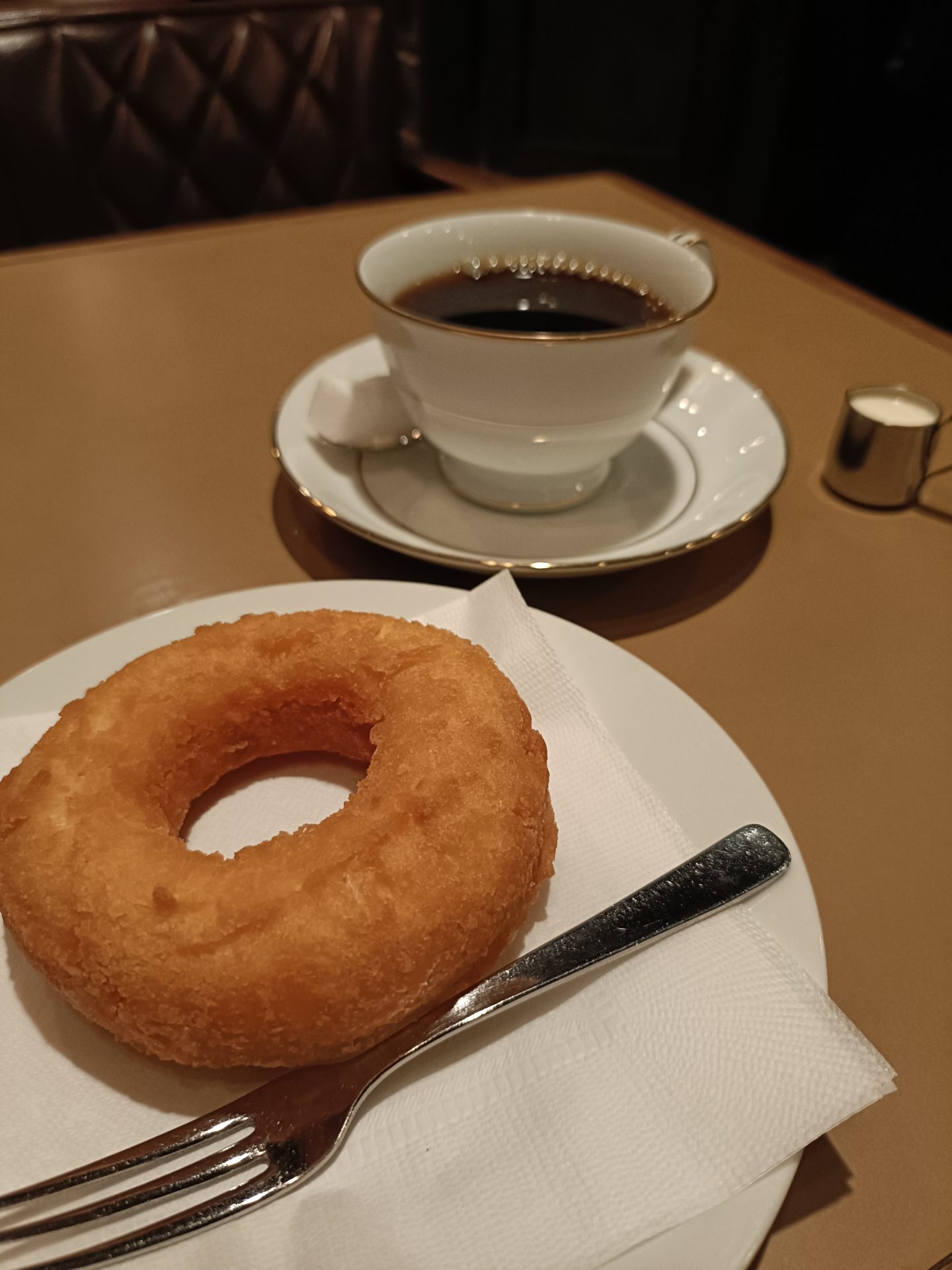
If you're going all the way, visit a place that will leave you with lasting memories! 7 Retro Cafés in Kyoto
Recently, retro-style coffee shops that make you feel as if you’ve slipped back in time to the Showa era have been attracting a lot of attention. With their vibrant colors […]
The signature dish at Muge Sanbo in Kyoto—the ”Ultra-Rich Matcha Parfait”—is absolutely delicious! If you want to experience the true essence of Kyoto, this is the place to go!
Have you heard of a shop called “Muge Sanbo,” whose signature dish is a parfait made with matcha that’s quintessentially Kyoto […]
Detective Conan: A Pilgrimage to the Kyoto Locations Featured in "The Crimson Love Song" and "The Crossroads of the Labyrinth"! List [Summary]
The Detective Conan movies set in Kyoto are *A Crimson Love Letter* and *Crossroads in the Labyrinth* […]
"Rurouni Kenshin" Kyoto Pilgrimage to Famous Locations! List [Summary]
Have you heard of *Rurouni Kenshin*? Not only is there an anime series, but it’s also been adapted into a live-action movie starring Takeru Satoh, so you should definitely check it out […]
What Is "Sawawa" in Kyoto? Discover the Charm of Matcha at Nishiki Market, with Over 1,300 Years of History!
Nishiki Market is often called the “kitchen of Kyoto,” and it’s lined with all kinds of shops, isn’t it? In a place like that, you can find drinks and ice cream made with matcha […]