

The time for new rice has arrived!
Every fall, new rice is shipped and it is the season for delicious rice.
We would like to introduce you to some of the best rice dishes Kyoto has to offer.
Table of Contents
■Harema's "Chirimen Sansho
■Kyoto Ichino Den's "Kura Misozuke" (pickles with soybean paste)
■Is it different from ordinary Shibazuke? Nama Shibazuke
■Komatsu Kelp" by Kyoto Ungetsu
■ Summary
■Harema's "Chirimen Sansho
Chirimen sansho is probably the first thing that comes to mind when you think of Kyoto's rice bowl offerings.
Chirimen sansho is one of the obanzai (side dishes). Chirimenjako (dried baby sardines) are boiled in soy sauce, mirin, sake, sugar, and other seasonings, along with sansho nuts that have had their lye removed.
In Kyoto, it has long been made and eaten as a reserve food around early summer, when sansho nuts are in season.
“It is also called ”Ojako“ or ”Jako Sansho.
Introduced here is "Chirimen Sansho" from Harema.
It is said that the first generation of "Harema" gave it as a souvenir to their close friends, and it has been loved by maiko, geiko, and other women in Kyoto who have discerning palates.
This "Chirimen Sansho" is characterized by its elegant texture and taste.
Only the smallest grains of chile are selected, and they are silky and not sweet.
And the tangy stimulation of the actual sansho pepper is exquisite.
Some restaurants have a nectar-like texture, but it is not sticky and persistent!
Another is "vegetable kelp," which uses salted kelp as a base and is cooked with lotus root, burdock root, sansho (Japanese pepper), and slightly larger pieces of baby sardines.
It has a deep flavor with less sweetness and is cooked well, so it goes well with ochazuke (rice with green tea).
It also contains no preservatives or colorants.
The seasoning, size and hardness of the baby sardines, and the amount of sansho (Japanese pepper) vary considerably from restaurant to restaurant, so it is fun to compare different kinds of food to find the one you like best.
■ Store Name:Harema Main Store
■HP:https://www.harema.co.jp/
■Address: 6-357 Miyagawa-suji, Higashiyama-ku, Kyoto-shi, Kyoto
Phone number: 075-561-4623
Kyoto Ichino Den's "Kura Misozuke" (pickles with soybean paste)
The next rice dish is saikyo zuke (pickles in saikyo pickles).
Saikyo zuke is a traditional Kyoto dish made by marinating fish or meat fillets in a bed of miso, a mixture of Kyoto's white miso, Saikyo miso, mirin and sake.
The name "Saikyo Miso" comes from the fact that Kyoto became the western capital of Japan after the Meiji Restoration, when the capital was moved to Edo.
Since the center of Kyoto is far from the sea, the fish was first marinated in miso in order to preserve it so that it would be tasty.
It can be said to be a product of Kyoto's history and climate.
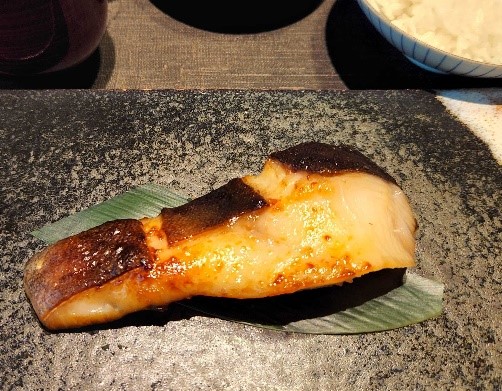
Kyoto Ichino Den's saikyo zuke is called kura-miso zuke because carefully selected fish is marinated in a secret miso bed.
There are a variety of fish, such as mackerel, salmon, and flounder, but the author's recommendation is gindara (silverfish).
It is moderately fatty, with the aroma of burnt miso, mild sweetness, and a melt-in-your-mouth texture!
Also particularly recommended as a souvenir is the "popular 3-kinds okonomiyake set," which can be purchased only at the main store and Kyoto Isetan. This set contains three types of kura-miso zuke (silverfish, sea bream, and mackerel) in one container, and can be carried around for a long time (up to 4 hours in summer and 6 hours in winter), making it perfect for giving to family and close friends.
There is also a pre-baked Saikyo zuke, which can be enjoyed by simply heating it in a microwave oven. This is a must-try item for those who want to enjoy a different kind of authentic Saikyo zuke with a lot of time and care.
■ Store Name:Kyoto Ichinoden, B1, JR Kyoto Isetan
■HP:https://www.ichinoden.jp/kyotoisetan/
Address: Higashi Shiokoji-cho, Shiokoji-sagaru, Karasuma-dori, Shimogyo-ku, Kyoto-shi, Kyoto
Phone number: 075-366-5908
■Is it different from ordinary Shibazuke? Nama Shibazuke
Next is the pickles "Nama-Shibazuke".
Shibazuke is a standard pickle often seen in lunch boxes and is one of the three most popular pickles in Kyoto, along with sukkizuke and senmaizuke.
The godmother is said to be Kenreimonin Tokuko, daughter of Taira no Kiyomori.
Kenreimonin, who attempted to enter the sea at Dannoura at the time of the fall of the Heike clan, was rescued by warriors of the enemy Minamoto clan and spent the rest of her life alone and lonely in Ohara, Kyoto. To remind Kenreimonin of her former days, local people offered her pickles made from shiso, a specialty of the area. The taste and beautiful purple color delighted Kenreimonin so much that he named it "Murasaki-hazuke" (purple leaf pickles), and the name "shibazuke" later took root.
Did you know that there are actually two types of Shibazuke?
One is traditional Shibazuke, which is made by pickling red shiso and eggplant with only salt and using the power of lactic acid bacteria attached to the eggplant and red shiso, or "lactic acid fermentation. It is characterized by its moist texture, richness, and sourness, and is sold under the name "nama-shibazuke" to differentiate it from those processed with seasoned vinegar.
The other is Shibazuke, which is made by pickling kyuri (cucumber) or nasu (eggplant) in salt and seasoning it with vinegar in the style of Shibazuke. The use of "vinegar" gives it a refreshing taste and fresh texture.
The one introduced here is the former, traditional Shibazuke.
You can still find fresh shibazuke this time of year, as Kyoto's long-established shibazuke shops pickle a year's worth of shibazuke between July and August, and freshly pickled shibazuke are available from July to August.
It has no peculiarities and is very easy to eat with just the right amount of sourness and saltiness.
It is cut into convenient sizes, making it easy to arrange!
In addition to fresh shibazuke, we are happy to offer a wide variety of shibazuke and shiso pickles, such as "Oraga pickles" arranged using the tradition of shibazuke making and "Nishiki Jakuchu pickles (red shiso)" that use roasted sake.
Masugo's pickles "Nama-Shibazuke" are traditional Kyoto pickles made by lactic acid fermentation.
It has no peculiar taste and is very easy to eat with just the right amount of sourness and saltiness.
Another favorite point is that it is cut into bite-size pieces, making it easy to eat and arrange.
Please try to arrange them in tartar sauce, fried rice, etc. and discover new tastes!
■ Store Name:Masunori Masunori Main Store
■HP:https://masugo.co.jp/
Address: 181 Higashi-Uoya-cho, Nishikishikoji-dori, Tominokoji-nishiiru, Nakagyo-ku, Kyoto City
Phone number: 075-211-5346
Komatsu Kelp" by Ungetsu, Kyoto
The last item introduced is "Komatsu Kelp" from Kyoto Ungetsu.
Ungetsu" was established in Rakuhoku in 1970, when the previous generation, who had studied vegetarian cuisine, opened a restaurant in 1966 in a place associated with "Noma Gentaku," a famous doctor in the Edo period. He also always tries not to be intrusive, and aims for honest cuisine that does not try to be eccentric.
Komatsu Kelp", a representative product of Ungetsu, is a specialty born from the idea of kaiseki cuisine. When kaiseki cuisine reaches the point of rice dishes, there are times when people want to drink a little more sake, but they are still hungry.
It is much finer than ordinary salted kelp and has a silky smooth texture. It has a delicate and refined taste, and is a product that receives comments of delight from those to whom it is given.
Some come in bags, some in bottles, and some in paulownia wood boxes, so you can choose according to quantity, price, and use.
Gosho Ungetsu also serves lunch, so please visit when you are sightseeing in Gosho.
■ Store Name:Gosho Unmonthly
■HP:https://tabelog.com/kyoto/A2601/A260302/26007453/
Address: Nijuji-me corner, Teramachi-dori Imadegawa-sagaru, Kamigyo-ku, Kyoto-shi, Kyoto
Phone number: 075-223-5087
■ Summary
While it is hard to leave out the gorgeous sweets that are typical of Kyoto, why not choose a “friend of rice” as a souvenir during your visit to Kyoto in this season when the new rice is delicious?


Related PostRelated Articles
If you're going all the way, visit a place that will leave you with lasting memories! 7 Retro Cafés in Kyoto
Recently, retro-style coffee shops that make you feel as if you’ve slipped back in time to the Showa era have been attracting a lot of attention. With their vibrant colors […]

The parfaits at FUKUNAGA901 are so cute! If you're looking for exquisite sweets at Kyoto Station, this is the place to go!
Are you familiar with “FUKUNAGA901,” a shop that’s been trending on social media platforms like Instagram and YouTube […]
The signature dish at Muge Sanbo in Kyoto—the ”Ultra-Rich Matcha Parfait”—is absolutely delicious! If you want to experience the true essence of Kyoto, this is the place to go!
Have you heard of a shop called “Muge Sanbo,” whose signature dish is a parfait made with matcha that’s quintessentially Kyoto […]
Detective Conan: A Pilgrimage to the Kyoto Locations Featured in "The Crimson Love Song" and "The Crossroads of the Labyrinth"! List [Summary]
The Detective Conan movies set in Kyoto are *A Crimson Love Letter* and *Crossroads in the Labyrinth* […]
What is “Minori Cafe” in Shimogyo Ward, Kyoto? Their parfaits and desserts are delicious♡
Have you heard of a café called “Minori Café,” located right near Kyoto Station? Here, you can enjoy seasonal desserts and treats from famous shops […]