

Arashiyama is a major sightseeing spot in Kyoto. Arashiyama is the perfect place to experience something out of the ordinary, visiting famous temples, eating and walking. There are so many famous places to visit in Arashiyama that it is hard to know where to go.
So here it is! The KYOTREAT editorial staff, who know Kyoto very well, has created a special route that you should definitely take if you are planning to visit in the summer!
Please refer to them and enjoy Arashiyama efficiently this summer.
Table of Contents
■zarame
■Nomiya Shrine
Kurumaori Shrine
■Cormorant
■ Summary
■zarame
How about trying some cotton candy to start off your Arashiyama stroll?
■What is the famous "zarame" in Kyoto?
zarame" has been a hot topic of conversation in Kyoto for the past few years.
The "zarame" is a cotton candy specialty store that has its main store in Arashiyama and is popular among young women as Kyoto's cotton candy,
It's elegant and calming.
You can feel Kyoto with cotton candy.
The event was very well received by the public.
Recently, the restaurant has been featured in the TV media, offering cotton candy in unusual flavors that can only be found here.
■Attractiveness and features of zarame
zarame" is a store that is particular about its ingredients and production methods.
As you can see from the Kyoto Arashiyama Honten website, even the pomelo itself is made from ingredients developed to have a unique flavor.
Kyoto Uji Matcha
Kyoto Uji roasted tea
Tanba black soybean soybean flour
These products are made with carefully selected Kyoto ingredients, such as the following, and are finished in an elegant taste.
Its taste, as well as its cute, Instagram-worthy colors, are probably the reason for its popularity on social networking sites.
The menu at "zarame" varies from the standard plain, to oni kinako, persimmon and maple leaf rooibosti, and more.
What do you recommend for ■zarame?
Here are some of the popular products recommended by "zarame.
○ cotton bridge
We use black soybean kinako (soybean flour) produced in Tanba, Kyoto, which is famous as a high-class kinako (soybean flour). It has a luxurious and elegant taste.
Cherry Blossom Milk
It has a mild taste with Japanese cherry leaves and Hokkaido milk.
XX cotton glaze (pottery)
This sparkling cotton candy with sweet and sour strawberries is sure to be an Instagram hit.
reddish-brown sesame paste
This popular product is made with carefully selected Uji green tea from Kyoto and is rich in flavor.
Kyo Matcha Latte
Enjoy an authentic matcha latte made with Kyoto Uji matcha with cotton candy.
Roasted tea latte
This adult roasted tea latte has a delicious bitter taste and aroma of roasted tea.
Review by ■zarame
It was a taste that changed my concept of cotton candy. I imagined a simple cotton candy, but this was delicious. It had an elegant taste.
I can't believe I got to eat strawberry miruku with cotton candy! It was sweet and delicious.
The pomegranate is a special kind of pomegranate. This is delicious... I liked the sweet Yatsuhashi aroma.
A cotton candy specialty store that parents and children can enjoy together. Very good for eating and walking around. It was an Arashiyama Desu-like memory.
. interesting, tasty, and fun cotton candy. Really stylish. It was popular among foreigners.
Stylish cotton candy. The container is also too stylish. Personally, I enjoyed the strawberry miruku and oni kinako. The texture was fine.
They say it is also available online. This is a definite repeat.
I think it is a new taste of Kyoto. It looked and tasted great.
The taste is light, but I could tell it was made with authentic ingredients. The Uji green tea seems to be addictive.
I can enjoy many different flavors of cotton candy. Now I want to try different flavors again.
Wooooooooooooooooooooooooooooooooooooooooooooooooooooooooooo!
■zarame
HP:https://zarame-japan.com/
Address: 1 Saga Tenryuji Shurumado-cho, Ukyo-ku, Kyoto-shi, Kyoto
Access: about 1 minute walk from Randen "Saga Station
■Nomiya Shrine
After getting cotton candy, head toward "Nomiya Shrine" while eating it. It takes about 15 minutes to get there if you walk slowly along the famous bamboo grove path while eating.
■What is Nomiya Shrine?
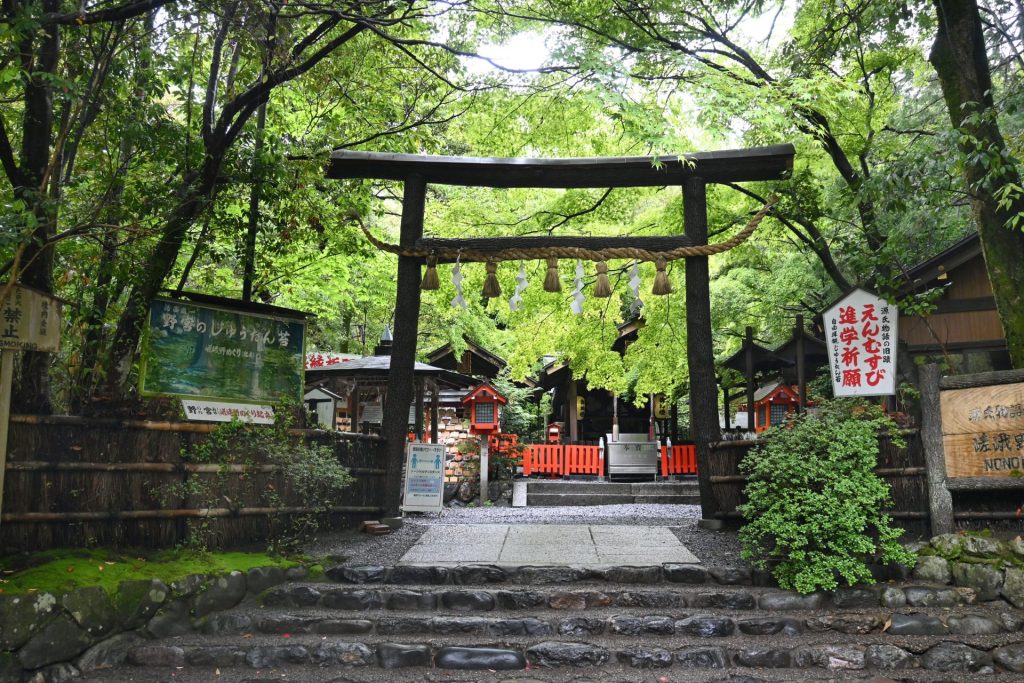
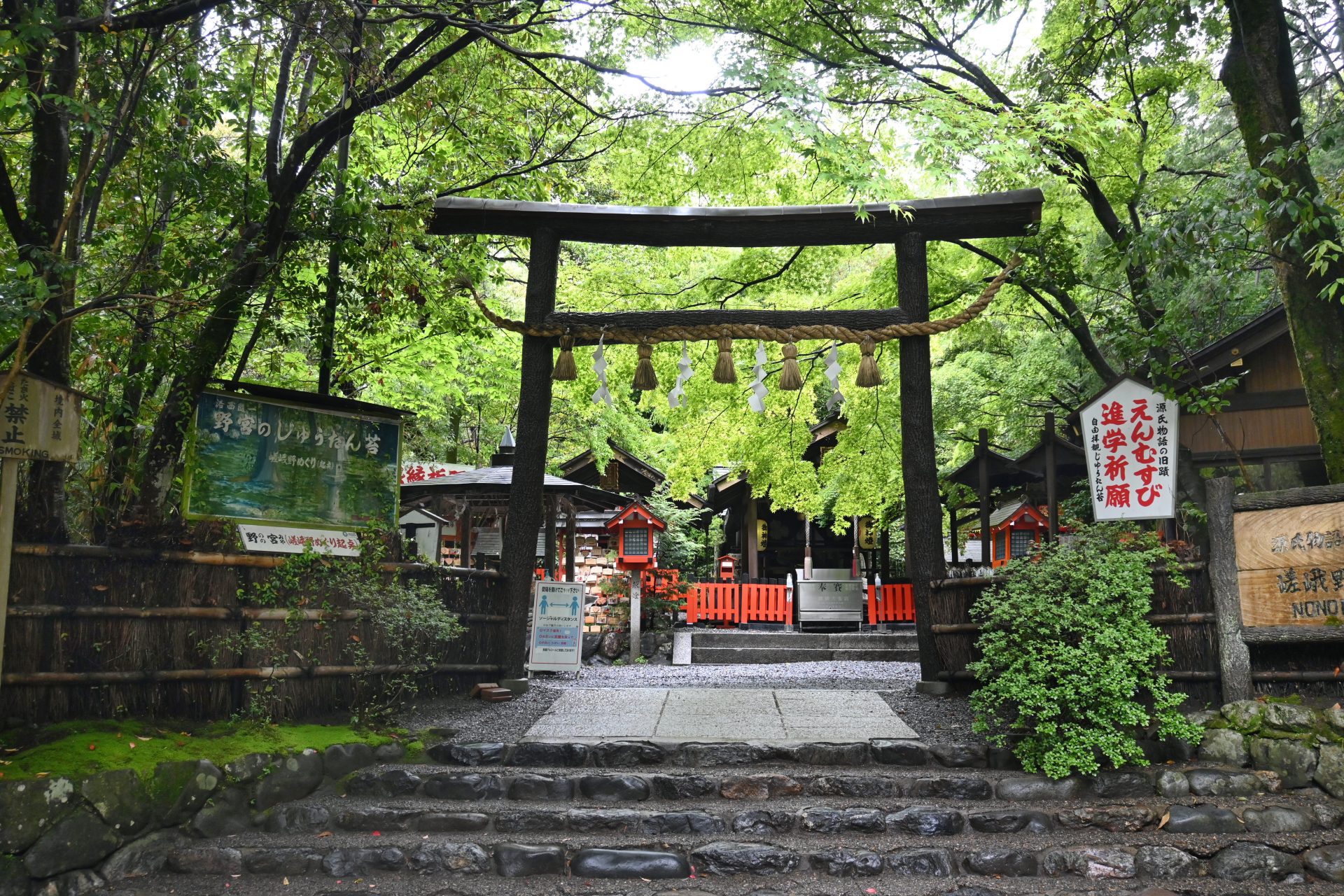
Nomiya Shrine is the starting point of the Sagano Tour and is located in the bamboo grove path, a sightseeing spot in Arashiyama.
It is also known for its appearance in the Tale of Genji, "The Scroll of the Wise Tree". The main shrine, Nomiya Ookami, is blessed with good health and wisdom, and is visited by many people every day.
Other blessings on the temple grounds include the following
Hakubine Benzaiten → fortune, entertainment
Daikokuten, the god of marriage
Hakufuku Inari Daimyojin → childbirth, safe delivery, prosperous business
Daisen Benzaiten→Traffic safety, improved fortune
Atago Oojin→Fire suppression and victory luck
■History of Nomiya Shrine
Nomiya Shrine, standing dignified in the nature of Sagano, is said to have been built after the transfer of the capital to Heian period.
In Japan, it was customary for girls between the ages of 10 and 13 to be chosen as Saiku, or Saiku, and sent to the Ise Jingu Shrine in Ise, Mie Prefecture, to serve the gods in place of the emperor.
The present Nomiya Shrine was used as a place to purify oneself during the year before visiting the Ise Jingu Shrine.
They stayed at the shrine for about three years to purify their bodies and souls.
The Tale of Genji, the world's oldest full-length novel written by Murasaki Shikibu, also mentions a girl who was chosen to be a Saiku and the Nomiya Shrine where she is said to have purified herself.
■Nomiya Shrine Highlights
○Kuroki Torii
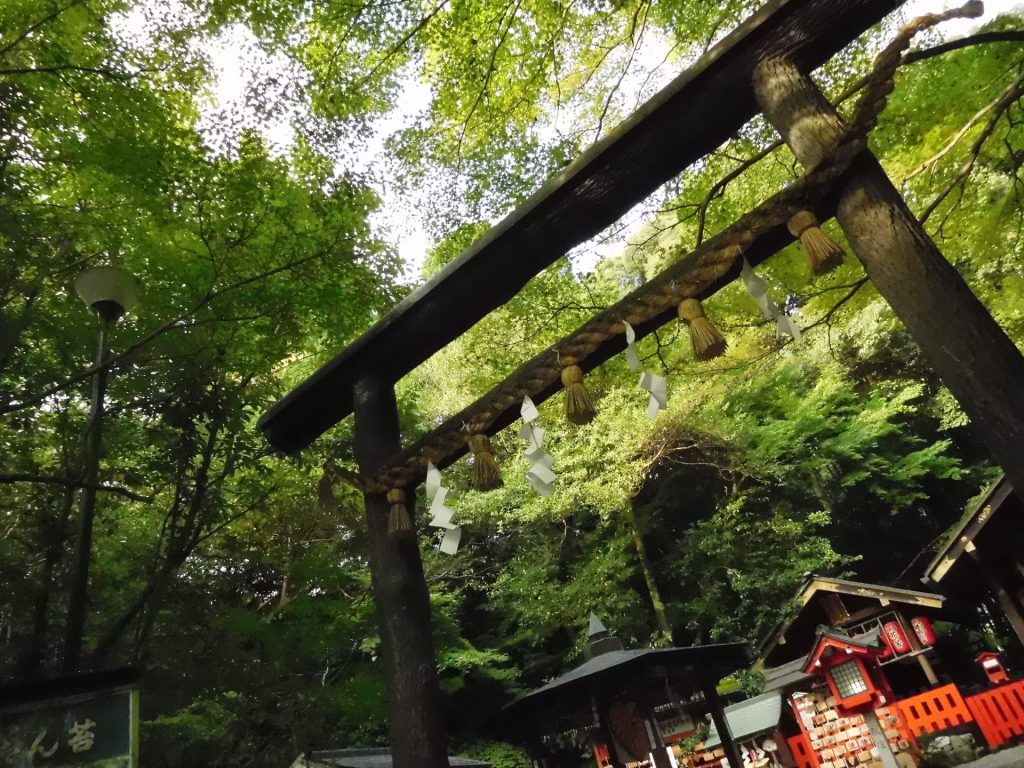
Most people think of a vermilion-colored torii gate. However, the torii of Nomiya Shrine is a black wooden gate with the bark of the tree still attached.
This torii gate is made of sawtooth oak from Kenzan, Tokushima Prefecture, and is the only black torii gate in Japan because this sawtooth oak is now hard to find.
The hues blend in with the nature of the mountain and its austere atmosphere draws you in.
○Hon-den
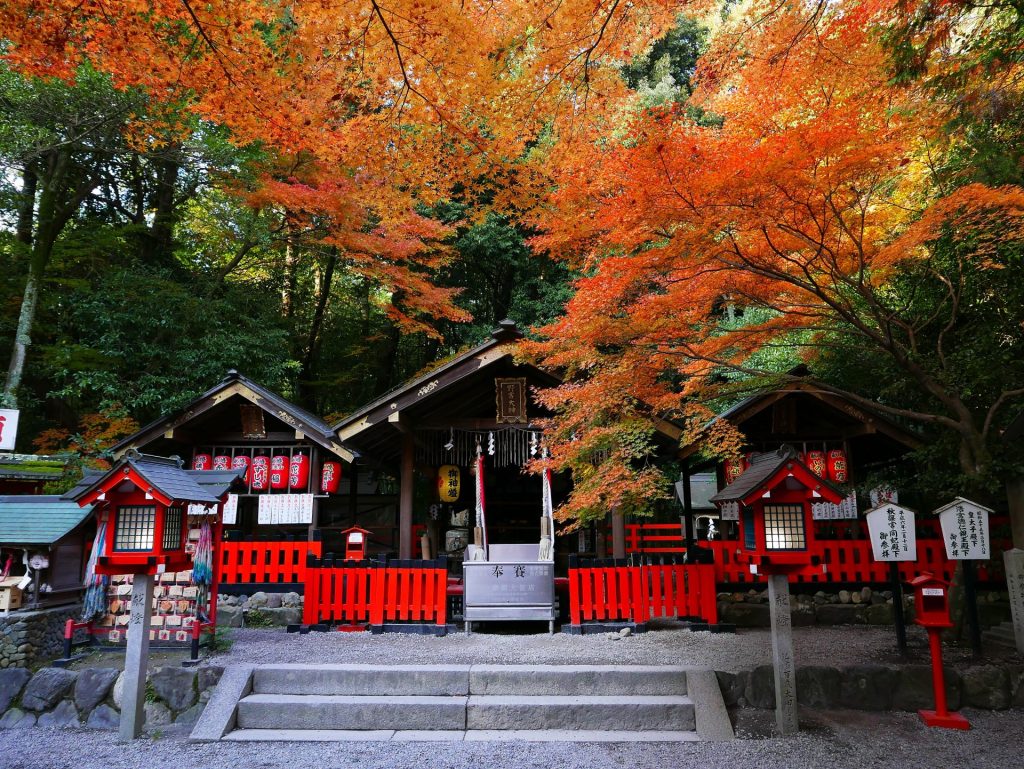
The main shrine of Nomiya Shrine is located just inside the torii gate. Amaterasu is enshrined in the main shrine, which offers blessings such as good health and wisdom.
○Shirafuku Inari Daimyojin
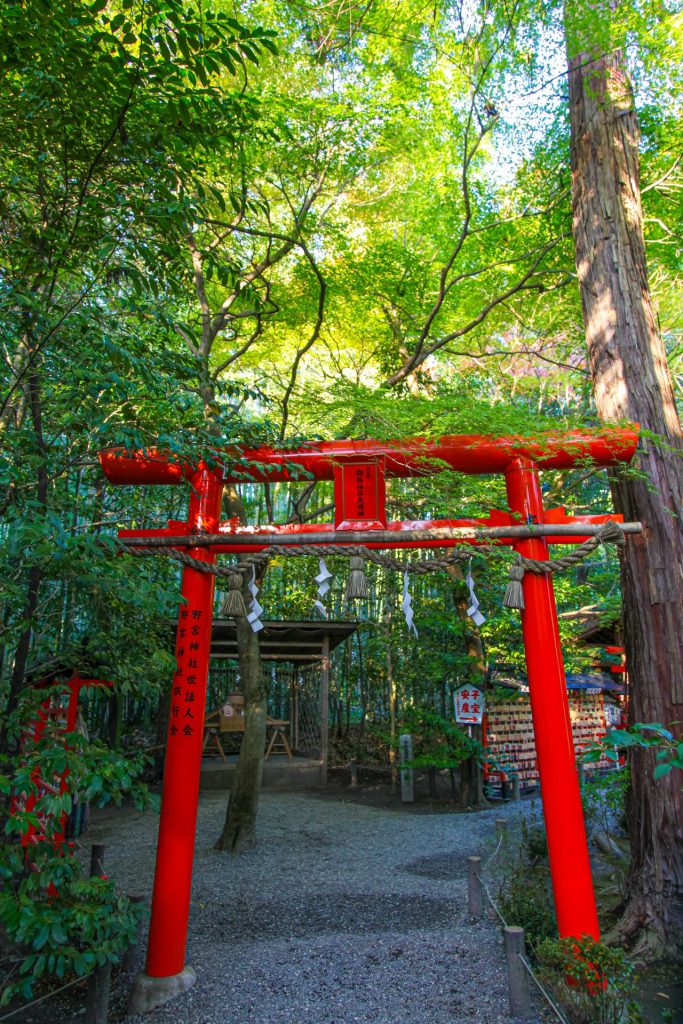
Shirafuku Inari Daimyojin is popular among women because it is said to bring blessings for childbirth and easy delivery.
Xerotops laevis (species of moss)
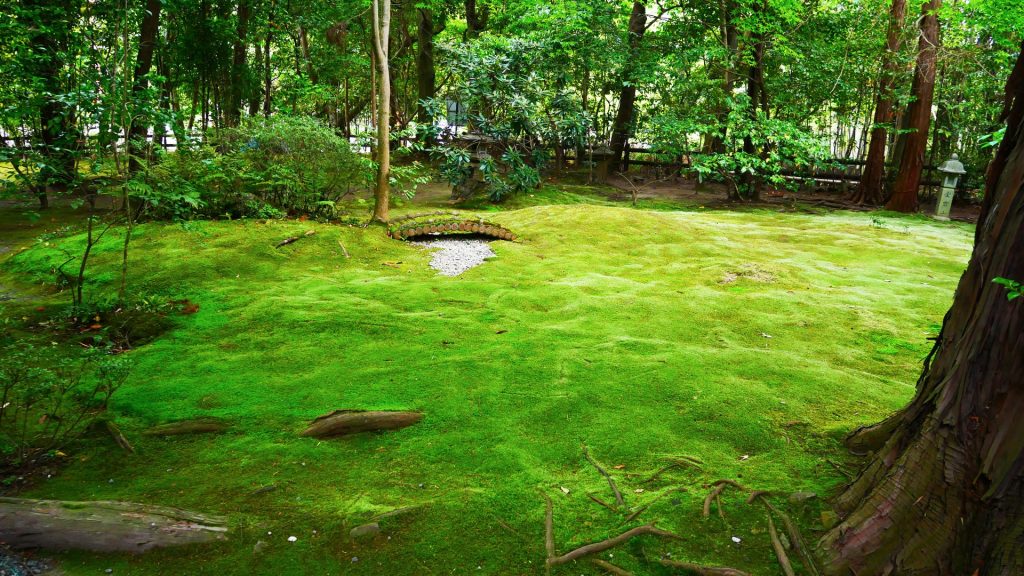
The small garden on the grounds is lushly green and covered with fluffy moss that looks like a carpet. The small bridge is the Watarigetsu Bridge, and the white sand represents the Katsura River.
Misogi-goshi-gai (form of Shinto purification)
This is where one can pray to remove unwanted affinities. The practice is to purify the water by dropping sins and impurities into it. At Misogi-Purification Hall, you write what you want to purify on a prayer form, float the form in the water, place a small coin, and pray. It seems to be a good place to pray when you want to break off a relationship with someone you have difficulty with, or when you want to break off a problem that you cannot solve by yourself.
○Emae
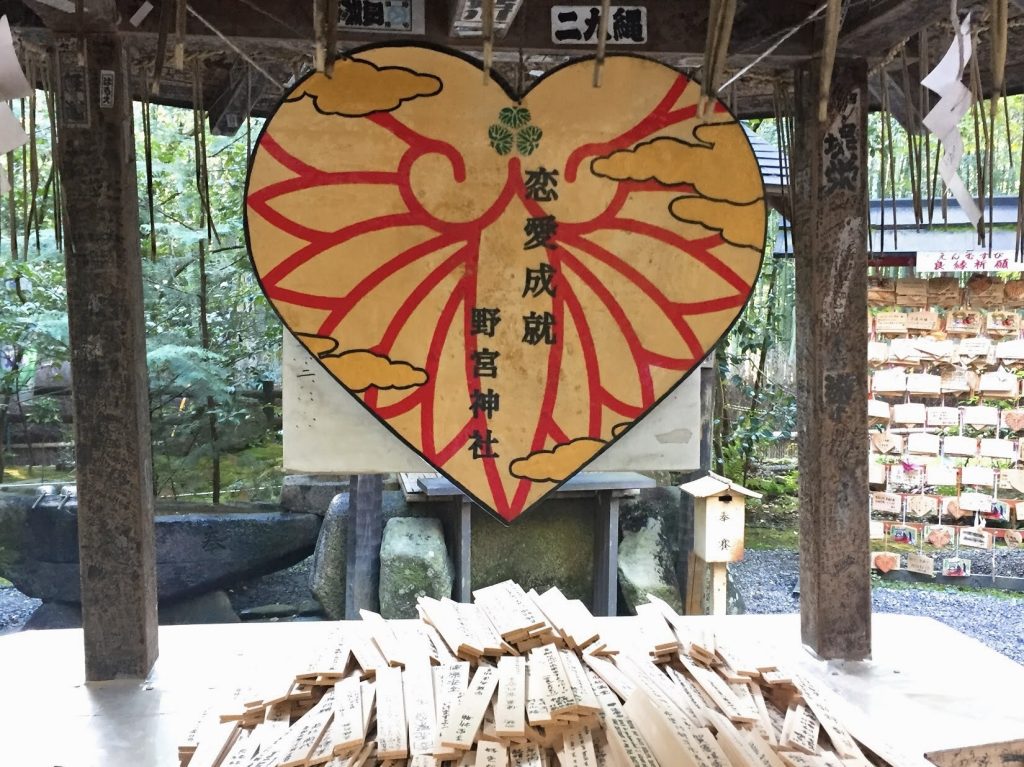
Nomiya Shrine also has wonderful ema (votive picture tablet). There are ema (wild ema, ema for safe delivery of children, ema for good marriage, and ema for love), and you can make a variety of requests, including prayers for good marriage, good luck, success in school, good health, prosperous business, and safe delivery of children. Please pay attention to the design of the ema as well.
xenolith
The "Turtle Stone" is shaped like a large turtle.
This turtle stone enshrines the god of marriage, Nomiya Daikokuten, and it is said that if you stroke it while making a wish, your wish will come true within a year. Please pray here at the very end of your visit to each shrine.
Wooooooooooooooooooooooooooooooooooooooooooooooooooooooooooo!
■Nomiya Shrine
HP:http://www.nonomiya.com/
Address: 1 Saganomiya-cho, Ukyo-ku, Kyoto-shi, Kyoto
Access: Approx. 10 min. walk from JR Saga-Arashiyama Sta.
Kurumaori Shrine
After visiting Nomiya Shrine, you will want to visit more shrines and temples in Kyoto. The next place you should visit is Kurumaori Shrine. The shrine is frequented by celebrities, and the names of singers, idols, celebrities, actors, and other celebrities are lined up on the tamagaki fence inside the shrine grounds. It takes about 20 minutes on foot from Nomiya Shrine. It is also convenient to take a bus. With the famous Wataratsuki Bridge by your side, resume your Arashiyama stroll!
What is Kurumaori Shrine? About the origin of the name
Kurumaori Shrine is one of the most popular shrines and temples in Arashiyama. The deity is Kiyohara Yoriyoshi, a Heian-period scholar of the Japanese and Chinese arts and a man whose practical skills were said to be unparalleled in his day.
During the Kamakura period (1185-1333), Emperor Godaigo was on his way to Arashiyama on a pleasure trip when the axle part of the cowshed broke. The place where it was broken was just in front of Kurumaori Shrine. In fear of the deity, the stone on the right side in front of the shrine gate was called "Kurumaori Ishi" (Kuruma Oriishi).
At that time, he learned that the shrine was dedicated to Kiyohara no Yoriyoshi, and was sent the divine title of "Shoichi Kurumaori Daimyojin," which became known as Kurumaori Shrine.
■What are the benefits of Kurumaori Shrine?
What are the benefits of Kurumaori Shrine?
As mentioned above, the stone on the right side in front of the gate is called "Kurumaoriishi," and there is a strong belief in the stone.
For example, there is a "purification shrine" with standing sand in the shape of a stone motif and a "prayer god stone," an amulet containing a stone. The purification shrine is said to purify bad luck, and the prayer god stone is a power stone that grants wishes.
Many tourists also come to the shrine to pray for success in examinations and academic achievement, as well as for money fortune, love fortune, and entertainment.
■What are the highlights of Kurumaori Shrine?
Here is a summary of the highlights of Kurumaori Shrine. Please check it out so that you do not miss anything when you visit the shrine.
○Entertainment Shrines
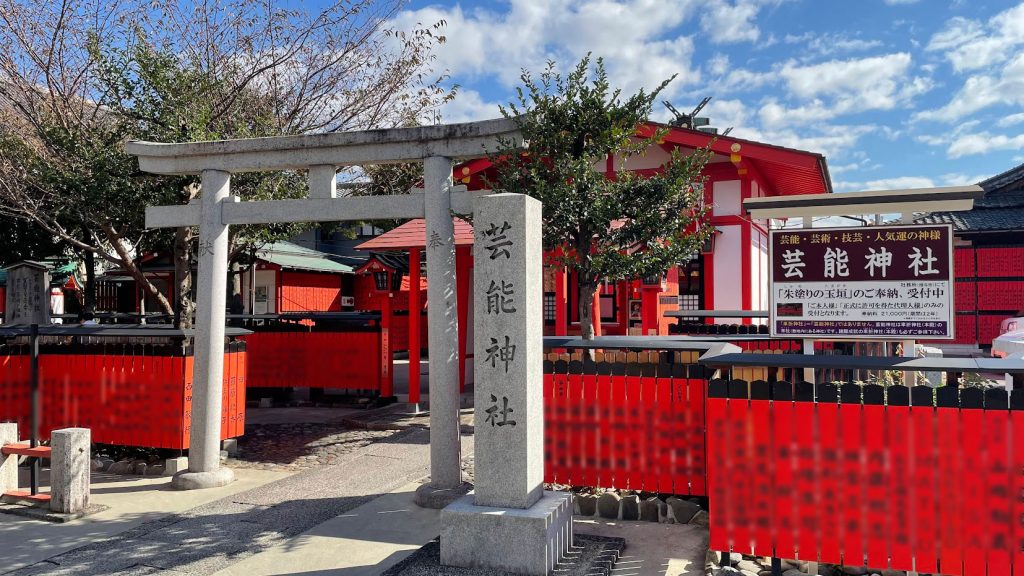
The "Performing Arts Shrine," which is particularly popular within the precincts of Kurumaori Shrine, is dedicated to Ame-no-Uzume-no-mikoto, the god of the performing arts, and is said to bring blessings for the arts and entertainment.
Around the shrine are vermilion-colored "tamagaki," or sacred stone walls, on which the names of celebrities who have visited the shrine are handwritten one by one by priests. Many celebrities, including ATSUSHI of EXILE, Shoko Nakagawa, and Arisa Mizuki, have visited the shrine. It is said that if you visit the shrine, you will get more jobs, and the shrine has been introduced as a filming location and visited by celebrities.
It is also worshipped by those who wish to improve their artistic skills, and is visited by artists of calligraphy, flower arrangement, tea ceremony, and so on.
Since this tamagaki will be posted for two years, it is possible that the names of the celebrities may have changed the next time you come back to visit the shrine.
One way to enjoy visiting this place is to visit it as a power spot and, in conjunction with that, to look for the names of your favorite celebrities.
Main Shrine and Worship Hall
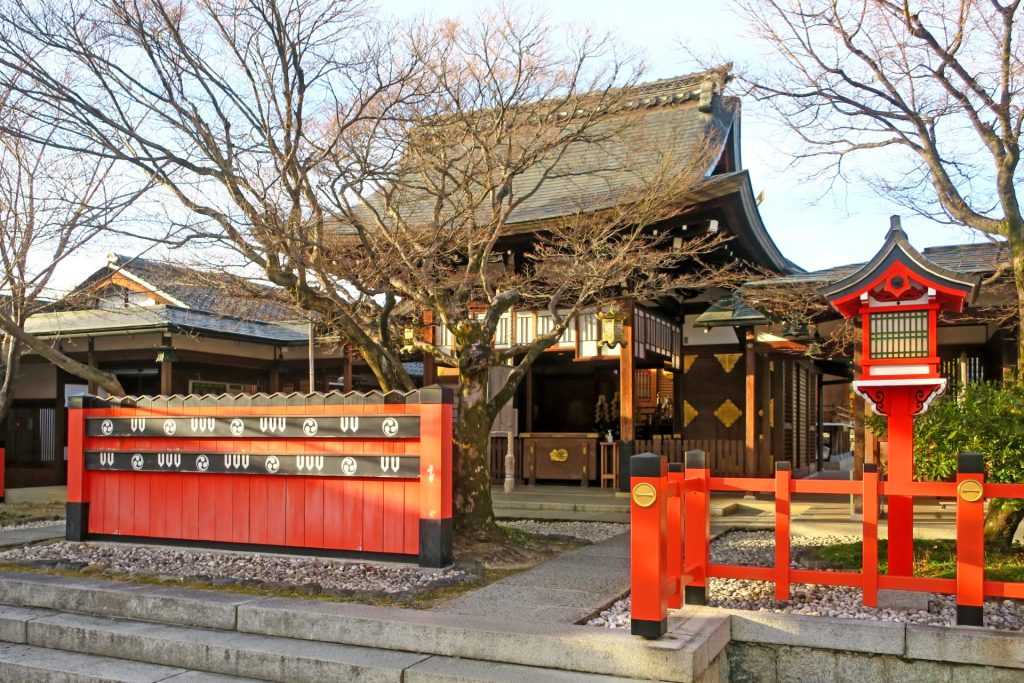
The most important main shrine and worship hall at Kurumaori Shrine. The main hall and worship hall are dedicated to the deity, Kiyohara no Yoriyoshi.
The main shrine was renovated in 2014, but some structures built in the mid-Edo period still remain, giving visitors a sense of history. Prayers and Shinto rituals are held in the worship hall in front.
In front of the shrine, there is a place where people who have had their wishes fulfilled can pile up stones with their thanks written on them as a sign of gratitude.
Also, the komainu (guardian dogs) sitting in front of the inner sanctuary are a must-see.
shrine of Shinto purification
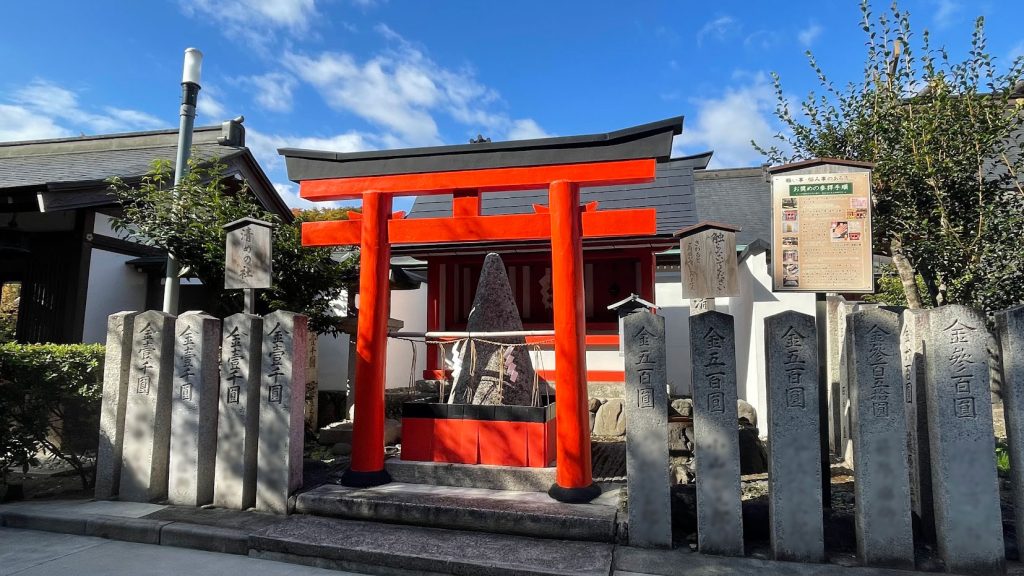
Standing sand "purification shrine" with a stone motif. It has become famous as a power spot to eliminate bad luck.
Prayer god stones, amulets that have been purified by Shinto priests, are also popular as power stones that make wishes come true.
There are two types of prayer stones: amulets to carry around with you, and gofuda (votive tablets) to display on a kamidana (altar).
These are said to grant wishes for money, prosperous business, and better luck in love.
Please remember that it is a rule to return double the number of stones when your wish is granted.
Wooooooooooooooooooooooooooooooooooooooooooooooooooooooooooo!
Kurumaori Shrine
HP:http://www.kurumazakijinja.or.jp/
Address: 23 Saga-Asahi-cho, Ukyo-ku, Kyoto-shi, Kyoto
Access: A short walk from Kurumaori Shrine Station on the Keifuku Electric Railway Arashiyama Line
■Cormorant
When dusk gradually approaches after visiting shrines, why not see a "cormorant fishing" event, a summer tradition in Arashiyama? You may have heard of "cormorant fishing," but few people have actually seen it in person. This event is held only during this season, so it is a must-see for those who visit Arashiyama in summer!
What is cormorant fishing?
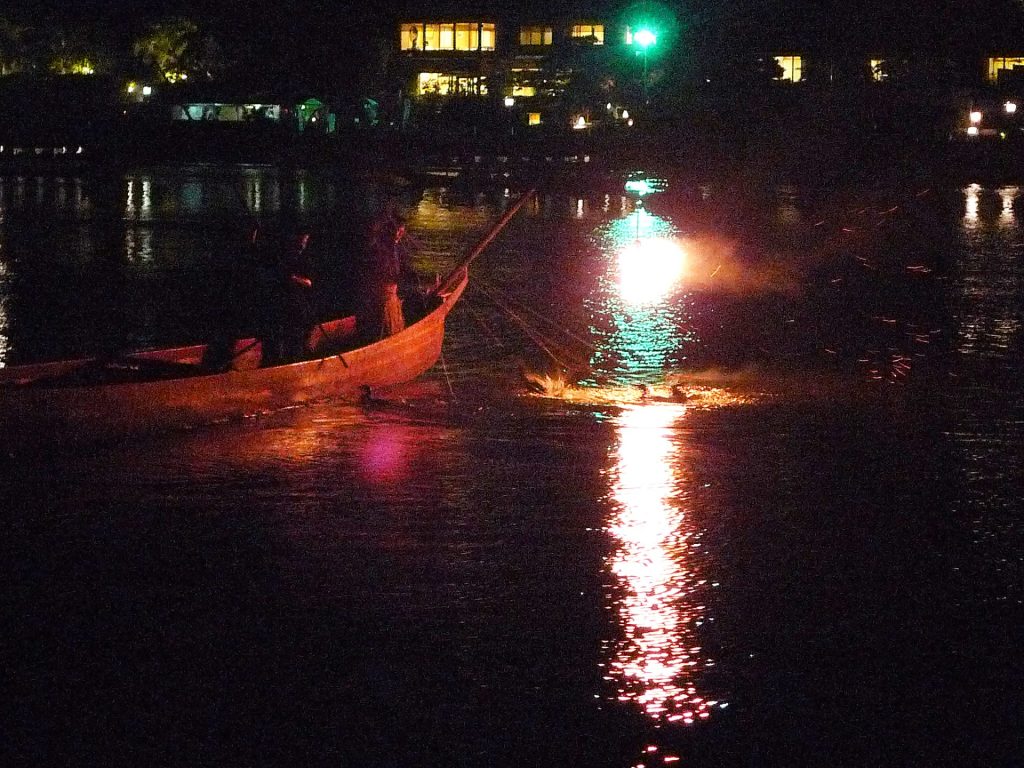
What is cormorant fishing anyway?
Cormorant fishing is a summer tradition that has been passed down from generation to generation as part of traditional Japanese culture.
Cormorant fishing is a method of catching fish practiced in Japan and China. To catch fish, a string is wrapped around the neck of a bird called a cormorant, which is then allowed to catch ayu fish.
However, because the cormorant's neck is tied with a string, the ayu cannot be swallowed, but the cormorant master makes the cormorant spit it out to catch the ayu. The larger ayu is taken out of the cormorant's throat by the cormorant, while the smaller ones are not caught by the string and can be swallowed as they are.
In Arashiyama, you can see cormorant fishing using an old-fashioned fishing method on a houseboat floating on the Oigawa River. It is fascinating to be able to see cormorants in the midst of Arashiyama's great nature, along with the night view. If you purchase a ticket, you can experience a sightseeing boat with meals or a chartered boat.
■History of Cormorant Fishing
Cormorant fishing takes place not only in Kyoto, but also in Yamanashi, Aichi, and Hiroshima Prefectures. In Kyoto, cormorants can be seen at two locations: the Uji River in Uji City and Arashiyama.
The history of cormorant fishing dates back more than 1,300 years. According to the earliest information, there was a man in Mino Province, now Gifu Prefecture, who made cormorant fishing his profession in the 2nd year of the Taiho Era, named "Ukaibutsuyoshi" (Cormorant Fishing).
During the Warring States Period, the annual offering of ayu fish as a form of hospitality began after Nobunaga Oda saw cormorants fishing on the Nagara River.
In 1688, the haiku poet Matsuo Basho also visited the temple and composed a poem, "Omoshiro te yatte kanashiki (The Unune Boat is so funny, it's almost sad.)" The poem is said to have been written by Basho, a famous haiku poet.
The advantage of the cormorant method of catching ayu fish is that the fish is stunned in the cormorant's esophagus, which keeps it fresh and unscathed.
However, catching sweetfish in cormorants was inefficient, and the number of cormorants gradually declined after the Meiji Era (1868-1912).
Cormorants were almost lost during the Meiji period (1868-1912), but the governor of Gifu Prefecture made a request to the Imperial Household Agency to protect cormorants as a national service.
And in 1991, cormorant fishing was held in the U.S., becoming known throughout the world as a traditional Japanese culture.
Cormorant fishing in Arashiyama began in the Heian period (794-1185) when aristocrats enjoyed boating on the Oigawa River upstream from the Watarigetsukyo Bridge. During the reign of Emperor Seiwa, court cormorant fishing took place. Although it declined during the Edo period (1603-1867), it was revived in 1950 and is now a summer tradition.
■ Cormorant fishing method
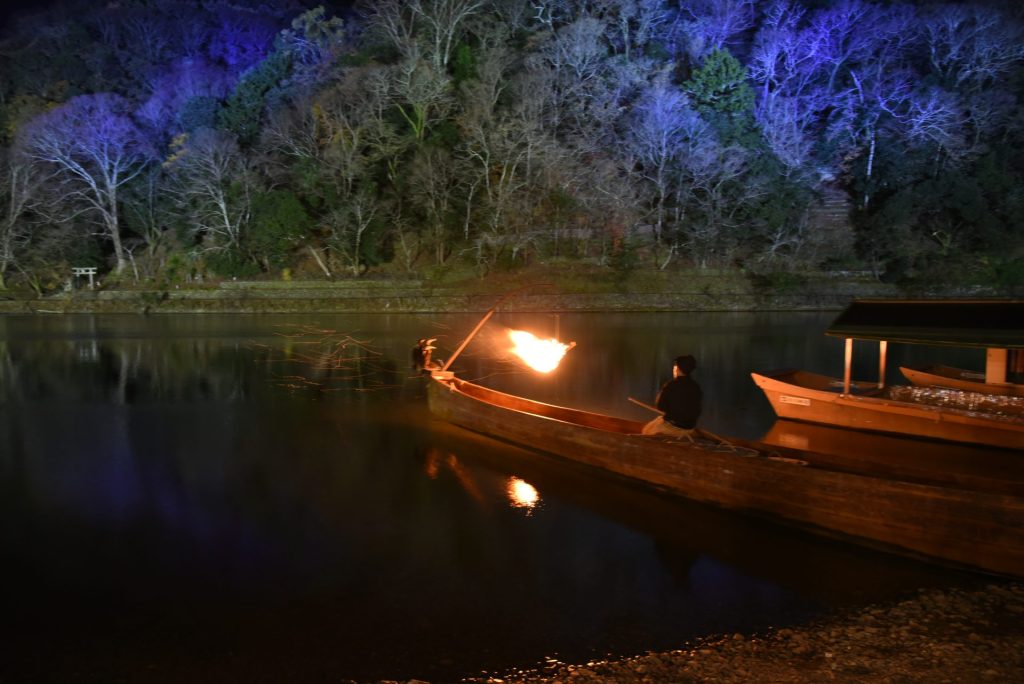
A cormorant connected to the hand of a cormorant master riding on a cormorant boat.
In cormorant fishing, a fire burning in a small boat not only serves as lighting but also catches the scales of fish that are startled by the brightness and begin to move, reflecting off the surface of the water.
The cormorant master then pulls in the reins, pinches the cormorant's throat, and removes the fish.
Incidentally, in Yamanashi and Wakayama Prefectures, cormorants are released without reins through training, and in Shimane Prefecture, cormorants with cormorants walk along the river to catch ayu fish without getting on a boat.
■Features of Cormorants
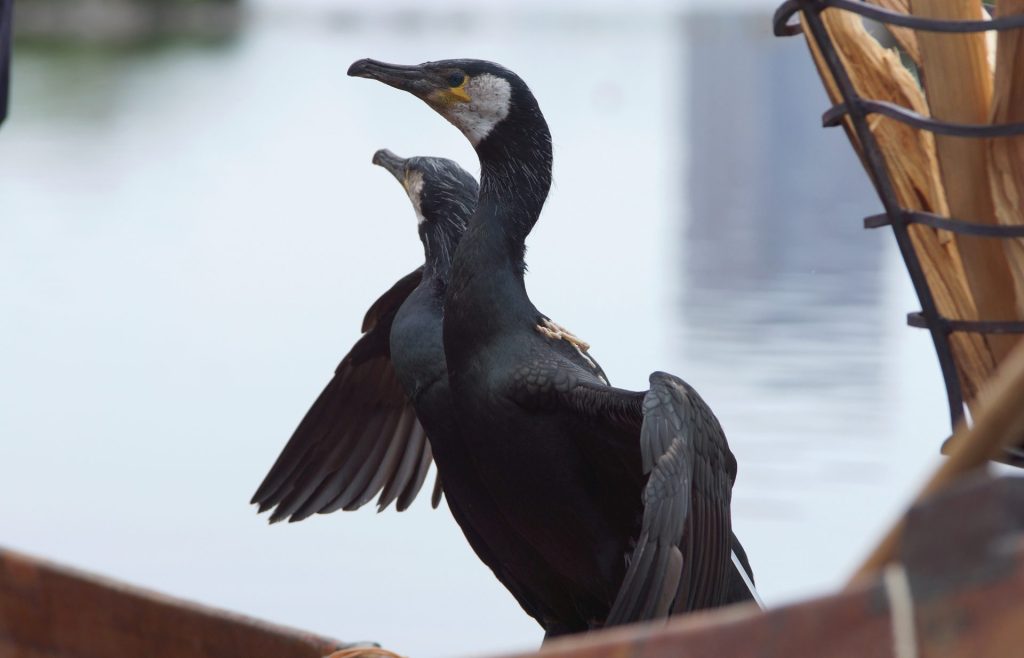
Cormorants operated by cormorants in Japan
violet shag
...Kawakawa.
Japanese cormorant (Phalacrocorax capillatus)
Himeu.
There are four species of The Arashiyama cormorant fishermen use sea cormorants to catch ayu fish, which are characterized by being the largest in size.
Wooooooooooooooooooooooooooooooooooooooooooooooooooooooooooo!
■Arashiyama Toushisen Arashiyama Houseboat Arashiyama Cormorant
HP:https://arashiyama-yakatabune.com/
Address: Saga-Tenryuji Kura-no-Banba-cho, Ukyo-ku, Kyoto-shi, Kyoto (Arashiyama-dori Funakita-boarding area)
Access: 5 min. walk from Randen "Arashiyama Stn.
■ Summary
In this issue, we have introduced a route of places to visit this summer in Arashiyama, one of the most popular sightseeing areas in Kyoto. The schedule is relatively flexible, so you can still fill your schedule with places you want to visit in the Arashiyama area, or spend your time at cafes and other places.
We invite you to enjoy the cool atmosphere of Arashiyama, surrounded by nature even in the hot Kyoto.


Related PostRelated Articles

The obanzai at "Gyaatei" in Arashiyama, Kyoto, is wonderful! What is the Gyaatei Set Meal?
What places did you visit while sightseeing in Arashiyama, Kyoto? Arashiyama has several attractions, such as the Hozu River boat ride, the Torokko Train, the Bamboo Grove Path, and the Togetsukyo Bridge […]
Terakoya Honpo’s Innovative Dango Are Amazing! Let’s Go on a Sweet Treat Tour in Arashiyama to Sample the Exquisite “Kabi Dango”
Are you enjoying sightseeing around Saga-Arashiyama, such as the Togetsukyo Bridge, Tenryu-ji Temple, and the Torokko Train? There are many tourist attractions in Saga-Arashiyama […]
Come try the giant mitarashi dango at Koto Imo Honpo! A popular choice for street food in Arashiyama♪
Have you heard of a shop called “Kotoimo Honpo,” located just off the path through the bamboo grove? Lately, it’s been on Ins […]
Detective Conan: A Pilgrimage to the Kyoto Locations Featured in "The Crimson Love Song" and "The Crossroads of the Labyrinth"! List [Summary]
The Detective Conan movies set in Kyoto are *A Crimson Love Letter* and *Crossroads in the Labyrinth* […]
"Rurouni Kenshin" Kyoto Pilgrimage to Famous Locations! List [Summary]
Have you heard of *Rurouni Kenshin*? Not only is there an anime series, but it’s also been adapted into a live-action movie starring Takeru Satoh, so you should definitely check it out […]