

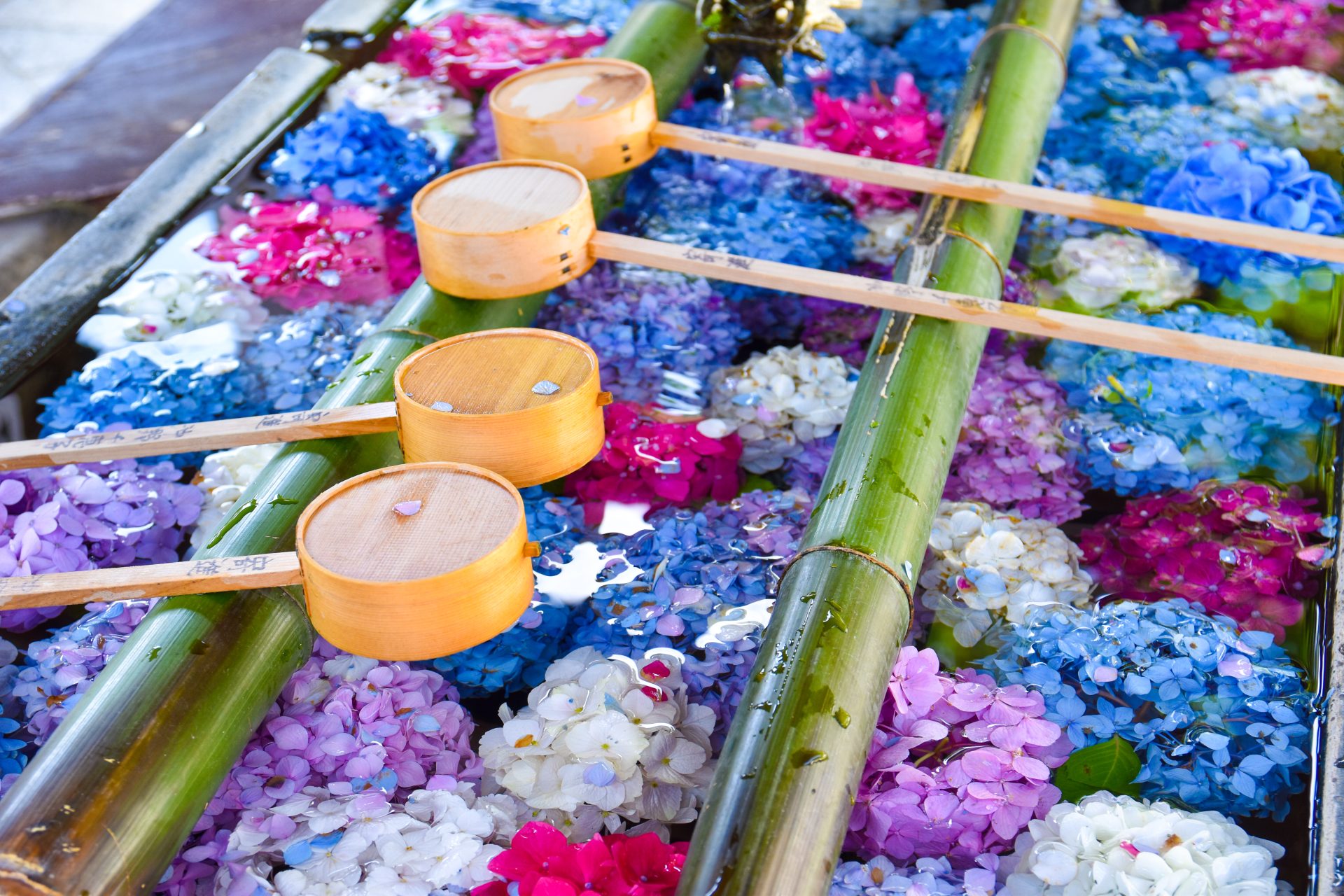
Hana-Tezui is a hot topic these days.
The gorgeous flowers are like art, and just looking at them is a refreshing experience.
Where did this hanatemizu originate and what kind of temples and shrines can we see it at?
In this issue, we will introduce temples and shrines with hana-temizu, which can be seen in sightseeing areas in Kyoto, as well as its birthplace.
Please read this article and then visit the actual place and enjoy its beauty.
◆Table of Contents
■What is Hana-Tezui in the first place?
■Hana Tezui is now being talked about as an art form! How did it start and why?
■What is the origin of Hana Tezui?
■Temples and shrines with beautiful flower hand-watering art in Kyoto
■ Summary
■What is Hana-Tezui in the first place?
Have you ever heard of "hana-temizu" found at temples and shrines?
Hana-temizu" was originally used to refer to purifying hands with morning dew on plants and flowers when water was not available for outside rituals.
Hana-Tezui, which soothes people's hearts with its vibrant flowers, has been attracting attention as a new social networking spot in recent years.
■Hana Tezui is now being talked about as an art form! How did it start and why?
The modern flower hand-watering is also a hot spot for photogenic reflection.
To begin with, the reason why so many flowers were floated in the tezumisha has to do with the spread of the new type of coronavirus.
When the new coronavirus spread, many temples and shrines had to stop using the hand-watering facilities where people gather to prevent the spread of infection.
There, flowers were displayed in a handbasin that no one was using anymore, which led to the spread of the flower arrangement throughout the country.
Flowers are now decorated not only in Kyoto, but also in other places around the country at the handbasins, and the reason for this is that
Hoping for a convergence of the new coronaviruses.
The number of worshippers has decreased dramatically, so we are trying to encourage people to visit us as much as possible.
Because we want our worshippers to be healed.
Such things as these seem to be the starting point.
The shrine has also attracted the attention of young people for its Instagram image, and many worshippers now visit the shrine for the hanamizu (flower watering).
■What is the origin of Hana Tezui?
Hana-temizu has become a hot topic at temples and shrines throughout Japan, but it actually originated in Kyoto.
It became popular when hydrangeas were floated in the water closet at "Yanagitani Kannon Yangtani-ji Temple" in Nagaokakyo City, Kyoto Prefecture.
This temple has been a place of prayer for healing eye diseases for 1,200 years and has been believed in by people suffering from eye diseases.
They started floating flowers around 2015 with the hope of "bringing blessings and peace through the five senses to our anxious times, and to a sacred place with history and four seasons."
The precincts of the temple are
ritual gestures (squatting, clapping, etc.)
Dragon Hand Water
Garden water
Buckleya lanceolata (species of parasitic deciduous shrub)
hand of love
There are also floral hand-measurements, such as hydrangeas and sunflowers, and during events such as Christmas and Halloween, floral hand-measurements with images of the colors of the event are also introduced.
■Temples and shrines with beautiful flower hand-watering art in Kyoto
So, where are the temples and shrines in Kyoto where you can see Hana-Temizu?
I would like to introduce some of them.
○Yanggokannon Yanggoksa Temple
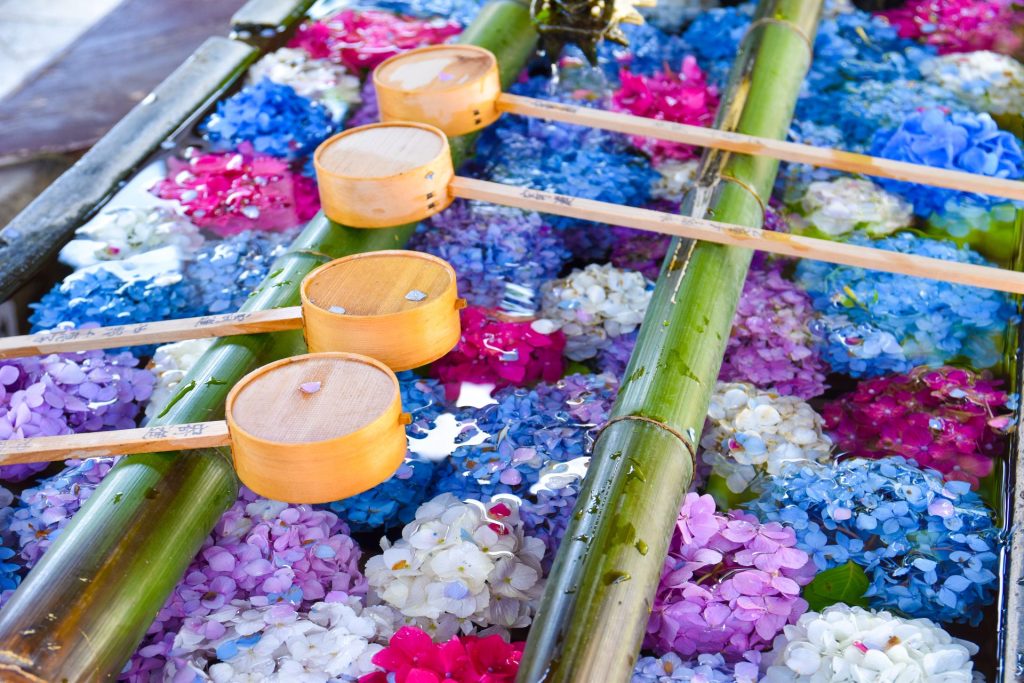
Yanagitani Kannon Yanggokudera Temple is the birthplace of Hana-Temizu.
Located in Nagaokakyo City, Kyoto Prefecture, it is also famous for its hydrangea and autumn leaves.
Floating seasonal flowers in the hana-temizu will soothe your heart when you see them.
Facility Name: Yanagiya Kannon Yanggokudera Temple
HP:https://yanagidani.jp/
Address: 2 Jodoya Donoya, Nagaokakyo City, Kyoto, Japan
Access: about 10 minutes by car from Hankyu Nishiyama-Tennozan Station
○Kitano Tenmangu Shrine
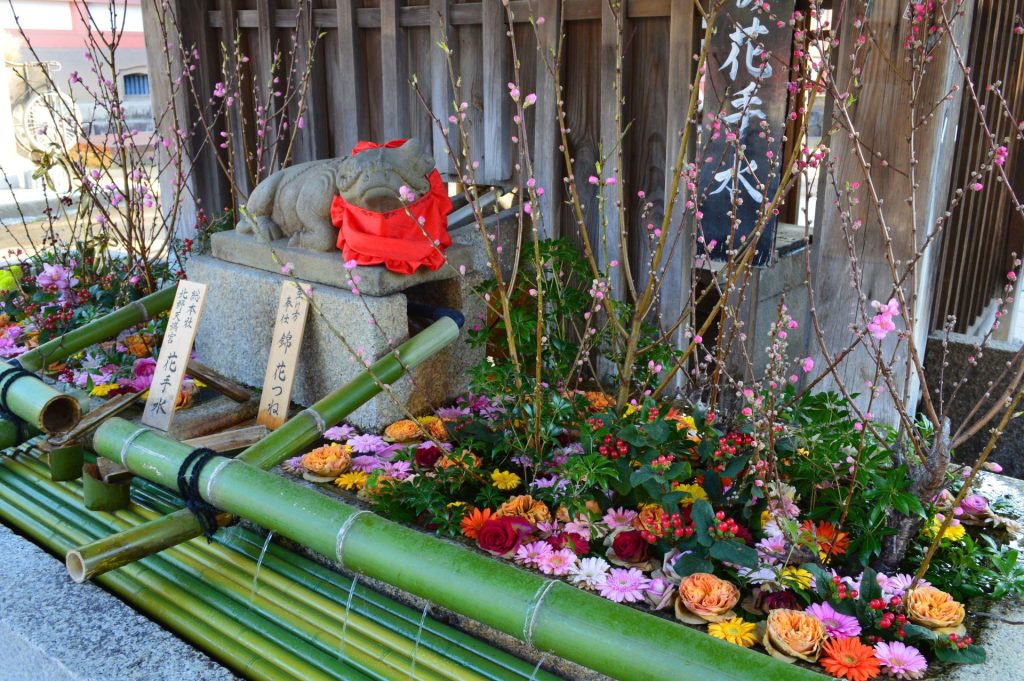
At Kitano Tenmangu Shrine, which enshrines Sugawara no Michizane, the water basin in the hand basin is also a colorful flower hand basin.
The flower hand-watering ceremony at Kitano Tenmangu Shrine features a theme each time, such as the Kyoto-inspired theme of the Gozan-no-Okuribi (Bonfires on Five Mountains), which is artistic in its beauty.
Facility Name:Kitano Tenmangu Shrine
HP:https://www.kitanotenmangu.or.jp/
Address: Bakuro-cho, Kamigyo-ku, Kyoto-shi, Kyoto
Access: Short walk from "Kitano Tenmangu-mae" (city bus)
○Kinkai Komyoji Temple
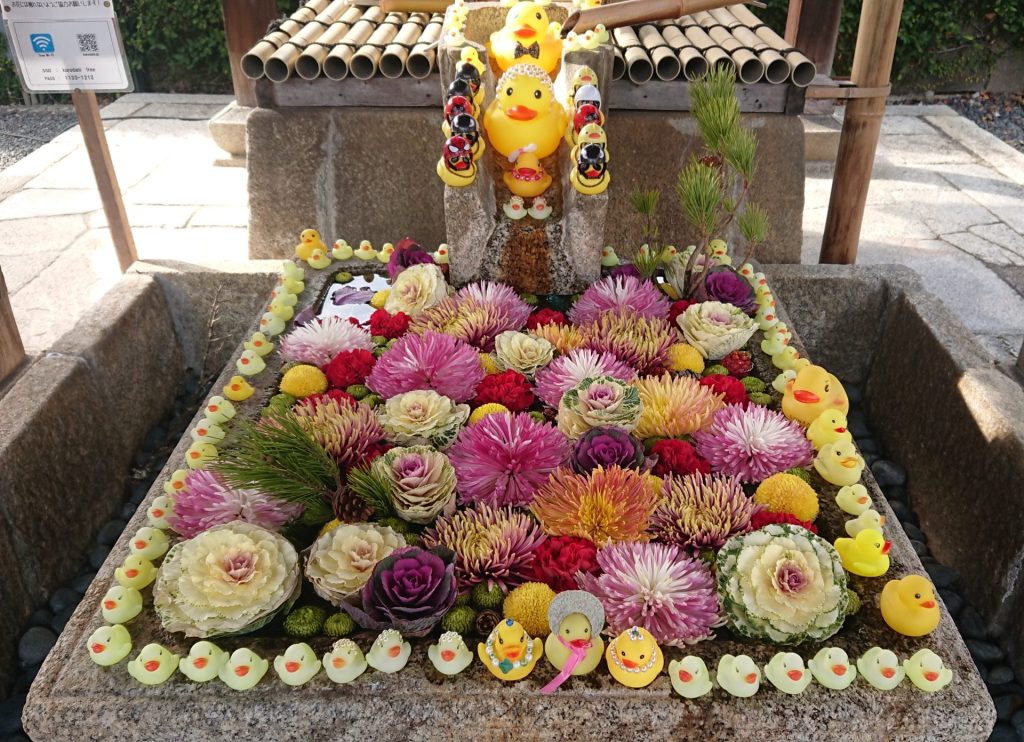
Konkai Komyoji Temple is called "Kurodani-san" in Kyoto.
The tezumisha is characterized by colorful flowers and figurines of turtles and ducks.
A few years before he started Hanatemizu, he floated a turtle figurine in the garden, inspired by the turtle objects in the garden.
However, they were stolen, and when the duck figurines that were donated were floated, some of the turtle figurines were also returned, so now the turtle and duck figurines are placed.
You will see cute ducks wearing bow ties and afros along with flowers.
Facility Name:Konkai Komyoji Temple
HP:https://www.kurodani.jp/
Address: 121 Kurotani-cho, Sakyo-ku, Kyoto-shi, Kyoto
Access: about 5 minutes walk from "Okazaki Michi" city bus stop
○Shinnyodo
Shinnyo-do Temple is officially called Shinsho Gokuraku-ji Temple, which means "true paradise.
Located in Sakyo-ku, Kyoto City, it is also known as an old temple famous for its autumn foliage in the Rakuto area.
Flowers that bloom on the temple grounds, such as mukuge and hydrangea, are floated in the hana-temizu, giving it a natural, quaint atmosphere.
Facility Name:Nyorai Buddha
HP:https://shin-nyo-do.jp/
Address: 82 Shinnyo-cho, Jodoji, Sakyo-ku, Kyoto-shi, Kyoto
Access: about 8 minutes walk from Kinrin Shako-mae bus stop by city bus
○Shorinji Temple
Shorinji Temple is located in Higashiyama-ku, Kyoto.
The flower-tezui ceremony began about five years ago when the temple began arranging flowers that bloomed on the grounds of the temple little by little in the hand-watering basin, and the response from visitors to the ceremony was overwhelming. The priest arranges the flowers with the spirit of Zen, hoping that visitors will look at the beautiful flowers and reflect on themselves.
Compared to the hana-temizu at other temples and shrines, flowers are not only floated on the surface of the water, but are also decorated in a three-dimensional manner.
Facility Name:Shorinji Temple
HP:https://shourin-ji.org/
Address: 15-795 Honmachi, Higashiyama-ku, Kyoto-shi, Kyoto
Access: about 10 minutes walk from JR Tofukuji Station
Nisong-in Temple
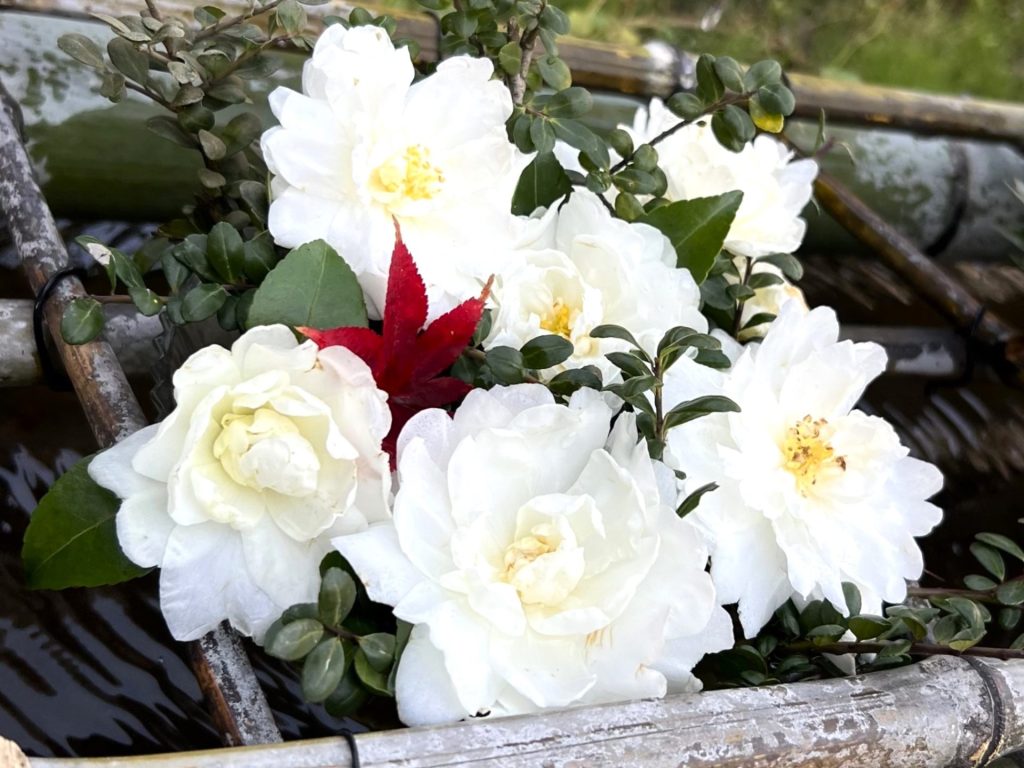
Arashiyama is one of the most diverse tourist destinations in Kyoto.
Nison-in Temple is easily accessible during such sightseeing in Arashiyama and is famous for its autumn foliage.
Seasonal flowers such as hydrangeas, dahlias, chrysanthemums, and other large and small flowers float in the hanatemizu or flower pots.
Facility Name:Ninseiin Temple
HP:https://nisonin.jp/
Address: 27 Chogami-cho, Saga Nison-in Monzen, Ukyo-ku, Kyoto-shi, Kyoto
Access: about 10 min. walk from Saga Shakado-mae bus stop by city bus
■ Summary
In this issue, we have introduced some temples and shrines in Kyoto that have hana-temizu (flower water with beautiful flowers floating in it).
Recently, many people have been visiting for this hanatemizu, and just looking at the world created with flowers is a relaxing experience.
Don't just take pictures of the hanatemizu, but don't forget to visit each of the temples and shrines and see them.


Related PostRelated Articles
If you're going all the way, visit a place that will leave you with lasting memories! 7 Retro Cafés in Kyoto
Recently, retro-style coffee shops that make you feel as if you’ve slipped back in time to the Showa era have been attracting a lot of attention. With their vibrant colors […]

The obanzai at "Gyaatei" in Arashiyama, Kyoto, is wonderful! What is the Gyaatei Set Meal?
What places did you visit while sightseeing in Arashiyama, Kyoto? Arashiyama has several attractions, such as the Hozu River boat ride, the Torokko Train, the Bamboo Grove Path, and the Togetsukyo Bridge […]
Enjoy a cup of coffee in the retro atmosphere of “Kaze to Coffee” in Kyoto’s Kamigyo Ward… Are the accompanying sweets tempting?
There are many tourist spots in Kyoto, but perhaps some of you would like to take a break from the bustling atmosphere from time to time […]
Terakoya Honpo’s Innovative Dango Are Amazing! Let’s Go on a Sweet Treat Tour in Arashiyama to Sample the Exquisite “Kabi Dango”
Are you enjoying sightseeing around Saga-Arashiyama, such as the Togetsukyo Bridge, Tenryu-ji Temple, and the Torokko Train? There are many tourist attractions in Saga-Arashiyama […]
Come try the giant mitarashi dango at Koto Imo Honpo! A popular choice for street food in Arashiyama♪
Have you heard of a shop called “Kotoimo Honpo,” located just off the path through the bamboo grove? Lately, it’s been on Ins […]