

Corona has settled down a lot and the variety of souvenirs available around Kyoto Station has become very extensive.
Among them, this month's article introduces a variety of Japanese sweets, including those recently discovered by the author, a Japanese sweets lover, that will satisfy even the most authentic taste buds.
Table of Contents
Hyakumanben Crockery Masaaki "Tokiwagi" "Sousho Mochi
■Tsuruya Yoshinobu IRODORI "Amber Sugar" "IROMONAKA Individual Wrapping
■KAMEYA YOSHICHO "Sliced Yokan [Ogura Butter]" "Karasuwadama
■Heian-den" and "Awata-yaki", Kyoto Confectionery
■Ajarashi Mochi Honpo, Kyoto Confectioner, Mangetsu "Ajarashi Mochi", "Honey Dipped Kyonagon".
■Suetomi "Uzubeni" and "Kyo-fusen
■Sasaya Iori "Representative Famous Sweets Dorayaki
■Tawaraya Yoshitomi "Unryu" and "Shibami Sugar
■ Summary
Hyakumanben Crockery Masaaki "Tokiwagi" "Sousho Mochi
First up are sweets from Hyakumanben Kaguya Masaaki.
Hyakumanben KAGIYA Masaaki is a Japanese confectionery located southwest of Hyakumanben intersection. 1696 saw the opening of the main family, KAGIYA Enaki, followed by the creation of a branch, KAGIYA Masaaki, in 1920. It was closed during the war and reopened in 1950 after the war, but the main family remained in business. Kagiya Masaaki continues to operate as is, using Tanba Dainagon, Hokkaido azuki beans, and carefully selected rice cake flour in pursuit of the best combination of various sweets.
The representative confectionery is "Tokiwagi". It is a product of the popular confectionery of the original family that has been inherited today. It is a carefully baked, thinly spread sweet bean paste with a moderate sweetness and elegant flavor. The authentic flavor of azuki beans can be fully appreciated, and it has a relatively long shelf life, which is a good point. We highly recommend this product to those who love red bean paste.
Another item I would like to introduce at Kagiya is "Kasane-mochi," a rice cake that I recently had for the first time and was extremely impressed.
I have known "Tokiwagi" and "Obaku," which is millet yokan covered with soybean flour, for a long time and have repeated them, but this is the first time I have seen this one! I was attracted by the catchphrase "soft and fluffy Gyuhi Mochi" and bought it without hesitation. I was attracted by the slogan "soft and fluffy Gyuhi Mochi," so I bought it without any hesitation! It was almost like a marshmallow! It was the best taste I have ever had. The luxurious Tanba Dainagon is also a nice accent to the taste and texture. It seems that a limited version with cherry blossom flavor is also available in the spring, so we can look forward to another one next spring!
Wooooooooooooooooooooooooooooooooooooooooooooooooooooooooooo!
(Where to buy)
Kyo Meishakaya Kyo (in front of the West Exit ticket gates of the JR Conventional Lines)
■HP:https://www.kyoto-kagiya.co.jp/
Address: In front of the West Gate on the 2nd floor of JR Kyoto Station, 8-3, Higashishioji-Takakura-cho, Shimogyo-ku, Kyoto-shi, Kyoto
Phone: 075-365-8602
■Tsuruya Yoshinobu IRODORI "Amber Sugar" "IROMONAKA Individual Wrapping
Next is a new type of Japanese confectionery created by a long-established shop.
IRODORI is another brand of Tsuruya Yoshinobu, which was founded in 1803, and was started with the desire to expand the horizons of Japanese confectionery with rich "colors". Traditional Japanese colors are used for the six colors of the concept. Each color represents the passage of time: "sunrise," "sunset," "clear sky," "clear skies," "night sky," and "night sky.
Located at Kyoto Station, with excellent access right in front of the Hachijo exit of the Shinkansen. Even if you are in a hurry to catch the Shinkansen, this is a valuable shop where you can buy sweets that mix tradition and innovation unique to Kyoto! This is a precious store where you can buy confections that mix tradition and innovation unique to Kyoto, even when you are in a hurry to catch the bullet train.
Amber Sugar" is a stick-shaped dried confectionery that looks like pastels. The five flavors in the clear case include jasmine, chamomile, lavender, and mint. In addition to the gorgeous appearance, the surface is crispy and crunchy. In addition to its gorgeous appearance, the surface is crispy and crunchy, while the inside is smooth and pliable, creating a unique two-step texture.
The "IROMONAKA Individually Packaged Monaka" is an easy-to-eat, bite-sized monaka with a crispy baked monaka texture and a refined taste with just the right amount of sweetness from the red bean paste!
The colorful monaka are individually wrapped like macaroons and come in four flavors: Ogura, Koshian, Matcha, and Seasonal flavor red bean paste. There are four flavors: Ogura, Koshian, Matcha, and a seasonal flavor of red bean paste. Ogura has a rich, bean-like flavor of azuki beans. Koshian is more refined and refreshing than Ogura. The matcha has a smooth texture and a rich matcha aroma that escapes through the nose.
These Japanese sweets are cute and pop in appearance, yet authentic, and are perfect for both Japanese tea and coffee. It is also recommended as a gift.
There is also an eat-in space inside the store, where you can sit at a table and slowly enjoy Japanese sweet treats. The author recommends the "Seasonal Cream Anmitsu. It is a dish with star quality ingredients: agar that melts easily in your mouth, high quality red bean paste with a fragrant azuki aroma, shiratama (white bean curd) with a smooth texture and a deep rice flavor, mitsumame (soy beans) with just the right amount of saltiness, seasonal fruits, and milky ice cream.
IRODORI products are also available at Toranomon Hills, Shibuya Hikarie ShinQs, and Toyoko Noren-gai stores, so if you like them, you can give them as gifts.
Wooooooooooooooooooooooooooooooooooooooooooooooooooooooooooo!
(Where to buy)
Irodori Kyoto Station Hachijo Exit
■HP:https://www.tsuruyayoshinobu.jp/
Address: 8-3 Higashishioji-cho, Shimogyo-ku, Kyoto (directly connected to JR Kyoto Station)
Phone: 075-574-7627
■KAMEYA YOSHICHO "Sliced Yokan [Ogura Butter]" "Karasuwadama
The following snacks are products that are very often featured in magazines. You may have seen them before! I bet many of you have seen this one before, right? This is Kameya Yoshicho's "Sliced Yokan".
Kameya Yoshinaga is a Kyoto confectioner that was founded in 1803 in Shijo Sakaegai, Kyoto, by Kameya Ryoan.
The main business is the sale of wagashi, but the main store also offers a wagashi-making workshop. Two years ago, I participated in a wagashi-making workshop with my child, and the craftsman gave us detailed instructions directly, resulting in a very satisfactory wagashi.
In addition, we are creating fun confections with free ideas that are not bound by the boundaries of Japan and the West, such as the "Satomi Fujita by KAMEYA YOSHINAGA" confectionery brand that combines the sensitivity of Reimi Fujita, a pastry chef with experience in Paris, and the tradition and techniques of KAMEYA YOSHINAGA.
Sliced Yokan with Ogura Butter” is made from Tanba Dainagon azuki bean jelly topped with Okinawan salty butter yokan and poppy seeds. By simply placing it on a piece of bread and baking it, you can easily enjoy ”Ogura Butter Toast". The yokan melts as it cooks, creating a blissful taste! It is thin and compact, so I use it frequently as a small Kyoto souvenir. They also release seasonal limited editions such as baked sweet potato, passion fruit, and cacao, so be sure to check them out as well!
And the signature product here is the "Wuwadama" (crow's-feather balls).
Karasu-hatama" is based on the fruit of a plant called hinoki-fan (hinoki fan), which is used for the New Year's shuttlecock ball called "nubatama. Beautiful jet black as if wet, it has been sung in ancient poems as a pillow word for "black" or "night.
Karasuwatama is a sweet made of sweet bean paste and covered with agar agar. The brown sugar mixed into the bean paste comes from Hateruma Island, the southernmost island in Japan. The brown sugar flavor fills your mouth as you enjoy the sweet bean paste with the soft agar. It is indeed made in Hateruma! The poppy seed topping adds a subtle texture.
There is also a product called "Seasonal Karasuwadama," a monthly changing flavor featuring "Karasuwadama," available only at the JR Kyoto Isetan store.
Just looking at these colorful, seasonal items is an exciting experience. These items have a short shelf life, so how about a souvenir to take home or a treat for yourself?
Wooooooooooooooooooooooooooooooooooooooooooooooooooooooooooo!
(Where to buy)
KAMEYA YOSHICHO J.A.R. Kyoto Isetan Store
■HP:https://kameya-yoshinaga.com/
Address: JR Kyoto Isetan B1F, Higashishioji-cho, Shiokoji-sagaru, Karasuma-dori, Shimogyo-ku, Kyoto
Phone: 075-344-4419
■Heian-den" and "Awata-yaki", Kyoto Confectionery
The next confectionary is "Heian-den" by Kyoto Confectioner Heian-den.
Heian-den is a long-established Japanese confectionary store established in 1951, with a store in front of the Otorii gate of Heian Shrine. It is a competent shop handling Kyoto brand products that have been certified as one of the 100 best examinations in Kyoto. The main store is housed in a tasteful Japanese-style house, and its large wooden signboard conveys the weight of its long history. The showcase inside the store displays a wide variety of sweets, from fresh cakes to sweets that will last for a long time. In the back of the store, there is a sweet shop where you can enjoy a set of matcha green tea and main sweets or "Kuzu-zenzai" (bean-jam-studded sweet made from kuzu). Kuzu-zenzai" is a zenzai made from the finest Tanba Dainagon, topped with a white bean and high-quality Yoshino kuzu (arrowroot starch). This is a rare and delightful menu item that allows you to enjoy the taste of the moist white bean dumpling and the firmness of the Yoshino kuzu all at the same time.
Heian-den" is the representative wagashi of this company, which has been certified as one of the 100 best confectioneries in Kyoto and as a Kyoto brand. Its shape represents the pattern of the green-glazed eaves round roof tiles of Heian Palace. The unique feature is that the cracked pattern is intentionally added to express the texture of the roof tiles!
The fragrant baked dough and the aromatic yuzu (Japanese citron) white bean paste give it a nostalgic and comforting flavor.
Another recommended snack is "Awata-yaki. Awata-yaki, also called Awataguchi-yaki in the old days, is a type of pottery that was first produced in the early Edo period by a potter from Seto, Owari Province, who began baking using clay produced in the Awataguchi area. It is said that Awataguchi Pottery was widely produced in the Okazaki area. The confectionery is named after the Awata-yaki pottery, and its color is said to reproduce the austere tones of the Awata-yaki pottery. The store displays "Awata-yaki" vessels, as the previous owner was a collector.
The rice cake part is flavored with soy sauce and tastes a little like mitarashi. The balance of softness and elasticity is exquisite! Inside the rice cake is a sweet bean paste made from Tanba Dainagon azuki beans. The harmony of sweetness and saltiness makes it an addictive specialty.
Wooooooooooooooooooooooooooooooooooooooooooooooooooooooooooo!
(Where to buy)
Kyo Meishakaya Kyo (in front of the West Exit ticket gates of the JR Conventional Lines)
■HP:http://heianden.shop-pro.jp/
Address: In front of the West Gate on the 2nd floor of JR Kyoto Station, 8-3, Higashishioji-Takakura-cho, Shimogyo-ku, Kyoto-shi, Kyoto
Phone: 075-365-8602
Ajarashi Mochi Honpo, Kyoto Confectioner, Mangetsu "Ajarashi Mochi", "Honey Dipped Kyonagon".
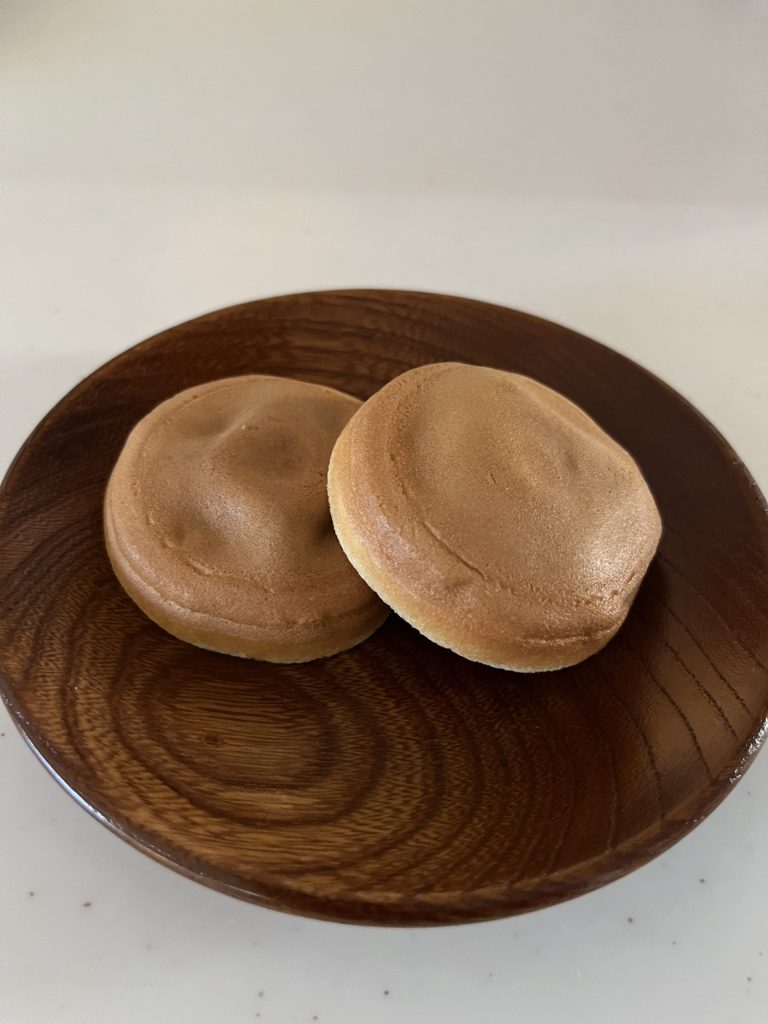
Next is a confectionary that is definitely one of the top runners among the many famous confectionaries! Ajarashi Mochi" is made by Ajarashi Mochi Honpo Kyoto Confectionery. The "Ajarashi Mochi" is made by Ajarashi Mochi Honpo Kyoto Confectioner Mangetsu. It was founded in 1856, and at that time, the store was located near Demachi Bridge. Although it was evacuated during the war, it later returned to its current location and has since kept its name at its current location.
Ajarashi Mochi" was developed by the second generation head of the family in the Taisho period (1912-1926). It is a semi-perishable sweet baked in a dough made of rice flour mixed with eggs and other ingredients, and filled with red bean paste made from Tanba Dainagon azuki beans. The name "Ajari" comes from the name of a monk who practiced asceticism on Mount Hiei. The word "Ajari" is derived from the Sanskrit word meaning "high priest" and represents the rank of a monk in the Tendai and Shingon sects.
The shape is inspired by the Ajirokasa, a hat worn by Ajari, a priest who performs a thousand-day pilgrimage on Mt. Hiei.
Kyo-gashiji Mangetsu has a motto of making only one type of confectionery with one type of red bean paste. Therefore, the lineup consists of only four types: "Ajari-mochi", "Mangetsu", "Kyo-nagon", and "Monaka".
They also offer products while adhering to another motto: "We strive to keep prices as low as possible without compromising the quality of the ingredients.
The charm of "Ajarashi mochi" lies in its sticky texture. The mochi is made with glutinous rice, glutinous sugar, and eggs, and is baked with a soft, flavorful, sweet crust filled with sweet red bean paste made from Dainagon azuki beans produced in Tanba.
Although it is best to eat them as they are, you can warm them in the microwave for 20 to 30 seconds to make them fluffy and freshly cooked. I also like to toast them in a toaster oven for a while. The crust becomes crispy and savory, and you will discover a different taste.
There are several places in Kyoto Station where you can purchase "Ajari Mochi". If you are outside the ticket gates, "Omiyage Koji Kyoto Komachi" is located near the central ticket gate of the conventional train. You can also buy them inside the ticket gates of the Shinkansen bullet trains.
Another recommendation from Mangetsu is "Mitsuzuke Kyonagon". It is made from large Tamba Dainagon grains soaked in honey and wasanbon sugar, and then paired with koshi-an (sweet red bean paste) and agar (string agar). Although it is hard like yokan, it is not kneaded, so it is not too dense and soft. In other words, the texture is somewhere between yokan and mizu-yokan, and you can enjoy the blistering flavor of azuki beans in a refined sweetness. It is half the size of a typical yokan and can be eaten by a small number of people.
It may be common knowledge that "Ajari-mochi" is the equal of Mitsuki, but since this one, filled with Mitsuki's specialties, has a slightly longer shelf life than Ajari-mochi, why don't you try it as a souvenir?
Wooooooooooooooooooooooooooooooooooooooooooooooooooooooooooo!
(Where to buy)
Kyoto Confectionery Manzuki
■HP:http://www.ajyarimochi.com/
Address: Kyoto Station Bldg. 1F, 8-3 Higashishioji-Takakura-cho, Shimogyo-ku, Kyoto City, near the central exit ticket gate
Phone: 075-365-8602
■Suetomi "Uzubeni" and "Kyo-fusen
Next is a confectionary from Suehomi, a Kyoto confectionary shop that has been available at JR Kyoto Isetan since 2021.
Suehomi is a Kyoto confectionery established in 1893. Sue-Tomi has been serving the heads of tea ceremonies and the headmasters of various religious sects, and is highly esteemed by its peers.
Many people may associate Suetomi with "Suetomi Blue.
The wrapping paper is an impressive wrapping paper with delicate seasonal flowers in a unique sky blue color. Shortly after the war, Takejiro Yamaguchi II asked Japanese-style painter Harison Ikeda, who was a close friend of Takejiro's, to create the wrapping paper, and the two consulted with each other in great detail. The design is said to have been created just like a tea ceremony master and a confectioner working together to create confections for the tea ceremony. They continue to be loved as a symbol of the Suehomi brand.
First, I would like to recommend one of our representative confections, "Usuberini". It is a dried confectionary designed to be served at tea ceremonies all year round. The plum paste inside the rice cracker is also beautifully visible through the cracker.
The light, thin fuyaki rice crackers and the ume plum paste with just the right amount of sweetness are a true taste of Kyoto's refined elegance.
I remember that when I first tasted it as a child, I was surprised that there was a food in the world that melted in your mouth so softly.
The next recommendation is "Kyo-fusen. In Kyoto, since the Heian period (794-1192), the front and back of a woman's costume have been called "kasane-no-shikome," and people have enjoyed the seasons in Kyoto by using these colors. This one expresses the colors of Kyoto with the five basic colors: red, white, blue, green, and yellow sugar.
Kyo-fusen also has seasonal limited editions. The author previously purchased a dried-up version with holiday season motifs such as Christmas trees and snowmen. During the year-end and New Year's holidays, zodiac-themed items for the New Year are also sold in a box, making them perfect for special gifts and take-home presents.
Also of note is the new brand "SUETOMI AoQ" (Suetomi AoQ), which will be launched in October 2022.
With the desire to bring Kyoto sweets and tea time to as many people as possible in a more casual manner, we offer confections that incorporate new ingredients and techniques while inheriting traditions.
For example, the "AoQ's An Financier" is a moderately sweet financier made with rich, aromatic Hokkaido butter, topped with a generous amount of Sue-Tomi's finest red bean paste. The financier is a delicacy that makes you realize once again that butter and azuki beans are such a perfect match! This is a gem that will make you realize once again how well butter and azuki beans go together.
Wooooooooooooooooooooooooooooooooooooooooooooooooooooooooooo!
(Where to buy)
Kyoto Confectionery Shop Suehomi
■HP:https://www.kyoto-suetomi.com/
Address: JR Kyoto Isetan, B1F, Higashishioji-cho, Shiokoji-sagaru, Karasuma-dori, Shimogyo-ku, Kyoto-shi, Kyoto
■Telephone: 075-352-1111 (main line)
■Sasaya Iori "Representative Famous Sweets Dorayaki
Next, we will introduce some sweets from Sasaya Iori.
Iori Sasaya was established in 1716. The current head of the company is the tenth generation of this long-established business. Since its establishment, it has served the Kyoto Imperial Palace, shrines and temples, and tea ceremony masters. Originally, there were 248 Japanese confectionery stores in Kyoto, 28 of which served the Imperial Household. Sasaya Iori is not only one of them, but also one of the few stores that have survived in the direct lineage. It is said that "Sasaya Iori" is the head family of all Japanese confectionery shops with the name of "Sasaya".
The representative confectionery here is "Representative Famous Confectionery Dorayaki". Dorayaki originated in the late Edo period. A monk at Toji Temple in Kyoto asked Ihee Sasaya, the fifth generation head of the family, to make a snack for him, and in response, he invented the idea. Dorayaki, sold only on the 20th, 21st, and 22nd of each month, is a representative confectionary, and is also called "phantom" because of its rarity. The cylindrical shape of the dorayaki is different from the typical shape of dorayaki. The sweetness of the bean paste is just right, and the harmony of the chewy dough and the aroma of bamboo grass is exquisite.
The neck shape makes it easy to cut into desired lengths and enjoy. It is also delicious when slightly baked in a toaster oven to make it crispy.
We also highly recommend mousses and jellies decorated with seasonal motifs. The seasonal motifs, such as cherry blossoms in spring, goldfish in summer, and autumn leaves in fall, are a feast for the eyes, and when given as gifts or souvenirs, they are sure to be enjoyed by adults and children alike. When you bring them as gifts or souvenirs, both adults and children will be delighted with them.
Iori Sasaya also has a new brand! Its name is Ihee Jyudai Me Ihee Kasho, and it opened in December 2018 at the J.R. Kyoto Isetan.
Based on the concept of expressing the beautiful meeting of contemporary and nostalgia in a new style of Kyoto-style confectionery, we propose new sensory Japanese sweets that bring the culture of Kyoto confectionery to the present.
We recommend the "◯mochi" rice cake. It is a revival of a product that has been a favorite of Sasaya Iori for a long time. It is a smooth, glutinous, soft rice cake with sweet bean paste inside, topped with fragrant poppy seeds to enhance the taste. The individually packaged mochi has a shelf life of about two weeks, making it a perfect souvenir.
Wooooooooooooooooooooooooooooooooooooooooooooooooooooooooooo!
(Where to buy)
■ Sasaya Iori JR Kyoto Isetan Store
■HP:https://www.sasayaiori.com/
Address: B1F, JR Kyoto Isetan, Higashishioji-cho, Shiokoji-sagaru, Karasuma-dori, Shimogyo-ku, Kyoto
Phone: 075-371-3333
■Tawaraya Yoshitomi "Unryu" and "Shibami Sugar
The next item we will introduce is another wagashi from the long-established Tawaraya Yoshitomi.
Tawaraya Yoshitomi was founded in 1745. The company originally dealt in azuki beans and other grains as a minor grains merchant, and then started a confectionery business using these ingredients. The trademark "tawara" mark tells the history of the company's time as a cereal merchant.
Under the motto of “Always seeking for the best confectionery and striving for the way of confectionery,” we strive to create Kyoto-style confectioneries that are beautiful to look at, delicious to eat, and will remain in your heart forever.
The main store is located on Ogawa-dori, where the headmaster of the tea ceremony is located, and the Karasuma-dori store is next to it. In the Kyo-gashi Museum, there is a permanent exhibition of confectionery wooden molds used to make dried confections, design books with designs of confectioneries, confectionery containers with mother-of-pearl inlays and maki-e lacquerware used when delivering confectioneries to the imperial court and noble families, and sugar confectioneries, allowing visitors to experience the history of Japanese confectioneries.
One of the most popular confections here is "Unryu," a famous confection created by Tomejiro VII, who was fascinated by a painting of a dragon and clouds by Kano Doharu (owned by Shokokuji Temple, Kyoto).
It represents a majestic and majestic dragon riding on a cloud, and was named by the late Master Yamazaki Daiko of the Daihonzan Shokokuji Temple.
The red beans are carefully selected from large Japanese red beans, cooked with just the right amount of water and heat, and then hand-rolled one by one into a thick paste called "muraume-an" (a thick red bean paste made by kneading rice flour, glutinous rice flour, etc., into a paste and steaming it to form a batter).
The contrast between the hollowness of the muraume-an and the moistness of the azuki bean paste inside is delightful, and although the sweetness is moderate, the taste of the azuki beans is very rich and delicious.
Unryu also has a "White Unryu" made with white azuki beans. It has a mellow, rich, and noble taste.
Another recommendation is "Shiba Aji Sugar. This is an assortment of Gyuhi sugar confections made with fragrant and colorful shiso leaves from Ohara, Kyoto, and Nikki-flavored gracigans. The shiso-flavored confectionery has a sticky, elastic texture and a sweet, salty flavor that is irresistible and keeps you coming back for more. The Nikki-scented rakugan has an exquisite texture and is a perfect match for green tea.
Wooooooooooooooooooooooooooooooooooooooooooooooooooooooooooo!
(Where to buy)
■Harbeth Kyomeikan, Kintetsu Meitengai
■HP:https://kyogasi.co.jp/
Address: 31-1 Higashishiokoji Kamadono-cho, Shimogyo-ku, Kyoto City, Kyoto (in Kintetsu Meitengai Miyako-michi)
Phone: 075-691-8384
■ Summary
All of these sweets can be purchased in the Kyoto Station area. Before heading home, why not buy authentic Japanese sweets from Kyoto as a souvenir for a loved one or as a gift to yourself to remember your trip?
If you want to find Kyoto souvenirs, not only Japanese sweets, check out Youtube here!


Related PostRelated Articles
The parfaits at FUKUNAGA901 are so cute! If you're looking for exquisite sweets at Kyoto Station, this is the place to go!
Are you familiar with “FUKUNAGA901,” a shop that’s been trending on social media platforms like Instagram and YouTube […]
Detective Conan: A Pilgrimage to the Kyoto Locations Featured in "The Crimson Love Song" and "The Crossroads of the Labyrinth"! List [Summary]
The Detective Conan movies set in Kyoto are *A Crimson Love Letter* and *Crossroads in the Labyrinth* […]
What is “Minori Cafe” in Shimogyo Ward, Kyoto? Their parfaits and desserts are delicious♡
Have you heard of a café called “Minori Café,” located right near Kyoto Station? Here, you can enjoy seasonal desserts and treats from famous shops […]
"Rurouni Kenshin" Kyoto Pilgrimage to Famous Locations! List [Summary]
Have you heard of *Rurouni Kenshin*? Not only is there an anime series, but it’s also been adapted into a live-action movie starring Takeru Satoh, so you should definitely check it out […]
"K-ON!" Kyoto Pilgrimage to the Series' Locations! List [Summary]
Have you heard of the anime “K-ON!”? “K-ON!” is a four-panel manga series by manga artist Kaki Furai […]