

"Detective Conan" is a beloved anime series that enjoys immense popularity both in Japan and abroad. Among its many stories, the "Crimson School Trip" arc—set in Kyoto—was produced as a special episode to commemorate the 1,000th episode and has been highly acclaimed by fans.
The settings featured in the series—such as Kiyomizu-dera Temple, Yasaka Shrine, and Ponto-chō, which Conan (Shinichi Kudo) and Ran visit on their school trip—are all actual locations you can visit in Kyoto. In this article, we’ll take a detailed look at the locations featured in the “Crimson School Trip” arc, along with the history and highlights of each spot.
Table of Contents
■What kind of story is "The Crimson School Trip Arc"?
■Sacred Site 1: Kiyomizu-dera Temple
■Sacred Site 2: Yasaka Koshin-do
■Sacred Site 3: Yasaka Shrine
■Sacred Site 4: Ponto-chō
■Sacred Site 5: Yogen-in Temple
■Sacred Site 6: Sanjūsangen-dō
■Pilgrimage Site 7: Fruit Parlor Yaoiso
■Sacred Site 8: Kyoto Tower
■Summary: Key Points for the Pilgrimage
■What kind of story is "The Crimson School Trip Arc"?
"Detective Conan: The Crimson School Trip" was produced as a two-week special (the "Crimson Arc" and "Love Crimson Arc") to commemorate Volumes 94–95 of the manga and the 1,000th episode of the TV anime series. The story follows Conan, who has returned to his true form as Shinichi Kudo, as he joins Ran and the others on a school trip to Kyoto. Highlights include the development of Shinichi and Ran’s relationship, as well as the banter between Shinichi, Heiji Hattori, and Kazuha Toyama.
The story unfolds as the protagonist is drawn into a mystery after a chance reunion with an actress, with the investigation taking place against the backdrop of Kyoto’s famous landmarks—starting at Kiyomizu-dera Temple and continuing through Yasaka Shrine and Ponto-chō. The story repeatedly depicts scenes typical of Kyoto centered around the theme of “autumn foliage,” and visiting these locations during the actual fall foliage season will allow you to fully immerse yourself in the atmosphere of the story.
We’ll leave the details of the story for you to discover in the main feature, but from here on, we’ll take a closer look at the actual locations featured in the story from the perspective of sightseeing in Kyoto.
■Sacred Site 1: Kiyomizu-dera Temple
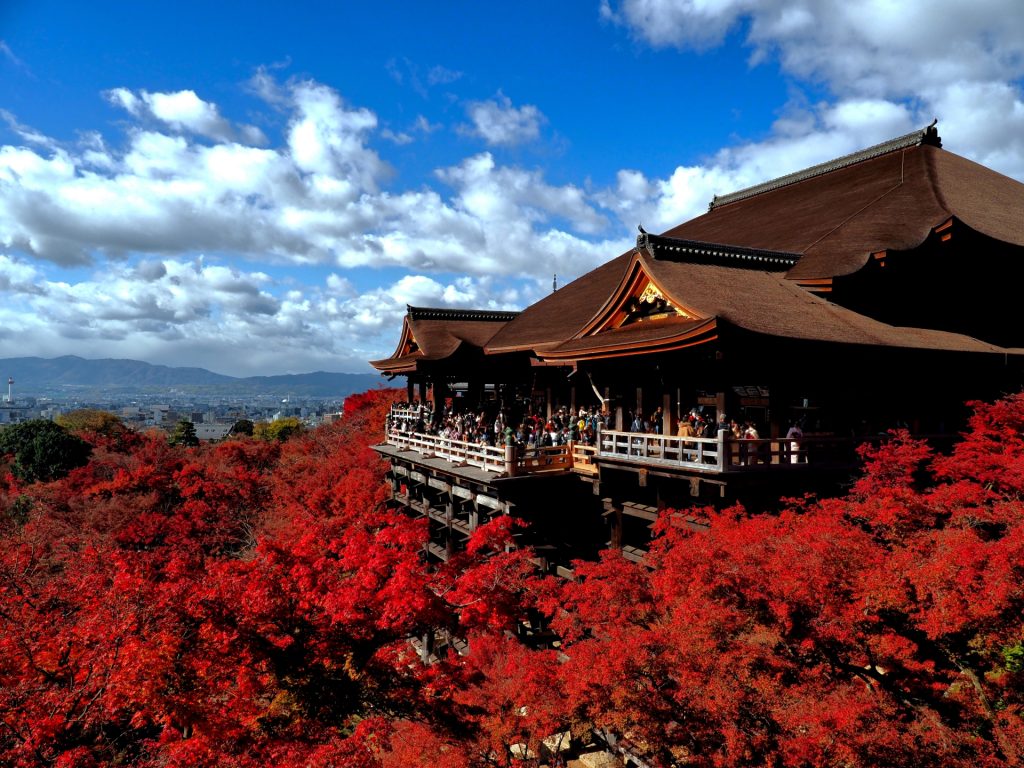
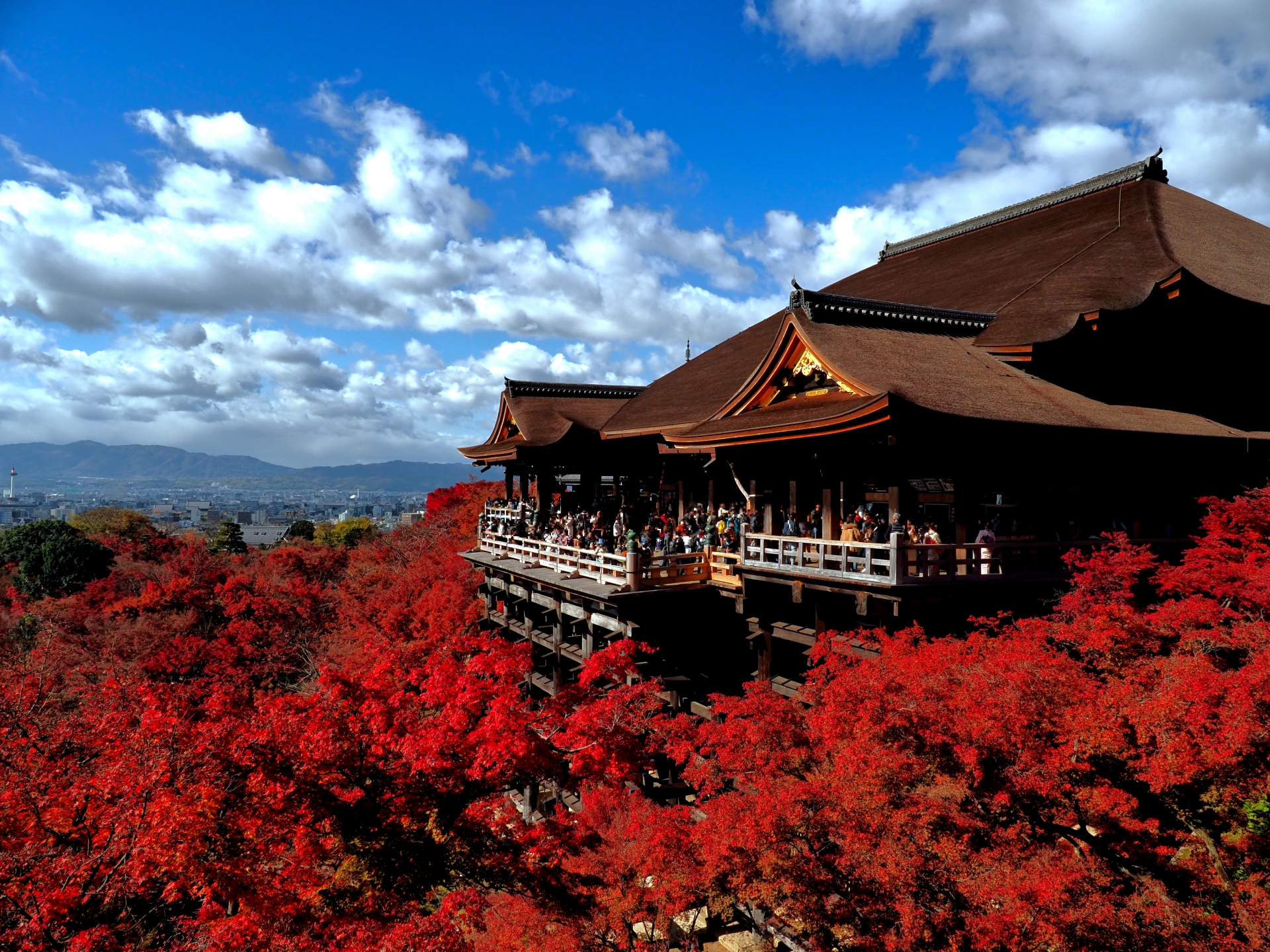
The "Kiyomizu-dera Temple," a UNESCO World Heritage Site, appears at the beginning of the school trip arc. The story depicts a scene where the characters take a commemorative photo overlooking the Kiyomizu stage, and the beautiful temple grounds, adorned with autumn foliage, are portrayed in a striking manner.
Kiyomizu-dera is the head temple of the Northern Hosso School, said to have been founded in 778 by the monk Enchin; it took on its current form following the construction of the Buddha Hall by Sakanoue no Tamuramaro. The main hall, known as “Kiyomizu-no-Butai” (Kiyomizu Stage), is built to jut out over a sheer cliff and is famous for its traditional “kake-zukuri” construction method, which uses no nails whatsoever; the view of Kyoto’s cityscape from there is truly breathtaking. With many other highlights, such as the Niō Gate, the Three-Story Pagoda, and the West Gate, the temple attracts numerous visitors throughout the year, from the cherry blossoms in spring to the autumn foliage.
○ Information on Sacred Sites
Facility Name:Kiyomizu Temple
Address: 1-294 Kiyomizu, Higashiyama-ku, Kyoto-shi, Kyoto
Directions: Take City Bus Route 206 or Kyoto Bus Route 86 and get off at “Gojozaka”; it’s about a 13-minute walk from there (via Kiyomizu-Shinmichi and Chawan-zaka).
Visiting Hours: 6:00 a.m. to 6:00 p.m. (Subject to change depending on the season; please check the official website for details)
Official Website:https://www.kiyomizudera.or.jp/
◎Related Articles
Regarding the “Womb Tour” at Kiyomizu-dera Temple:This articleBut we go into more detail there.
■Sacred Site 2: Yasaka Koshin-do
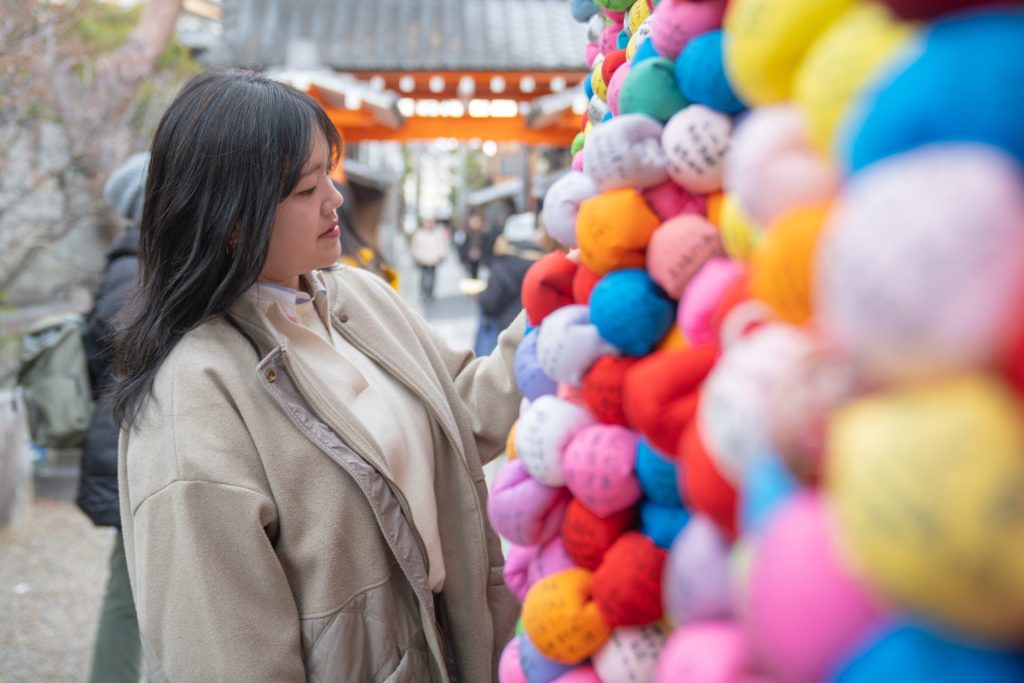
Located along the route from Kiyomizu-dera Temple toward Gion, "Yasaka Koshin-do" is a temple that has become extremely popular in recent years as an Instagram-worthy spot.
In the story, there is a scene where Ran and the others take a commemorative photo with this hall in the background.
Its official name is “Kongō-ji,” and the temple grounds are adorned with numerous colorful amulets known as “Kukuri-sarū.”
The "Kukuri-saru" is a figure modeled after a monkey with its limbs bound; it originates from the Koshin faith, which holds that if one refrains from a single desire, one’s wish will be granted.
It is believed to bring blessings such as family harmony, matchmaking, and protection from misfortune, and the view of Hokan-ji Temple’s five-story pagoda (commonly known as the “Yasaka Tower”) as seen from within the temple grounds makes it a popular photo spot.
○ Information on Sacred Sites
Facility Name:Yasaka Kōshin-dō (Kongō-ji)
Address: 390-1, Kanazono-cho, Higashiyama-ku, Kyoto-shi, Kyoto
Directions: Get off at the "Higashiyama Yasui" stop on the city bus; it's just a short walk from there.
Official Website:http://www.yasakakousinndou.sakura.ne.jp/
■Sacred Site 3: Yasaka Shrine
"Yasaka Shrine," known as a symbol of Gion, is also one of the sacred sites featured in the school trip arc.
The “Utsukushi-gozen-sha” shrine, located within the temple grounds, has long been known as a place where geisha and maiko from Gion come to pray for beauty. According to legend, applying a few drops of the “beauty water” that springs from the shrine to one’s skin will bring beauty.
Yasaka Shrine is the head shrine of the Gion faith, which is said to have approximately 2,300 shrines nationwide, and is affectionately known locally as “Gion-san.” The Gion Festival, held in July, is widely known as Yasaka Shrine’s festival and is counted among Kyoto’s Three Great Festivals.
○ Information on Sacred Sites
Facility Name:Yasaka Shrine
Address: 625 Gion-cho, Higashiyama-ku, Kyoto-shi, Kyoto
Directions: About a 5-minute walk from Gion-Shijo Station on the Keihan Main Line; about an 8-minute walk from Kyoto-Kawaramachi Station on the Hankyu Kyoto Line
Official Website:https://www.yasaka-jinja.or.jp/
■Sacred Site 4: Ponto-chō
Photo: Photo AC
The setting where the characters in the story visit a traditional Japanese restaurant is "Ponto-chō," a geisha district along the Kamogawa River.
Located between Kiyamachi-dori and the Kamo River, this cobblestone alley stretches approximately 500 meters from north to south and is lined with traditional Japanese restaurants and tea houses.
There are various theories regarding the origin of the place name “Ponto-chō.” One theory suggests it derives from a Portuguese-derived word that was used in this area during the Edo period, while another theory holds that the name comes from the sound of the word “tsuzumi” (a type of drum), as the area’s geography—sandwiched between the Kamo and Takase Rivers—resembles a drum.
In recent years, the number of modern restaurants and bars housed in renovated traditional townhouses has increased, making this area popular as a place where visitors can enjoy both the charm of long-established establishments and Kyoto’s new culinary scene.
○ Information on Sacred Sites
Facility Name:Pontocho (area of Tokyo near Tokyo Bay, inc. Niigata, Toyama, Ishikawa and Fukui prefectures)
Address: Ponto-cho, Nakagyo Ward, Kyoto City, Kyoto Prefecture (along the Kamo River between Shijo Street and Sanjo Street)
Directions: About a 3-minute walk from Gion-Shijo Station on the Keihan Main Line; about a 1-minute walk from Kyoto-Kawaramachi Station on the Hankyu Kyoto Line
Official Website:https://www.ponto-chou.com/
■Sacred Site 5: Yogen-in Temple
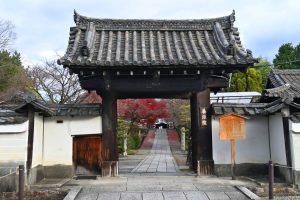
Photo: Photo AC
Located right next to the Sanjūsangen-dō, "Yōgen-in" is depicted in the story as the temple where the "Blood Ceiling" appears.
Yodo-dono, the daughter of Asai Nagamasa—a Sengoku-period warlord who committed suicide on the orders of Toyotomi Hideyoshi—founded this temple to honor his memory.
The current buildings were rebuilt in Genna 7 (1621) by Tokugawa Kazuko (Tofukumon-in), the third daughter of Tokugawa Hidetada; the Main Hall, the Goma Hall, the Central Gate, and the Bell Tower are designated as Important Cultural Properties of Japan.
The “Blood Ceiling,” which has made the temple widely known, was created by using the floorboards from the corridor at that time as the ceiling to commemorate the Tokugawa-aligned samurai who committed seppuku during the Battle of Fushimi Castle in 1600.
The fusuma and sliding door paintings by Tawaraya Sōtatsu are also among the highlights.
○ Information on Sacred Sites
Facility Name:Yogen-in
Address: 656 Sanjūsangendō-mawari-chō, Higashiyama Ward, Kyoto City, Kyoto Prefecture
Directions: About a 10-minute walk from Shichijo Station on the Keihan Main Line
Official Website:https://yougenin.jp/
■Sacred Site 6: Sanjūsangen-dō
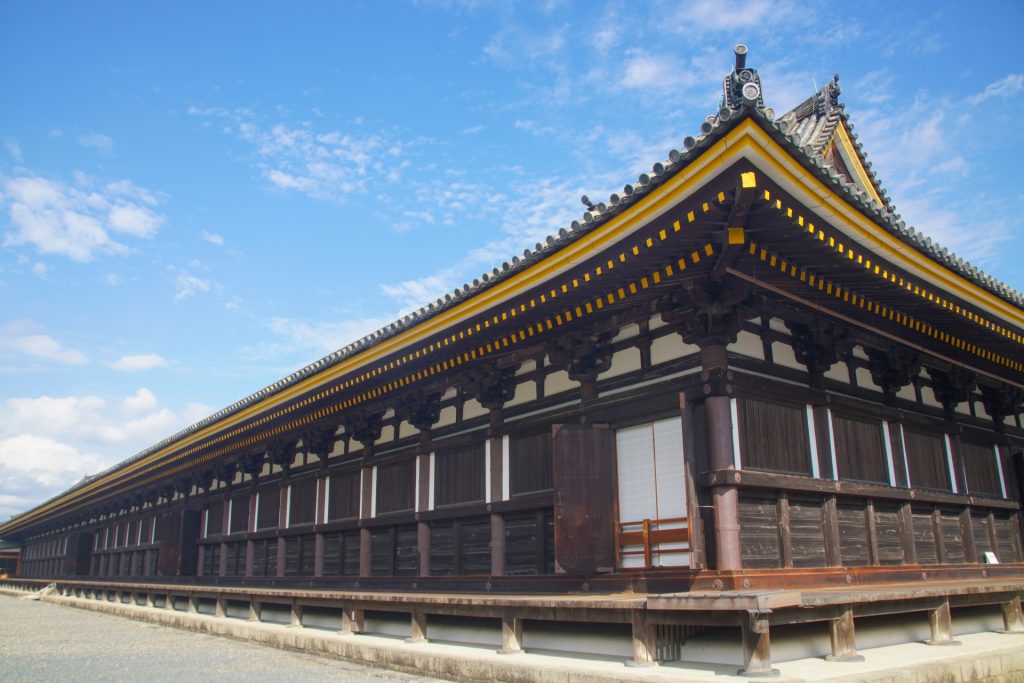
The "Sanjūsangendō," officially known as "Rengeō-in," is also an important setting in the school trip arc.
In the story, there is a scene where the character mimics a pose in front of a standing statue of the Thousand-Armed Kannon.
It is said to have been founded in 1164 by Emperor Go-Shirakawa, with financial support from Taira no Kiyomori, within his own imperial villa; it is affectionately known as the “Sanjūsangendō” because there are 33 bays between the columns in the inner sanctuary of the main hall.
Inside the main hall, which is approximately 120 meters long, a spectacular sight unfolds: centered around the National Treasure, the seated Thousand-Armed Kannon, 1,000 standing statues of the Thousand-Armed Kannon are lined up in a row.
Based on a legend that Emperor Go-Shirakawa’s long-standing headaches were cured through prayer to the principal image, the temple is also known for its ability to “ward off headaches,” and amulets for this purpose are available.
○ Information on Sacred Sites
Facility Name:Sanjusangendo (Buddhist temple in Kyoto)
Address: 657 Sanjūsangendō-mae-chō, Higashiyama Ward, Kyoto City, Kyoto Prefecture
Directions: About a 7-minute walk from Shichijo Station on the Keihan Main Line
Official Website:https://www.sanjusangendo.jp/
■Pilgrimage Site 7: Fruit Parlor Yaoiso
"Fruit Parlor Yaoiso" is a favorite among foodies.
The manga features a scene where Ran, Sonoko, and Sera enjoy fruit sandwiches, and the shop is known as one that the original author, Gosho Aoyama, has actually visited.
The company was founded in Meiji 2 (1869) as a specialty fruit store, and in Showa 47 (1972), it opened a fruit parlor on the second floor of its main store.
Our famous fruit sandwiches are made with lightly sweetened whipped cream and plenty of seasonal fruit, offering a flavor enjoyed by people of all ages.
Parfaits made with seasonal fruits such as strawberries, kiwis, and melons are also popular.
○ Information on Sacred Sites
Facility Name:Fruit Parlor Yaoiso
Address: 496 Tachinakamachi, Shijo Omiya Higashi-iru, Shimogyo-ku, Kyoto-shi, Kyoto
Directions: About a 1-minute walk from Omiya Station on the Hankyu Kyoto Line
Official Website:http://yaoiso.com/
■Sacred Site 8: Kyoto Tower
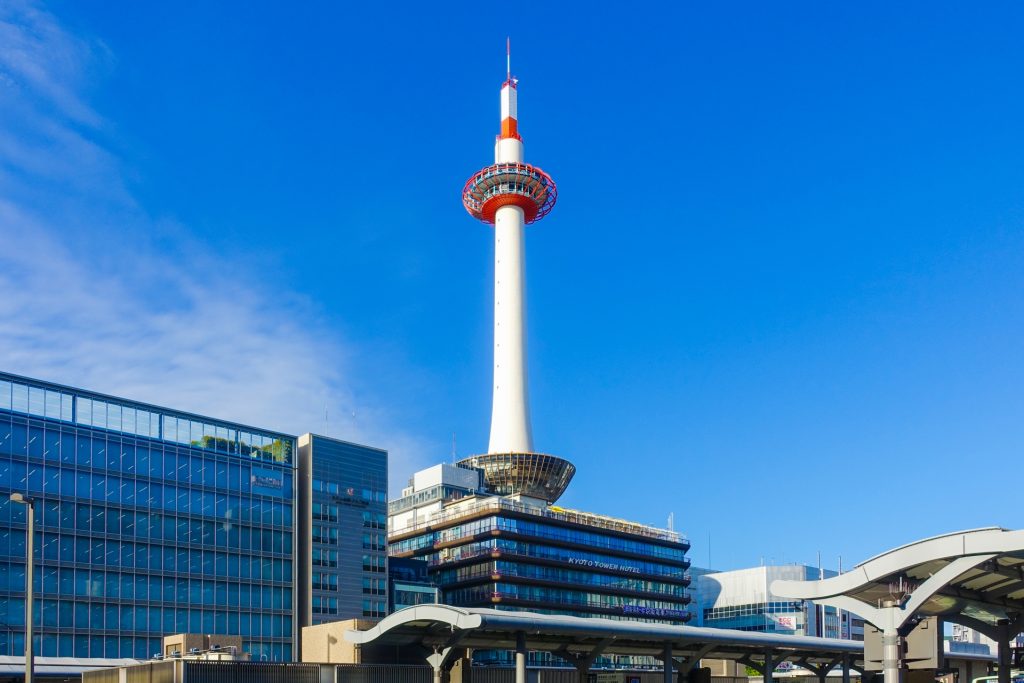
Although it does not appear directly in any scenes from the series, a collaboration project with Kyoto Tower was held in the past to commemorate the broadcast of the “Crimson School Trip Arc,” and it is known among fans as one of the series’ sacred sites. Various promotional activities were held in conjunction with the broadcast, including the release of collaboration artwork and the sale of original merchandise.
Kyoto Tower is a 131-meter-tall landmark in Kyoto, and its location right next to Kyoto Station makes it a particularly eye-catching sight.
From the observation deck, you can see the city of KyotoYou can enjoy a 360-degree view, and on clear days, you can see all the way to Mount Hiei and the mountain ranges of Kyoto in the distance.
○ Information on Sacred Sites
Facility Name:Kyoto Tower
Address: Kyoto, Kyoto Prefecture721-1 Higashi-Shiokoji-cho, Shimogyo Ward, Kyoto City (south of Shichijo on Karasuma Street)
Directions: About a 2-minute walk from the Central Exit of JR Kyoto Station
Official Website:https://www.kyoto-tower.jp/
◎Related Articles
■Summary: Key Points for the Pilgrimage
The locations featured in *Detective Conan: The Crimson School Trip* include some of Kyoto’s most popular tourist attractions, such as Kiyomizu-dera Temple, Yasaka Shrine, and Sanjusangendo Temple, making this an itinerary that even non-Conan fans can thoroughly enjoy.
The route from Kiyomizu-dera Temple to Yasaka Koshin-do, Yasaka Shrine, and Ponto-cho is easy to explore on foot and is highly recommended as a classic sightseeing route in the Higashiyama area.
Since the story vividly depicts the autumn foliage season, if you go on a pilgrimage in the fall, you’re more likely to encounter the same scenery as in the story.
When visiting shrines and temples, please be considerate of other tourists and local residents, observe proper etiquette, and enjoy your time sightseeing in Kyoto.
By the way, there is also a *Detective Conan* movie set in Kyoto, and information on the locations featured in that film can be found atAnother ArticleWe've covered this in our article, so be sure to check it out too!


Related PostRelated Articles

The parfaits at FUKUNAGA901 are so cute! If you're looking for exquisite sweets at Kyoto Station, this is the place to go!
Are you familiar with “FUKUNAGA901,” a shop that’s been trending on social media platforms like Instagram and YouTube […]
The signature dish at Muge Sanbo in Kyoto—the ”Ultra-Rich Matcha Parfait”—is absolutely delicious! If you want to experience the true essence of Kyoto, this is the place to go!
Have you heard of a shop called “Muge Sanbo,” whose signature dish is a parfait made with matcha that’s quintessentially Kyoto […]
Detective Conan: A Pilgrimage to the Kyoto Locations Featured in "The Crimson Love Song" and "The Crossroads of the Labyrinth"! List [Summary]
The Detective Conan movies set in Kyoto are *A Crimson Love Letter* and *Crossroads in the Labyrinth* […]
What is “Minori Cafe” in Shimogyo Ward, Kyoto? Their parfaits and desserts are delicious♡
Have you heard of a café called “Minori Café,” located right near Kyoto Station? Here, you can enjoy seasonal desserts and treats from famous shops […]
"Rurouni Kenshin" Kyoto Pilgrimage to Famous Locations! List [Summary]
Have you heard of *Rurouni Kenshin*? Not only is there an anime series, but it’s also been adapted into a live-action movie starring Takeru Satoh, so you should definitely check it out […]