

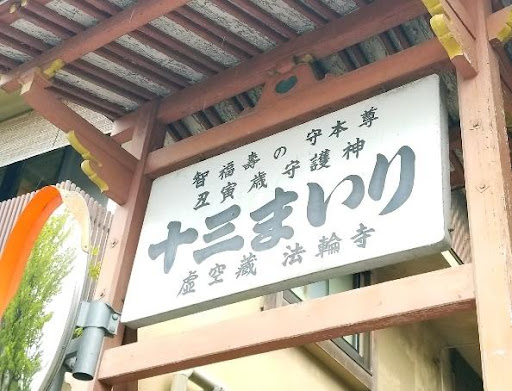
When walking across the Togetsukyo Bridge in Arashiyama, you may see parents telling their children, dressed in their finest clothes, “Don’t look back!” This is a scene of parents and children who have just completed the “Jūsann-mairi.” It is an important rite of passage, long practiced in Arashiyama, Kyoto, to celebrate a child’s growth.
In this article, we’ll take a detailed look at the origins and proper etiquette of the “Jūsō Mairi,” as well as the history and highlights of Hōrin-ji Temple, a well-known destination for this pilgrimage.
Table of Contents
■What Is the "Jūsō Mairi"?
■ Etiquette for the Day of the Thirteen-Temple Pilgrimage
■Highlights of Horin-ji Temple
■Visitor Information (Dates, Prayer Fees, Directions)
■ Summary
■What is jusan mairi?
The “Jūsan-mairi” is a tradition in which children who have turned 13 according to the traditional Japanese counting system (12 years old in actual age, around the time of elementary school graduation) visit temples and shrines to receive wisdom and good fortune. Although this custom has been passed down for generations in the Kansai region—including Kyoto and Osaka—it has gradually spread to areas outside Kansai in recent years, and it is said that an increasing number of families in regions such as Kanto are now observing the Jūsan-mairi.
The age of 13 in the traditional Japanese counting system marks the first full cycle of the Chinese zodiac since birth and has long been regarded as an unlucky year or a major milestone in life. While Shichi-Go-San is a celebration of a child’s growth during early childhood, the Jūsan-mairi is characterized by its status as a “rite of passage into adulthood.”
■The Origins of the "Jūsō Mairi" and the History of Hōrin-ji Temple
The place believed to be the birthplace of the “Thirteen Pilgrimage” is Hōrin-ji Temple in Arashiyama, commonly known as “Saga’s Kokūzō-san.” It is said to have begun in the 6th year of the Tenchō era (829), when the monk Dōshō enshrined the principal image of Kokūzō Bosatsu (Kokūzō Bodhisattva), and it is recorded that the temple was renamed “Hōrin-ji” in the 16th year of the Jōgan era (876). It is mentioned in Sei Shōnagon’s *The Pillow Book* as one of Kyoto’s most representative temples, and the blessings bestowed by its principal image are said to be recorded in the *Tales of Times Past*. It is a temple with a long and distinguished history dating back to the Heian period.

The origin of the “Thirteen Pilgrimage” is said to date back to the early Heian period, when Emperor Seiwa—who ascended the throne at a young age—reached the age of 13 (by the traditional Japanese counting system) and held an imperial memorial service at Horin-ji Temple as a symbol of his coming of age. Kūkōzō Bosatsu is said to have been born as the 13th attendant of Dainichi Nyorai, and because he is the Buddha who presides over wisdom, good fortune, and the arts, the pilgrimage came to be known as the “Pilgrimage for Wisdom” or “Receiving Wisdom.”
■Etiquette for the Day of the Thirteen-Temple Pilgrimage
When visiting the shrine, children first use a brush to write a single kanji character representing their wish on a special sheet of paper. There are no rules regarding which characters to write—such as “知” (knowledge), “賢” (wisdom), “美” (beauty), or “健” (health)—and it is customary for each child to choose a character that embodies their personal wish. This custom originates from a time when offering a hand-copied sutra was considered the most respectful form of worship; today, it has been simplified to the practice of offering a single kanji character as “Ichiji Shakyō” (One-Character Sutra Copying). The written character serves as a stand-in for the person, and during the prayer period, it is read aloud at the temple as part of the prayer ritual.
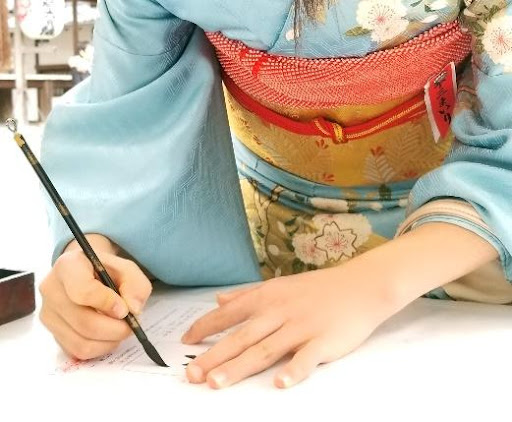
Traditionally, both boys and girls wear “hon-zari” kimonos, the same style as adults; girls wear “naka-furisode” with raised shoulders, while boys wear “mon-tsuki hakama.” It is said that in the past, there was also a custom of changing children’s hairstyles to those of adults and changing their childhood names to adult names to coincide with this occasion.
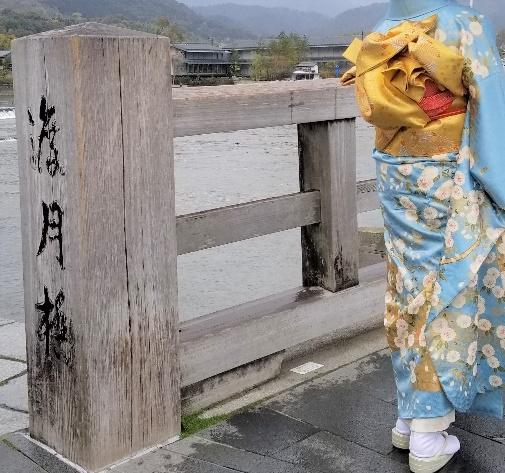
Perhaps the best-known custom associated with the “Thirteen-Temple Pilgrimage” is the rule against looking back after paying respects. After receiving a prayer service at Hōrin-ji Temple, it is said that you must never look back until you have descended the stone steps and crossed the Togetsu Bridge. This is because legend has it that if you do look back along the way, you will give back or lose the wisdom and good fortune you have just received. Following this custom, the practice of not looking back until you have left the approach path has spread even to other temples and shrines where the Jūsann-mairi is observed.
■Highlights of Hōrin-ji Temple
After passing through the mountain gate and climbing the stone steps, you’ll find “Denden-gu,” a shrine dedicated to the guardian deity of electricity and radio waves, located along the approach. It is a shrine that is rare even on a national scale, attracting worshippers who pray for advancements in electrical and electronic technologies.
As you continue up the stone steps, the Main Hall comes into view straight ahead, with the Tahō-tō Pagoda to its left. From the observation deck on the right-hand side as you face the Main Hall—known as “Butai”—you can take in a panoramic view of the Sagano landscape, including the Togetsukyo Bridge, as well as the Higashiyama mountain range and the cityscape of Kyoto. Be sure to enjoy this view during your visit.
■Visitor Information (Dates, Prayer Fees, Directions)
The "Thirteen Pilgrimages" at Hōrin-ji Temple are held twice a year, in the spring and fall, during designated periods.
- Spring Visit to the Thirteen Shrines: March 13–May 13 (one month before and after April 13, with April 13 as the midpoint)
- Autumn Visit to the Thirteen Shrines: October 1 through around November 30
Prayer fees vary depending on the duration of the prayer; the general guidelines are 5,000 yen for one week, 7,000 yen for one month, and 13,000 yen for one year (as these amounts are subject to change, we recommend checking the official website in advance).
○ Hōrin-ji Temple (commonly known as “Saga’s Kokuzō-san”)
Address: 616-0006 Kyoto Prefecture, Kyoto City, Nishikyo Ward, Arashiyama Kokuzo-yama-cho
Phone: 075-862-0013
Directions: About a 15-minute walk from the "Arashiyama Station" on the Randen Line
About a 20-minute walk from "Saga-Arashiyama Station" on the JR Sagano Line
About a 5-minute walk from the Hankyu "Arashiyama Station"
About a 5-minute walk from the "Hankyu Arashiyama Station" stop on the Kyoto Bus (Routes 62, 63, 66, 72, 73, 76, 83, 90, 92, and 94)
HP:https://www.kokuzohourinji.com
■summary
The “Jūsō-mairi” is a rite of passage unique to Arashiyama in Kyoto, originating from a legend associated with Emperor Seiwa of the Heian period and passed down for over 1,000 years. The series of rituals—in which children write a single character imbued with their own wishes and cross the Togetsukyo Bridge without looking back—embodies the hopes of families watching over their children’s growth, as well as the understated elegance characteristic of the ancient capital of Kyoto.
If you have the chance to visit Arashiyama in the spring (mid-March to mid-May) or fall (October to November), you may see children dressed in their finest traditional attire, accompanied by their families watching over them. As you stroll around the Togetsukyo Bridge area, be sure to take a moment to reflect on these traditional Kyoto customs.


Related PostRelated Articles

The obanzai at "Gyaatei" in Arashiyama, Kyoto, is wonderful! What is the Gyaatei Set Meal?
What places did you visit while sightseeing in Arashiyama, Kyoto? Arashiyama has several attractions, such as the Hozu River boat ride, the Torokko Train, the Bamboo Grove Path, and the Togetsukyo Bridge […]
Terakoya Honpo’s Innovative Dango Are Amazing! Let’s Go on a Sweet Treat Tour in Arashiyama to Sample the Exquisite “Kabi Dango”
Are you enjoying sightseeing around Saga-Arashiyama, such as the Togetsukyo Bridge, Tenryu-ji Temple, and the Torokko Train? There are many tourist attractions in Saga-Arashiyama […]
Come try the giant mitarashi dango at Koto Imo Honpo! A popular choice for street food in Arashiyama♪
Have you heard of a shop called “Kotoimo Honpo,” located just off the path through the bamboo grove? Lately, it’s been on Ins […]
Detective Conan: A Pilgrimage to the Kyoto Locations Featured in "The Crimson Love Song" and "The Crossroads of the Labyrinth"! List [Summary]
The Detective Conan movies set in Kyoto are *A Crimson Love Letter* and *Crossroads in the Labyrinth* […]
"Rurouni Kenshin" Kyoto Pilgrimage to Famous Locations! List [Summary]
Have you heard of *Rurouni Kenshin*? Not only is there an anime series, but it’s also been adapted into a live-action movie starring Takeru Satoh, so you should definitely check it out […]