

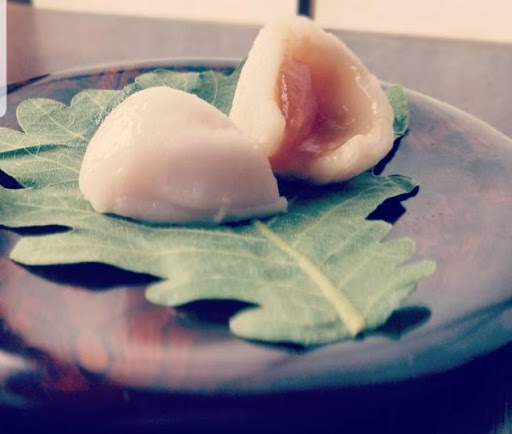
As “Children’s Day” on May 5 approaches, Japanese confectionery shops display seasonal sweets that add color to the season. Among them, “kashiwa-mochi” is a classic favorite, but did you know that there’s actually a significant difference between the fillings used in eastern and western Japan? When choosing kashiwa-mochi in Kyoto, knowing a little bit of trivia will help you enjoy the experience even more.
In this article, as a Kyoto tourism media outlet, we’ll provide a detailed overview—from the origins of Children’s Day and the Boys’ Festival to the distinctive features of Kyoto’s kashiwa-mochi, and even the kashiwa-mochi from “Demachi Futaba,” a popular Japanese confectionery shop that always has long lines.
Table of Contents
■What Is Children's Day? What Is the Boys' Festival?
■Kashiwa-mochi and Chimaki: Differences in the Culture of Traditional Japanese Sweets for the Boys’ Festival Between the East and West
■ Do Kyoto’s kashiwa-mochi come with “miso-flavored red bean paste”?
■ Kashiwa-mochi and Seasonal Japanese Sweets from Demachi Futaba
■ Summary
■What Is Children's Day? What Is the Boys' Festival?
"Children's Day" is a national holiday established in 1948 with the purpose of "respecting the dignity of children, promoting their happiness, and expressing gratitude to mothers." The reason this day was set as May 5 is linked to “Tango no Sekku,” one of the “Five Seasonal Festivals” (Gosekku), which are traditional events celebrating the changing seasons. After World War II, when new national holidays were being established, the view that dates associated with cultural events familiar to the public should be chosen was taken into account; it is said that this led to Children’s Day being set on the same date as the “Tango no Sekku,” which had long been a day to celebrate the growth of boys.
It is believed that the customs associated with the Boys’ Festival were originally introduced to Japan from China during the Nara period, and they became established in Japan as one of the “Five Festivals,” in which strongly scented plants such as iris and mugwort are used to ward off evil spirits. Even today, traditional practices such as flying carp streamers, displaying May dolls, and taking baths with iris leaves are widely observed.
■Kashiwa-mochi and Chimaki: Differences in the Culture of Traditional Japanese Sweets for the Boys’ Festival Between the East and West
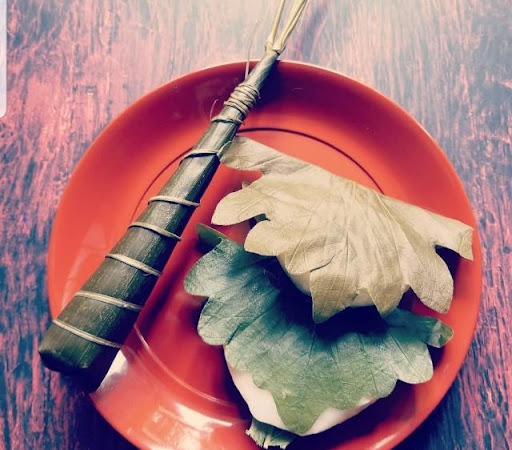
When it comes to traditional Japanese sweets for the Boys’ Day festival, many people probably think of “kashiwa-mochi” or “chimaki.” In fact, these two treats have different cultural backgrounds depending on whether you’re in the eastern or western parts of the country.
Chimaki are dumpling-shaped sweets wrapped in bamboo leaves and other materials; they are said to have been introduced from China during the Nara period along with the Boys’ Festival and have long been enjoyed, particularly in the Kinki region, where the capital was located. On the other hand, kashiwa-mochi is a traditional Japanese confectionery believed to have originated in Edo (present-day Tokyo) during the Edo period. Since kashiwa leaves are known for not falling off until new buds emerge, they are considered a symbol of “prosperity of descendants” and “an unbroken family line,” and it is said that this is why they came to be eaten during the Boys’ Festival.
In the Kansai region, where tradition and Kamigata culture are highly valued, the custom of eating chimaki has been passed down to this day. In contrast, it is said that the chimaki tradition never really took root in eastern and northern Japan, where the custom of eating kashiwa-mochi eventually became the norm. As a result, the tendency that “Kanto prefers kashiwa-mochi, while Kansai prefers chimaki” can still be observed today; however, kashiwa-mochi is widely sold even in Kyoto, and as the Boys’ Day festival approaches, storefronts are adorned with both kashiwa-mochi and chimaki.
■Do Kyoto's kashiwa-mochi come with "miso-flavored red bean paste"?

Although kashiwa-mochi is enjoyed throughout the country, the kashiwa-mochi found in the Kansai region—particularly in Kyoto—has a characteristic not commonly seen in other regions. Specifically, in addition to varieties filled with grainy red bean paste and smooth red bean paste, kashiwa-mochi filled with “miso paste” is also sold there.
Kashiwa-mochi with miso filling is believed to have originated in eastern Japan during the Edo period and has traditionally been popular in regions from the Kanto region northward. While it is said not to have spread widely to the Kansai region, many wagashi shops in Kyoto offer all three varieties—chunky red bean paste, smooth red bean paste, and miso filling—making this a unique and interesting feature of Kyoto.
Around this time of year, kashiwa-mochi appear in store windows, and each shop showcases its own unique style—for example, those with miso filling may feature rice cakes colored pink or pale yellow, or be made with Dōmyōji flour (a coarsely ground flour made from steamed and dried glutinous rice). Furthermore, the way the kashiwa leaves are wrapped also carries significance; some shops use the orientation of the leaves to indicate the filling—for example, wrapping azuki bean paste with the leaf’s outer side facing out and miso paste with the leaf’s inner side facing in.
■Demachi Futaba's Kashiwa-mochi and Seasonal Japanese Sweets
If you're looking for kashiwa-mochi in Kyoto, you'll definitely want to visit "Demachi Futaba," a popular Japanese confectionery shop that always has a long line of customers. It's known for the long lines that form—regardless of whether it's a weekday or a holiday—as customers flock to buy its signature item, "Meidai Mame-mochi."
Demachi Futaba is a long-established shop founded in Meiji 32 (1899). Its signature product, the mame-mochi, consists of a soft, habutae-style mochi wrapper filled with a smooth red bean paste made from carefully selected red adzuki beans from Hokkaido and azuki beans from Tokachi. The combination of the saltiness of the red adzuki beans and the refined sweetness of the smooth red bean paste makes this a popular item with an exquisite flavor.
The shop offers a wide selection of seasonal items. While it’s best known for its bean-filled mochi, it’s also renowned for its delicious Minazuki (a traditional Japanese confection for the Nagoshi no Harae purification ritual), Inoko-mochi (an early-winter treat), and red rice, making it a Japanese confectionery shop you’ll want to visit year-round.
During the Boys’ Day festival season, we offer three varieties of kashiwa-mochi: whole-bean red bean paste (with mugwort), smooth red bean paste, and miso-flavored red bean paste. The miso-filled kashiwa mochi is characterized by its deep color and the distinct flavor and sweetness of miso, with a hint of sansho pepper added to the filling. The sweet-salty flavor and aroma of sansho pepper pair perfectly with the chewy, springy mochi, creating a one-of-a-kind taste experience.
Also, don’t miss the “Mizorogai-ike Chikama,” which goes on sale in time for the Boys’ Festival. Made by women from the Rakuhoku and Mizorogai-ike (Kamigamo area) regions, who roll each one by hand and steam them carefully, this treat truly conveys the warmth of traditional craftsmanship.
Please note that all of Demachi Futaba’s traditional Japanese sweets are best enjoyed on the day of purchase, so we recommend savoring them on the same day you buy them. Since this popular shop often has lines forming right after it opens, it’s best to visit around opening time if you want to be sure to get some. Their products are also sometimes available in the Kyoto souvenir sections of department stores such as JR Isetan at Kyoto Station, Kyoto Takashimaya, and Daimaru Kyoto.
Why not try some kashiwa-mochi and chimaki—treats unique to this season—while sightseeing at Shimogamo Shrine or enjoying a moment by the Kamo River Delta?
〇Demachi Futaba
Address: 236 Seiryū-chō, Kamigyō-ku, Kyoto City (up the street from Imadegawa on Demachi-dōri)
Phone: 075-231-1658
Business Hours: 8:30 a.m. to 5:30 p.m.
Closed: Tuesdays and the fourth Wednesday of each month (if that day is a holiday, the store will be closed the following day; New Year’s holidays may be extended)
Directions: About a 7-minute walk from Exit 5 of Demachiyanagi Station on the Keihan Main Line (just across the Kamogawa Delta)
*Please note that business hours and available products are subject to change, so please check with the store in advance before visiting.
■summary
A major feature of Kyoto’s kashiwa-mochi is that, in addition to grainy red bean paste and smooth red bean paste, there is also an option called “miso paste.”
Given that the Kansai region was traditionally known for its tradition of chimaki, the fact that kashiwa-mochi with miso filling has become so firmly established here gives us a sense of the depth of Kyoto’s wagashi culture.
If you’re visiting Kyoto as the Children’s Day festival approaches, be sure to try the mame-mochi, seasonal kashiwa-mochi, and Fukanui-ike chimaki at “Demachi Futaba,” a popular shop where long lines are guaranteed. We recommend allowing plenty of time and, if possible, visiting right around opening time.


Related PostRelated Articles

Detective Conan: A Pilgrimage to the Kyoto Locations Featured in "The Crimson Love Song" and "The Crossroads of the Labyrinth"! List [Summary]
The Detective Conan movies set in Kyoto are *A Crimson Love Letter* and *Crossroads in the Labyrinth* […]
"Rurouni Kenshin" Kyoto Pilgrimage to Famous Locations! List [Summary]
Have you heard of *Rurouni Kenshin*? Not only is there an anime series, but it’s also been adapted into a live-action movie starring Takeru Satoh, so you should definitely check it out […]
"K-ON!" Kyoto Pilgrimage to the Series' Locations! List [Summary]
Have you heard of the anime “K-ON!”? “K-ON!” is a four-panel manga series by manga artist Kaki Furai […]
A Pilgrimage to the Sacred Sites of "The Eccentric Family" in Kyoto! List [Summary]
Have you heard of the anime *The Eccentric Family*? *The Eccentric Family* is an anime adaptation of a novel by Tomihiko Morimi […]
A Pilgrimage to the Sacred Sites of *Nurarihyon's Grandson: The Thousand-Year Demon Capital* in Kyoto! List [Summary]
"Nurarihyon's Grandson," a Japanese manga by Hiroshi Shiibashi. Serialized in Weekly Shonen Jump in 2008, it features yokai as its theme […]