

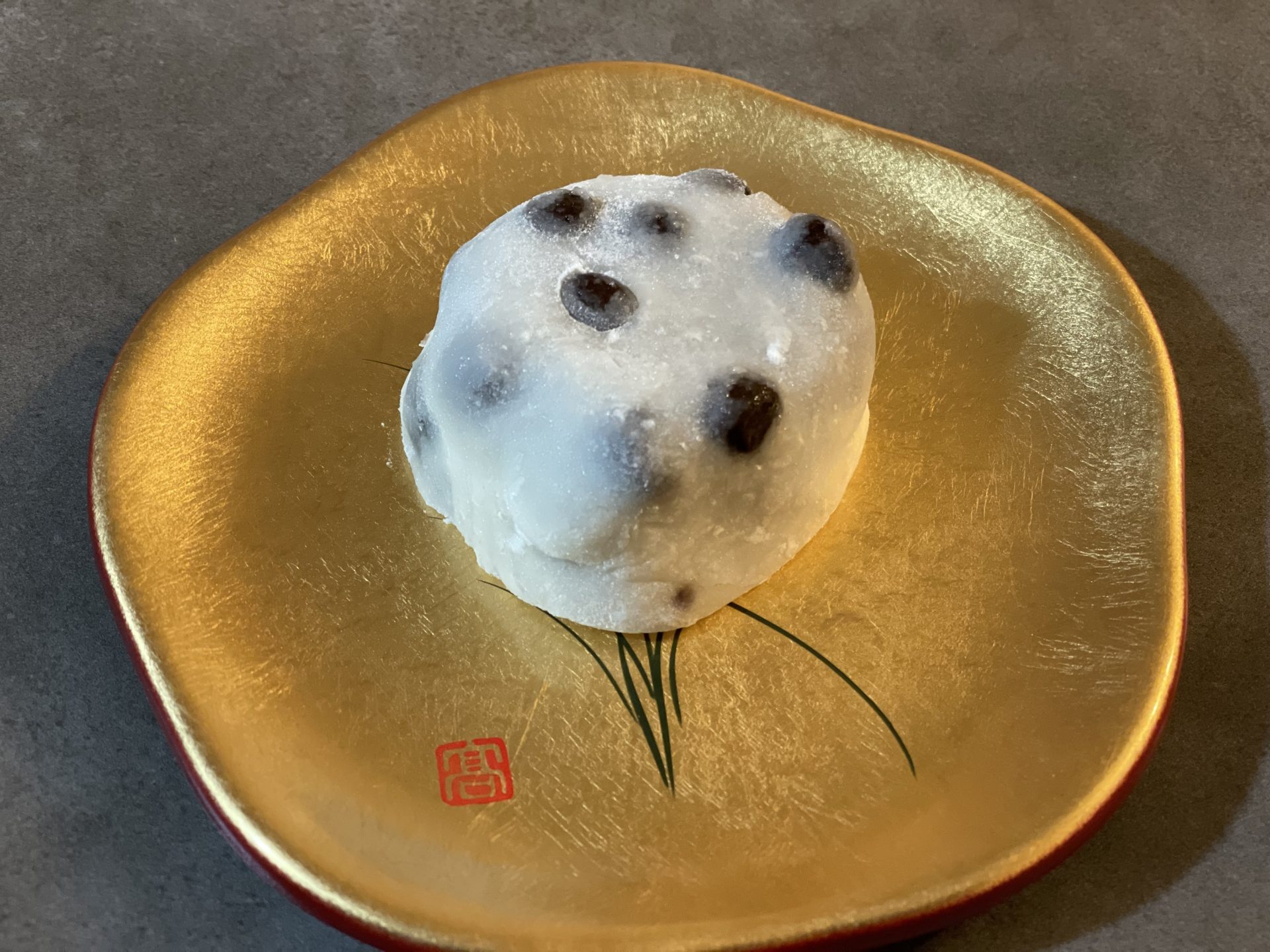
"Demachi Futaba," a traditional Japanese confectionery shop, is located just a short distance from Demachiyanagi Station in Kyoto, right next to the "Kamo River Delta," where the Kamo and Koya Rivers converge. Founded in 1899 (Meiji 32), this shop—with a history spanning over 120 years—is one of Kyoto’s most popular spots, drawing long lines of customers not only from the local community but also from tourists visiting from both Japan and abroad.
There’s always a line outside the store starting in the morning on weekdays, and it’s not uncommon to wait 30 minutes or more. So why do so many people go out of their way to visit? In this article, we’ll take a detailed look at everything from the appeal of their signature product, “Meidai Mame Mochi,” to its history, how to purchase it, and tips for avoiding the lines.
Please note: Prices, business hours, and days off are subject to change. Be sure to check the latest information before visiting.
Table of Contents
■What Is Demachi Futaba? 120 Years of History
■Why Our Signature Product, "Meidai Mame-mochi," Is So Beloved
■ Popular Items Other Than Mame Mochi
■Basic Information & Directions
■ Tips for Avoiding Lines and Things to Keep in Mind When Making a Purchase
■What Is Demachi Futaba? 120 Years of History
Demachi Futaba was founded in 1899 (Meiji 32) by its first-generation owner, Sanjiro Kuromoto, a native of Komatsu City, Ishikawa Prefecture. It is said that the origin of the shop’s current signature product, “Meidai Mame-mochi,” was inspired by the bean cakes traditionally offered as shinsen (offerings to the gods) in his hometown of Komatsu City.
The shop is located in a corner of the Demachi Shopping District, near the Kamo River (the upper reaches of the Kamo River). It continues to operate using the same traditional methods and in the same location as always, and remains widely loved—from as a daily snack for locals to as a souvenir for tourists visiting Kyoto.
■Why Our Signature Product, "Meidai Mame-mochi," Is So Beloved
○ Carefully Selected Ingredients
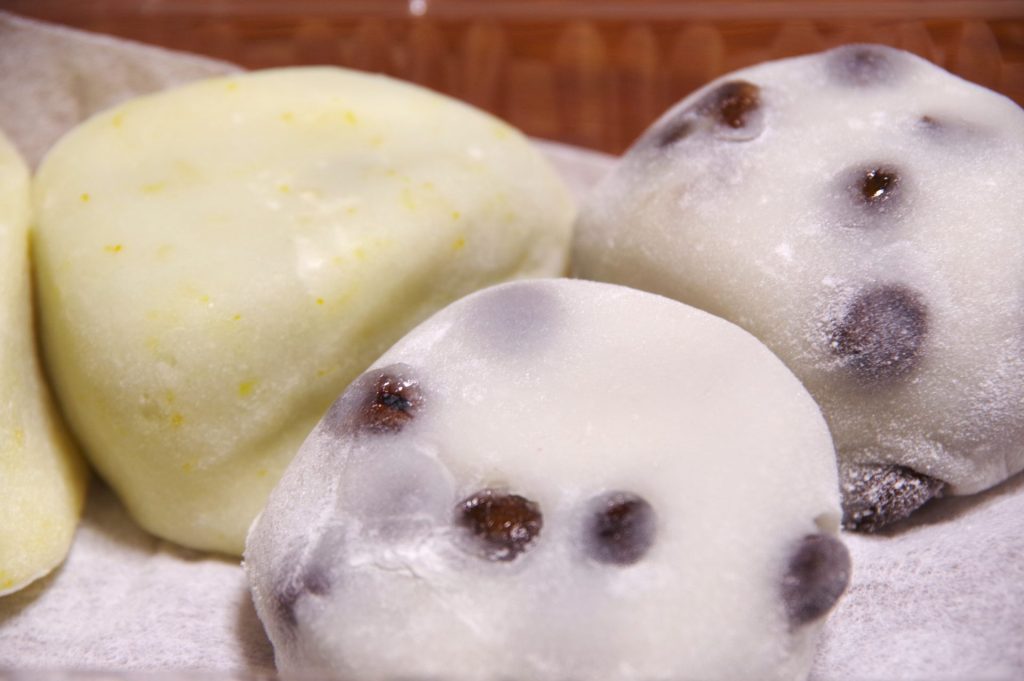
One of the reasons why Demachi Futaba’s mame-mochi is praised as “different from other daifuku” is the shop’s unwavering commitment to quality ingredients.
- Red peas
Sourced from carefully selected farmers in the Biei area of Hokkaido and elsewhere. For a delightful texture and a touch of saltiness. - Sifted red bean paste
Made with adzuki beans from the Tokachi region of Hokkaido. It features a refined sweetness and a smooth texture. - Mochi
Made with Ha-ni-bu-to glutinous rice from Shiga Prefecture. It features a firm, springy texture and a distinct natural sweetness.
○ Traditional Manufacturing Methods
Not only the ingredients, but also the preparation methods involve techniques passed down through generations. The habutae glutinous rice is steamed and then pounded twice, creating its unique, chewy texture. Even during shaping, the process is carried out with meticulous attention to detail—such as rolling the rice quickly by hand to preserve its flavor—resulting in a taste unlike any other shop.
Another reason for its popularity is the exquisite balance between the subtle saltiness of the red adzuki beans and the refined sweetness of the smooth red bean paste. With a best-by date set for the same day it’s sold, this is a traditional Japanese sweet that truly lets you enjoy a “freshly made” treat right on the spot.
■ Popular Items Other Than Mame Mochi
While Demachi Futaba’s signature item is, of course, its famous mame-mochi, you won’t want to miss the seasonal items that appear throughout the year.
- Mame Mochi: Our signature product. A harmonious blend of red adzuki beans, smooth red bean paste, and habutae glutinous rice.
- Inaka Daifuku (Yomogi Mochi): A classic treat with a rich aroma of yomogi
- Black Soybean Daifuku: Enjoy a toasty aroma that’s different from that of regular bean mochi
- Tamba Chestnut Mochi (Seasonal, Fall): Made with whole, large Tamba chestnuts. The natural sweetness of the chestnuts is its main appeal.
- Minazuki and Matcha Minazuki (Seasonal, June): Traditional Kyoto sweets inspired by the Nagoe no Harai purification ritual
- Chestnut Sticky Rice and Red Bean Rice: In addition to sweets, sticky rice and red bean rice are also popular items.
- Warabi Mochi: Made with authentic warabi flour, it has a melt-in-your-mouth texture.
Seasonal items tend to sell out quickly, so if there's something specific you're looking for, we recommend visiting early in the day.
■Basic Information and Directions
| Item | Details |
| Store Name | Demachi Futaba |
| address (e.g. of house) | 236 Seiryū-chō, Kamigyō-ku, Kyoto City, Kyoto Prefecture (De-machi-dōri, Imadegawa-agaru) |
| Phone | 075-231-1658 |
| Business Hours | 8:30 a.m.–5:30 p.m. (Closes when sold out. Hours may vary depending on the season.) |
| Closed Days | Tuesdays and the fourth Wednesday of each month (if the fourth Wednesday is a holiday, the following day is closed). *Closed during the year-end and New Year’s holidays (approx. Jan. 1–7), Obon (approx. Aug. 17–19), and Golden Week make-up holidays. |
| Payment Methods | Cash is the preferred payment method (please check with the store in advance) |
| Directions | About a 7-minute walk from Exit 5 of Demachiyanagi Station on the Keihan Main Line (crossing the Kawai Bridge and Demachi Bridge); about a 2-minute walk from the “Kawaramachi Imadegawa” bus stop on the City Bus and Kyoto Bus routes. |
A popular way to enjoy the sweets you’ve purchased is to eat them on the riverbank at the Kamogawa Delta (where the Kamogawa and Takano Rivers converge), which is right nearby. On a sunny day, we recommend taking a break there while listening to the gentle murmur of the river.
■ Tips for Avoiding Lines and Things to Keep in Mind When Making a Purchase
- Aim for right after opening
Since lines often form even on weekdays before the store opens at 8:30, arriving right when the store opens is the best time to make your purchase with the least amount of waiting. - It gets especially crowded on weekends and during the tourist season
Queues tend to get much longer on weekends and during the cherry blossom and fall foliage seasons. Be sure to allow plenty of time for your visit. - Please note that items may sell out
It's not uncommon for popular items and seasonal specials to sell out between the morning and the afternoon. If there's a specific item you're looking for, be sure to visit early. - Best before the end of the day
Since these are fresh sweets, they don't keep well. If you take them home, we recommend eating them all on the same day. - Also available at department stores
If you have trouble finding them at the main store, they may also be available at locations such as JR Isetan at Kyoto Station, Kyoto Daimaru, and Kyoto Takashimaya (since store locations and sales dates are subject to change, it’s best to check in advance).
■ Summary
For over 100 years, “Demachi Futaba” has continued to preserve its signature flavor by meticulously selecting ingredients and adhering to traditional methods. You’ll need to be prepared to wait in line, but it’s well worth the wait—it’s easy to see why so many people keep coming back. If you’re visiting the Demachiyanagi or Kamogawa Delta area, be sure to allow plenty of time to stop by.
*Please note that the prices, business hours, and closed days listed in this article are subject to change. Be sure to check with the store before visiting.


Related PostRelated Articles

Detective Conan: A Pilgrimage to the Kyoto Locations Featured in "The Crimson Love Song" and "The Crossroads of the Labyrinth"! List [Summary]
The Detective Conan movies set in Kyoto are *A Crimson Love Letter* and *Crossroads in the Labyrinth* […]
"Rurouni Kenshin" Kyoto Pilgrimage to Famous Locations! List [Summary]
Have you heard of *Rurouni Kenshin*? Not only is there an anime series, but it’s also been adapted into a live-action movie starring Takeru Satoh, so you should definitely check it out […]
"K-ON!" Kyoto Pilgrimage to the Series' Locations! List [Summary]
Have you heard of the anime “K-ON!”? “K-ON!” is a four-panel manga series by manga artist Kaki Furai […]
A Pilgrimage to the Sacred Sites of "The Eccentric Family" in Kyoto! List [Summary]
Have you heard of the anime *The Eccentric Family*? *The Eccentric Family* is an anime adaptation of a novel by Tomihiko Morimi […]
A Pilgrimage to the Sacred Sites of *Nurarihyon's Grandson: The Thousand-Year Demon Capital* in Kyoto! List [Summary]
"Nurarihyon's Grandson," a Japanese manga by Hiroshi Shiibashi. Serialized in Weekly Shonen Jump in 2008, it features yokai as its theme […]