

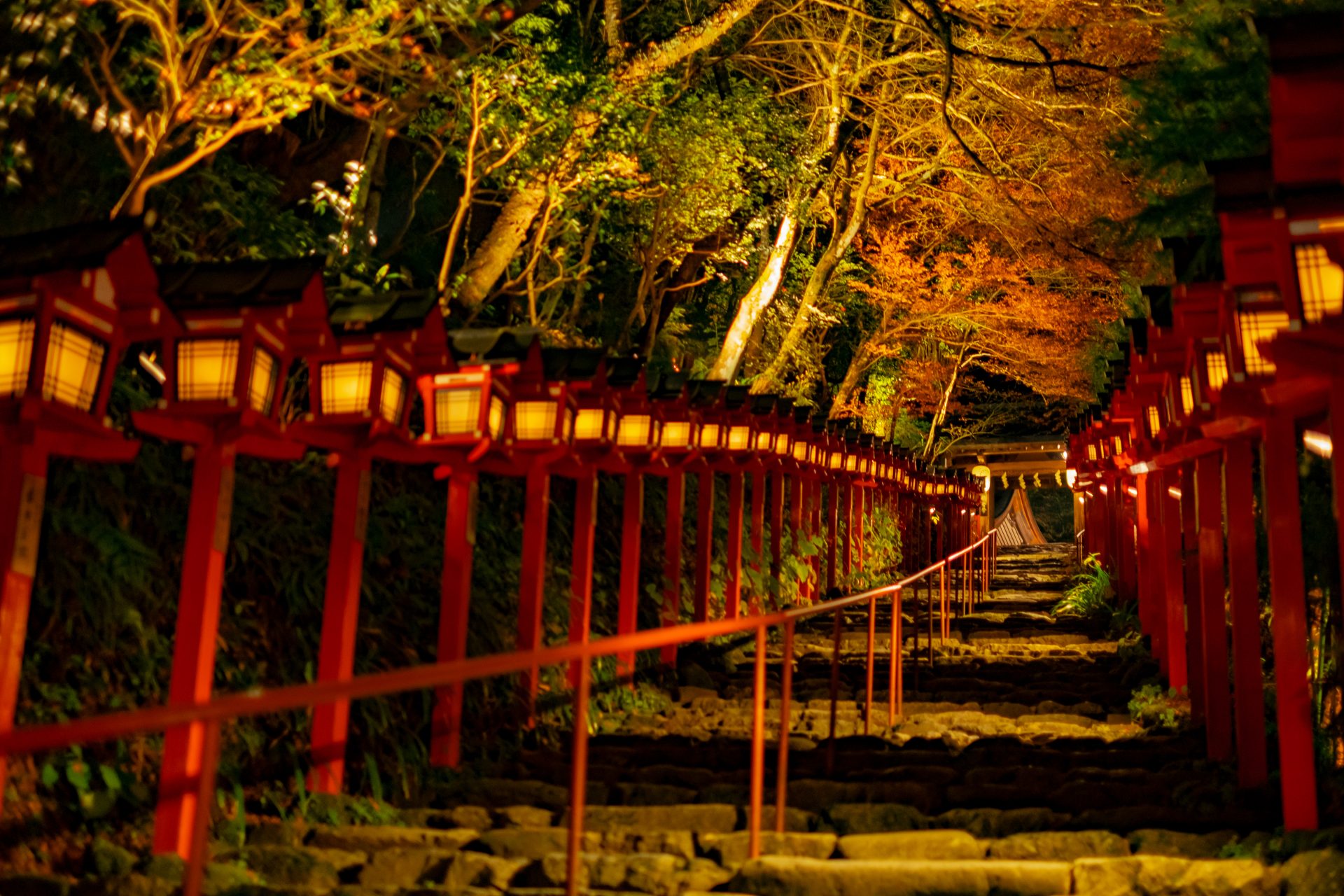
Kyoto is home to numerous spots steeped in mysterious legends and folklore that have emerged over the city’s 1,200-year history. In this article, we’ll introduce places that have all been believed to mark “the boundary between this world and the next.” From legends associated with Heian-period onmyōji and poets to a temple once considered the entrance to hell, we’ll unravel these eerie tales unique to Kyoto, backed by historical facts.
Disclaimer: This article is intended to provide an introduction to history, folklore, and culture. Since it is dark at night and you must be mindful of private property and sacred grounds, please be sure to observe proper etiquette during your visit.
Table of Contents
■Ichijō-modori Bridge | A bridge steeped in the legends of Abe no Seimei and Watanabe no Tsuna
■Kifune Shrine | The Origins of the “Ushi no Koku Mairi” Ritual at the Shrine of Matchmaking
■Rokudō Chinjō-ji | The Well Through Which Ono no Takamura Is Said to Have Entered the Underworld
■ Summary
■Ichijō-modori Bridge | A bridge steeped in the legends of Abe no Seimei and Watanabe no Tsuna
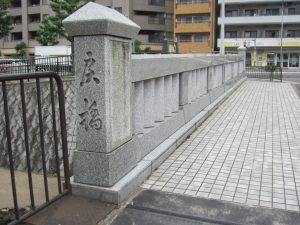
"Ichijō-modori Bridge" is a small bridge spanning Horikawa-dori in Kamigyō Ward, Kyoto City. Ichijō-dori, located at the northern tip of Heian-kyō, served as the boundary separating the capital from the outside world, and this bridge has also long been believed to be "the threshold connecting the mortal world and the spirit world."
The Origin of the Name "Modori Bridge"
It is said that this bridge, originally called “Tsuchimikado Bridge,” came to be known as “Modohashi” due to an event that occurred in the 18th year of the Engi era (918). The legend goes that when the scholar Miyoshi no Kiyoyuki passed away and the funeral procession was about to cross this bridge, his son Jōzō—who had been unable to be at his father’s deathbed due to his spiritual training—clung to the coffin and prayed for his father’s revival, whereupon Kiyoyuki temporarily came back to life. Based on this legend of “the dead returning to the living world,” the bridge came to be regarded as a special place—the “Bridge Where the Dead Revive.”
His Connection to Abe no Seimei and Watanabe no Tsuna
Right next to the bridge stands “Seimei Shrine,” dedicated to Abe no Seimei, a Heian-period onmyōji. Legend has it that Seimei once lived on this site, and there is also a tale that he kept his shikigami (spirits commanded by onmyōji) hidden beneath the bridge. It is said that because Seimei’s wife was frightened by the shikigami’s appearance, he usually kept them hidden under the bridge and summoned them only when necessary to put them to work.
There is also a famous legend that Watanabe no Tsuna—one of Minamoto no Yorimitsu’s Four Heavenly Kings—encountered a demoness on this bridge and severed her arm with his famous sword, Hige-kiri. This story has served as the basis for the Kabuki play *Watanabe no Tsuna and the Demoness*.
In addition, there is a legend that after Sen no Rikyū was forced to commit seppuku, his wooden statue was displayed at the foot of this bridge, suggesting that the bridge has served as the setting for numerous stories throughout the ages.
Traditions That Endure to This Day
Based on the connotations of the word “return,” it is still customary today for marriage delegations, wedding processions, and funeral processions to avoid crossing this bridge. On the other hand, it is said that during wartime, some people visited this bridge to pray for the safe return of soldiers heading off to war.
Basic Information
| Item | Details |
| address (e.g. of house) | Kamigyo Ward, Kyoto City, Kyoto Prefecture; west of Horikawa on Ichijo-dori (about 100 meters south of Seimei Shrine) |
| Tour | The bridge itself is open to visitors at all times (the current bridge was rebuilt in 1995). |
| Places to Visit While You're There | Seimei Shrine (The shrine grounds feature a replica bridge built using the railings of the former Ichijō-Modoribashi Bridge, as well as statues of shikigami) |
| Directions | Just a short walk from the "Ichijo-Modoribashi/Seimei Shrine" city bus stop |
■Kifune Shrine | The Origins of the “Ushi no Koku Mairi” Ritual at the Shrine of Matchmaking
Located in Sakyo Ward, Kyoto City, south of Kurama, “Kifune Shrine” is a historic shrine dedicated to the god of water, where rituals to pray for rain or to stop rain have been performed since ancient times. It is also the head shrine of the approximately 450 Kifune Shrines said to exist nationwide. Although the exact date of its founding is unknown, according to the shrine’s tradition, it is said to have originated when Tamayori-hime-no-Mikoto, the mother of Emperor Jimmu, arrived at this site in search of a water source and enshrined the water deity there.
Kifune Shrine as the “Palace of Love”
There is a legend that Izumi Shikibu, a female poet of the Heian period, visited Kifune Shrine to pray for a reconciliation with her husband after struggling with their strained relationship, and her wish was granted. This is the origin of the shrine’s reputation as a place of worship for the “god of matchmaking.” Even today, it remains one of Kyoto’s premier spiritual spots, attracting many visitors who come to pray for a good marriage.
The Legend of the Midnight Pilgrimage
On the other hand, the Kifune Mountains are said to be the birthplace of a magical ritual known as “Ushinokoku Mairi.” This custom—in which, during the “Ushi no Koku” (around 1:00 a.m. to 3:00 a.m.), a person dressed in white drives a five-sun nail into a straw doll to curse someone they hold a grudge against—was incorporated into the Noh play *Kanawa* and became widely known in later generations. This is strictly a matter of legend and folk belief; the current Kifune Shrine does not condone such acts. Naturally, one must strictly refrain from any behavior that desecrates the sacred precincts.
Visitor Information
| Item | Details |
| address (e.g. of house) | 180 Kurama Kibune-cho, Sakyo-ku, Kyoto-shi, Kyoto |
| Phone | 075-741-2016 |
| Visiting Hours (Main Shrine) | 6:00 a.m. to 8:00 p.m. (6:00 a.m. to 6:00 p.m. from December through April) *Hours may be extended during the light-up period |
| Certificate Issuance Desk | 9:00 a.m. to 5:00 p.m. |
| Admission Fee | Free admission to the temple grounds |
| Directions | About a 5-minute ride on the Kyoto Bus (bound for Kibune) from Eizan Electric Railway's "Kibuneguchi Station"; get off at "Kibune" and it's right there. |
| Official Website | https://kifunejinja.jp/ |
Kifune, along with Mount Kurama, is an area rich in natural beauty and is also famous for its riverside dining. Visiting during the day poses no danger whatsoever, and the area is beloved by many tourists as Kyoto’s “inner sanctum.” Since there are few streetlights at night and the paths are mountainous, it’s best to visit during daylight hours before sunset.
■Rokudō Chinjō-ji | The Well Through Which Ono no Takamura Is Said to Have Entered the Underworld
"Rokudō Chinnō-ji" is located along Higashiyama-Matsubara-dōri in Higashiyama Ward, Kyoto City. Affectionately known locally as "Rokudō-san," it is a temple of the Rinzai School’s Kennin-ji branch. It is said to have been founded during the Enryaku era (782–805), and because this area once served as the entrance to “Toribeno,” the cremation site of Heian-kyō, it has long been believed to be “the boundary between this world and the next—the Crossroads of the Six Paths.” “Rokudō” refers to the six realms of existence in Buddhism (Hell, Hungry Ghosts, Animals, Asuras, Humans, and Heaven), and the temple is known as the site where “Nobe no Okuri”—a ritual to bid farewell to the deceased—was performed.
Ono no Takamura and the "Well That Leads to the Afterlife"
This temple is particularly famous for a legend associated with Ono no Takamura, a Heian-period bureaucrat and scholar. There is a strange legend that Takamura served the Imperial Court by day while working as an official in the underworld under King Yama by night. In the garden behind the main hall, the “Well of the Underworld,” said to have been used by Takamura to travel to the underworld, still stands today. In 2011, the “Well of Return from the Underworld”—said to have been used by Takamura when he returned from the underworld—was also discovered on the adjacent former temple grounds.
Pilgrimage to the Six Paths
Every year from August 7 to 10, the traditional “Rokudō Mairi” ceremony is held to welcome the spirits of ancestors, drawing large crowds of worshippers. It is a custom unique to Obon in Kyoto, in which worshippers purchase Koyamaki and ring the welcoming bell to greet the spirits of their ancestors.
Visitor Information
| Item | Details |
| address (e.g. of house) | 595 Komatsu-cho, Higashiyama Ward, Kyoto City, Kyoto Prefecture |
| Visiting Hours | 9:00 a.m. to 4:00 p.m. |
| Admission Fee | Free access to the temple grounds (the Main Hall and the Well Leading to the Afterlife are accessible only during special viewing periods or by prior reservation) |
| Directions | About a 5-minute walk from the "Shimizu-dō" city bus stop |
| Official Website | https://www.rokudou.jp/ |
While you can usually stroll freely around the temple grounds, the well and the interior of the main hall are only open to the public during special events such as temple treasure exhibitions. Therefore, if you’d like to take your time exploring, we recommend checking the official website for the special viewing schedule before visiting. The temple is within walking distance of the Kiyomizu-dera and Yasaka Shrine areas, making it easy to include in your Higashiyama sightseeing itinerary.
■ Summary
The three spots featured here all share the common theme of “the boundary between this world and the next,” while each preserves legends associated with different eras and historical figures. Abe no Seimei and Watanabe no Tsuna at Ichijō-modoribashi; Izumi Shikibu and the “Ushi no Koku Mairi” at Kifune Shrine; and Ono no Takamura at Rokudō Chinō-ji—it is precisely because this capital has endured for over a thousand years, dating back to Heian-kyō, that so many of these tales of the supernatural have been passed down through the generations.
If you visit during the day, all of these are safe places to explore. Exploring them with an understanding of the history behind the legends will surely make your trip to Kyoto even more enriching.
*Please note that the information in this article regarding visiting hours, admission fees, and other details is subject to change. Be sure to check the official websites of each facility for the latest information before your visit.


Related PostRelated Articles

Detective Conan: A Pilgrimage to the Kyoto Locations Featured in "The Crimson Love Song" and "The Crossroads of the Labyrinth"! List [Summary]
The Detective Conan movies set in Kyoto are *A Crimson Love Letter* and *Crossroads in the Labyrinth* […]
"Rurouni Kenshin" Kyoto Pilgrimage to Famous Locations! List [Summary]
Have you heard of *Rurouni Kenshin*? Not only is there an anime series, but it’s also been adapted into a live-action movie starring Takeru Satoh, so you should definitely check it out […]
"K-ON!" Kyoto Pilgrimage to the Series' Locations! List [Summary]
Have you heard of the anime “K-ON!”? “K-ON!” is a four-panel manga series by manga artist Kaki Furai […]
A Pilgrimage to the Sacred Sites of "Ikkyu-san" in Kyoto! List [Summary]
Do you all in Japan know who Ikkyu-san is? I’m sure everyone—from elementary school-aged children to adults—has heard of him at least once […]
A Pilgrimage to the Sacred Sites of "The Eccentric Family" in Kyoto! List [Summary]
Have you heard of the anime *The Eccentric Family*? *The Eccentric Family* is an anime adaptation of a novel by Tomihiko Morimi […]